Support

Harwich

Attractions

About

Harwich is a colorful port town on the east coast of England, where the air is always filled with freshness and the salty tang of adventure. Located in the county of Essex, at the picturesque confluence of the Stour and Orwell rivers, it serves as an important maritime gateway connecting the United Kingdom with continental Europe. Since ancient times, this town has played a key role in navigation, and today it attracts travelers with its authenticity and absence of big-city bustle.
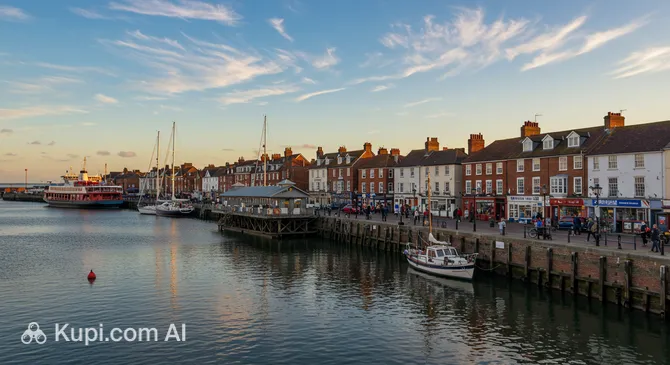
Harwich. Illustration.
Source: Kupi.com AI

With a population of just under 18,000, Harwich retains the cozy atmosphere of a friendly small town. It is a pleasure to wander through the narrow streets here, admiring the historic houses that create a special mood of serenity. Harwich's history can be traced in every corner: from ancient port structures to architectural monuments testifying to the area's rich past.

The town is famous for its maritime heritage, which is its main hallmark. Tourists are drawn to the picturesque quays, historic lighthouses, and forts, as well as the chance to watch majestic ships, as Harwich is a major ferry terminal connecting the island with the Dutch Hook of Holland. It is an ideal place for those who want to have a picnic overlooking the sea or embark on a short cruise.

If you are looking for an opportunity to discover non-touristy England, enjoy peaceful walks by the water, and witness beautiful sunsets, Harwich will be a true revelation for you. This town invites you to slow down and immerse yourself in the measured life of a real seaport.
Weather Overview

The climate in Harwich is defined by its coastal position: it features mild maritime weather without sharp temperature changes. The influence of the North Sea smooths out seasonal fluctuations, making the town accessible for visiting year-round, although each season has its own character. To plan your wardrobe properly, we recommend checking the detailed weather in Harwich before your trip.

Summer is the most pleasant time to visit. In July and August, the average temperature is around 18°C, with maximums reaching a comfortable 20–21°C. These are ideal conditions for long walks by the sea, as exhausting heat is very rare here. However, even in the warmest months, rainfall is possible: on average, there are 9 to 13 rainy days per month in summer.

Winters in the town are cool but not freezing. In January and February, the air cools to an average of 5–6°C, and night temperatures rarely drop below 3–4°C. December is considered the "wettest" month, with the number of rainy days reaching 15. Expect moderately warm summers with occasional rain and the cool, damp winters typical of this region of England.

Average monthly temperature

Average monthly precipitation

Interesting Facts

Beyond the main attractions, Harwich holds many fascinating secrets and historical details. This town can surprise even seasoned travelers with its unique connections to maritime culture and cinema.

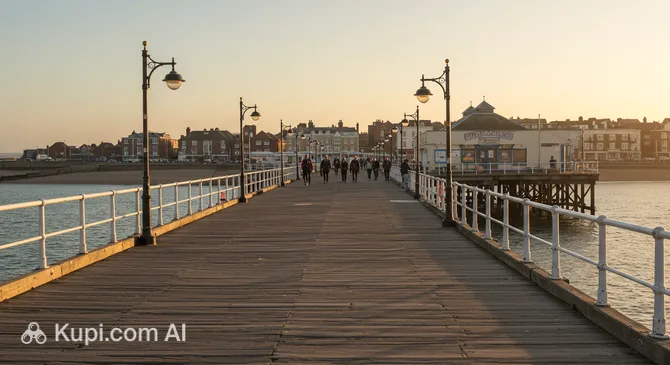
Ha'penny Pier. Illustration.
Source: Kupi.com AI

Traveler photos:

  • Harwich is one of England's oldest ports. Locals claim that ships have been mooring in this harbor since Roman times, highlighting the town's strategic importance in the country's maritime history over millennia.

  • The town could easily be called the unofficial capital of British lighthouses. It is the base for the famous Trinity House, the organization responsible for navigational aids, buoys, and lighthouses throughout the United Kingdom.

  • On the waterfront, you can see a real rarity—the LV18 lightvessel. This ship served as the inspiration for the famous "Radio Caroline" in the cult film "The Boat That Rocked," so music and movie lovers flock to see this legend with their own eyes.

  • Harwich serves as a gateway not only to the sea but also to a great journey by land. A section of the famous E2 long-distance walking route passes through the town—part of a trans-European trail connecting the UK with the Netherlands.

How to Get There

When planning a trip to this port town, it's worth thinking about your route in advance, as there are no direct flights to Harwich itself. Nevertheless, thanks to the UK's developed transport network, getting here is quite easy. You can find out all the ways to get to the city in more detail on a separate page, while below we will look at the main options via the nearest transport hubs.

There is no airport in the town of Harwich itself, but you can fly into London Southend (SEN) in London, which is about 56 km from Harwich. This is the nearest air hub, and a car journey from there takes about 1 hour and 45 minutes. Another popular option is Stansted (STN) International Airport, also located on the outskirts of London, 70.8 km away. The journey from there by taxi or bus takes about 2 hours. Stansted serves a huge number of flights and is a convenient entry point for travelers from Europe.

For convenience, here is summary information on the main airports:

AirportPassenger trafficDistance
London Southend Airport172 06856 km
Stansted Airport29.8 mln71 km
Norwich International Airport353 00082 km
London City Airport3.6 mln96 km
London Luton Airport16.7 mln112 km

The railway is one of the most comfortable ways to reach the Essex coast. There are small stations within Harwich itself, but most tourist traffic passes through major London terminals. The key departure point is Liverpool Street station (IATA: ZLS) in London, which is about 103 km from Harwich. Direct "Mayflower Line" trains depart from here, taking passengers straight to the ferry terminal. If considering a car trip from this station, it would take about 3 hours, so switching to a direct train is much more convenient.

Below is a table of the nearest major railway stations through which you can plan your route:

StationPassenger trafficDistance
Ebbsfleet International Station1.7 mln85 km
Ashford International Railway Station3.5 mln92 km
Stratford International Station56.6 mln98 km
Liverpool Street Station94.5 mln104 km
King's Cross Station20.5 mln106 km

Main Attractions

Harwich's attractions are inextricably linked to its rich maritime past and strategic importance as a port. A walk through the town feels like a journey through the centuries, where Victorian architecture stands alongside powerful defensive structures. This place is perfect for those who love naval history and atmospheric coastal landscapes.

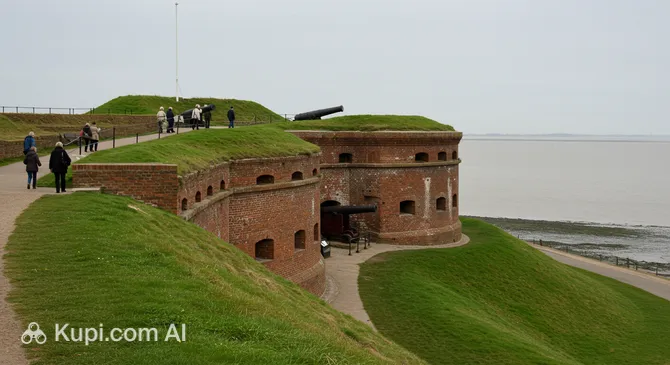
One of the most impressive buildings is the Harwich Redoubt Fort. This massive circular fortification was built in the early 19th century to protect the port from Napoleonic forces. The fort is excellently preserved: today, tourists can walk through the moat, explore the dark casemates, and see a collection of vintage cannons. The upper ramparts offer a magnificent panoramic view of the harbor, making it a must-visit site.

Harwich Redoubt Fort. Illustration.
Source: Kupi.com AI

Traveler photos:

The heart of the waterfront and a favorite spot for a promenade is the Ha'penny Pier. It is one of the few surviving Victorian wooden piers in the UK. It got its charming name ("halfpenny pier") from the toll charged to visitors on its opening day in 1853. Entry is now free, and it is the best point in town to watch massive ferries departing for Europe or simply enjoy the fresh sea breeze.

Connoisseurs of culture and vintage aesthetics should look out for the Electric Palace Cinema. Built in 1911, it is one of the oldest purpose-built silent cinemas in the country and is still operational today. The preserved original interior and facade immerse audiences in the atmosphere of the early 20th century, turning an ordinary film screening into a unique cultural experience.

Also of interest is the Harwich Maritime Museum, located in the decommissioned Low Lighthouse building. The museum's exhibition is compact but packed with artifacts telling the story of the town's role in the world wars, fishing, and the work of the Royal Navy. The lighthouse building itself is an architectural landmark and adds character to the town's skyline.

Local Cuisine

Harwich's gastronomic scene is inextricably linked to its status as a seaport. As befits a coastal town, fresh seafood forms the basis of the local menu. The main culinary symbol remains the traditional British "fish and chips"—fish in a crispy batter with hot potatoes. Thanks to its proximity to the sea, the fish here is always of excellent quality, and portions are often served wrapped in paper to maintain the authenticity of street food. Additionally, the Essex coast is famous for its shellfish, so in season, it's worth trying fresh oysters or crabs at local establishments.

The food culture in the town centers around cozy historic pubs where time seems to have stood still. These are ideal places to soak up the atmosphere of old England and try local drinks. Various types of ale and cider, often produced at small regional breweries, are particularly popular. For those who prefer non-alcoholic beverages, a traditional "cream tea"—strong tea with milk, served with scones, clotted cream, and jam—is a mandatory item on the agenda.

Lunch or dinner in Harwich often turns into a picturesque picnic. Locals and tourists alike enjoy taking food to go and heading to the water. One of the best locations for such a snack is the area where Ha'penny Pier is located. Here you can enjoy the taste of a fresh catch or an ice cream while watching the majestic ferries and breathing in the salty sea air, making the meal truly unforgettable.

Travel Tips

A trip to Harwich is an immersion into the atmosphere of old maritime England, where every stone breathes history. To make your visit to this cozy port town as comfortable and trouble-free as possible, we have prepared a list of useful recommendations to help you plan the perfect trip.

  1. Clothing and Gear. Given its coastal location, the weather here can be changeable and windy even in summer. Be sure to bring a windproof jacket and an umbrella, and dress in layers to easily adapt to temperature changes. For walks along the historic cobbled streets of Old Harwich, comfortable flat shoes are best. Don't forget an adapter for Type G sockets (British standard), as European plugs will not fit here.

  2. Transport Nuances. The historic town center is compact and best explored on foot. For trips to neighboring Dovercourt or to the ferry terminal, you can use local buses or "Mayflower Line" trains. Note that taxi services like Uber may not operate as consistently here as in London, so it is more reliable to have local taxi numbers handy, especially for early or late trips.

  3. Finance and Payment. The official currency is the Pound Sterling (£). Contactless payment is widely developed in the United Kingdom: cards and smartphones are accepted almost everywhere, from pubs to ticket offices. However, it is still worth having a small amount of cash (£10–20) for small purchases at kiosks. Tips in restaurants are usually 10–12.5%, and sometimes they are already included in the bill as a "service charge."

  4. Health and Safety. Harwich is a quiet and safe town, but standard precautions are still wise. The emergency services number is 999 (or 112). Pharmacies (Pharmacy or Chemist) can be found in the center and in large supermarkets, but there may not be 24-hour pharmacies in a small town, so it's better to bring essential first-aid medicines with you.

  5. Communication and Internet. The main language is English; locals are friendly and will gladly help if you know at least basic phrases. Free Wi-Fi is available in many cafes, pubs, and at stations. If you need mobile internet, a local SIM card (e.g., EE, O2, Vodafone) can be bought in supermarkets or newsagents without a passport.

  6. Local Etiquette. Britons highly value politeness and personal space. The words "please," "thank you," and "sorry" are used constantly. In pubs, it is customary to order drinks and food at the bar and pay immediately. And, of course, queuing is a sacred rule: never try to push in front, even if you are in a hurry.

  7. What to Avoid. A major mistake for tourists is station name confusion. Do not confuse Harwich International station (ferry terminal and cruise port) with Harwich Town station (historic town center). They are some distance apart, and a mistake can cost you time and an extra train journey.

  8. Kitchen Schedules. Unlike large metropolises, in small towns like Harwich, pub kitchens may close quite early, around 8:00–9:00 PM. If you are planning a late dinner, it is better to check the establishment's opening hours in advance or book a table to avoid going hungry.

By following these simple tips, you can avoid minor domestic troubles and fully focus on the beauty of the seascapes and the rich history of the town. We wish you an unforgettable journey and fair winds in Harwich!

Entertainment & Nightlife

Nightlife in Harwich has its own unique charm, far from the frenzy of busy metropolises. You won't find massive neon-lit nightclubs open until dawn here. Instead, the town offers an immersion into the atmosphere of traditional English fun, centered in historic pubs and cozy bars. The main evening activity buzzes in the Old Harwich area, where narrow streets fill with the warm light of lanterns and the sound of lively conversation.

The evening leisure culture here is built around socializing and tasting local drinks. The crowd in the establishments is eclectic: from local fishermen and port workers to tourists waiting for a ferry. There is practically no dress code anywhere; the style of clothing is casual or comfortable tourist gear. Most venues close quite early by big-city standards—around 11:00 PM or midnight—so it's better to start your evening early, right after sunset.

Among the specific places worth noting is The Alma Inn. This establishment is famous not only for its excellent selection of ales and seafood but also for regular music evenings featuring local bands. Another legendary spot is The Hanover Inn, whose building is steeped in history; here you can feel the spirit of old maritime England by a real fireplace. For those seeking a quieter setting with a water view, the bar at The Pier hotel is suitable, serving excellent cocktails and wines in a more refined atmosphere.

In terms of safety, Harwich is one of the calmest towns in the region. Walking through the nightly Old Town or along the quay where Ha'penny Pier is located is safe and can be a great way to end the evening. However, lighting in the outskirts can be dim. If you've stayed late at a friend's or in a pub in the neighboring Dovercourt area, it's better to call a local taxi, as public transport runs infrequently at night. The average price for a pint of beer is around £4–5.

Regarding cultural leisure, a visit to the Electric Palace Cinema is a unique evening entertainment. This is one of the oldest working cinemas in the UK, showing both new releases and classics in authentic early 20th-century interiors. During the day, the town offers museums, parks, or the Harwich Redoubt Fort, but it is with the onset of twilight that the historic center reveals its coziest side.

Parks & Museums

Harwich harmoniously combines rugged maritime romance with cozy green corners and a rich cultural heritage. For travelers, it is a great opportunity to alternate walks in the fresh air with immersion into fascinating chapters of British history by visiting local museums and natural areas.

The main natural gem of the area is considered to be Dovercourt Bay. This is not just a place for swimming, but a picturesque zone for long walks, awarded the prestigious "Blue Flag." The beach is famous for its two Victorian-era cast-iron lighthouses, which have become symbols of the town. The wide sandy and shingly stretch is ideal for family holidays, picnics, and watching seascapes in any weather.

For those seeking solitude away from the sea wind, Bobbit’s Hole nature reserve will be a true discovery. This small natural oasis, hidden in the center of Dovercourt, is a freshwater lake surrounded by dense greenery. Peace and quiet reign here, and visitors can spot ducks, kingfishers, and even woodpeckers. It is a wonderful place for a short reset in the lap of nature.

The cultural life of the town is closely linked to the sea, and Harwich's museums vividly demonstrate this. A must-visit is the Harwich Redoubt Fort, which functions not only as an architectural monument but also as an impressive military museum. Its casemates house unique exhibits, including vintage cannons and military uniforms, telling the story of the protection of British shores over the centuries.

Another important institution is The Harwich Museum. It is located near the railway station and offers a deep dive into the social and maritime history of the region. The exhibition covers everything from the role of the Royal Navy to the history of the famous Mayflower. Temporary exhibitions dedicated to local celebrities and events are often held here.

The Harwich Lifeboat Museum deserves special attention. Located in a historic Victorian boathouse building, it is dedicated to the heroism of people who save lives at sea. Tourists can see an actual lifeboat used in the past and learn exciting stories of maritime operations that are an integral part of this port town's spirit.

Insider Tip: As you walk around town, look out for the Mayflower Trail. Harwich is the home of Christopher Jones, the captain of the legendary ship that took the Pilgrims to America. Following this route, you will find his house and other historical markers that often escape the attention of average tourists.

Getting Around

The public transport system in Harwich is compact, logical, and perfectly adapted to the needs of a port town. There is no metro or tram system, and the primary means of travel for tourists arriving by ferry is the railway and bus service. The town's infrastructure is set up so that you can get from the international terminal to the historic center or beaches quickly and comfortably.

The railway line known as the Mayflower Line plays a key role in local logistics. For tourists, it is the most convenient way to move between three main points of interest: Harwich International station (where the ferry terminal is located), Dovercourt station (the shopping and residential area with the beach), and the terminus at Harwich Town (the historic old town). Trains run regularly, and the journey from the port to the center takes only a few minutes, essentially functioning as an overground metro.

The bus network connects Harwich with the surrounding area and neighboring towns in Essex. The main operator is First Essex. Buses are a great option if you need to reach the far corners of Dovercourt or go to neighboring Colchester. The most popular routes pass through main streets and stop at key attractions and supermarkets. Most buses are modern, low-floor, and equipped with USB charging ports.

Water transport deserves special attention. During the warmer months (usually from April to October), the Harwich Harbour Ferry pedestrian ferry runs between Harwich, Shotley, and Felixstowe. This small yellow vessel not only serves a transport function, allowing you to quickly cross to the other side of the estuary, but also serves as a great tourist attraction. Tickets are purchased directly on board, and payment is possible by both cash and card.

The payment system for ground transport is simplified as much as possible. Contactless bank cards, as well as Apple Pay and Google Pay, are accepted everywhere on buses. You simply tap your card on the driver's validator when entering. Train tickets can be bought at station machines or via mobile apps (such as Greater Anglia or Trainline), which is often cheaper. For short trips within the town, the cost of a train or bus ticket usually does not exceed a few pounds.

As an alternative to public transport, local taxi services are popular. It is important to note that services like Uber may be unavailable or have very long wait times here, so it is more reliable to save the numbers of local firms or take a car from the rank at Harwich International station. Harwich is also a very flat town, making it ideal for cycling; rental points can be found in the waterfront areas.

Tourists should remember one important detail: public transport, especially buses, can stop running quite early, around 10:00–11:00 PM, and on Sundays, the intervals between services increase. If you are planning a late dinner in the Old Town or arriving by night ferry, check the schedule in advance or book a taxi to ensure you reach your destination.

Accommodation

Accommodation in Harwich has a special charm typical of small English port towns. Here you are unlikely to find massive chain skyscraper hotels or ultra-luxury resort complexes. The backbone of the hotel stock consists of cozy guest houses (B&Bs), small private hotels, and historic inns, often located right above traditional pubs. This allows tourists not just to spend the night, but to literally immerse themselves in the local culture and lifestyle.

When choosing an area to stay, you should be guided by the purpose of your visit. If you are interested in history, architecture, and proximity to the ferry terminal, Old Harwich is the ideal choice. The most atmospheric buildings are concentrated here, and many rooms offer views of the harbor and historic streets. For those who prefer a more relaxed holiday by the water, the Dovercourt area is a better fit. It is located a bit further from the port but offers excellent access to beaches and promenades, which is especially relevant in the summer season.

The price range in the town can be described as moderate, especially compared to London or popular resorts in the south of England. Most options fall into the budget and mid-range segments. However, keep in mind that space in historic hotels is limited. During the peak tourist season (July–August) and during local festivals, demand increases sharply.

We recommend booking your accommodation in advance, preferably several weeks before your trip, to ensure a room with a good view. You can look for options on major international booking platforms or directly on the websites of local guesthouses—owners often offer better rates or include the famous full English breakfast in the price.

Nearby Cities

For those who want to explore the surroundings, Harwich serves as an excellent starting point for day trips to several interesting nearby locations. The town's location on the border of Essex and Suffolk provides access to the region's rich historical heritage and picturesque resorts.

Just 26 km from the port is Colchester—Britain's oldest recorded town. It is a real magnet for history lovers thanks to its majestic Norman castle built on the ruins of a Roman temple and one of the best zoos in Europe. Another attractive option is a trip to Ipswich, located only 16 km away. It is a lively port town with a beautiful waterfront full of restaurants and the magnificent Christchurch Park, home to an ancient Tudor mansion. If you're looking for traditional beach entertainment, head to Clacton-on-Sea, where sandy beaches, a famous pier with attractions, and the atmosphere of a classic English resort await you.

CityPopulationDistance
Felixstowe24 4417 km
Walton-on-the-Naze12 05410 km
Ipswich290 00016 km
Clacton-on-Sea50 54818 km
Hadleigh18 30024 km

These nearby destinations offer a glimpse into the diverse culture and landscapes of the region, from ancient Roman walls to modern seaside promenades.

Shopping & Souvenirs

Shopping:

General Overview: Harwich is more a place for peaceful walks and historical immersion than a major shopping hub. You won't find massive shopping galleries or high-fashion boutiques here. However, the town offers a cozy atmosphere for buying essentials and unique local souvenirs. Commercial life here is measured and focused on meeting the daily needs of locals and the requests of tourists looking for something authentic to remember the coast by.

Main Shopping Areas/Streets: The main shopping artery of the town is High Street in the Dovercourt area. This is a busy street where most shops are concentrated: from small family-run stores and cozy bakeries to well-known British chain supermarkets. A stroll here allows you to feel the rhythm of daily life for the townspeople. In the historic part, Old Harwich, there are fewer shops, but you can find curious antique stores and small galleries hidden among the old houses.

Shopping Centers: There are no large indoor malls in the usual sense in Harwich. The main place for more significant purchases is the Harwich Gateway Retail Park, located at the entrance to the town. This is an open-air retail park home to major supermarkets and home and leisure goods stores. It is a convenient place if you need to stock up on groceries or buy household items before continuing your journey.

Markets: Lovers of a lively atmosphere should check out the Dovercourt Street Market, which traditionally takes place on Fridays. Here, local traders offer fresh produce, home-baked goods, clothing, and various household items. It's a great place to buy farmhouse cheeses or seasonal fruit from Essex, as well as simply chat with the friendly locals.

Souvenirs: Given the town's maritime soul, the best gifts are nautical-themed items: ship models, decorative lighthouses, captain's caps, or vintage maps. It's also worth looking for souvenirs related to the history of the legendary ship the "Mayflower," whose captain lived right here. In local confectioneries, you can buy traditional English sweets, such as creamy fudge or shortbread in beautiful tins.

Opening Hours and Payment: Most shops are open Monday to Saturday from 09:00 to 17:30. On Sundays, many small private shops are closed, and larger supermarkets operate on a reduced schedule (usually from 10:00 to 16:00). Bank cards are accepted everywhere in the United Kingdom, and contactless payment is preferred even for small amounts. Cash might only be needed at the market.

Tax Free: It is important for tourists to note that since 2021, the rules have changed, and the traditional VAT refund system (Tax Free) for goods purchased in shops no longer applies to visitors taking purchases in their personal luggage. You can now only save on tax if the shop organizes direct delivery of the purchased item to your address abroad.

Reached the end of the page?

That means the route is fully explored