Support

Oban

About

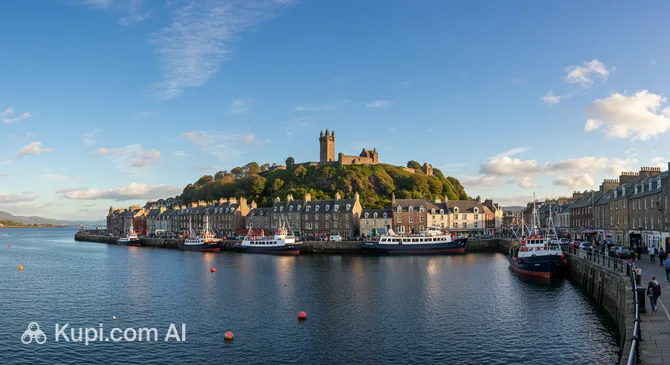
Oban is a true Scottish gem, nestled on the shores of the Firth of Lorn in the western part of the region. This picturesque town, located in Great Britain, is often called the "Gateway to the Isles." Thanks to its strategic position and ferry connections, it serves as the perfect starting point for journeys to the Inner Hebrides.
Oban. Illustration.
Source: Kupi.com AI

The town stretches around a horseshoe-shaped bay protected by green hills, creating a unique microclimate and postcard-perfect views. Although the population is only about 8,100 people, Oban is surprisingly lively. It plays the role of an important transport and tourism hub for the Argyll and Bute region, connecting mainland Scotland with the island territories.

The atmosphere here is special: the air is filled with the spirit of maritime adventure mixed with the coziness of an old town. The fascinating history of Oban can be traced through its architecture and traditions. One of the main attractions is the Corran Esplanade, a lovely place to stroll while enjoying the smell of the sea and fresh pastries, and in the evenings, watching the stunning sunsets over the bay.

Travelers value Oban not only for its views but also for the opportunity to experience authentic Scottish culture. Locals are happy to share legends over a glass of famous whisky, and the town's hospitality will make your visit unforgettable. Be sure to include this cozy port in your itinerary to feel the genuine charm of the west coast.


Weather Overview

Oban's climate is typical of Scotland's west coast: it is mild, oceanic, and quite humid. Thanks to the influence of the Atlantic, extreme frosts are rare here, but you shouldn't expect scorching heat either. In winter, average temperatures stay around 4–5°C, and night minimums rarely drop below 2°C. Summer here is fresh and comfortable for long walks: in July and August, the air warms to an average of 13.3–13.4°C, with maximum values reaching 15.6°C.

Precipitation is a frequent companion for travelers in this region. Expect cool summers and mild winters, accompanied by regular rain throughout the year. October is considered the wettest month, with up to 24 days of precipitation recorded, while the driest period is usually April (about 15 rainy days). Before your trip, it is recommended to check the current weather in Oban to choose the right wardrobe and not forget a reliable raincoat.

Average monthly temperature

Average monthly precipitation

Interesting Facts

Beyond its well-known panoramic views and cozy harbor, Oban holds many fascinating stories that make a visit truly special. Here are some curious facts that will help you see this Scottish town in a new light.
  • The famous McCaig's Tower, which towers over the town, is often compared to the Roman Colosseum due to its unusual architectural appearance. It was built at the end of the 19th century by a local banker, not only as a monument to his family but also with the noble goal of providing work for local stonemasons during difficult economic times.

  • Surprisingly, the Oban Distillery is actually older than the modern town surrounding it. Founded in 1794, this production facility is located in the very center of Oban and still produces the eponymous whisky, which is considered true "liquid history" and a signature of the region.

  • The town bears the proud title "Gateway to the Isles." Every year, thousands of ferries depart from here, taking travelers to the mystical beauties of the Inner Hebrides, such as Mull and Iona.

  • Traces of deep antiquity remain in the town's surroundings. For example, the Dunollie Museum, Castle and Grounds is closely linked to the history of the powerful Clan MacDougall, who have owned these lands since the 13th century, and the ruins of local fortresses still hold legends of Celtic settlements.

McCaig's Tower. Illustration.
Source: Kupi.com AI

Traveler photos:

How to Get There

When planning a trip to the picturesque west coast of Scotland, it is important to think about logistics in advance. The town of Oban, as the "gateway to the islands," has excellent transport links with the region's major metropolises. You can find out more about how to get to Oban to choose the most convenient route for you, whether by car, bus, or rail.

There is no civil airport in the town of Oban itself, so most tourists arrive via the international air gateways of neighboring large cities. The closest and most convenient option is Glasgow Airport (GLA). It is located in Glasgow, approximately 88 km from Oban. The journey by rental car or taxi takes about 2–2.5 hours, allowing you to enjoy views of Loch Lomond along the way.

An alternative option is Edinburgh Airport (EDI), the busiest airport in Scotland. It is located in Edinburgh, about 140 km from Oban. The journey from here takes a bit longer—roughly 3 hours by car. Both airports handle many international flights and offer convenient connections for travelers.

For convenience, here is a summary of the main airports:

AirportPassenger trafficDistance
Tiree Airport12 00087 km
Glasgow International Airport8.1 mln88 km
Glenegedale Airport29 91995 km
Machrihanish Airport6 712110 km
Glasgow Prestwick Airport535 101115 km

Rail travel in Scotland is excellent, and a train journey can be an adventure in itself thanks to the scenic landscapes. While there is no station listed directly in Oban in this list, you can look to the country's largest transport hubs, from where it is easy to continue your journey.

A key transfer point is Glasgow Central station. It is located in Glasgow, about 97 km from Oban. This is one of the busiest stations in the UK. After arriving here, you can transfer to a train (usually departing from the nearby Queen Street station) or a bus to cover the remaining distance to the coast.

Another important hub is Waverley Station in Edinburgh, located about 150 km from the destination. This is the main railway station of the Scottish capital, where trains from London and other cities arrive. From here, it is also convenient to plan a further transfer to the west.

Below is information about the nearest major railway stations:

StationPassenger trafficDistance
Aberdeen Railway Station2.3 mln96 km
Glasgow Central Station25.0 mln98 km
Waverley Railway Station23.1 mln151 km
ScotRailway Station1.2 mln151 km
Dundee Railway Station1.7 mln151 km

Main Attractions

Oban, despite its modest size, offers travelers a rich program. The town harmoniously combines historical heritage, gastronomic pleasures, and natural beauty. Most iconic sites are within walking distance, making a stroll through the "Gateway to the Isles" particularly enjoyable.

The undisputed dominant feature of the landscape is McCaig's Tower. This majestic granite structure, reminiscent of the Roman Colosseum, is visible from almost anywhere in town. While the climb to the tower may seem steep, the effort is well rewarded: the observation deck within the walls offers perhaps the best panoramic view of Oban Bay and the islands of Kerrera, Lismore, and Mull. Inside the tower itself is a well-kept garden where you can relax in peace after the ascent.

For history buffs, the Dunollie Museum, Castle and Grounds is a must-visit. This historical complex, located north of the harbor, served as the seat of the Clan MacDougall for centuries. Today, tourists can explore the ruins of the medieval tower standing on a rocky promontory and visit the 1745 House Museum, which houses unique family relics and textiles. A walk along the woodland trails around the castle allows you to enjoy the mystical atmosphere of the Scottish nature.

Dunollie Museum, Castle and Grounds. Illustration.
Source: Kupi.com AI

Traveler photos:

In the very heart of the town, just steps from the waterfront, lies the famous Oban Distillery. It is one of the few whisky distilleries in Scotland located directly within a town rather than in a remote rural area. Visitors can take a tour to learn the secrets of creating the "water of life" and, of course, sample the signature single malt whisky, which combines maritime notes with the peaty aroma of the Highlands.

After a walk in the fresh air, it is worth stopping by a place like the Oban Chocolate Company. This is not just a shop, but a true workshop of flavor where exquisite sweets are handmade. The café at the factory is famous for its hot chocolate and waffles, and the windows offer a peaceful view of the bay, making it the perfect spot for a cozy break.

Local Cuisine

Oban's culinary reputation extends far beyond Scotland—the town rightfully bears the unofficial title of "Seafood Capital." Thanks to its location by the cold waters of the Atlantic, local restaurants and cafés offer exceptionally fresh delicacies. Oysters, mussels, langoustines, and crabs reach the plate literally hours after being caught, making the flavors incredibly rich and pure.

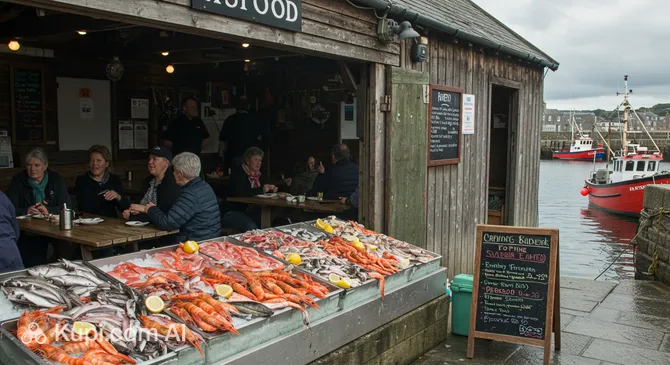
A true symbol of street food here is the famous Oban Seafood Hut—a small green shack on the pier, known among gourmets worldwide. There are no waiters or white tablecloths, but you can try the best crab sandwich or a shellfish platter while enjoying the view of the fishing boats. If you want something warming, be sure to order Cullen skink—a thick traditional soup made of smoked haddock, potatoes, and onions, perfect for the changeable Scottish weather.

Oban Seafood Hut. Illustration.
Source: Kupi.com AI

Traveler photos:

Drinking culture in Oban is inextricably linked to history. The main drink remains the local single malt whisky, distinguished by a smooth taste with notes of sea salt and peat. Locals recommend pairing it with a piece of smoked salmon or island cheese. To soak up the atmosphere of old Scotland, stop by a traditional pub like The Oban Inn. This establishment, with its rich history and cozy interior, is a great place to sample local ale or cider in friendly company.

In addition to seafood, the region is famous for its farm products. At local markets, you can find home baking, heather honey, and jams prepared according to old family recipes. If you are planning a trip in the summer, try to catch the Seafood Festival, when the town transforms into one large open-air gastronomic venue where chefs compete in the art of cooking the gifts of the sea.

Travel Tips

Welcome to Oban! To ensure your journey to the "Gateway to the Isles" is as comfortable as possible and leaves only pleasant impressions, we have gathered the most important practical recommendations, taking local specifics into account.

  1. Clothing and gear. Weather on Scotland's west coast changes in a flash, so the main principle is layering. Even in summer, be sure to bring a quality waterproof windbreaker with a hood and water-resistant flat shoes—useful for walking on cobblestones and the climb to McCaig's Tower. Don't forget a travel adapter (Type G, British standard), as European plugs will not fit here.

  2. Transport. Oban itself is compact, and its center is best explored on foot. For trips to the surrounding area or the islands, the key carrier is the ferry company CalMac (Caledonian MacBrayne)—it's worth booking ferry tickets online in advance during the high season. West Coast Motors buses run throughout the town and region. Renting a car makes sense if you plan to travel deep into the Highlands, but note that parking in central Oban can be difficult in summer.

  3. Finances. The currency is the Pound Sterling (£). Scotland uses its own banknotes, which differ in design from English ones but have the same value (they may be accepted reluctantly in England, so try to spend them locally). Bank cards and contactless payments are accepted almost everywhere, even at seafood kiosks. Cash is only needed for small souvenirs or tips (usually 10–15% in restaurants).

  4. Health and safety. Oban is a very safe town where you can walk peacefully even in the evening. The main natural nuisance during the summer period (May to September) is midges (tiny biting flies). Be sure to buy a local repellent (such as Smidge) at any pharmacy or supermarket. Pharmacies (Pharmacy/Chemist) are easy to find in the center, for example, on George Street.

  5. Communication. The primary language is English, though you may see signs duplicated in Gaelic. The local accent can be unfamiliar, but Scots are very friendly and will happily repeat a phrase. Wi-Fi is available in most cafés, hotels, and at the ferry terminal. For mobile internet, SIM cards from operators like EE, O2, or Vodafone can be bought in local supermarkets.

  6. Local etiquette. Scots value politeness and personal space. Respect the queue (queuing is sacred here), whether boarding a bus or ordering food. It is customary to greet bus drivers when boarding and thank them when getting off. In pubs, it is normal to strike up a light conversation with a neighbor, but don't be intrusive.

  7. What to avoid. Never refer to the locals as "English"—this can be taken as an insult; they are Scots or British. It is also strongly recommended not to feed the seagulls on the waterfront: these birds in Oban are very large and bold, and they can snatch food right out of your hands and even cause injury.

  8. Dining tip. Since Oban is a popular tourist destination and the number of good restaurants is limited, be sure to book dinner tables in advance, especially on Fridays and weekends. Many kitchens close quite early, around 8:30–9:00 PM, so don't leave dinner until late in the evening.

Oban will enchant you with its hospitality and steady pace of life. By following these simple tips, you can avoid minor hassles and focus entirely on the beauty of the Scottish landscapes and the taste of the freshest seafood.

Entertainment & Nightlife

Nightlife in Oban is not about loud raves and the neon lights of megacities; it's about soulfulness, live music, and famous Scottish hospitality. Evening entertainment here is centered around traditional pubs, where a pint of ale or a glass of whisky is accompanied by the sounds of a fiddle and friendly conversation. Most of the activity bustles around the harbor and on the main George Street, where venues are located literally door-to-door, making it easy to hop from one place to another.

The atmosphere in local establishments is extremely democratic and relaxed. There is no strict dress code: jeans and a sweater are appropriate everywhere, though high heels are best left at home due to the cobblestones and hilly terrain. The crowd is a colorful mix of local fishermen, students, and tourists from all over the world. The liveliest time is Friday and Saturday, when pubs fill to capacity and the fun often spills out onto the street.

If you are looking for an authentic experience, be sure to stop by The Oban Inn. This is the town's oldest pub, located in an 18th-century building right across from the harbor. The interior, with dark wood, stained glass, and nautical memorabilia, instantly transports you to the past. Live music is often played here, and the selection of local ales will satisfy even a discerning gourmet. It's the perfect place to start the evening with a view of the fishing boats.

For those who want to be in the thick of things, The Tartan Tavern is a great choice. This venue is famous for its laid-back atmosphere and is a popular gathering spot for locals. If you're lucky, you might catch an impromptu folk music session. Prices in town are quite reasonable by British standards: a pint of beer averages around £4–£5. Most pubs close around midnight or 1:00 AM, so it's worth starting your evening early, around 8:00 or 9:00 PM.

In terms of safety, Oban is one of the quietest towns in the UK. Night walks through the illuminated center and along the waterfront pose no threat, though you should be careful near the water. If your hotel is further away, it's better to use a taxi. Cars can be found at the rank by the railway station or called by phone, but wait times on weekend evenings can be long, so keep the numbers of local services handy.

As for daytime and cultural entertainment, Oban offers a more measured pace. Art lovers should check the schedule at the Corran Halls, the town's main cultural center, which hosts concerts, theatrical productions, and exhibitions. The town also has the Phoenix Cinema, a community-run project that shows both new releases and arthouse films. On a sunny day, the best entertainment is a stroll along the promenade or a picnic in the parks overlooking the islands.

Parks & Museums

While Oban is primarily known as a seaport, the town and its surroundings offer travelers picturesque green spaces and fascinating museums that reveal the rich heritage of the West Highlands. Here, you can easily alternate between walks in the fresh air and immersion in clan history and the region's military past.

Nature lovers should start their acquaintance with the town by visiting the unique Dunollie Museum, Castle and Grounds. This site combines history and landscape design: the area around the ruins of the ancient fortress is covered with ancient woodland where cozy trails are laid out. The "Faerie Garden" and the Drapery Garden add a special charm to the grounds and are particularly popular with families. In spring, carpets of bluebells and daffodils bloom here, creating a fairytale atmosphere.

Another important green spot on the map is the inner garden of a famous landmark—McCaig's Tower. The walls of this unfinished "Colosseum" protect the space from the wind, creating a quiet and well-tended square with flower beds and benches, perfect for a rest after the uphill walk. If you are looking for open space and a sea breeze, head to Ganavan Sands beach. A scenic coastal footpath connects it to the town center, offering magnificent views of the islands of Mull and Lismore.

Cultural life in Oban is concentrated in several key museums. The Oban War and Peace Museum, located in the old newspaper office building on the waterfront, is a true treasure trove of local stories. The exhibition tells of the town's strategic role during World War II, when flying boats were based here, as well as the development of fishing and the construction of the railway. Entry to the museum is usually free, and the collection of photographs and artifacts is impressively detailed.

For a deeper dive into Scottish traditions, visit the 1745 House Museum on the Dunollie estate. It houses the heritage of Clan MacDougall: ancient weapons, costumes, textiles, and family relics passed down through generations. For those interested in industrial architecture and "living" history, the Oban Distillery will be of interest. It is one of the oldest buildings in town, and the guided tour serves as a museum journey through the stages of traditional spirit production.

Among the town's architectural gems, St. Columba's Cathedral stands out. This Neo-Gothic building on the waterfront draws attention with its austere granite facade and magnificent stained glass windows inside. The building serves as an important spiritual center and a fine example of early 20th-century Scottish ecclesiastical architecture.

Insider Tip: If you want to enjoy a panorama of the town in silence, head up to Pulpit Hill south of the harbor. This spot is less popular with tourists than McCaig's Tower, but the view from here is no less breathtaking, especially at sunset. At the top, you will find a mysterious stone known as the "Minister's Stone" and several convenient viewpoints.

Getting Around

Oban's transport system is compact and intuitive, which perfectly matches the size of this cozy town. There is no metro, tram, or trolleybus system here. The town center is so small that it is easy to walk across in 15–20 minutes. However, for trips to remote beaches, viewpoints, or neighboring villages, you will need local transport, which operates efficiently and on schedule.

The primary form of land public transport is the bus. The main operator in the region is West Coast Motors. Their routes connect the town center (usually departing from Station Road near the railway station) with popular locations such as Ganavan Sands beach, the Soroba area, and surrounding settlements. The buses are modern and comfortable, but keep in mind that in the evenings and on Sundays, service intervals increase significantly, and some routes may not run at all.

The fare payment system is very convenient for tourists. You don't need to look for kiosks or buy paper tickets in advance. The most common method is contactless payment with a bank card or smartphone directly with the driver upon boarding. Just state your destination and tap your card on the terminal. If you prefer cash, try to have the exact change, as drivers cannot always break large bills. The cost of a trip around town is usually a few pounds. For frequent travel, you can use the operator's mobile app, where day passes are available.

A unique feature of Oban's transport system is its status as the "Gateway to the Isles." Ferries here function much like suburban trains. The Caledonian MacBrayne (CalMac) terminal is located right next to the railway station. From here, vessels regularly depart for the islands of Mull, Lismore, and others. For foot passengers, tickets can be bought at the terminal office before departure, but in the summer season, it is recommended to book them online in advance, especially if you are traveling with a car.

As an alternative to public transport, taxis are popular in Oban. The rank is located right by the railway station and ferry terminal. This is especially relevant if your hotel is on the hills, where walking up with suitcases can be difficult. Cars are metered, and most drivers accept cards, though it's best to confirm this before boarding. Car-sharing services are not developed here, but there are bike rental points, which is a great choice for outings in good weather.

Tourists should remember an important detail: transport schedules in Scotland are strictly observed. To plan your route, use the Traveline Scotland app or Google Maps—they show real-time arrival info. If you are planning a bus trip, it is customary to signal the driver with your hand at the stop to ask them to stop, otherwise the bus might drive past.

Accommodation

The choice of accommodation in Oban will pleasantly surprise travelers with its variety and character. Despite the town's modest size, the full palette of accommodation options is represented here: from budget youth hostels and campsites to luxurious Victorian hotels and cozy family guesthouses. The B&B (Bed & Breakfast) format is particularly popular in Scotland—often these are small guesthouses in historical buildings where the hosts offer not just a bed, but a hearty traditional breakfast.

When choosing an area, you should consider the goals of your trip. If you are planning an early departure to the islands, the most convenient option is the town center and harbor area. Staying here puts you within walking distance of the railway station and ferry terminal, as well as in the heart of the restaurant scene. For those seeking romance and panoramic views, the Corran Esplanade is ideal. Hotels here line the shore, offering guests the chance to fall asleep to the sound of the waves and watch sunsets over the island of Kerrera right from their room window.

Oban Hotel & Spa. Illustration.
Source: Kupi.com AI

Traveler photos:

For those who prefer peace and seclusion, look at accommodation options on the hills surrounding the center. While the walk up may require effort, the reward is stunning views of the bay and freedom from city noise. There are also many cottages and apartments available for rent in the Oban area, which is a great solution for families or large groups traveling by car.

Important booking tip: Oban is an extremely popular destination, especially during the summer season (May to September) and during local festivals. Good value-for-money options are snapped up months in advance. It is highly recommended to book your accommodation early to avoid being left without a roof over your head or overpaying for the last remaining suites.

Prices in town range from budget (hostels from £25–£30 per night) to high (premium hotels from £150–£200). Bookings can be made through popular international online platforms or directly on hotel websites—the latter often allows you to get a small bonus like a free breakfast or a room upgrade.

Nearby Cities

For those who want to explore the surrounding area, Oban serves as an excellent starting point for day trips to several interesting nearby locations:

First and foremost is a trip to the Isle of Mull. Just 45 minutes by ferry, and you find yourself in a world of wildlife and rocky shores. The island's main town, Tobermory, is famous for its colorful houses on the waterfront, which have become a hallmark of the region. It is the perfect place for those who want to see sea eagles, whales, or simply enjoy island romance.

Another popular destination is the historic town of Inveraray, situated on the shores of Loch Fyne. Here you will find the majestic Inveraray Castle, the seat of the Dukes of Argyll, with its magnificent gardens, and the famous Inveraray Jail museum, where you can immerse yourself in the atmosphere of 19th-century justice. The journey there takes about an hour and offers picturesque views.

For fans of dramatic landscapes, a trip to Glencoe is a must. This place, steeped in legends and a somber history, is considered one of the most beautiful in Scotland. Majestic mountains, waterfalls, and deep gorges attract photographers and hikers from all over the world.

Below is information about the nearest major towns and cities that could also be part of your itinerary:

CityPopulationDistance
Fort William10 17550 km
Colonsay13057 km
Gourock10 35065 km
Helensburgh13 64065 km
Greenock41 99067 km

These nearby destinations provide a glimpse into the diverse culture and landscapes of the region.

Shopping & Souvenirs

Shopping in Oban is a pleasant and relaxed activity that is a world away from the bustle of major cities. Here, you won't find endless rows of global chain boutiques, but instead, you will discover the charm of independent family shops, craft workshops, and stores selling local delicacies. The town is famous for quality Scottish-made goods, from warm woolen items to exclusive food products that make excellent mementos of your trip.

The heart of the town's retail life is George Street. This main street stretches along the central part of town and offers the best selection of shops. Strolling here, you will find everything from souvenir shops with magnets and postcards to specialized outdoor clothing stores, which is particularly relevant in the Highlands' changeable climate. It is also worth exploring the side streets and the waterfront, where small galleries and jewelry workshops offering Celtic-themed pieces are often hidden.

Due to its compact size, Oban does not have large shopping centers or malls in the usual format. Shopping here is focused on the High Street. Nevertheless, on the outskirts of town (for example, in the Lochavullin area), there are several retail parks with large supermarkets (Tesco, Marks & Spencer Foodhall) and home goods stores where tourists can stock up on provisions or buy travel essentials.

While there is no large permanent indoor market, Oban's gastronomic fame makes it an excellent place to buy edible souvenirs. Local fishmongers located near the ferry terminal sell the freshest seafood, including smoked salmon and shellfish. Farmers' markets are held periodically in the town, where local producers offer cheeses, jams, and baked goods.

The choice of souvenirs in Oban will delight lovers of authenticity. First and foremost, of course, is whisky. The shop at the Oban Distillery offers collectible bottles of the famous single malt that can be hard to find elsewhere. Those with a sweet tooth should definitely visit a place like the Oban Chocolate Company. They sell handmade chocolates with unusual flavors, such as sea salt or whisky, in beautiful gift packaging.

Additionally, visitors often take home sheepskin and cashmere products, traditional Scottish kilts, and tartan accessories from Oban. Look out for local ceramics and glassware inspired by the seascapes of the west coast.

Shops in the town center are typically open Monday to Saturday from 09:00 to 17:00 or 17:30. On Sundays, many smaller shops may be closed or operate on a reduced schedule (from 11:00 to 16:00), though large supermarkets stay open longer. Bank cards (Visa, Mastercard) and contactless payments are accepted everywhere, even in small cafés and kiosks, but having some cash pounds for very small purchases is always a good idea.

Reached the end of the page?

That means the route is fully explored