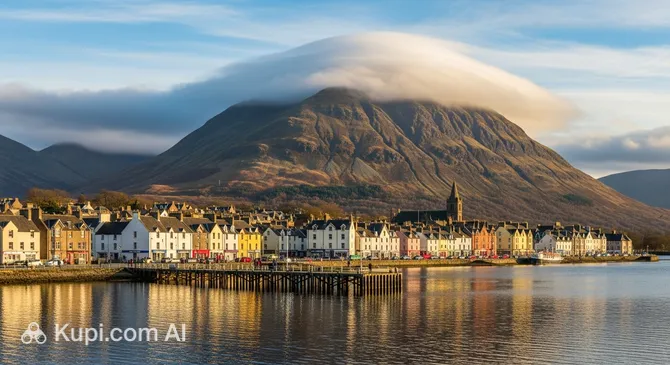
Fort William is often called the "Outdoor Capital" of Scotland. This picturesque town, situated on the shores of Loch Linnhe at the foot of the mountains, attracts travelers with its rugged beauty and unique atmosphere of adventure. It is here in the north that the UK reveals its most impressive mountain landscapes, making the region a mecca for climbers and nature lovers.
Fort William. Illustration.
Source: Kupi.com AI
The town is the second largest settlement in the Highlands, with a population of just over 10,000. Despite its compact size, life here is vibrant year-round. Fort William's rich history, rooted in the construction of military fortifications and Jacobite uprisings, blends harmoniously with the modern rhythm of tourism.
The main attraction that draws thousands of people here is Ben Nevis, the highest peak in the British Isles, which towers directly above the town. Additionally, Fort William serves as the starting point for the legendary Jacobite steam train. This route, passing over the Glenfinnan Viaduct, became world-famous thanks to the Harry Potter films and is considered one of the most beautiful railway journeys in the world.
Whether you plan to conquer mountain peaks or simply want to enjoy cozy pubs and fresh air, Fort William is an excellent choice for an unforgettable trip.
Weather Overview
The climate in this region can be described as temperate maritime, meaning cool summers and mild but wet winters. The weather here is fickle, so the weather in Fort William often brings surprises, with sun giving way to rain several times a day. Expect cool summers with frequent precipitation and mild winters when temperatures rarely drop deep below freezing.
The summer months—June, July, and August—are the warmest, with average temperatures around 12–13°C and highs reaching 15–16°C. However, even in the height of summer, rain is not uncommon: on average, there are between 19 and 22 rainy days per month. April and May are considered relatively dry months when the number of days with precipitation drops to 15–18, and the air gradually warms up.
Winter brings coolness, but severe frosts are rare. In January and February, the average temperature stays around 2–3°C, while nightly lows can drop to 0°C. October is the rainiest month of the year (24 days with precipitation), so waterproof clothing and sturdy footwear are essential for traveling during the off-season.
Average monthly temperature
Average monthly precipitation
Interesting Facts
Beyond its main attractions, Fort William holds many fascinating secrets and unexpected records that are only revealed to curious travelers.
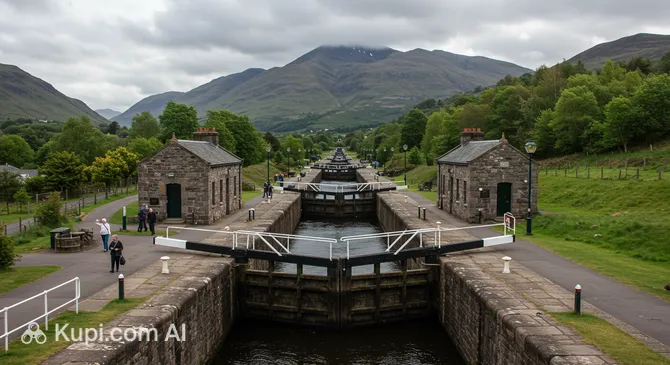
In the town's vicinity lies a unique engineering feat—Neptune's Staircase. This is the longest staircase lock flight in the UK, built by the famous engineer Thomas Telford in the early 19th century. The system of eight locks raises vessels to a height of about 20 meters, and passing through this section takes boats approximately 90 minutes, making it a captivating sight for onlookers.
The town is known for an unusual automotive achievement: in 1911, Henry Alexander Jr. drove a Ford Model T to the summit of Ben Nevis. This promotional stunt, intended to prove the car's reliability, took five days of climbing over rocky slopes and bogs, while the descent took only a few hours. A bronze statue of the driver behind the wheel of the legendary car was erected in town to commemorate the event.
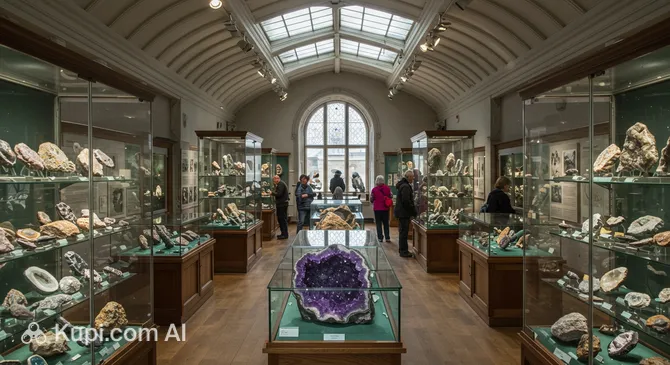
Geology and mystery enthusiasts can visit the Treasures of the Earth museum, located in a former church building. It houses one of Europe's finest private collections of crystals, gemstones, and fossils. A special atmosphere is created by artificial caves and UV lighting that makes the minerals glow in the dark.
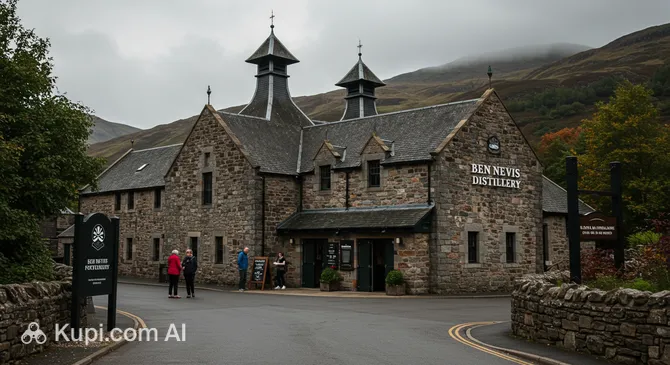
The local Ben Nevis Distillery is one of the oldest licensed distilleries in Scotland, founded back in 1825. Its unique production process involves using water from two mountain pools located on the slopes of Britain's highest mountain, which masters claim gives the spirits a distinct "Highland" character.
Neptune's Staircase. Illustration.
Source: Kupi.com AI
Traveler photos:
How to Get There
The journey to the "Outdoor Capital" of Scotland is an adventure in itself, as the road winds through picturesque glens and mountain passes. Since the town is located deep in the Highlands, there are no direct international flights, and tourists often have to combine different modes of transport. You can find out more about how to get to Fort William by exploring all available routes and connections.
There is no airport in Fort William itself, so travelers usually fly into Scotland's major cities and then continue their journey by land. The closest is Inverness Airport (INV) in the city of Inverness, located about 103 km from Fort William. The trip from there by taxi or bus takes approximately 175 minutes.
Another popular option is Glasgow Airport (GLA), situated in the city of Glasgow, about 113 km away. It is a major international hub receiving many flights. The journey from there to Fort William takes roughly 190 minutes. You can also use flights to the capital's Edinburgh Airport (EDI). It is located in Edinburgh, about 144 km from the destination, and the transfer from there takes around 235 minutes.
For convenience, here is a summary of the region's main airports:
The railway is one of the most beautiful ways to reach the region, although key transport hubs are located outside the town. Tourists often arrive at Glasgow Central station in Glasgow, which is about 119 km from Fort William. This is one of the country's busiest stations, from where you can plan a further connection by train or bus toward the Highlands. The road journey by motor transport from this hub takes about 200 minutes.
Another important transit point is Waverley Station in Edinburgh. It is located 153 km from Fort William. Upon arrival here, travelers can enjoy the views of the capital before heading north. The journey time by car from the station to the town is approximately 250 minutes.
Below is information about the major railway stations that can serve as starting points for a trip to Fort William:
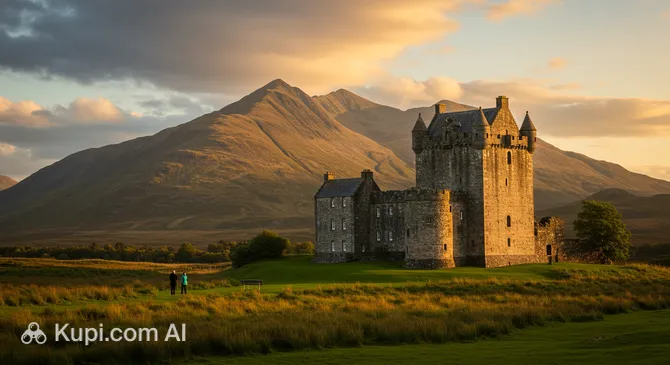
While Fort William is primarily famous for its nature, there are several iconic sites within the town and its surroundings that allow you to touch the region's history and enjoy your time. One of the most atmospheric historical buildings is Old Inverlochy Castle. These picturesque 13th-century ruins are located on the banks of the River Lochy. The castle played an important role in Scottish history and witnessed two major battles. Today, it is a quiet and romantic spot, perfect for walks and photo sessions against the backdrop of ancient stone walls.
Old Inverlochy Castle. Illustration.
Source: Kupi.com AI
Traveler photos:
For those who have come to the region to conquer peaks or go hiking, the Ben Nevis Visitor Centre is a must-visit. It is located in Glen Nevis, at the foot of the famous mountain. Here, tourists can get up-to-date weather reports, route maps, and safety advice from rangers, which is critical given the Highlands' changeable climate. Additionally, the center offers souvenirs and information about the local geology and wildlife.
If the weather isn't suitable for walking, which often happens in Scotland, it's worth visiting the Highland Cinema. This is not just a movie theater, but a true cultural hub for the town with unique architecture reminiscent of a traditional red-roofed Scottish croft. Inside, there is a cozy cafe-bar where you can grab a bite before a screening. This place has quickly become a favorite for both locals and tourists looking for warmth and entertainment in the town center.
Local Cuisine
The gastronomic scene in Fort William reflects the rugged but generous character of the Scottish Highlands. Local cuisine relies on the freshest ingredients from the "Highland larder": game from the surrounding forests and seafood from the cold waters of Loch Linnhe. Tourists shouldn't look for high molecular gastronomy here; instead, they can expect hearty, warming dishes perfect for restoring energy after climbing mountains or long walks in the rain.
Seafood is considered the main delicacy of the region. Be sure to try the local mussels, scallops, or langoustines, which are often served in simple but cozy establishments right by the water. Another pillar of the menu is game, especially venison, which is served as steaks, stews, or added to pies. And, of course, a visit to Scotland wouldn't be complete without tasting haggis—a traditional dish made of sheep's offal, usually served with mashed turnips and potatoes ("neeps and tatties").
For an authentic atmosphere and traditional food, the Ben Nevis Inn is a great choice. This restaurant is located in a historic barn at the very foot of Britain's highest mountain. A spirit of mountaineering brotherhood prevails here, and the portions are famous for their impressive size, making it a favorite for both locals and travelers who have just come down from the summit.
The drink culture in Fort William is inextricably linked to whisky. The "water of life" flows freely here, and almost every pub will offer you dozens of single malt Scotch varieties, including products from the local distillery. For beer lovers, the region offers excellent craft options. For example, the Black Isle Bar specializes in organic beer brewed at its own brewery in the Highlands and offers wood-fired pizzas to go with it, creating a modern and relaxed environment.
If you're looking for something lighter or follow a plant-based diet, the town's gastronomy offers those options as well. Local cafes actively support the healthy eating trend. Check out The Wildcat—this establishment positions itself as an ethical vegan cafe with excellent coffee and homemade pastries, proving that Scottish cuisine can be diverse and modern.
In general, dining in Fort William is casual. There is no need to dress up for dinner: in most pubs and restaurants, you'll feel comfortable in jeans and a sweater. Many establishments operate on a first-come, first-served basis, especially during the tourist season, so it's worth arriving early for dinner at popular spots.
Travel Tips
Welcome to Fort William, the heart of the Scottish Highlands! To ensure your trip to the foot of Ben Nevis, one of the most picturesque corners of the UK, is as comfortable and surprise-free as possible, we have prepared a list of important practical recommendations.
Clothing and Gear. The weather in the Highlands changes instantly, so the main principle is layering. Be sure to bring a waterproof windbreaker, a good raincoat, and reliable trekking boots, even if you don't plan on difficult climbs. Umbrellas are often useless here due to strong winds. In summer, midges repellent is critical, and you will need a Type G adapter (British standard) for electrical devices.
Transport. The town itself is compact; its center is easy to explore on foot. Public transport consists of buses (the main operator is Shiel Buses) connecting the town with the surrounding areas. Apps like Uber barely work here; it's better to book taxis in advance by phone. Renting a car is ideal for fully exploring the region, but remember the left-hand traffic and narrow rural roads (passing places).
Finance. The currency is the Pound Sterling (£). Bank cards are accepted almost everywhere, including pubs and souvenir shops, but it's still worth having some cash for small expenses and remote locations. ATMs are available in the town center and supermarkets. Tipping in restaurants is welcome and usually ranges from 10–15% of the bill if a service charge is not automatically included.
Health and Safety. Fort William is a safe town, but the main risks are associated with the wilderness. Do not go into the mountains without preparation, a map, and leaving word of your route. Pharmacies (e.g., Boots) are located on High Street, but there are no 24-hour ones—bring essential medicines with you. The emergency number is 999. Tap water is safe to drink—it's pure and delicious here.
Communication and Language. The primary language is English, though you will see duplicate signs in Gaelic. The local accent may be unfamiliar, but Scots are friendly and willing to repeat things more slowly. Wi-Fi is available in most cafes and hotels. Be aware that mobile signals can drop in the mountains and deep glens, so download offline maps in advance.
Local Etiquette. Scots value politeness. Queuing is an unwritten but strict rule, whether boarding a bus or ordering a beer in a pub. It is customary to greet bus drivers and shop assistants. In pubs, drinks and food are often ordered and paid for at the bar immediately rather than waiting for a waiter at the table.
What to Avoid. Never call the locals "English"—this can offend their national pride; use "Scots" or the neutral "British." Also, categorically avoid underestimating Ben Nevis: attempting to climb it in flip-flops or city clothes, even on a sunny day, is not only bad manners but a real danger to life.
Establishment Hours. Life in the town quiets down quite early. Kitchens in many pubs and restaurants may close as early as 8:30 PM – 9:00 PM, so plan your dinner in advance. Booking tables for the evening (especially in the tourist season) is a necessity, as there aren't many good places and they fill up quickly.
We hope these tips help you feel at home in the Highlands. Enjoy the majesty of the mountains, the fresh air, and the unique Scottish hospitality!
Entertainment & Nightlife
Nightlife in Fort William is significantly different from that of bustling metropolises. Here, you won't find the neon signs of massive nightclubs or dance floors open until dawn. Instead, the town offers the cozy, warm atmosphere of traditional pubs, where evenings are spent tasting whisky, listening to live folk music, and chatting with travelers from around the world. The epicenter of evening activity is the town's main pedestrian artery—High Street—where most establishments are concentrated.
For fans of quality drinks and a modern atmosphere, the Black Isle Bar is an excellent choice. This venue specializes in craft beer from an independent Scottish brewery and is famous for its wide selection of ales and stouts. The interior is stylish and casual, and the crowd is a mix of local youth and tourists looking to unwind after an active day. The bar stays open late, offering not only drinks but also excellent wood-fired pizzas.
If you're looking for a more cultural leisure option, check out the Highland Cinema. This unique venue combines a modern cinema with an atmospheric bar and restaurant. Film nights are frequently held here, and local musicians often perform on stage. It's the perfect place to spend a quiet evening in the warmth, enjoying a movie or a glass of wine in an interior styled after a traditional Scottish home.
Slightly away from the center, near the start of the mountain ascent, lies the legendary Ben Nevis Inn. In the evening, this place turns into a busy hive where climbers gather after descending from the summit. Live Scottish music (ceilidh) is often played here, creating an unmistakable Highland vibe. Keep in mind that due to its popularity, it's better to book a table in advance, and it's most convenient to get here by taxi in the evening.
Practical Tips and Safety:
Dress Code: A "casual" and "outdoor" style prevails in Fort William. It is perfectly normal to show up in bars wearing jeans, a fleece, or even trekking boots.
Opening Hours: Most pubs close around 11:00 PM – midnight, with only a few bars staying open until 1:00 AM on weekends. Kitchens stop taking orders earlier, around 9:00 PM.
Transport: Public transport is rare at night. If you're staying out late, write down the numbers of local taxi services in advance—it's nearly impossible to hail a car on the street at night.
Safety: The town is very quiet and safe for nighttime walks; however, some streets may be poorly lit, so having a flashlight on your phone won't hurt.
As for daytime entertainment, besides mountain hiking, the town offers a visit to the West Highland Museum, where you can learn about the Jacobites, or a walk through picturesque lakeside parks. Cruises on Loch Linnhe are also popular, allowing you to see the beauty of the region from the water during daylight hours.
Parks & Museums
While Fort William is primarily known as the gateway to mountain peaks, the town and its surroundings offer guests picturesque green spaces and fascinating museums that reveal the region's rich culture and geology. Walks here allow you to enjoy the tranquility of nature, while the exhibits let you dive into the Highland history hidden behind the rugged landscapes.
The main natural attraction in the immediate vicinity is Glen Nevis. This is not just a gorge, but a vast natural area with cascading waterfalls, ancient forests, and scenic trails where you can spend an entire day in silence. For more relaxed recreation, the promenade along Loch Linnhe is perfect. This green area by the water offers magnificent views of the hills and is a popular spot for picnics and evening sunset walks.
A cultural itinerary should begin with a visit to the West Highland Museum, located on the main pedestrian street. Its exhibition dedicated to the Jacobite uprisings and the life of Highlanders is considered one of the best in the region. Another unique site is the Treasures of the Earth museum. This is an impressive private collection of crystals, gemstones, and fossils housed in atmospheric artificial caves, where UV lighting makes the minerals shine with a mystical light.
Treasures of the Earth. Illustration.
Source: Kupi.com AI
Traveler photos:
Among the historical monuments, the ruins of the Old Fort, located by the water near the center, deserve special attention. This 17th-century fortification gave the modern town its name, and although only fragments of the walls remain, the site is steeped in history. Architecture lovers will also find St Andrew's Church interesting, with its delicate stone carvings and stained glass, representing a fine example of Episcopal architecture in Scotland.
For those seeking unusual experiences and photos, we suggest heading to the Corpach area to see the "Old Boat of Caol." The hull of a fishing vessel washed ashore against the backdrop of the majestic Ben Nevis peak creates a strikingly cinematic and somewhat melancholy landscape that not all travelers know about.
Getting Around
Fort William's transport system is quite compact, which is unsurprising for a small town in the Highlands. The town center can easily be covered on foot in 15–20 minutes; however, for trips to remote attractions, neighboring villages (such as Corpach or Caol), or to the start of hiking trails, you will need transport. The main means of travel here are buses, which connect the town with the surrounding areas and Glen Nevis.
The main bus operator in the region is the local company Shiel Buses, and Stagecoach routes are also available. The buses are modern and comfortable. The schedule depends on the season: in summer, services run more frequently to accommodate the flow of tourists heading to Ben Nevis, while in winter, the number of routes is reduced. It's important to remember that bus services in the evening (after 6:00 PM – 7:00 PM) become rare or stop altogether, so always check schedules at stops or online in advance.
Paying for bus fares is very simple for tourists. You can buy a ticket directly from the driver upon boarding. The most convenient way is contactless payment with a bank card or smartphone, which avoids the need to search for change. If you prefer cash, try to have the exact amount, as the driver may not have change for large notes. The cost of a trip depends on the distance, but prices remain affordable within the town limits.
Fort William railway station is located in the very center of town, but trains here are used more for regional travel than for trips within the town. From here, trains depart for Glasgow and the famous excursion train to Mallaig. There is no metro or tram system in the town due to its small size and mountainous terrain.
Special attention should be paid to taxis. International ride-hailing apps like Uber barely operate in Fort William. Local taxi fleets are used, and it's customary to call a car by phone or pick one up at designated ranks (for example, at the station or the Morrisons supermarket). In high season and during the evening, demand for taxis exceeds supply, so for a trip to dinner or the station, it is highly recommended to book a car several hours or even a day in advance.
As an alternative, many tourists choose to rent a car, which gives complete freedom of movement along Scotland's scenic roads. Also, given the town's status as an outdoor activity hub, bike rentals are very popular here. You can rent both mountain bikes for tackling trails and e-bikes for comfortable rides around the surroundings. For pedestrians and cyclists, there is a small passenger ferry crossing Loch Linnhe and connecting the town with Camusnagaul, which offers stunning mountain views.
Accommodation
Fort William offers travelers a wide range of accommodation options that fully match its status as the "Outdoor Capital." Here you can find housing for every taste and budget: from affordable hostels and campsites for backpackers to cozy family guest houses (B&Bs) and comfortable hotels. Traditional Scottish Bed and Breakfasts are particularly popular in the region, where hospitable hosts offer not just a place to sleep, but a hearty morning meal before you head into the mountains.
When choosing an area, you should consider the goals of your trip and your mode of transport:
Town Center (High Street and surroundings). An ideal choice for those traveling without a car. Here you will be within walking distance of the train and bus stations, as well as the best pubs and shops.
Achintore Road. This road stretches along the shores of Loch Linnhe. Hotels and guest houses here often offer rooms with stunning views of the water and hills, but it requires a bit of a walk to get to the center.
Glen Nevis. The best place for nature lovers. Campsites, caravan parks, and youth hostels are located here. It is an excellent base for starting an ascent of Ben Nevis, surrounded by forests and waterfalls.
Corpach and Banavie. Quieter areas a few kilometers from the center, located near the unique engineering feat of Neptune's Staircase. Suitable for those seeking peace and who have a car at their disposal.
Booking Tip: Fort William is an extremely popular destination, and the demand for accommodation often exceeds supply, especially during the summer season (May to September) and during sports festivals. It is highly recommended to book your stay at least 2–3 months in advance. Attempting to find a room "on the spot" at the height of the season may end in failure or the need to stay in neighboring towns.
The price range varies depending on the season and type of accommodation. Budget travelers can expect spots in hostels or campsites (low price segment). The middle class is represented by numerous B&Bs and three-star hotels, where prices rise significantly in summer. Luxury seekers can find exclusive options in historic mansions in the town's outskirts. For booking, major international online platforms are convenient, but many small family-run guest houses also accept direct bookings through their websites or by phone, which can sometimes be more cost-effective.
Nearby Cities
For those who want to explore the surroundings, Fort William serves as an excellent starting point for day trips to several interesting nearby locations:
Inverness, often called the "capital of the Highlands," is just an hour and a half drive away. It is a lively cultural center of the region where you can stroll through the Victorian market, visit the castle, or go searching for the famous monster at Loch Ness, which is located nearby. The city offers excellent shopping and many restaurants for gastronomic tourism.
Another iconic destination is Stirling, one of Scotland's most historically significant cities. It is home to the majestic Stirling Castle, perched atop a cliff, and the famous William Wallace Monument. This is an ideal place for those who want to immerse themselves in the atmosphere of medieval battles and royal history, although the drive there takes a bit longer.
These nearby destinations provide a glimpse into the diverse culture and landscapes of the region, making your trip to Scotland even more fulfilling.
Shopping & Souvenirs
Shopping in Fort William has its own unique character, fully reflecting the town's identity as the "Outdoor Capital." You won't find massive, glossy shopping malls with global fashion houses here; instead, the town offers perhaps Scotland's best selection of professional outdoor gear, quality wool clothing, and authentic local products. This is a place where buying a new jacket or a bottle of rare whisky becomes part of the adventure.
The center of attraction for all shoppers is High Street. This picturesque pedestrian street, decorated with flower planters and historic architecture, hosts most of the interesting shops. Strolling here, you'll find cozy bookstores with maps and guides, family bakeries, Scottish knitwear shops, and numerous souvenir stalls. The atmosphere is relaxed, and shopkeepers are always ready to chat and give advice.
Although there are no classic mega-malls in the town, the Nevisport shop, located right by the station, serves as the main retail space for many tourists. It is a true temple for mountain lovers: you can find equipment of any complexity level here, from trekking poles to climbing gear, as well as a cafe and a souvenir department. For groceries and essentials, head to the West End Retail Park, where major supermarkets are located.
The market culture in the town is more seasonal, but specialty shops successfully fulfill the role of gastronomic markets. You can find shops selling smoked meats, island cheeses, and game. Special attention should be paid to local delicacies often sold in small farm corners within regular stores.
Ben Nevis Distillery. Illustration.
Source: Kupi.com AI
Traveler photos:
When it comes to souvenirs, Fort William offers a classic "Highlander set," but of the highest quality. First and foremost is the "water of life." The local Ben Nevis Distillery produces excellent single malt whisky, and a bottle of this spirit bought directly from the source makes the best gift. Wool and cashmere products are also popular: blankets, scarves, and sweaters in traditional tartan patterns.
Another great place to find mementos is the Ben Nevis Visitor Centre. Here, in addition to maps and gear, unique souvenirs related to Britain's highest mountain are sold, with proceeds often going toward maintaining the cleanliness and nature of the region. Don't forget about the sweets: Scottish shortbread and heather honey.
Shops in Fort William usually operate from 9:00 AM to 5:30 PM, though large supermarkets stay open longer, often until 8:00 PM or 10:00 PM. On Sundays, many smaller shops may open later or operate on a reduced schedule. Bank cards (Visa, Mastercard) are accepted almost everywhere, and even in small kiosks, contactless payment has become the norm, though having a little cash for very small purchases doesn't hurt.
Regarding Tax Free, it's important to know that rules changed in 2021. VAT refunds for foreign tourists on goods purchased in UK shops have been abolished. You can now only shop tax-free if the retailer ships the goods directly to your home address abroad, which often comes with high shipping costs.