Support

Stirling

About

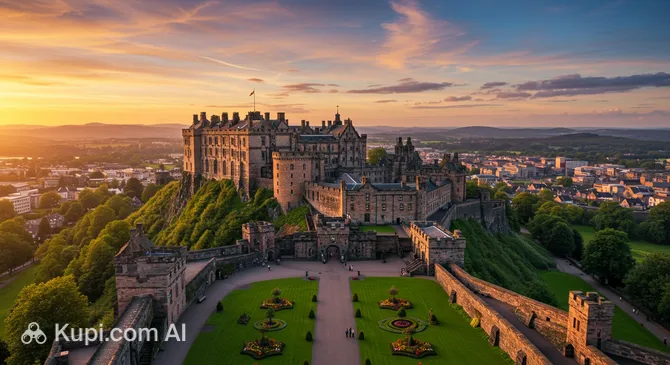
Stirling is the true heart of Scotland, a city where every stone breathes legends and modern rhythms are harmoniously interwoven with centuries-old traditions. It is nestled on the border between the picturesque plains of the Lowlands and the rugged peaks of the Highlands, making it a unique point of attraction for travelers.

Stirling. Illustration.
Source: Kupi.com AI

Geographically, the city is located in the center of the region, forming part of the United Kingdom. With a population of about 37,600 people, Stirling retains the charm of a small town where it is easy to feel at home, while also serving important administrative functions.

The unique atmosphere here is created thanks to the preserved medieval spirit. The event-filled history of Stirling literally comes to life on its narrow cobbled streets. The main landmark is the majestic Stirling Castle, which once served as a royal residence. Additionally, guests are drawn to the exquisite Victorian Stirling Arcade shopping gallery and proximity to natural wonders such as the Trossachs National Park and Loch Lomond.

This city is the perfect place to immerse yourself in a Scottish fairy tale, walk along ancient fortress walls, and breathe in the fresh air of green valleys. Stirling is definitely worth staying in to discover its secrets.

Weather Overview

The climate in Stirling can be described as temperate maritime, typical for much of Scotland. It is rarely extremely hot or too cold, but the weather is famous for its changeability. Expect moderately warm summers with periodic rainfall and cool, damp winters, so a waterproof jacket or umbrella will come in handy in any season.

Summer months are the most comfortable for walking: in July, the warmest time of year, the average maximum temperature reaches 17.6°C. In winter, the thermometer rarely drops far below freezing, with January minimums around 0.6°C. Precipitation is distributed fairly evenly throughout the year: even in the "driest" month, April, about 12 rainy days are recorded. To better prepare for your trip, check what weather in Stirling is characteristic of your chosen month.

Average monthly temperature

Average monthly precipitation

Interesting Facts

Beyond its main attractions, Stirling holds many fascinating secrets and historical details that confirm its unofficial title as the "Key to Scotland." For centuries, this city played a decisive role in the nation's fate, and many events that took place here changed the course of history forever.

Stirling Castle. Illustration.
Source: Kupi.com AI

Traveler photos:

  • There is an old saying: "He who holds Stirling holds Scotland." This is no exaggeration: the majestic Stirling Castle is situated on top of an extinct volcano, which made it practically impregnable and a strategically important point controlling the crossing over the River Forth.

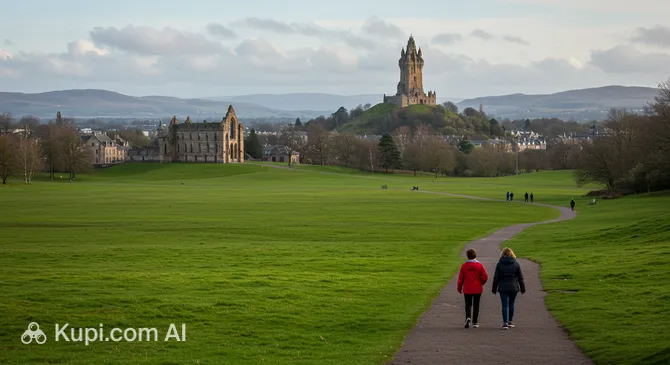
  • The city is inextricably linked with the name of the national hero William Wallace, whose image inspired the creators of the film "Braveheart." In honor of the legendary defender, the National Wallace Monument rises on a hill, visible from almost any point in the city and serving as a reminder of the struggle for independence.

  • It was in the vicinity of Stirling that one of the most significant battles in Scottish history took place, where King Robert the Bruce won a victory over English forces. Today, the Battle of Bannockburn Visitor Centre offers guests a unique interactive experience, allowing them to feel like a participant in a medieval battle.

  • Stirling was for a long time the de facto capital of the Kingdom of Scotland and is one of the oldest settlements in the country. Many monarchs were crowned here, including Mary, Queen of Scots, giving the city a special royal status that is palpable even centuries later.

How to Get There

Stirling occupies a strategically important position in the central part of Scotland, making it easily accessible for travelers. Thanks to the region's excellent transport infrastructure, you can choose the most convenient route, whether by plane or train. To find out all the details and plan the perfect trip, we recommend reading about all the ways to get to the city.

Since there is no airport in Stirling itself, most tourists arrive via the major air hubs of neighboring cities—Edinburgh and Glasgow. The closest and one of the most convenient options is Edinburgh Airport (EDI). It is located in the city of Edinburgh, about 40 km from Stirling. It is Scotland's largest airport with a huge passenger flow, receiving many international flights. A trip from here by taxi or rental car will take about 40–50 minutes. You can find more information by visiting the Edinburgh Airport page.

Another popular point of entry is Glasgow Airport (GLA), located in the city of Glasgow at a distance of about 41 km from the center of Stirling. This is also a major international transport hub, serving millions of passengers annually. Travel time by car from this airport to Stirling will be approximately 45–55 minutes. Read more about this hub via the link: Glasgow Airport.

For clarity, here is a summary of the main airports:

AirportPassenger trafficDistance
Edinburgh Airport14.4 mln40 km
Glasgow International Airport8.1 mln41 km
Dundee Airport41 12768 km
Glasgow Prestwick Airport535 10179 km
Machrihanish Airport6 712133 km

Rail travel is another great way to reach the region. Although Stirling has its own station, many travelers, especially those arriving from England, change at major hub stations nearby. One of the key hubs is Glasgow Central station, located in the city of Glasgow, just 35 km from Stirling. This is one of the busiest stations in the UK, from where trains to Stirling depart regularly; the journey takes less than an hour.

Also worth noting is Waverley Station in Edinburgh, located about 50 km from the destination. This is the main railway station of the Scottish capital with a huge passenger flow. From here, you can easily transfer to a direct train to Stirling, enjoying the picturesque views along the way. Travel time by train or car from Edinburgh is about 50–60 minutes.

Below is a table with data on the nearest major railway stations:

StationPassenger trafficDistance
Aberdeen Railway Station2.3 mln33 km
Glasgow Central Station25.0 mln35 km
Waverley Railway Station23.1 mln50 km
Dundee Railway Station1.7 mln68 km
Carlisle Central Station2.1 mln150 km

Main Attractions

Despite its compact size, Stirling offers travelers an incredible concentration of historical monuments and cultural sites. A walk through this city is like a journey through time, where every street and building tells its own unique story of kings, knights, and the struggle for independence.

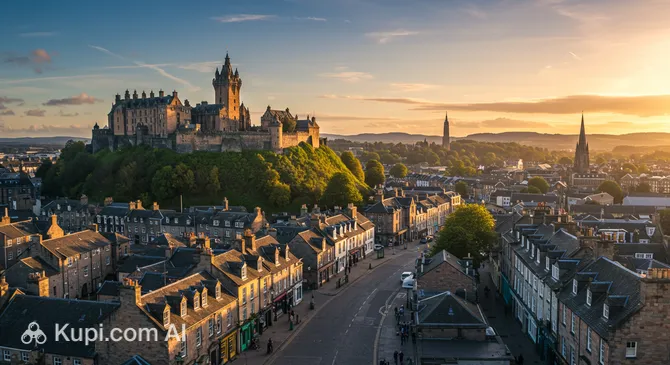
The city's main treasure and one of Scotland's most significant fortresses is the majestic Stirling Castle. Perched atop a steep volcanic crag, it dominates the surrounding landscape. Visitors can explore the magnificent Royal Palace—one of the best examples of Renaissance architecture in Britain—and look into the Great Hall and the Chapel Royal. The castle walls offer breathtaking panoramic views of the River Forth valley.

Stirling Castle. Illustration.
Source: Kupi.com AI

Traveler photos:

On the opposite side of the valley, on Abbey Craig hill, stands the National Wallace Monument. This impressive Victorian tower is dedicated to the national hero William Wallace. Inside the museum, you can see the legendary two-handed sword of the commander, and after climbing the 246 steps of the spiral staircase, you will be rewarded with one of the best views in Scotland, spanning the Highland mountains and the bends of the river.

The National Wallace Monument. Illustration.
Source: Kupi.com AI

Traveler photos:

For those who want to immerse themselves in the atmosphere of Victorian justice, the Stirling Old Town Jail is an interesting discovery. This is not just a museum, but an interactive attraction with live actors who tell the grim but fascinating history of the local penal system in an engaging way. The tours here are full of humor and historical details, making it popular with families with children.

Military history enthusiasts should visit the Battle of Bannockburn Visitor Centre. Located at the site of the famous 1314 battle, it uses advanced 3D technology to transport guests into the thick of medieval combat. It is a unique experience that allows you not just to learn facts, but to feel the strategy and tension of a historic moment.

If you prefer quiet walks in the fresh air, check out the Stirling Old Bridge. This stone crossing, built in the 15th century, was for a long time the only way across the River Forth and remembers many historical events. Today, it is a picturesque spot, perfect for memorable photos.

Local Cuisine

Stirling is a real find for foodies wishing to get acquainted with Scottish cuisine in all its diversity. The city's gastronomic scene successfully combines loyalty to traditions with modern culinary trends. On the menus of local establishments, you will certainly encounter legendary dishes such as haggis—a savory oatmeal sausage with offal—tender smoked salmon, and thick Cullen Skink soup made from smoked fish and potatoes. Traditional meat pies, which are prepared here with special skill, are excellent for a quick but filling snack.

The dining culture in the city is not limited to classic restaurants. Farmer's markets and street fairs are particularly popular, where you can try fresh cheeses, homemade pastries, and seasonal vegetables grown in the surrounding areas. If you want to enjoy a cozy atmosphere and quality food, it is worth stopping by Allan Park—this place is perfect for experiencing local hospitality.

Stirling Craft Beer Bar. Illustration.
Source: Kupi.com AI

Traveler photos:

No trip to Scotland is complete without tasting the local drinks. Stirling is famous for its pubs, where ale and beer are treated with great respect. Connoisseurs of the frothy drink should definitely visit the Stirling Craft Beer Bar, which offers a wide selection of local varieties. And, of course, one cannot forget the famous Scottish whisky—the "water of life," which is served here almost everywhere.

For those looking for variety and wanting to take a break from hearty Scottish cuisine, the city also has establishments with international menus. For example, the restaurant Rishis Indian Aroma offers the vibrant flavors of Indian dishes, which have long been an integral part of British gastronomic culture. Gastronomic festivals, often held in the city, also provide an excellent opportunity to chat with locals and learn the secrets of family recipes.

Travel Tips

Welcome to Stirling! To make your journey to this historical "Key to Scotland" as comfortable and carefree as possible, we have gathered a list of the most important practical recommendations to help you avoid minor inconveniences and focus on your experiences.

  1. Clothing and Essentials: The weather here is changeable, so the golden rule is layering. Even in summer, be sure to bring a waterproof windbreaker and an umbrella. Since Stirling is a hilly city and the roads to the castle are paved with cobblestones, you will need truly comfortable flat shoes. Don't forget an adapter for Type G sockets (British standard), as European plugs will not fit here.
  2. Transport: The historical city center is compact and is most pleasant to explore on foot. For trips to more distant locations (e.g., the Wallace Monument), it is convenient to use local buses; tickets can be bought from the driver (it is advisable to have change or a card for contactless payment). Taxis are easy to find at ranks by the station or called via popular apps. Renting a car in the city itself is not necessary; it is only useful for trips to national parks.
  3. Finance: The official currency is the Pound Sterling (£). Scotland issues its own banknotes, which have the same value as English ones but may cause questions when exchanged outside the country; for example, in the United Kingdom (specifically in England), they are sometimes accepted reluctantly. Cards are accepted almost everywhere, but it's worth having a little cash for small purchases at markets. A tip of 10–15% is welcome but often remains at your discretion.
  4. Health and Safety: Stirling is a very safe city, and walking here is calm even after dark, however, reasonable caution is always wise. Pharmacies (look for Pharmacy or Boots signs) operate on standard schedules; there are few 24-hour ones. The emergency services number is 999. Tap water here is of excellent quality and is safe to drink.
  5. Communication: Locals speak English, but the Scottish accent and dialect words may be unfamiliar—don't hesitate to ask for clarification. Free Wi-Fi is available in many cafes, museums, and at the station. For constant connectivity, it is convenient to buy a prepaid SIM card from local operators (O2, EE, Vodafone) at any supermarket or mobile shop.
  6. Local Etiquette: Scots are famous for their friendliness. It is customary to greet the driver when entering the bus and say "thank you" (Cheers or Thank you) when exiting. Queuing is an unwritten but strict law: never try to move ahead of others, whether at a bus stop or a bar counter.
  7. What to Avoid: A major tourist mistake is calling Scotland England; for locals, this can sound offensive as they are proud of their national identity. Also, don't try to run up the hill to the castle or monument—the climbs are steeper than they look; pace yourself.
  8. Extra Tip: Be sure to walk the Back Walk. This is one of the oldest urban pedestrian paths in Europe, laid out back in the 18th century. It circles the castle rock and city walls, offering stunning views and a chance to see the city from an unusual perspective completely for free.

Stirling is a city that is easy to love for its history and coziness. By following these simple tips, you can feel confident and enjoy every moment of your stay in the ancient capital, discovering its secrets and legends.

Entertainment & Nightlife

Stirling's nightlife may not compare in scale to neighboring Glasgow or Edinburgh, but it has its own unique charm. Thanks to the presence of the university, the city has a youthful and dynamic atmosphere that comes alive at sunset. You won't find massive nightclubs with lasers and techno here, but there is an abundance of traditional pubs, cozy bars with live music, and atmospheric venues where you can spend an evening over a glass of ale and heartfelt conversation.

The epicenter of evening entertainment is the area around Friars Street and Baker Street. Most popular venues are concentrated here. The crowd is very diverse: from students celebrating passed exams to local residents and tourists. The dress code in most places is casual—the style is appropriate almost everywhere. If you appreciate quality drinks, be sure to visit the Stirling Craft Beer Bar. This establishment is famous for its excellent selection of local brews and a relaxed atmosphere, perfect for starting the evening.

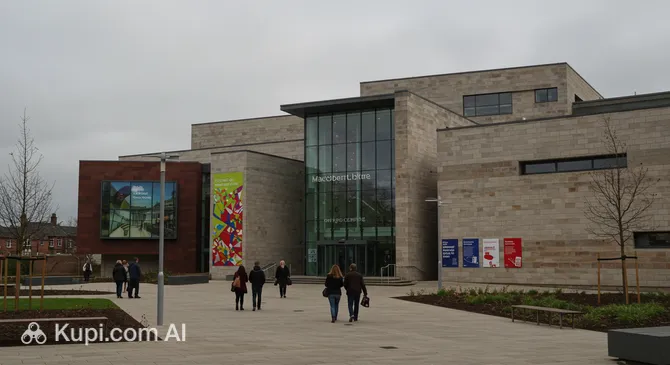
Macrobert Arts Centre. Illustration.
Source: Kupi.com AI

Traveler photos:

For those seeking cultural leisure in the evening, the main point of attraction is the Macrobert Arts Centre. Located on the university campus, this multi-functional complex combines a cinema, theater, and concert venue. Film screenings, theatrical productions, comedy shows, and exhibitions take place here regularly, making it the center of the city's creative life.

Regarding safety, Stirling is considered one of the calmest cities in the UK. Walking through the center at night generally does not cause concern, however, as elsewhere, it is worth sticking to well-lit streets. Public transport runs less frequently at night, so it is most convenient to take a taxi to return to your hotel. Cars can be found at ranks in the center or called via local apps; a trip around the city is usually inexpensive due to the small distances.

While the main emphasis is on the evening, daytime entertainment in Stirling also deserves attention. Shopping enthusiasts should visit the Thistles Shopping Centre, where popular brands are represented. And if you want to take a break from the city bustle, head to Kings Park—it is a magnificent place for quiet walks in the fresh air with a view of the castle, where historically the royal hunting grounds were located.

Parks & Museums

Stirling harmoniously combines rugged stone architecture with picturesque natural landscapes and rich museum collections. The city is surrounded by green hills and parks that once served as recreation spots for Scottish monarchs, and local galleries carefully preserve artifacts that tell of the complex fate of this region.

One of the main green gems of the city is Kings Park. Historically, this site was used as royal hunting grounds for Stirling Castle. Today, it is a vast space with well-kept paths, tennis courts, and a skate park, perfect for picnics and family holidays. Some of the most impressive views of the castle itself, towering on the crag, open from here, making the park a favorite spot for photographers.

King's Park. Illustration.
Source: Kupi.com AI

Traveler photos:

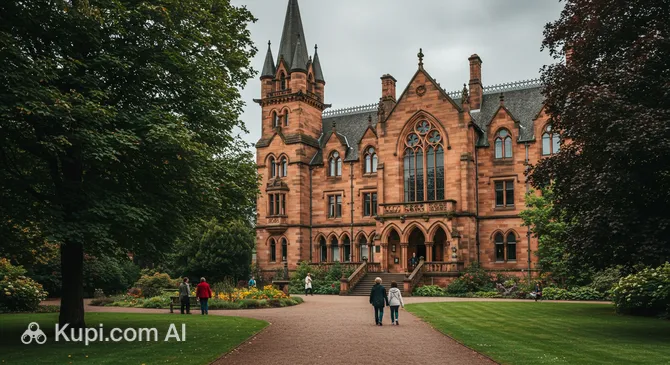
Another important natural zone is the campus of the University of Stirling, located around Airthrey Loch. This place is often called one of the most beautiful university campuses in the world. Here you can walk along the water, enjoy the silence of the forest, and see Airthrey Castle. Although it is not a city park in the classic sense, access here is open to everyone, and a walk here will provide true peace of mind.

The cultural heart of the city beats in the Stirling Smith Art Gallery and Museum. Founded in 1874, this museum offers a deep dive into the history of the city—from prehistoric times to the present. Its collection includes unique exhibits, such as the world's oldest football (found behind the beams in Queen Mary's bedroom at Stirling Castle) and canvases by Scottish artists. It is a cozy place with its own garden, where history becomes tangible.

The Stirling Smith Art Gallery & Museum. Illustration.
Source: Kupi.com AI

Traveler photos:

Those interested in military history and interactive displays should visit the Battle of Bannockburn Visitor Centre. Although it is more of a memorial complex than a classic museum, it provides a unique opportunity to study medieval battle tactics and the role of Robert the Bruce in the struggle for Scottish independence through modern multimedia installations.

Among the open-air architectural monuments, the Stirling Old Bridge holds a special place. Built in the 15th century, it was for a long time the most important crossing over the River Forth and the "gateway to the Highlands." Today, it is a pedestrian area where you can feel the spirit of antiquity. In the distance, on Abbey Craig hill, the National Wallace Monument stands like a guardian of the city, being a museum in itself dedicated to the life of the national hero.

Insider Tip: If you want to see the city from an unusual angle, climb Gowan Hill. Here you will find the "Beheading Stone," steeped in dark legends, and the view of the valley and the bends of the River Forth from here is simply fantastic, while there are usually far fewer tourists here than at the main attractions.

Getting Around

Stirling's transport system is compact and convenient, perfectly matching the size of this historic city. There is no subway, tram, or trolleybus system here; the main method of travel for locals and tourists is by bus. Given the hilly terrain, public transport is a real lifesaver for those who want to visit attractions located on the heights without exhausting themselves with long uphill walks.

The bus network covers the entire city and its surroundings, linking the center with key points such as the University of Stirling and the Wallace Monument. The main operators are First Bus and McGill’s. For tourists, routes running between the railway station, the castle, and the university campus are particularly useful. During the summer season, special open-top tour buses often run on a circular route between the main attractions.

The fare payment system is modern and simple. The most convenient way is contactless payment with a bank card or smartphone (Apple Pay, Google Pay) directly to the driver upon boarding. You can also pay in cash, but in this case, it is recommended to have the exact amount, as drivers may not always be able to give change. The cost of a single trip varies depending on the distance but is usually around £2–£3. If you plan to move around a lot during the day, it is more profitable to purchase a Day Ticket, which entitles you to unlimited travel within the operator's zone.

For route planning and ticket purchasing, it is convenient to use the carriers' mobile apps (e.g., the First Bus app). You can track bus movements in real-time, which is especially relevant in the evening when intervals increase. The city also operates a Park and Ride system: you can leave your car in a free parking lot on the outskirts (e.g., Castleview) and reach the center by bus for a nominal fee, avoiding the problems of finding a parking space on narrow old streets.

Stirling railway station, although an important transport hub, is rarely used within the city itself since distances are small. However, if you want to quickly reach the nearby picturesque town of Bridge of Allan, a train trip takes only a few minutes and is a great alternative to the bus or taxi.

As an alternative to public transport, taxi services are well-developed in Stirling. Taxi ranks are located at the railway station and on central streets. Cars operate on a meter, and drivers generally accept cards, but it's better to clarify this before boarding. Popular aggregators like Uber may not operate as consistently here as in megacities, so it is more reliable to rely on local dispatch services.

For outdoor enthusiasts, the Nextbike city bike rental system is available. Rental stations are scattered throughout the city, including the station and the university. This is a great way to see the surroundings if you are ready for some physical effort, as Stirling is a city on hills. Nevertheless, the historical center is best explored on foot, armed with comfortable shoes, as many interesting corners are accessible only to pedestrians.

Accommodation

Stirling offers travelers a wide range of accommodation options that will satisfy both budget tourists and those looking for comfort and historical atmosphere. Since the city is quite compact, most properties are within walking distance of the main attractions, but choosing the right area will help make your trip even more pleasant. You can find everything here: from cozy family-run guest houses (B&Bs) and inexpensive hostels to boutique hotels located in ancient mansions.

If proximity to shops, restaurants, and transport hubs is important to you, it is best to stay in the city center. This is the ideal choice for those traveling without a car. A landmark can be the Thistles Shopping Centre: hotels in this area allow you to be in the thick of things and have quick access to the railway station. Life here is bustling until late in the evening, so you won't be bored.

For those who prefer silence and green landscapes, it is worth looking at the area adjacent to Kings Park. This is a prestigious and quiet part of the city, built up with magnificent Victorian villas, many of which have been converted into charming guest houses. Staying here will allow you to enjoy morning walks in the park and views of the castle while being only 10–15 minutes walk from the center.

A special category of accommodation in Stirling is the traditional Scottish Bed and Breakfast. This is a great way to immerse yourself in the local culture: hosts often personally prepare breakfast and share tips about the city's hidden gems. During the summer period (from June to August), there is also the possibility of budget accommodation in the student campuses of the University of Stirling, which is especially popular among young people and large groups.

Price Range and Booking Tips:

Accommodation prices vary depending on the season. Budget overnight stays in a hostel will cost around £25–£40 per night, a room in a good B&B or mid-range hotel will cost from £80 to £120, and luxury options start from £150. We strongly recommend booking accommodation in advance, especially if your trip falls in the summer months or during local festivals, as the best options are snapped up months in advance. Booking via major online platforms is convenient, but direct contact with small guest houses sometimes allows you to get a better price or an upgraded breakfast.

Nearby Cities

For those who want to explore the surrounding area, Stirling serves as an excellent starting point for day trips to several interesting nearby locations:

Just 16 km from the city is Falkirk, which has become a real magnet for tourists thanks to its engineering and artistic attractions. The main points of interest here are the "Falkirk Wheel," a unique rotating boat lift connecting canals, and "The Kelpies"—grandiose 30-meter sculptures of horse heads rising above the landscape.

History buffs should head to Dunfermline, located about 30 km away. This is the ancient capital of Scotland, home to the famous Dunfermline Abbey—the resting place of many Scottish kings, including the legendary Robert the Bruce. The city is also known as the birthplace of philanthropist Andrew Carnegie, whose cottage museum is open to visitors.

CityPopulationDistance
Dunblane9 4108 km
Alloa14 4209 km
Larbert11 05012 km
Falkirk35 85016 km
Kilsyth10 08017 km

These nearby destinations allow you to get a sense of the diverse culture and landscapes of the region, from industrial heritage to royal tombs.

Shopping & Souvenirs

Shopping in Stirling is a pleasant and untiring activity that perfectly complements walks through historical sites. The city is compact enough that most shops are within walking distance of each other. You won't find endless metropolitan labyrinths here, but you can enjoy a cozy atmosphere where modern brands sit alongside traditional Scottish shops and family boutiques.

The heart of the city's commercial life is the pedestrian streets in the center, particularly Port Street and King Street. This is where life bustles: street musicians set the mood, and shop windows beckon with a variety of goods. Be sure to stop by the historic Stirling Arcade. This magnificent Victorian-era building is an attraction in its own right. Under its elegant glass roof are hidden small shops selling gifts, clothing, and interior items run by local entrepreneurs.

For those who prefer a more familiar shopping format with a large selection of brands under one roof, the main point of attraction is the Thistles Shopping Centre. It is located in the very heart of the city and houses over 80 shops, including popular British and international clothing, cosmetics, and electronics chains. It is the perfect place to update your wardrobe or hide from the changeable Scottish weather.

If you are interested in larger purchases or household goods, it is worth driving a bit further from the center to Springkerse Retail Park. This is a vast retail area featuring large supermarkets, appliance stores, and sporting goods. It is convenient to get here by car or bus if you need to buy something bulky or visit specialized stores.

Local markets deserve special attention. Stirling Farmers' Market, which usually takes place on Port Street on the second Saturday of each month, is a true festival of taste. Here you can buy the freshest local products: from Scottish cheeses and meat delicacies to homemade jam and pastries. This is a great chance to taste Scotland and chat with the producers directly.

As for souvenirs, traditional items brought from Stirling include sheep's wool and cashmere products—scarves, blankets, and sweaters here are of excellent quality. Of course, whisky is popular: the city has specialized shops with a huge selection of varieties, including rare and collectible bottles. Also, look out for items with tartan patterns, shortbread in beautiful tins, and jewelry made from heather.

Shops in Stirling usually operate from 9:00 to 17:30 or 18:00 from Monday to Saturday. On Sundays, many outlets open later, around 11:00, and close earlier, around 16:00 or 17:00. Bank cards (Visa, Mastercard) are accepted almost everywhere, and contactless payments via smartphone are widespread even in small kiosks.

It is important to remember that since 2021, Tax Free rules in the UK have changed. Tourists can no longer claim back VAT for goods bought in shops and taken out in personal luggage. This option is now practically unavailable for retail purchases, so the price shown on the tag should be considered final.
Reached the end of the page?

That means the route is fully explored