Support

Brill Windmill

About

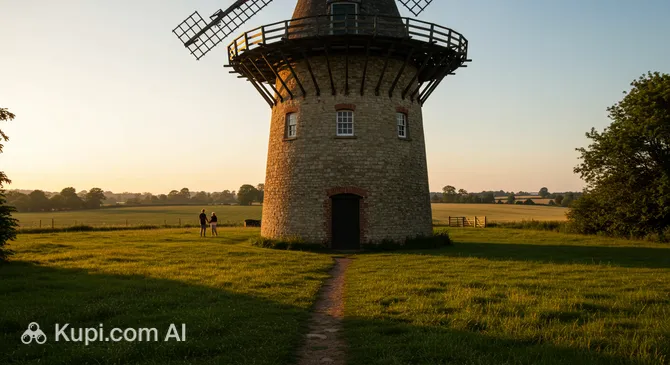
If you are looking for the embodiment of a classic English idyll, then Brill Windmill is a must-see on your itinerary. Perched on a hilltop in the village of the same name in Buckinghamshire, very close to the city of Oxford, it is considered one of the oldest and most significant post mills in the entire United Kingdom.
\n
Brill Windmill
Brill Windmill. Иллюстрация. Источник: Kupi.com AI
\n

This remarkable piece of late 17th-century engineering is a rare type of post mill. Its main feature is that the entire wooden body of the building can rotate around a massive central post, ensuring the sails are always facing the wind. The mill holds Grade II* status, which officially confirms its exceptional historical and architectural value.

\n

Today, the mill is a major regional landmark, attracting travelers not only for its ancient timber construction but also for its stunning panoramic views. From its elevation of 180 meters, it offers breathtaking vistas of the countryside that have inspired photographers and artists for centuries.

Contacts

For planning your visit to this historic site, you may find the following contact information useful. The monument is managed and preserved by the Brill Parish Council in collaboration with the volunteer-led Brill Windmill Society.

How to contactContact
AddressSouth Hls, Brill, Aylesbury HP18 9TQ, Великобритания
Websitewww.brillparishcouncil.co.uk

What to Do

The main reason tourists visit here is the chance to experience a living history of engineering. During tours, which are usually held on weekends, you can step inside and examine the ancient mechanisms in detail: massive wooden beams, huge millstones, and the gears that once turned grain into flour. Volunteers are happy to share insights into the intricacies of a miller's work and the history of this unique site's restoration.

Be sure to set aside time for a walk across the adjacent Brill Common. This spot is perfect for an outdoor picnic or quiet contemplation of nature. The hilltop offers the best views for photo shoots, especially during the "golden hour" before sunset, when the sun's rays beautifully illuminate the windmill's sails. While exploring the surroundings, you can find traces of another mill, Parson’s Mill, which was destroyed by a lightning strike over a century ago.

After visiting the landmark, it is worth heading down into Brill village itself. Stroll through its quiet streets, admire the historic houses, and stop by a local pub to experience true English provincial hospitality. This location is perfect for those wanting to escape the noise of big cities and spend time in harmony with history and the landscape.

Getting There

The easiest way to reach this picturesque spot is by car. The drive from the center of Oxford takes about 25–30 minutes: you should take the B4009 via the town of Thame. Free parking spaces are available near the windmill and within the village.

For those who prefer public transport, buses run from Oxford or Aylesbury (e.g., routes 55 or X20 operated by Arriva and Redline). Get off at the stop in the center of Brill village, followed by a pleasant 10–15 minute walk uphill to the attraction.

If you value time and comfort, you can take a taxi directly from central Oxford or the nearest railway station. A one-way trip is reasonably priced and allows you to enjoy the views of the English countryside without being tied to a bus schedule.

Outdoor enthusiasts often choose cycling or hiking routes passing through Bernwood Forest. The windmill serves as an excellent landmark and the final destination for hikes starting from the nearby villages of Oakley or Boarstall.

Ближайший город: Oxford

History & Facts

The history of using wind energy on the hills of Brill dates back to the Middle Ages — the first mentions of mills on these lands appear in documents from 1086. However, the current Brill Windmill structure is much "younger": dendrochronological analysis of the timber has shown that the main beams were prepared in 1685–1686. This makes it one of the oldest surviving structures of its type.

For centuries, the mill faithfully served local residents by grinding grain into flour. It was owned by prominent local dynasties, such as the Pointer and Nixey families, who were not only millers but also hereditary bakers. Work at the mill continued until 1924, when its industrial operation finally ceased.

Interestingly, in the 19th century, a brick "roundhouse" was built around the open base of the mill to protect the lower part of the structure and serve as a warehouse. In the mid-20th century, the mill was in a state of disrepair, but thanks to the efforts of Sir Henry Aubrey-Fletcher and the subsequent transfer of the site to the County Council, it was saved. In 1967, an internal steel frame was installed, rendering the structure static but ensuring its preservation for years to come.

The last major restoration was completed in 2009. Thanks to an English Heritage grant of £280,000, craftsmen restored rotting wooden elements and returned the mill to its historical appearance. Today, it is a Grade II* listed building — a site of special architectural and historical significance.

Time Needed

To leisurely explore the windmill itself, study its internal mechanisms, and take memorable photos against the backdrop of its picturesque sails, you will need about 1–1.5 hours. This is enough time to soak in the ancient atmosphere and enjoy the views from the hill.

If you plan to complement your visit with a walk across Brill Common, search for the remains of the destroyed Parson’s Mill, or have lunch in one of the cozy village pubs, we recommend allowing 2 to 3 hours for the trip. This is an ideal format for a relaxing break in nature away from the city bustle.

Working Hours

Brill Windmill is open to the public primarily during the warmer season — from March to September. During this period, you can go inside to see the mechanisms on Saturdays and Sundays from 14:00 to 17:00. On weekdays, the mill is usually closed for internal viewing, but you can always admire it from the outside and walk around the hills at any time.

Since the mill's operation is supported by volunteers, opening hours may change depending on the weather or special events. Before your trip, we strongly recommend checking the official website of the Brill Parish Council for the current schedule.

DayWorking hours
понедельникЗакрыто
вторникЗакрыто
средаЗакрыто
четвергЗакрыто
пятницаЗакрыто
суббота14:00–17:00
воскресенье14:00–17:00

Nearby

A visit to the village of Brill can easily be combined with exploring other interesting places around Oxford. The windmill's location allows you to see both quiet rural monuments and the grand architecture of the university city in a single day.

NameDistance
Bicester Village10.4 km
The Oxfordshire Golf Hotel & Spa10.8 km
Spice Lounge15.2 km
Magdalen College15.3 km
Oxford University Museum of Natural History15.4 km
Pitt Rivers Museum15.4 km
Oxford Botanic Garden15.4 km

Reached the end of the page?

That means the route is fully explored