Support

Magdalen College

About

Among the architectural treasures for which Oxford is famous, Magdalen College holds a special place. It is one of the oldest, largest, and certainly most beautiful educational institutions in the city, rightfully considered an important part of the cultural heritage of the United Kingdom. The college combines a functioning academic center with a majestic historical monument.
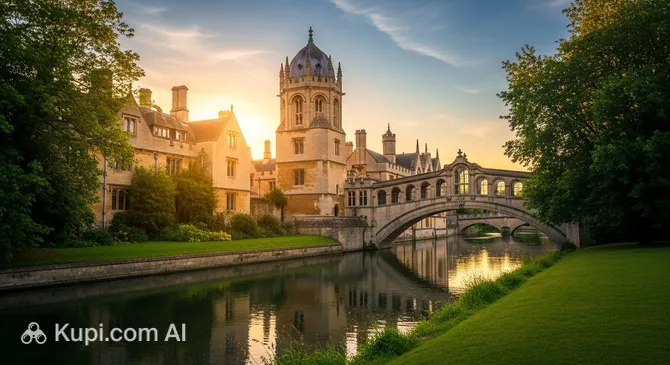
Magdalen College
Magdalen College. Иллюстрация. Источник: Kupi.com AI

The main symbol and hallmark of this place is the Magdalen Tower, soaring 144 feet into the sky. Its slender silhouette has defined the city's skyline for several centuries. The college's architectural ensemble includes not only academic and residential buildings but also a magnificent chapel and traditional university quadrangles (inner courtyards), where an atmosphere of peace and focus prevails.

Today, the college continues its active life: scientific research is conducted and students are taught here, yet the doors of this historical complex are also open to tourists. Visitors are drawn by the opportunity to touch living history and see for themselves a place where the traditions of medieval education blend harmoniously with modernity.

Contacts

For those who plan their visit in advance and want to clarify details regarding tours or special events, the college provides several ways to get in touch. You can find up-to-date information on the official website or contact the administration directly by phone.

Below are the main contact details for the institution:

How to contactContact
AddressОксфорд OX1 4AU, Великобритания
Phone+44 1865 276000
Websitewww.magd.ox.ac.uk

What to Do

Start your acquaintance with the college by visiting its famous tower, built at the turn of the 15th and 16th centuries. This is a masterpiece of Late Gothic architecture, often called the most graceful building in the city. Be sure to pay attention to the facade details—they preserve the craftsmanship of past architects and are a favorite subject for photographers.

Inside the complex, the historic chapel deserves special attention. Its interior is decorated with magnificent 17th-century stained glass windows by Richard Greenbury. While strolling along the Great Quad, take a closer look at the stone sculptures: these allegorical figures, installed around 1509, hide many mysteries and symbols characteristic of the Renaissance era.

Film enthusiasts will enjoy simply wandering around the grounds, recognizing the outlines of buildings from famous movies and television series. The authentic atmosphere of the campus, with its shady alleys and presidential apartments, allows you to feel for a moment like part of England's elite academic world.

Getting There

Finding this landmark is easy, as it is located in the heart of the historic center at the junction of High Street and Longwall Street. Your main visual landmark will be the famous tower, which is visible from almost anywhere in the old city.

Most tourists prefer to get here on foot, walking past other university buildings. If you are in a remote area, you can use city buses that stop in the immediate vicinity of the college entrance. For those who value comfort, taxis are always available to quickly bring you from the station or any other part of the city.

It should be noted that car traffic in the center of Oxford is strictly limited, and parking spaces are extremely scarce. Therefore, experienced travelers are advised to leave their private vehicles at one of the park-and-ride lots and use public transport to avoid the hassle of finding a parking spot.

Ближайший город: Oxford

History & Facts

Magdalen College traces its history back to 1458, when it was founded by William Waynflete, Bishop of Winchester. Originally, this place was intended as a stronghold for the study of philosophy and theology, and it very soon became one of the most influential educational institutions of which the United Kingdom is proud.

During the English Civil War, the college showed unwavering loyalty to the King, which subsequently led to serious changes in the faculty. Another significant confrontation occurred in 1687, when the academic community entered into open conflict with King James II, defending their right to choose their own leadership and preventing the appointment of a candidate imposed by the monarch.

After some stagnation in the 18th century, the college experienced a true flowering during the Victorian era, regaining its status as a prestigious scientific center. Over the centuries of its existence, it has nurtured a whole galaxy of great people: the outstanding writer Oscar Wilde, Lord Chancellor Thomas Wolsey, and the future King Edward VIII all studied here. These walls remember great discoveries and heated discussions that shaped the face of modern science and culture.

Time Needed

To leisurely see all the architectural beauties, visit the chapel, and enjoy the silence of the inner courtyards, the average visitor will need about 1.5–2 hours. This time is quite sufficient to soak in the spirit of the ancient university.

If you plan to study the allegorical sculptures in detail, examine the stained glass, or simply want to walk around the grounds longer, it's worth setting aside half a day. In Oxford, there is no need to rush, as every detail here deserves a careful look.

Working Hours

Access to the grounds for tourists is governed by the academic calendar, so opening hours may vary. Usually, the college is open to visitors during the daytime, but during exam periods or important student ceremonies, entry may be restricted.

To ensure your visit goes as planned, we strongly recommend checking the information on the college's official website before your trip. This will help avoid disappointment if access for outsiders is temporarily closed on the day of your visit.

Nearby

Oxford is literally steeped in history, and the concentration of architectural monuments here is incredibly high. After visiting the college, be sure to find time for a walk through the neighboring streets, where a masterpiece of medieval architecture or a world-famous museum hides around almost every corner.

Exploring the surroundings will allow you to feel the city's academic atmosphere more deeply and see the places that have inspired great writers and scientists for centuries. Here is a list of nearby points of interest that can be reached in just a few minutes:

NameDistance
Oxford Botanic Garden0.2 km
Bodleian Library0.5 km
Radcliffe Camera0.5 km
Turf Tavern0.5 km
University Church of St Mary the Virgin0.5 km
Sheldonian Theatre0.6 km
The Covered Market0.7 km

Reached the end of the page?

That means the route is fully explored