Support

Sumburgh Airport

About the Airport

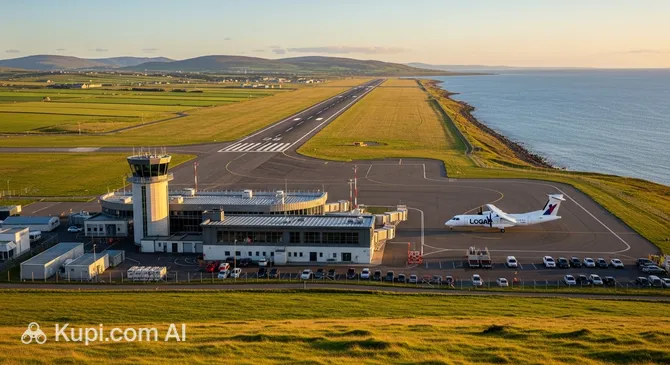
Sumburgh Airport. Source: Kupi.com Binoculars

Sumburgh Airport is not merely the air gateway to the Shetland Islands, but a true landmark located on the southernmost tip of Mainland. It serves as a vital artery connecting this remote archipelago with mainland Scotland and the wider world. Established back in 1936, the airport has undergone a long journey of development, transforming into a modern transport hub that plays a key role for both tourism and the support of the offshore oil and gas industry. Its location is truly unique: the runways are surrounded by the waters of the North Sea, offering passengers breathtaking views during takeoff and landing.

IATA Code LSI
ICAO Code EGPB
City Shetland Islands
Distance to centre approx. 40 km to the town of Lerwick
Status International
Annual Passengers ~303,700 (2022/23)
Popular Airlines Loganair, British Airways, KLM
Schedule "Sumburgh Airport" online flight board

One of the most amazing features of Sumburgh Airport is its runway, which is crossed by the A970 road. Traffic here is regulated by barriers, similar to a railway crossing, which are lowered during aircraft takeoffs and landings — a unique spectacle for travellers. The airport is also important for the energy sector due to the presence of a dedicated helicopter strip, 550 metres long, serving offshore platforms. For tourists, Sumburgh is a convenient starting point for exploring the incredible nature of the islands, including the nearby Sumburgh Head nature reserve, famous for its colony of charming puffins.

Contact Information

  • Official Website: www.hial.co.uk/sumburgh-airport
  • Help Desk Phone: +44 (0)1950 460654
  • Airport Address: Sumburgh, Shetland, ZE3 9JP, United Kingdom
  • Email: For general enquiries, it is recommended to use the address of the management company HIAL: info@hial.co.uk
  • Social Media: You can follow airport news on the official pages of the Highlands and Islands Airports management company on Facebook and X (formerly Twitter).
  • Lost Luggage Information: Issues regarding lost or damaged luggage are handled directly by the airlines. Please contact your carrier's support service.
  • Passenger Support Contacts: For consultations and assistance, passengers can use the airport help desk phone number.

Getting to the Airport

Sumburgh Airport (LSI) is the main air gateway to the Shetland Islands, located on the southern tip of Mainland, approximately 40 kilometres from Lerwick, the administrative centre of the archipelago. You can get from the town to the airport and back in several ways, each having its own advantages depending on your budget, time, and plans for travelling around this picturesque region of the United Kingdom.

The most economical way to get to the airport is by using public transport. A regular bus route connects the ferry terminal in Lerwick with Sumburgh Airport. The journey takes approximately 40-50 minutes and allows you to enjoy views of the southern part of the island. The ticket price is significantly lower than a taxi, making this option ideal for budget travellers. Important: we recommend checking the schedule in advance, as the frequency of trips may change, especially on weekends and public holidays.

For greater comfort and speed, you can choose a taxi or pre-booked transfer. This is the fastest way to reach the airport; the trip will take about 30-40 minutes. Taxis can be found at designated stands in Lerwick or ordered by phone. This option is particularly convenient if you are travelling with family, a large amount of luggage, or simply value your time. If you plan to actively explore the islands, the best solution would be car rental. Many rental companies have representatives directly at the airport, allowing you to pick up or return the car immediately before departure. This gives maximum freedom of movement throughout the archipelago.

For those arriving at the airport in their own or a rented vehicle, convenient parking is provided on the territory of Sumburgh Airport. Both short-term and long-term parking options are available. This is a convenient option if you are leaving your car for the duration of your absence or meeting arrivals. It is best to check current information on rates and availability on the official airport website.

To summarise: the bus is your choice if you are travelling light and want to save money. A taxi ensures maximum comfort and speed. Car rental is ideal for those who want complete independence in exploring the Shetland Islands. Whichever method you choose, always allow extra time for the journey, taking into account the changeable Shetland weather, to reach your flight without haste.

Terminals and Map

Sumburgh Airport (LSI) is a compact and modern regional airport, the structure of which is designed for maximum passenger convenience. You will not have to worry about long walks or complex navigation, making the start and end of your journey to the Shetland Islands particularly pleasant.

Terminal Structure and Purpose

Sumburgh Airport operates one passenger terminal, which serves all flights: both scheduled domestic flights and helicopter transport, which plays an important role in connecting with oil platforms in the North Sea. Thanks to the single building, all infrastructure is within walking distance, and there is no need to transfer between different terminals.

Layout and Navigation

The terminal is arranged very logically. Upon entering, you immediately find yourself in the general area where check-in counters and airline representatives are located. After completing check-in, passengers proceed to the security checkpoint, beyond which lies a comfortable departure lounge. The arrivals area is located in another part of the building and includes a baggage claim belt and an exit to car rental counters and taxis. Navigation is intuitive thanks to clear signage in English.

Departure and Arrival Zones and Procedure Times

Check-in and security screening procedures at Sumburgh Airport are significantly faster than at major airports. Typically, all formalities take no more than 15–20 minutes. It is recommended to arrive at the airport 60–90 minutes before the departure of a domestic flight to check in luggage and pass through security without rushing.

  • The Departure Zone after security offers passengers comfortable seating areas, a café, and a shop where you can buy souvenirs and essential items.
  • The Arrival Zone is maximally functional: immediately after collecting your luggage, you find yourself in the main hall, where you can rent a car or order a taxi for further travel around the islands.

The main recommendation for navigation is simply to follow the signs. Due to the small size of the terminal, it is practically impossible to get lost here, and the staff are always ready to help and answer any questions.

Airport History

The history of Sumburgh Airport is a fascinating chronicle of the transformation of a modest airfield on the edge of the United Kingdom into a vital transport hub for the entire archipelago. The official founding date is considered to be 1936, when aviation pioneer Captain E. E. Fresson of Highland Airways opened the first grass landing strip here. His goal was to establish regular air communication between the remote Shetland Islands and the rest of Scotland.

With the outbreak of the Second World War, the airport acquired immense strategic importance. It was requisitioned by the Royal Air Force and became known as RAF Sumburgh base. During this period, the first hard-surface runways were built, and aircraft took off from the airfield to patrol the North Atlantic, escort Arctic convoys, and conduct anti-submarine warfare. After the war, the airport returned to civilian use, becoming the main air gateway to the islands.

A revolutionary stage in the airport's development began in the 1970s with the discovery of large oil and gas fields in the North Sea. Sumburgh became a key base for helicopters serving offshore platforms. This "oil boom" triggered massive expansion: the main runway was significantly lengthened, and in 1979 a new, more spacious terminal opened, capable of handling the sharply increased flow of both shift workers and regular passengers.

In subsequent decades, the airport was modernised repeatedly. In the mid-1990s, a significant reconstruction of the terminal was carried out. Another major modernisation project was completed in 2006: the runway was again lengthened and strengthened to accommodate larger modern aircraft, and an advanced Instrument Landing System (ILS) was installed, which significantly increased the reliability and safety of flights in the famously complex weather conditions of the Shetland Islands.

Sumburgh Airport is known for several unique features. The most interesting fact is that its main runway crosses the main A970 road. Before every aircraft takeoff and landing, traffic on the road is blocked by barriers, creating a spectacle similar to a railway crossing. Additionally, due to severe winds, the airport is considered one of the most challenging for landing in Europe, and pilots undergo special training to fly here. Furthermore, the picturesque surroundings of the airport have repeatedly become a filming location for the popular British detective series "Shetland".

Services and Amenities

Sumburgh Airport, despite its compact size, offers passengers all necessary services for a comfortable wait for their flight. The terminal features a café where you can have a snack, drink coffee or tea, as well as a small shop selling souvenirs, newspapers, and essential goods. It is an excellent place to pass the time before departure.

For the convenience of travellers, free Wi-Fi is provided throughout the airport, allowing you to stay connected or work. There are also charging stations for electronic devices in the waiting lounges. Although there are no full-service bank branches or currency exchange points at the airport, ATMs are installed where you can withdraw cash.

The airport pays great attention to passengers with special needs. For travellers with children, mother and child rooms with changing tables are provided. Passengers with reduced mobility can request special assistance in advance, which includes escort through the terminal and assistance with boarding. In case of necessity, passengers can contact airport staff for first aid.

It is worth noting that Sumburgh Airport lacks specialised VIP lounges and business lounges, as well as conference halls. There are no hotels directly within the terminal building, however, several accommodation options can be found in nearby settlements, including Lerwick. Business services are typically provided in major hotels in the region.

Dining

Sumburgh Airport (LSI) is a compact regional airport, so the choice of catering establishments is appropriate for its size. Nevertheless, passengers can find several convenient options to have a snack before departure or while waiting.

The main place for dining at the airport is the café, located in the main terminal building in the public area (landside), that is, before passing security control. This makes it convenient for both departing passengers and those meeting them. Here you can order hot and cold drinks, fresh pastries, sandwiches, soups, and several hot meal options. The café's opening hours are usually synchronised with the flight schedule, opening in the morning and closing after the departure of the last aircraft.

What is worth trying? Although the menu mainly consists of classic British café dishes, pay attention to offers using local produce. Sometimes you can find dishes made from Shetland lamb or fresh fish, for example, traditional "fish and chips". This is a great opportunity to get acquainted with local gastronomy at the last moment.

For passengers with special dietary requirements, the choice may be limited. Vegetarian options, such as vegetable soup or cheese sandwiches, are usually available. The availability of vegan or gluten-free dishes is not guaranteed, so if you have strict dietary restrictions, it is recommended to bring food with you. After passing security control (airside), in the departure lounge, the choice is typically even more modest and may be limited to vending machines with drinks and snacks.

Recommendations:

  • For a quick snack, coffee with a scone (a traditional British bun) or a ready-made sandwich is ideal.
  • For a full lunch, it is better to choose the hot soup of the day or a classic English breakfast if you are flying in the morning.

Prices in the café are moderate, typical for small airports in the United Kingdom.

Travel Tips

Travelling through Sumburgh Airport — the gateway to the picturesque Shetland Islands — can be simple and convenient if you know a few nuances. This is a small regional airport, so things happen a little differently here than in large international hubs. Here are a few tips to help you save time, stress, and money.

Arrival at the Airport and Check-in. For domestic flights within the United Kingdom, it is recommended to arrive at the airport 1.5–2 hours before departure. If you have an international flight (for example, a seasonal one to Norway), it is better to arrive 2.5 hours in advance. To save time, complete online check-in and print your boarding pass beforehand. If you are travelling with hand luggage only, this will allow you to proceed directly to security.

Security Control and Hand Luggage. Screening at Sumburgh Airport usually goes faster than at large airports, but the rules are standard. All liquids in hand luggage must be in containers of no more than 100 ml and packed in a transparent bag. Take laptops and other large electronics out of your bags in advance. Remember that the weather in Shetland is unpredictable, so even in summer, it is worth packing a warm sweater or windbreaker in your hand luggage.

Choosing a Seat on the Plane. Flights to and from the Shetland Islands are famous for their stunning views. If you want to enjoy panoramas of the coast, islands, and sea, choose a window seat. For greater convenience and the ability to stand up freely during the flight, an aisle seat is suitable.

Customs Control and Transfers. Since most flights arrive from other parts of the UK, there is no customs control for them. Passengers arriving on international flights (for example, from Bergen) go through standard border control procedures. If you have a connecting flight in Aberdeen, Glasgow, or Edinburgh, check at registration whether you will need to collect your luggage at the transit airport.

Savings and Flight Delays. To save money, book flight tickets and car rental in advance, especially during the tourist season. Prices for food and drinks at the airport can be high, so bring a light snack with you. The weather on the islands can cause flight delays or cancellations. Always check the status of your flight online before leaving for the airport. In case of a long delay, ask an airline representative about your rights — you may be provided with vouchers for meals or hotel accommodation.

Reached the end of the page?

That means the route is fully explored