Support

Stronsay Airport

About the Airport

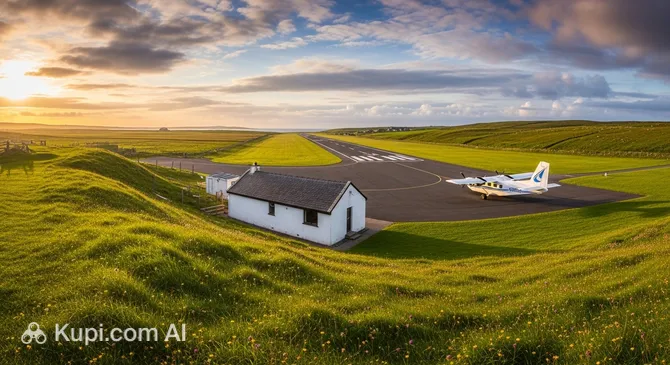
Stronsay Airport. Source: Kupi.com Binoculars

Stronsay Airport is not merely a transport hub, but a true gateway to the secluded island romance of the Orkney Islands. Landing here feels like an exciting excursion: the aircraft descends over emerald fields and a rugged coastline, revealing postcard-worthy views to passengers. This tiny airport is devoid of the hustle and bustle of giant terminals, offering travellers a homely atmosphere where pilots often know passengers by face, and check-in takes just a few minutes.

IATA Code SOY
ICAO Code EGER
City Stronsay (Whitehall Village)
Distance to Centre ~3 km
Status Domestic (Local)
Passengers per Year About 3,000 (2023-2024)
Schedule On request from the airline (Loganair)

Features and Advantages of the Airport:

The main characteristic of the Stronsay air harbour is its intimacy and simplicity. There are no long queues or complex security checks, allowing you to arrive for your flight shortly before departure, enjoying every minute of your rest on the island. Flights are operated on small Britten-Norman Islander aircraft, which fly at low altitudes, turning a routine flight to Kirkwall into an unforgettable panoramic journey over the sea and neighbouring islands.

The airport plays a vital role for the local community, providing a quick link to the "mainland" (Mainland Orkney) in just a few minutes of flight. For tourists, it is an ideal starting point for exploring the wildlife of Stronsay, its famous beaches, and the history of the "herring boom" in the village of Whitehall.

Contact Information

  • Official Airport Website: www.orkney.gov.uk (Transport section — the airfield is managed by the Orkney Islands Council).
  • Helpdesk Phone: +44 1856 873535 (Orkney Islands Council Department of Transport).
  • Airport Address: Stronsay Airport, Stronsay, Orkney, KW17 2AT, United Kingdom.
  • Email: transport@orkney.gov.uk (general enquiries), airfields@orkney.gov.uk (operational enquiries).
  • Social Media: Official pages of Orkney Islands Council (infrastructure information) and Loganair (flight status).
  • Lost Luggage Information: Flights are serviced by Loganair, support service phone: +44 344 800 2855.
  • Passenger Support Contacts: help@loganair.co.uk (booking and schedule).

How to Get to the Airport

Logistics on the island of Stronsay are characterised by simplicity and a lack of urban bustle. Since the island is small, you can reach the airfield from any point quite quickly. There are no traffic jams typical of metropolises, nor are there railways or a metro system; transport connections are built on personal arrangements and the schedule of the sole bus service.

Public Transport

There is no classic public transport in the form of regular route buses running every 15 minutes. However, the Stronsay Bus Service operates on the island. This is an on-demand transport service that is often coordinated with ferry schedules and flights.

  • Features: The bus must be booked in advance (preferably the day before your trip). Drivers are usually local residents who know the flight schedule perfectly.
  • Cost: The trip will cost a symbolic amount, usually around 2–4 GBP per person.

Taxi and Transfer

A taxi is the most reliable way to get to the airport if you have a lot of luggage. A local taxi service operates on the island (often also functioning as a school bus and courier service).

  • Recommendation: Order a car in advance by phone. There are no apps like Uber on the island, and it is impossible to "hail" a car on the street.
  • Hotel Transfer: If you are staying at a guest house or hotel in the village of Whitehall, be sure to check with the hosts about transfer availability. Many accommodation owners personally drive their guests to the plane for free or for a small fee — this is part of the local hospitality.

Car Rental and Parking

There are no international brand rental points directly at the Stronsay airport terminal. Most tourists rent a car in Kirkwall and transport it to the island by ferry. If you are travelling in a rented or private car, the drive to the airport will be a pleasure thanks to the scenic views.

Parking: There is a small parking area right next to the runway. It is free and located within walking distance of the aircraft boarding point. Leaving a car here is safe.

Travel Time

The journey from the island's main settlement, the village of Whitehall, to the airport takes:

  • By car/taxi: about 5–10 minutes.
  • By bicycle: about 15–20 minutes.
  • On foot: approximately 45–50 minutes (3 km). In good weather, many tourists prefer this option to enjoy nature one last time.

Nearest Transport Hubs

Stronsay Airport is part of a wider network connecting the Orkney Islands and northern Scotland. When planning a complex journey, it is useful to know about other airports in the region:

  • Kirkwall Airport (KOI) — the main hub of the Orkney Islands, located just 26 km away (by air). Most flights to Stronsay depart from here.
  • Papa Westray Airport (PPW) — located on a neighbouring island, famous for the shortest commercial flight in the world.
  • Wick Airport (WIC) — located on the mainland of Scotland, approximately 82 km to the south.
  • Sumburgh Airport (LSI) — the main air gateway to the Shetland Islands (111 km to the north).
  • Inverness Airport (INV) — a major international hub in northern Scotland, convenient for transfers when flying from other countries.

Terminals and Map

The infrastructure of Stronsay Airport embodies the minimalism and functionality characteristic of small Scottish island airfields. Here you will not find multi-level car parks, confusing maps, or endless Duty Free shops. The entire structure of the airport is designed to make the departure and arrival process as fast and clear as possible.

Number of Terminals and Their Purpose

The airport has one small passenger terminal. This is a compact single-storey building that serves all flights — both departing and arriving. There is no separation into international and domestic sectors, as all flights are operated within the Orkney Islands (primarily to Kirkwall).

Airport Map and Navigation

Navigation at Stronsay Airport is intuitive even for those flying for the first time. The movement scheme is as follows:

  • Entrance: You can enter the building directly from the adjacent car park. The distance from the car to the check-in counter is just a few steps.
  • Main Hall: Inside is a small waiting area and the airline service counter. This is a single space where passengers complete all formalities.
  • Boarding Gate: From the waiting hall, a door leads directly onto the apron to the aircraft.

Transfers Between Terminals

Since the airport consists of a single building, there is no need for shuttles, travelators, or long transfers. The entire path from the entrance door to the aircraft steps takes less than one minute on foot.

Departure and Arrival Zones

There is no rigid separation of passenger flows by walls or floors typical of large hubs.

  • Departure Zone: Represents a cosy waiting hall where one can take shelter from the changeable island weather. An airport employee invites passengers for boarding when the aircraft is ready for departure.
  • Arrival Zone: Arriving passengers exit the aircraft, walk a short distance across the airfield to the terminal building, or go straight to the exit from the airfield territory, where relatives or taxis meet them. Baggage collection often takes place right at the aircraft side or immediately upon entering the building.

Terminal Features

Despite its modest size, the terminal is equipped with everything necessary for a comfortable short-term stay:

  • Comfort: The heated premise protects against the strong winds characteristic of the Orkney Islands.
  • Sanitary Facilities: The building has restrooms.
  • Information: Information boards with safety rules and schedules are available.
  • Staff: Airfield staff, performing the functions of dispatchers, check-in agents, and security, are always in direct contact with passengers and ready to help with any question.

Procedure Times

Check-in and security processes at Stronsay are lightning-fast compared to mainland airports.

  • Check-in: Opens shortly before the aircraft arrives. Loganair recommends arriving at the airport approximately 20–30 minutes before departure. Check-in closes 10–15 minutes before take-off.
  • Security Check: The procedure is simplified, but safety requirements are strictly observed. There are practically no queues.

Navigation Recommendations

The main advice for tourists at Stronsay Airport is to relax. It is impossible to get lost or miss a flight here if you are already in the building. Listen carefully to the announcements of the airfield staff (often done by voice without a loudspeaker) and follow the pilot's instructions when boarding the aircraft, as it can be windy on the airfield.

Airport History

The history of Stronsay Airport is inextricably linked with the development of aviation in the Orkney Islands, designed to overcome the isolation of remote settlements. Before the advent of regular air services, the island's connection with the outside world depended entirely on sea ferries, the schedule of which was often disrupted due to severe North Sea storms. A turning point was 1967, when Loganair launched a pioneering network of inter-island flights, connecting Stronsay with Kirkwall and other islands of the archipelago.

Stages of Formation and Development

In the early years of operation, the airfield infrastructure was extremely simple. Runways were levelled grass fields, which imposed restrictions on flights in rainy weather. Over time, the Orkney Islands Council invested in modernising the surface, creating hardened soil and gravel strips capable of receiving aircraft almost all year round. An important stage was the construction of a small terminal building, which replaced temporary shelters, providing passengers with comfortable waiting conditions in the warmth.

Role in Community Life and Historical Significance

Stronsay Airport went down in the region's history not as a place of loud records, but as a "road of life". Since its opening, it has become a critically important link for emergency services. The ability to land an Air Ambulance saved many lives, allowing patients to be transported to the Kirkwall hospital in minutes instead of hours by sea. Also, for decades, Royal Mail delivery, pensions, and even visits by "flying bankers" and teachers were carried out through this airfield.

Interesting Facts:

  • Legendary Aircraft: Throughout almost the entire history of the airport's existence, the main and practically the only type of aircraft serving flights remains the Britten-Norman Islander. This enduring plane has become a symbol of local aviation.
  • Special Skills: Due to short runways and strong crosswinds characteristic of Stronsay, flights here are historically entrusted only to the most experienced pilots who have undergone special training for landing in difficult meteorological conditions.
  • School Flights: In the airport's history, there were periods when it actually performed the function of a "school bus", transporting high school students to school in Kirkwall and back for the weekends.

In recent years, the modernisation of the airport has mainly concerned security systems and navigation equipment. Runway lighting was improved, which increased flight safety in the dark, especially in winter when daylight hours in Orkney are very short. Today, Stronsay Airport retains its historical appearance of a cosy island harbour, remaining a monument to engineering ingenuity and an important social facility.

Services and Facilities

For travellers planning to fly from Stronsay Airport, it is important to remember: this is one of the smallest and cosiest airfields in the world. Here you will not find the usual infrastructure of large international hubs. Service here is built not on commercial services, but on the personal participation of staff, safety, and a home-like atmosphere.

Restaurants, Cafes, and Shops

The terminal building lacks catering and retail outlets. There are no cafeterias, vending machines with coffee or sandwiches, Duty Free shops, or newsstands.

  • Advice for Tourists: It is recommended to have a hearty lunch in the village of Whitehall before departure. If you need water or a light snack for the road, be sure to buy them in advance at a local shop on the island (for example, at Olive Bank or Ebenezer Stores), as it will not be possible to buy anything at the airport.

Lounges and VIP Services

The airport has one general waiting room. The concept of business lounges or VIP halls is not applicable here due to the miniature size of the building.

  • Comfort: The hall is a small heated room with seats, where all passengers wait for boarding together. The atmosphere here is quiet and calm.
  • View: The windows offer a direct view of the runway, allowing you to watch the landing of the arriving aircraft.

Connectivity, Wi-Fi, and Charging Devices

The technical equipment of the terminal is basic:

  • Wi-Fi: A public network from the Orkney Islands Council may be available in the building, but the signal is not always stable. It is recommended to rely on your own mobile internet (coverage of major operators on the island is generally present but may vary).
  • Electricity: There are no specialised stands for charging gadgets. A couple of ordinary household sockets might be found in the waiting room, but one should not count on them as a guaranteed service. It is better to have a charged power bank with you.

Banks and Currency Exchange

There are no ATMs or currency exchange points at the airport.

  • Cash: Ensure you have cash (British Pounds) in advance, while still in Kirkwall or by withdrawing money at the post office in Whitehall village (check opening hours, they may be limited).

Medical Services

There is no medical centre or pharmacy in the terminal. However, airfield personnel are trained in first aid rules. In emergencies, communication with the island's medical service is carried out promptly, as the island is small.

Services for Passengers with Children

There are no special mother and child rooms or play areas. Nevertheless, flying with children through Stronsay is easy due to the lack of queues and the very fast boarding procedure. Staff are always friendly to young travellers.

Services for Passengers with Reduced Mobility

Despite its modest size, the airport is accessible for passengers with reduced mobility:

  • Accessible Environment: The terminal is single-storey, there are no entrances with stairs, and doorways are sufficiently wide.
  • Boarding the Aircraft: Since there are no jet bridges and Islander aircraft are small, boarding is carried out with the help of staff. Airport employees and pilots personally help passengers with special needs to board and settle in the cabin.
  • Important: When booking a ticket with Loganair, be sure to indicate the need for special assistance so that the crew is ready to meet you.

Hotels and Accommodation

There are no hotels directly on the airport territory (sleeping in the terminal is impossible as it closes after flights depart). The nearest accommodation options are located in the village of Whitehall (about 3 km from the airfield):

  • Stronsay Hotel: The main hotel of the island with a restaurant.
  • Fish Mart Hostel: A budget and cosy hostel located in a historic building.
  • Guest Houses (B&B): Several private guest houses operate on the island, offering home comfort and breakfast.

Business Services

There are no conference rooms or business centres at the airport. If you need to conduct urgent negotiations or send a fax, it is better to use the services of a hotel in the village or the island's Community Centre.
Where to Eat

The gastronomic situation at Stronsay Airport (SOY) fully reflects its unique character as a remote island airfield. Travellers should be prepared for the fact that the usual concept of airport dining is absent here. The terminal has no restaurants, coffee shops, snack bars, or even vending machines with snacks or drinks.

Due to the lack of a commercial zone and separation into "sterile" and general zones (landside/airside are merged into one room here in the usual sense), passengers need to solve the issue of food independently and in advance. All gastronomic experiences await you not in the waiting room, but in the nearest settlement — the village of Whitehall.

Where to Eat Before Departure: Whitehall Village

Since check-in for the flight takes minimal time, tourists have the opportunity to enjoy lunch or dinner in the village, located just a 5–10 minute drive from the runway. The main establishments are located there.

The Stronsay Hotel

This is the heart of the island's social life and the only place where you can have a full lunch or dinner in a restaurant setting.

  • Cuisine and Specialties: The menu offers classic British dishes and casual dining options. Special attention should be paid to seafood. The Orkney Islands are famous for their crabs, lobsters, and hand-dived scallops caught in local waters. It is also worth trying dishes made from local beef or North Ronaldsay mutton if they are on the seasonal menu.
  • Average Bill: Lunch or dinner will cost approximately 15–25 GBP per person.
  • Opening Hours: Depend on the season and day of the week. Usually, the restaurant is open in the evenings, and lunches may be served by prior arrangement or on weekends. It is recommended to call in advance.

Shops: Ebenezer Stores and Olive Bank

For a quick snack, this is the best and only option. In local general stores, you can buy everything necessary for the road.

  • Assortment: Fresh pastries (buns, pies), sandwiches, traditional Orkney oatcakes, cheeses, chocolate, fruit, and refreshing drinks.
  • Orkney Delicacies: Pay attention to local fudge and products from local bakeries — this is a great souvenir and a tasty snack.
  • Opening Hours: Shops usually operate from 9:00 to 17:00 or 18:00, but may close for a lunch break or finish work early on Sunday.

Dietary Catering (Vegetarian, Vegan, Gluten-Free)

Given the remoteness of the island, the choice of specialised food is limited.

  • At the Hotel: There are usually 1–2 vegetarian options (for example, pasta, vegetable curry, or meat-free burgers). Vegan and gluten-free dishes are best requested in advance when booking a table.
  • In Shops: You can find fruits, nuts, and basic gluten-free snacks, but do not count on a wide range of specialised products (such as Halal or complex vegan desserts). If you follow a strict diet, it is better to bring a supply of food with you from Kirkwall.

Recommendations for Passengers

When planning to fly from Stronsay Airport, adhere to the following strategy:

  • For a Full Lunch: Visit The Stronsay Hotel 1.5–2 hours before departure. This will allow you to eat calmly and get to the airfield by the start of check-in.
  • For a Light Snack: Buy water and sandwiches at a shop in Whitehall before travelling to the airport. There will be nowhere to buy water in the terminal.
  • On Board: Loganair flights between the islands are very short (sometimes just 2 minutes to the neighbouring island or 10–15 minutes to Kirkwall), so there is no catering service on board.

Travel Tips

Travelling through Stronsay Airport is a unique experience that has little in common with flying through major international hubs. An atmosphere of calm and personal participation reigns here, and the rules are dictated not by bureaucracy, but by the specifics of small aviation and the changeable weather of the Orkney Islands. Here are a few tips to help you feel confident and comfortable.

Arrival Time Recommendations

Forget the rule of "arriving two hours early". In Stronsay, this is simply unnecessary and may lead to you waiting in front of closed terminal doors.

  • Optimal Time: Arrive 20–30 minutes before departure. This is quite enough to pass check-in and exchange a few words with the staff.
  • Do Not Be Late: Despite the relaxed atmosphere, the plane departs strictly on schedule. Check-in closes 10–15 minutes before the start, and pilots cannot wait for latecomers due to the tight schedule of inter-island flights.

Check-in, Weight, and Safety

The check-in procedure here has its unique features related to the type of aircraft used (Britten-Norman Islander).

  • Weighing is Mandatory: Do not be surprised or offended if you are asked to stand on the scales together with your hand luggage. For a small 9-seater aircraft, correct balancing ("centring") is critical for safety. The pilot needs to know the exact weight of every passenger and piece of luggage.
  • Documents: Although flights are domestic, always keep a photo ID with you.
  • Security: There are no metal detector frames or shoe scanners here like in large airports. Screening is conducted visually or manually, but requirements for prohibited items (sharp objects, flammable substances) remain standard for UK aviation.

Choosing a Seat on the Plane

Seats are usually not specified on Loganair boarding passes for inter-island flights. However, sitting "anywhere" is not always possible.

  • The Pilot Decides: Seat distribution depends on your weight. The pilot may ask you to occupy a specific seat (for example, in the first or last row) for the vessel's balance. Follow their instructions unquestionably.
  • Best Views: If the balance allows, try to sit by the window. Since the plane flies low, views of the sea and islands are stunning from any seat. Sometimes one of the passengers is lucky enough to take the seat next to the pilot (on the right), which gives the feeling of flying the plane.

Hand Luggage: What is Allowed and What is Not

The cabin of the Islander aircraft is very compact, and there are no usual overhead luggage bins.

  • Dimensions: Hard "cabin size" suitcases (on wheels) will not fit in the cabin. They will be taken to the luggage compartment. Take only small soft bags, backpacks, cameras, or ladies' handbags into the cabin.
  • Placement: You will have to hold hand luggage on your lap or place it under the seat (if there is space).
  • Luggage: Baggage allowance norms on these flights are strict (usually up to 15 kg), and excess weight is paid for or may not be allowed on board if the plane is fully loaded.

Tips for Passengers with Transfers

Stronsay Airport is usually just the starting point of your journey.

  • Connection in Kirkwall: If you are flying further (for example, to Edinburgh or London) via Kirkwall, allow enough time for the transfer (minimum 1–2 hours). The weather on the islands is unpredictable, and fog or strong wind can delay departure from the island.
  • Through Check-in: Check upon departure if your luggage will be registered to the final destination. Most often on Loganair flights, luggage is transferred automatically, but it is better to verify this with the staff on the ground.

Customs Control

Since all flights from Stronsay are operated within Scotland, there is no customs or passport control. You do not cross state borders, so the arrival procedure is maximally simplified: exit the plane and you are immediately free.

How to Save Time and Money

  • Food and Water: Buy a snack and water in advance at the village shop. There is no cafe at the airport, and meals are not offered on board (flight time 10–15 minutes). This will save you both nerves and budget.
  • Combined Route: To save money and get more impressions, try arriving on the island by plane and leaving by ferry (or vice versa). Ferry tickets are significantly cheaper than air tickets, and views from the sea are no less beautiful.
  • Discounts for Residents: If you are visiting friends or relatives living on the island, ask them about the Air Discount Scheme (ADS). Although it is intended for local residents, knowing about it will help understand the pricing.

What to Do in Case of Flight Delay

Delays and cancellations of flights due to weather (strong crosswind or low cloud cover) are part of life in Orkney.

  • Stay Calm: Staff do everything possible for safety. If a flight is cancelled, the airline usually rebooks passengers on the next available one.
  • Plan "B": Always have a backup option. If planes are not flying due to fog, ferries often continue to run. Check the Orkney Ferries schedule in advance to manage to get to the port in case of flight cancellation (the ferry takes longer, about 1.5–2 hours, but it is more reliable in bad weather).
  • Communication: Ensure the airline has your current mobile phone number and e-mail for flight status notifications.

Reached the end of the page?

That means the route is fully explored