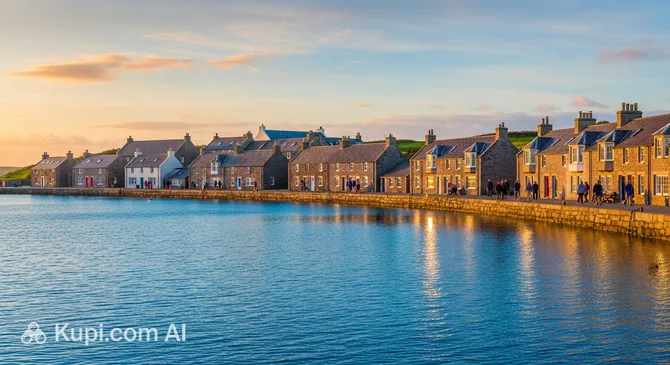
Stronsay offers a refreshing departure from the manicured city parks and vast museum complexes found in larger urban centers; instead, its "green spaces" are wild, wind-swept coastal landscapes, and its cultural heritage is intimately woven into the fabric of the community. For visitors, the entire island serves as an open-air gallery of natural beauty and historical resilience, where the line between the land and its history is beautifully blurred.
While you will not find formal botanical gardens here, the island's natural areas are spectacular. Rothiesholm Head is one of the most significant natural sites, offering a diverse landscape of rolling dunes, white sandy beaches, and rugged cliffs. It is a haven for walkers seeking solitude and scenery, with the added allure of being the legendary site where the "Stronsay Beast" washed ashore. The area supports a rich variety of wildflowers during the summer months, turning the headland into a vibrant tapestry of color against the backdrop of the sea.
Another key natural area is St Catherine’s Bay, a sweeping crescent of coastline that perfectly encapsulates the serene beauty of the island. Unlike a traditional park, this area remains untouched and wild, providing an ideal habitat for grey seals and waders. It is a favorite spot for gentle coastal walks, where the rhythm of the tides and the cry of seabirds replace the noise of city life. The bay's sheltered nature makes it a relaxing place to observe the abundant marine wildlife that calls Orkney home.
In terms of cultural institutions, the Stronsay Heritage Centre stands as the island's primary guardian of history. Located in the village of Whitehall, often within the historic Fish Mart building, this museum offers a fascinating deep dive into the island's past industries. Exhibits vividly recount the days of the "Herring Boom," when the population swelled by thousands, and the earlier kelp burning era. It also houses displays regarding the famous Stronsay Beast and local shipwrecks, providing essential context for understanding the community's maritime identity.
Although Stronsay does not have a district of large art galleries, the island is home to a thriving community of makers and artists whose work reflects the local culture. Small, independent studios and craft shops, such as those found along the island's craft trail, effectively serve as intimate galleries. Here, visitors can often meet the artists, see works inspired by the changing light and seascapes of Orkney, and purchase authentic local crafts that carry the spirit of the island.
For those interested in history and architecture, Lamb Head offers more than just scenic views; it is a significant archaeological landscape. The peninsula features the remains of an Iron Age broch and a chambered cairn, allowing adventurous tourists to walk amidst ancient history. Additionally, the architecture of Whitehall Village itself is a landmark. The impressive row of stone houses facing the harbor is a testament to the wealth generated during the herring fishing peak, standing as a preserved architectural memory of the 19th century.
For a truly authentic experience, keep your eyes on the ground while walking the beaches like the Ayre of the Myers. Locals and visitors alike engage in the competitive yet meditative pastime of hunting for "Groatie Buckies" (cowrie shells). Finding one of these tiny, pale shells is considered a sign of good luck and is a quintessential Orkney beachcombing tradition that connects you with the simple joys of island life.