Support

Kirkwall

About

Kirkwall is the vibrant capital and largest town of the Orkney Islands, an archipelago located off the northern coast of Scotland in the United Kingdom. Known for its rich Viking heritage and bustling harbor, this charming town serves as the perfect gateway to exploring the ancient wonders of the region. Despite its relatively small population of approximately 7,420 residents, Kirkwall possesses a lively atmosphere, combining the warmth of a close-knit community with the amenities of a modern travel hub.

The town is situated on the northern coast of the Mainland, the largest island in Orkney, and acts as the main commercial and transport center for the islands. The local climate is maritime, often characterized by brisk winds and rapidly changing weather, which adds to the dramatic beauty of the landscape. Visitors will find that the history of Kirkwall is palpable in its winding flagstone streets and well-preserved architecture, reflecting a past that dates back to the Norse era when the town was known as Kirkjuvagr, or "Church Bay."
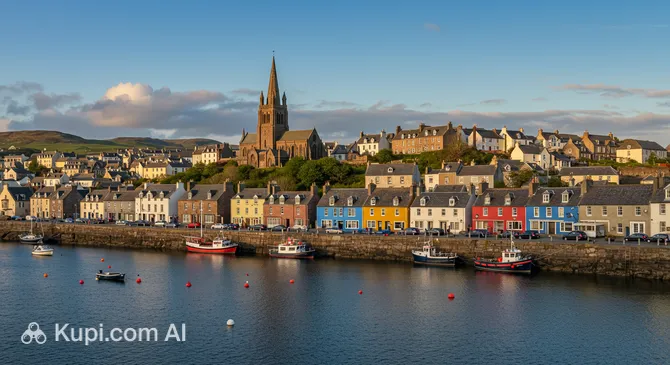
Kirkwall. Source: Kupi.Binoculars

One of the city's most iconic landmarks is the magnificent St Magnus Cathedral. Founded in 1137 by the Viking Earl Rognvald, this red sandstone masterpiece is known as the "Light in the North" and dominates the skyline with its medieval grandeur. Just a short walk away lie the ruins of the Bishop's and Earl's Palaces, which offer a fascinating glimpse into the opulent lives of Orkney's past rulers. For those interested in local craftsmanship, the town is also home to world-renowned whisky distilleries, such as Highland Park, where you can learn about the traditional art of whisky making.

Whether you are wandering through its historic lanes, sampling fresh local seafood at the harbor, or using it as a base to visit nearby Neolithic sites, Kirkwall offers a unique and memorable experience. It is a destination that perfectly blends ancient history with authentic island hospitality, inviting travelers to discover the distinct culture of the Northern Isles.

Weather Overview

The climate in Kirkwall is distinctly maritime, heavily influenced by the surrounding ocean which keeps temperature extremes at bay throughout the year. While the weather can be changeable, it contributes to the lush, green landscapes of the Orkney Islands. For a more detailed breakdown of conditions during your visit, you can check the weather in Kirkwall to help plan your daily activities.

Winters are generally mild for this latitude, with average temperatures in January and February hovering around 6°C. However, this season is characterized by frequent precipitation, with up to 22 wet days in January alone. As spring approaches, the frequency of rain decreases, making April and May some of the drier months with approximately 12 to 13 wet days. Summer brings the warmest weather, though it remains cool and refreshing; August sees average temperatures peaking at about 13.1°C. Autumn sees a return of frequent showers, particularly in October, which can experience up to 24 wet days.

Overall, travelers should expect cool, breezy summers with occasional showers and mild, damp winters where waterproof clothing is essential.

Interesting Facts

Beyond the main attractions, Kirkwall holds many fascinating secrets that reveal its deep Norse roots and unique island character. Here are some intriguing details that make this town truly special.
St Magnus Cathedral. Source: Kupi.Binoculars
  • Twice a year, on Christmas Day and New Year's Day, the town's streets transform into a chaotic playing field for "The Ba'," a mass game of street football played between the "Uppies" and the "Doonies." There are virtually no rules, and the game can last for hours as hundreds of men struggle to push a leather ball to their respective goals on opposite sides of the town.

  • The magnificent St Magnus Cathedral holds a rare legal status in the United Kingdom. Unlike most churches, it does not belong to the Church of Scotland but is owned by the people of Kirkwall themselves, a right granted by King James III in 1486 that the town council maintains to this day.

  • Despite the Orkney Islands being famously windswept and largely treeless, Kirkwall is home to the beloved "Big Tree" on Albert Street. This solitary sycamore, believed to be over 200 years old, is a local icon that has survived the elements and urban development, often requiring metal supports to keep it standing in the narrow street.

  • Kirkwall might have remained a Norwegian town if not for a royal wedding debt. The islands were pledged to Scotland in 1468 as security for the dowry of Margaret of Denmark when she married King James III, and since the money was never paid, the town permanently became part of Scotland.

How to Get There

Reaching the Orkney Islands is a journey that offers spectacular views and a sense of adventure. Whether you are planning to arrive by air or combine rail and sea travel, there are several convenient routes to this unique destination. For a comprehensive guide on all available transport options, you can read more about how to get to Kirkwall to help plan your trip effectively.

The most direct method of arrival is via Kirkwall Airport (KOI), which serves as the main air hub for the islands. Located just outside the town, it receives daily flights from major Scottish cities. The airport is situated approximately 4.5 km from the town center, and the transfer by taxi or bus typically takes around 27 minutes. For those traveling from further afield, Inverness Airport (INV) in the city of Inverness is a significant regional gateway. Although it is about 173 km away on the mainland, it offers a wider range of connections. From Inverness, visitors can rent a car or take a bus to the ferry terminals to complete their journey to Orkney.

Another option for regional travel is Wick Airport (WIC), located in the city of Wick on the northern tip of the Scottish mainland. It is approximately 59 km from Kirkwall (including the sea crossing). Travelers landing here can easily access the nearby ferry ports for a short crossing to the islands. The travel time from Wick to Kirkwall, involving ground transport and ferry, is estimated to take around 109 minutes.

For clarity, here is a summary of the main airports:

Airport Name City Passenger Traffic Km from City
Inverness AirportInvernessLarge172.8
Sumburgh AirportShetlandMedium137.4
Kirkwall AirportKirkwallMedium4.5
Wick AirportWickSmall59.1
Papa Westray AirportPapa WestraySmall41.0

It is important to note that the city of Kirkwall does not have a railway station, as there are no trains operating on the Orkney Islands. Travelers preferring rail transport typically take a train to a station on the Scottish mainland and then continue their journey by bus and ferry. You can arrive at the ScotRailway Station in the city of Inverness, which is about 174 km from Kirkwall. From there, you can get a taxi or bus to the ferry terminal, a total journey that takes about 281 minutes.

Below is a list of the nearest or most relevant railway stations:

Station City Passenger Traffic Km to Center
Stockholm Central StationStockholmHuge190.4
Dundee Railway StationDundeeLarge282.3
ScotRailway StationInvernessLarge174.1

Main Attractions

Kirkwall may be small, but it is packed with historical significance and cultural treasures that reflect its Norse heritage and Scottish influence. The town center is compact, making it easy to explore the main sights on foot, while the surrounding area offers a taste of the island's famous whisky production and ancient archaeology. Here are the top places to visit during your stay.

Dominating the skyline is the impressive St Magnus Cathedral, widely considered one of the finest medieval buildings in Britain. Founded in 1137 by the Viking Earl Rognvald, this masterpiece is constructed from striking red and yellow sandstone, creating a warm glow even on cloudy days. Visitors can explore the atmospheric interior, admire the stained glass windows, and learn about its dedication to St Magnus the Martyr. It remains a centerpiece of island life and a stunning example of Romanesque architecture.

St Magnus Cathedral. Source: Kupi.Binoculars

Just across the road from the cathedral lie the ruins of the Bishop's and Earl's Palaces. The Bishop's Palace dates back to the 12th century and is famous for being the place where King Haakon IV of Norway died in 1263. The neighboring Earl's Palace, built much later in the early 17th century by the tyrannical Earl Patrick Stewart, is often cited as one of the finest examples of French Renaissance architecture in Scotland. Although roofless, the intricate stonework, grand fireplaces, and spacious halls give a clear sense of the grandeur and ambition of its former owner.

For a deeper dive into the region's past, The Orkney Museum is a must-visit. Housed in Tankerness House, a beautifully preserved 16th-century town merchant's home, the museum takes you on a journey through Orkney's history, from the Stone Age to the Picts and Vikings. The exhibits are rich with artifacts, including Viking boat rivets and gaming pieces. Behind the museum, you will find a peaceful walled garden, a hidden gem that provides a quiet spot to relax away from the bustle of the main street.

No trip to Kirkwall would be complete without acknowledging its whisky heritage at the Highland Park Distillery. Located on the southern edge of the town, it is one of the northernmost whisky distilleries in the world. Visitors can take guided tours to see the traditional floor maltings—one of the few distilleries that still use this method—and smell the aromatic peat smoke that gives the whisky its distinctive character. It offers a fascinating look into a craft that has been honed on the islands for over two centuries.

Local Cuisine

The culinary scene in Kirkwall is a delightful reflection of the Orkney Islands' rich natural larder, characterized by an emphasis on exceptionally fresh, locally sourced ingredients. Due to its coastal location and fertile farmland, the town offers a gastronomic experience that rivals many larger cities. Visitors will find that the food culture here is unpretentious yet deeply committed to quality, with many restaurants and cafes proudly listing the local farms and fishing boats that supply their kitchens.

Seafood is, unsurprisingly, a staple of the local diet. The cold, clear waters surrounding the islands produce some of the finest shellfish in the world. When dining out near the harbor, be sure to try the hand-dived scallops, which are sweet and succulent, or the famous Orkney crab. A local favorite is "partan toes" (crab claws), often served simply to let the natural flavor shine. Lobster and sustainably farmed salmon are also widely available and are considered regional highlights.

Meat lovers are in for a treat as well, particularly with the renowned Orkney Beef, which holds Protected Designation of Origin (PDO) status. It is celebrated for its tenderness and flavor, resulting from cattle grazed on lush island pastures. Another unique delicacy to look out for is North Ronaldsay mutton. This meat comes from a unique breed of sheep that feeds almost exclusively on seaweed on the shoreline, giving the meat a distinctive, slightly gamey taste that is highly prized by chefs.

Traditional baking plays a significant role in Kirkwall's food heritage. You cannot leave without tasting a bere bannock, a type of flatbread made from bere, an ancient form of barley that has been grown on the islands for thousands of years. These are delicious when served warm with butter and a slice of savory Orkney Cheddar, another local product that has gained international acclaim. For those with a sweet tooth, traditional oatcakes and creamy fudge are perfect accompaniments to afternoon tea.

When it comes to drinks, Kirkwall is a heavyweight in the world of spirits. The town is famous for its single malt whisky, with distilleries producing smooth, smoky drams that capture the essence of the islands. Beyond whisky, the local brewing scene is thriving, producing excellent craft ales often named after Norse legends or island landmarks. Recently, locally distilled gin infused with island botanicals has also become a popular choice for a refreshing evening tipple.

Travel Tips

Preparing for a trip to Kirkwall means getting ready for four seasons in one day and embracing the unique rhythm of island life. To help you make the most of your time in this historic Viking hub, here are some essential practical tips to ensure a smooth journey.

  1. Clothing and Gear: The weather in Orkney is famously changeable, so the absolute key is layers. Bring a high-quality windproof and waterproof jacket, as umbrellas are often useless against the strong island gusts. Sturdy, comfortable walking shoes are a must for navigating Kirkwall’s charming flagstone streets and the uneven terrain of nearby archaeological sites.
  2. Transportation: Kirkwall itself is compact and best explored on foot. For venturing further afield, the local bus network is reliable for main routes, but to truly explore the hidden gems of the Mainland at your own pace, renting a car is highly recommended. Taxis are available but should be booked in advance, especially during the busy summer months.
  3. Finances: The currency is the British Pound Sterling (£). While credit and debit cards are widely accepted in shops and restaurants throughout Kirkwall, it is wise to carry some cash for smaller purchases or rural "honesty boxes." ATMs are readily available in the town center, and tipping around 10-15% for good service in restaurants is customary.
  4. Health and Safety: Kirkwall is an incredibly safe destination with very low crime rates. There are pharmacies located centrally for minor ailments, and medical assistance is available at the local hospital if needed. The biggest safety concern is often the natural elements, so always take care near cliff edges and on slippery piers during wet weather.
  5. Communication: English is the main language, spoken with a distinctive and melodic Orcadian lilt. You might hear local dialect words like peedie (meaning "small"), but locals are very accommodating to visitors. Mobile signal is generally good in the town, and free Wi-Fi is standard in most hotels and cafes.
  6. Local Etiquette: Orcadians are known for their warm hospitality and laid-back nature. A friendly greeting to passersby is common practice. When driving on single-track roads outside the town, it is strict etiquette to use passing places to let others overtake or pass, and a friendly wave of thanks is always appreciated.
  7. What to Avoid: Never refer to locals as "English"; they are proud Scots and Orcadians. Additionally, avoid walking on farmland without checking for livestock, and always leave gates exactly as you found them to respect the local farming community.
  8. Sunday Trading: Be aware that life slows down significantly on Sundays. Many independent shops in Kirkwall may be closed or operate with reduced hours, so it is best to plan your shopping and supply runs for weekdays or Saturdays.

By keeping these practicalities in mind, you will be well-equipped to enjoy the rugged beauty and ancient charm of Kirkwall without a hitch. Pack your woolens, embrace the fresh sea air, and get ready for an unforgettable island adventure.

Entertainment & Nightlife

Entertainment in Kirkwall is defined by its warm, community-focused atmosphere rather than a high-energy club scene. As a small island capital, the nightlife here revolves almost exclusively around traditional pubs, hotel bars, and venues that champion live music. The vibe is incredibly welcoming, with locals and visitors mingling freely, often over a dram of local whisky or a pint of island-brewed ale. The action is concentrated primarily around the harbor area and the main thoroughfare of Broad Street and Victoria Street, making it easy to hop between venues on foot.

For those seeking a lively evening, Helgi’s is a popular choice inspired by the islands' Viking heritage. Its distinct slate-grey exterior and cozy, wood-paneled interior create a characterful setting for evening drinks. Another standout venue is The Reel, located on Broad Street. This is the cultural heart of Kirkwall’s music scene, often hosting impromptu sessions featuring fiddles and accordions. It is the perfect place to experience the rich musical tradition of Orkney in an authentic setting. For a more relaxed drink with a view, Skippers Bar at the Kirkwall Hotel offers a sophisticated environment right on the waterfront, ideal for watching the evening light fade over the harbor.

The atmosphere in Kirkwall at night is casual and safe. There is generally no strict dress code; jeans and a warm sweater are standard attire for most nights out. Pubs typically stay open until around 11:00 PM or midnight on weekdays, extending to 1:00 AM on weekends. Prices are reasonable compared to larger UK cities, though alcohol prices reflect standard Scottish rates. Since the town is compact, walking is the primary way to get around, but if you are staying outside the town center, be aware that taxis can be scarce late at night. It is highly advisable to book a taxi in advance or have the number of a local firm saved on your phone.

While the evenings are for socializing, daytime entertainment in Kirkwall offers a wealth of cultural experiences. The town is dominated by the magnificent St Magnus Cathedral, which serves as a stunning centerpiece for exploration. Beyond the historical sites, visitors can enjoy browsing independent boutiques selling local jewelry and knitwear, or visit the local museums that chronicle the maritime and prehistoric history of the archipelago. For families or those looking for leisure, the Pickaquoy Centre offers a cinema and swimming pool, ensuring there is plenty to do before the sun goes down.

Parks & Museums

Kirkwall offers a delightful blend of open green spaces and deep-rooted history, allowing visitors to easily transition from a relaxing seaside stroll to an immersive journey through the Viking age. While the town is compact, it boasts well-maintained gardens and fascinating collections that reflect its status as the cultural heart of the archipelago.

For those seeking fresh air, the Peedie Sea is a unique natural feature located just west of the harbor. Once a part of the sea, it is now a landlocked brackish lagoon surrounded by pleasant walking paths and parkland. It is a favorite spot for locals to feed ducks or watch model yachts racing on the water. Another hidden gem is the Tankerness House Gardens, tucked away behind the bustling main street. This walled garden provides a sheltered oasis of tranquility, featuring manicured lawns and the curious "Groatie House," a small summerhouse adorned with volcanic stones and cowrie shells.

Just a short distance south of the town center lies Scapa Beach, a vast stretch of sand facing the historic waters of Scapa Flow. It is an excellent location for a bracing coastal walk, offering panoramic views and a poignant connection to the naval history of the region. The area is perfect for picnics on calmer days or simply watching the waves roll in during the dramatic changing weather.

When it comes to museums, the Orkney Museum is the premier destination for understanding the islands' heritage. Housed within the historic Tankerness House, the museum guides visitors through thousands of years of history, from the Stone Age to the Picts and the Vikings. The exhibits are rich with archaeological finds, including Viking boat rivets and gaming pieces, providing context to the ancient sites found throughout the landscape.

For a more specialized experience, the Orkney Wireless Museum offers a fascinating look at the history of radio and wartime communications. Given Orkney's strategic importance during both World Wars, this small but packed museum displays a treasure trove of equipment, maps, and photographs. It is a testament to the vital role communication played in the defense of Scapa Flow and offers a quirky, technical contrast to the ancient history elsewhere.

The town's architectural crown jewel is undoubtedly St Magnus Cathedral. Known as the "Light in the North," this Romanesque masterpiece was founded in 1137 and remains the most significant historical site in Kirkwall. Its striking red and yellow sandstone walls house centuries of history, including the remains of St Magnus himself. Nearby, the ruins of the Earl’s Palace and Bishop’s Palace stand as imposing reminders of the islands' turbulent past and the power of its former rulers.

For a truly authentic "insider" experience, seek out the Grain Earth House. Located somewhat unexpectedly within an industrial estate on the outskirts of town, this Iron Age underground passage and chamber is often overlooked by tourists. It offers a rare chance to descend into a prehistoric souterrain, providing a tangible connection to the domestic lives of Orkney's early inhabitants.

Getting Around

Public transport in Kirkwall is straightforward and reliable, primarily revolving around a network of buses that serve both the town and the wider island. Due to the compact nature of the settlement, visitors will not find complex systems like metros, trams, or trolleybuses here. Instead, the town is served by a fleet of modern buses, operated mainly by Stagecoach, which connect the town center with the airport, the ferry terminals, and other key locations across the Mainland. The central hub for all routes is the Kirkwall Travel Centre, conveniently located near the supermarkets and the harbor.

The payment system is designed to be user-friendly for tourists. You do not need to purchase a travel card in advance; tickets can simply be bought directly from the driver upon boarding. Contactless payment methods, including credit cards, debit cards, Apple Pay, and Google Pay, are widely accepted and preferred, though cash is also still taken. For those planning to explore multiple sites in a single day, it is worth asking the driver about a "DayRider" ticket, which offers unlimited travel within specific zones for a fixed price, often providing significant savings compared to single fares.

For a smooth experience, travelers should be aware that bus schedules can vary significantly depending on the day of the week. While services are frequent during weekdays, they are often reduced on Saturdays and can be very limited or non-existent on Sundays. It is highly recommended to check the latest timetables at the Travel Centre or via the operator's mobile app before setting out. Additionally, unlike in large cities where buses stop at every station, you may need to signal the driver clearly by raising your hand if you are waiting at a bus stop, especially in quieter areas.

Given the rural nature of the destination, alternatives to public transport are popular and often necessary for evening travel. Taxis are a vital part of the local transport mix, particularly since bus services tend to finish early in the evening. However, there is no Uber or similar ride-hailing app available; you must book with local taxi firms by phone, and it is advisable to do so well in advance, especially on weekends. Car rentals are also a favorite choice for tourists who want the freedom to explore the Neolithic sites at their own pace, while the town center itself is sufficiently compact to be navigated easily on foot.

A unique feature of Kirkwall's transport "system" is its connection to the sea. The harbor is not just a scenic spot but a functioning transport terminal. Orkney Ferries operate from here, serving as a lifeline to the Northern Isles. For a visitor, hopping on one of these ferries is akin to taking a regional bus, offering a scenic and practical way to visit islands like Shapinsay or Westray. While not a "metro," this inter-island ferry network is an essential and distinctive aspect of getting around the region.

Accommodation

Kirkwall provides a welcoming array of accommodation options suited to various travel styles and budgets. Visitors can choose from traditional hotels, charming bed and breakfasts, and modern self-catering apartments. While the town does not typically feature sprawling international luxury resorts, it excels in offering cozy, family-run guesthouses and historic hotels that provide a warm, personal touch. For those on a tighter budget or seeking a more communal atmosphere, there are also hostels and camping facilities available on the outskirts of the town.

The most convenient area to stay is undoubtedly the town center, particularly near the harbor and the main thoroughfare of Broad Street. Staying in this central zone places you within easy walking distance of major landmarks like St Magnus Cathedral and the Earl's Palace, as well as the main bus station for exploring the rest of the island. The waterfront area is especially popular for its scenic views and immediate proximity to local seafood restaurants and pubs, making it a perfect base for those who want to be in the heart of the action without needing a car for dinner.

Regarding costs and booking, Kirkwall offers a spectrum from affordable budget stays to higher-end boutique experiences. Prices tend to rise significantly during the peak summer months (June to August) due to high demand and limited capacity on the island. It is highly recommended to book your accommodation well in advance—often several months ahead—as the best options fill up quickly, especially during local festivals like the St Magnus Festival. Most properties can be booked via major online platforms, though contacting smaller B&Bs directly can sometimes secure a better rate or a more personalized experience.

Nearby Cities

For those looking to explore the surroundings, Kirkwall serves as an excellent base for day trips to several interesting nearby locations:

City Population Distance (km)
Elgin23128150
Shetland22900178
Fraserburgh13180154
Forres10100158
Nairn9960165

While the table above lists regional connections and neighboring island groups like Shetland which are suitable for longer excursions, the most accessible day trips are found within the Orkney archipelago itself. A short drive west brings you to Stromness, Orkney's second-largest town. With its winding flagstone streets and picturesque harbor, it offers a stark architectural contrast to Kirkwall. Visitors can explore the renowned Pier Arts Centre, wander through narrow lanes that have remained largely unchanged for centuries, or enjoy fresh seafood while watching the ferries depart for Scotland.

Another fascinating destination for a short visit is the village of St Margaret's Hope on the island of South Ronaldsay. Accessible via the famous Churchill Barriers—causeways built during World War II—the journey itself is a scenic highlight, offering views of the scuttled blockships in Scapa Flow. The village is known for its charming waterfront houses and the nearby Italian Chapel, a beautiful and ornate Catholic chapel constructed by Italian prisoners of war inside two Nissen huts, which stands as a moving symbol of peace and reconciliation.

These nearby destinations offer a glimpse into the diverse culture and landscapes of the region.

Shopping & Souvenirs

Shopping in Kirkwall is a delightful experience that contrasts sharply with the frantic pace of large city centers. Instead of sprawling commercial complexes and generic high-street chains, the town prides itself on a vibrant collection of independent retailers and family-run businesses. Visitors will find that the shopping scene here is intimately tied to the island's culture, with a strong emphasis on high-quality local craftsmanship, from intricate jewelry design to traditional textile manufacturing.

The heart of the town's retail activity beats along Albert Street and Bridge Street. These narrow, flagstone-paved thoroughfares are full of character and are pedestrian-friendly, allowing you to wander easily between shop fronts. Here, you can browse through unique boutiques offering everything from hand-knitted garments to books on local folklore. The atmosphere is relaxed and welcoming, with shop owners often happy to chat about the provenance of their goods.

Travelers expecting large shopping malls will not find them in Kirkwall. The town's charm lies in its lack of mass-market commercialization. However, for those needing travel essentials or groceries, there are well-stocked supermarkets located just off the main streets. The focus of the shopping experience remains firmly on the smaller, specialized stores that line the historic town center, offering a more personalized service.

While Kirkwall does not have a permanent daily market, the Orkney Farmers' Market is a highlight for foodies when it takes place, typically on the last Saturday of the month. Held in the town center, this market is the best place to buy directly from local producers. You can find stalls laden with fresh seafood, organic vegetables, and home-baked goods, providing a genuine taste of the islands' fertile larder.

When it comes to souvenirs, Kirkwall offers exceptional quality. The islands are world-famous for their silver and gold jewelry, with designs often inspired by Norse mythology and Neolithic carvings; several renowned local designers have workshops and galleries in town. Orkney knitwear is another must-buy, perfect for the cool climate. For edible gifts, look for Orkney cheese, traditional oatcakes, and fudge, or pick up a bottle of locally distilled whisky or gin to take a piece of the island spirit home with you.

Most shops in Kirkwall operate from approximately 9:00 AM to 5:00 PM, Monday through Saturday. It is important to note that Sunday trading is more limited; while supermarkets and some larger souvenir shops may open, many smaller independent boutiques remain closed or operate with reduced hours. Credit and debit cards are widely accepted throughout the town, even for small purchases, though carrying a little cash is always useful for market stalls or smaller transactions.

Reached the end of the page?

That means the route is fully explored