Support

Eday

About

Welcome to Eday, a captivating island located in the heart of the Orkney archipelago in the United Kingdom. Often referred to as the "Isthmus Isle" due to the narrow neck of land connecting its northern and southern halves, this destination offers a unique blend of rugged natural beauty and profound tranquility. It is a place where the pace of life slows down, allowing visitors to fully immerse themselves in the stunning maritime surroundings.

Geographically, Eday is situated centrally among the North Isles, making it a convenient stop for island hoppers. Despite its substantial size, it is home to a small, close-knit community of approximately 160 residents. The landscape is distinctively defined by its heather-clad hills and extensive peat banks, which have traditionally provided fuel for the local distilleries. The climate here is typical of the islands—brisk and windy—but often illuminated by dramatic, shifting skies that photographers adore.

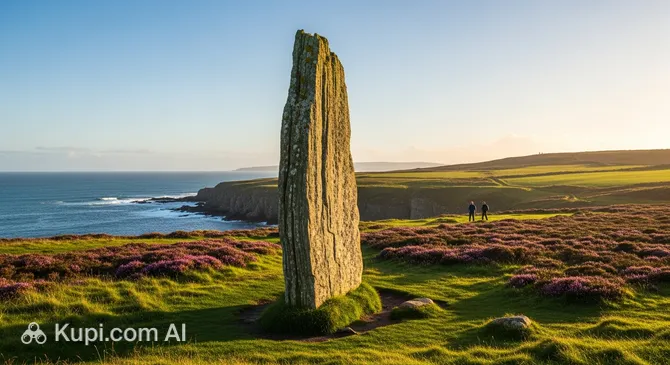
For those fascinated by the past, the history of Eday is incredibly rich and visible across the landscape. The island boasts a wealth of archaeological treasures, most notably the Stone of Setter. Standing over four meters tall, this imposing monolith is one of the tallest standing stones in the region and dominates the skyline. Visitors can also explore the ancient Vinquoy Chambered Cairn, which offers a fascinating glimpse into the Neolithic era.

Beyond its ancient stones, Eday is a haven for wildlife enthusiasts and walkers. The Eday Heritage Walk guides explorers through the island's most scenic spots, including the historic Carrick House, famous for its association with the capture of the pirate John Gow. Whether you are watching seals bask on the shore or listening to the call of seabirds on the cliffs, Eday invites you to experience a peaceful and authentic island adventure.

Weather Overview

The climate in Eday is distinctly maritime, characterized by moderate temperatures and frequent precipitation throughout the year. Visitors should be prepared for changeable conditions, where layers and waterproof clothing are essential regardless of the season. To help plan your daily activities, you can consult the detailed guide to the weather in Eday.

Summers are generally cool and fresh, offering comfortable conditions for exploring the outdoors. August is typically the warmest month, with average temperatures reaching around 13.1°C. While this is often the most popular time to visit, rain is still a regular occurrence, though the driest spells usually happen in April and June, which see about 12 wet days on average.

Winters are mild compared to many other northern locations, but they can be quite damp and blustery. The coldest period typically occurs in February and March, when average temperatures hover around 5.9°C. Expect cool, breezy summers and mild but wet winters, with October and December seeing the highest frequency of rainfall, often recording up to 24 wet days per month.

Interesting Facts

Beyond its scenic landscapes and wildlife, Eday hides a collection of intriguing stories and modern achievements that often surprise visitors. From its contribution to one of Scotland's greatest architectural wonders to its leading role in renewable energy, this island is far more than just a quiet retreat.

  • A Cathedral's Foundation: The stunning St Magnus Cathedral in Kirkwall has a deep connection to this island. Eday was the source of the distinctive yellow and red sandstone used in the cathedral's construction. This geological gift allowed masons to create the striking polychrome patterns that make the medieval structure so unique.

  • The "London" Surprise: Travelers might be amused to find the Bay of London on the island's eastern coast. While it shares a name with the famous capital, this tranquil bay offers peaceful shores and seabirds rather than bustling streets, making it a favorite spot for a quirky photo opportunity.

  • Pioneering Green Energy: The waters surrounding Eday, specifically the Fall of Warness, are at the cutting edge of technology. This area hosts a major test site for the European Marine Energy Centre (EMEC), where massive tidal turbines harness the power of the ocean currents to generate sustainable electricity.

  • The Pirate's Mark: Local history is colored by the tale of the pirate John Gow, who was captured at Carrick House in 1725. Legend has it that a dark stain on the floor of the house dates back to those dramatic events and, according to folklore, refuses to be scrubbed away.

How to Get There

Reaching the remote and beautiful island of Eday requires a bit of planning, as it involves crossing the sea to the Orkney archipelago. While the journey is part of the adventure, understanding your transit options is essential. You can find a comprehensive guide and more about how to get to Eday on our detailed transport page.

The island of Eday does not have its own major international airport, but you can fly into Kirkwall Airport (KOI) in the city of Kirkwall, which is about 29.3 km from Eday. As the primary hub for Orkney, it offers connections to the mainland and other islands. Reaching the connection points for Eday from the airport typically involves a short transfer followed by a ferry ride. Another significant option is Inverness Airport (INV) in Inverness, located roughly 200.4 km away on the Scottish mainland. This airport serves as a key gateway for the Highlands. The journey from here to the northern ferry terminals involves a longer drive through scenic landscapes.

For clarity, here is a summary of the main airports:

Airport Name City Passenger Traffic Km from Island
Inverness AirportInvernessHigh200.4
Sumburgh AirportShetlandMedium111.5
Kirkwall AirportKirkwallMedium29.3
Wick AirportWickLow85.8
Papa Westray AirportPapa WestrayVery Low17.6

The island of Eday does not have a railway station. The closest major rail link on the mainland is the ScotRailway Station (ZIV) in Inverness, which is approximately 201.7 km away. Visitors choosing this route typically travel by train to Inverness and then continue their journey by bus or rental car to the ferry ports. The ground transfer from the station to the ferry crossing is a substantial trip, allowing travelers to experience the beauty of the Scottish North.

Below is the information regarding the nearest railway station:

Station City Passenger Traffic Km to Center
ScotRailway StationInvernessHigh201.7

Main Attractions

The northern tip of the island is dominated by the dramatic Red Head, a striking promontory of red sandstone cliffs that offers some of the most spectacular coastal scenery in the region. A walk to the summit rewards visitors with sweeping views across the sound to the neighboring Calf of Eday and the open sea beyond. This rugged headland is a haven for nature lovers, as the cliffs support thriving colonies of seabirds, including puffins and guillemots, which can often be seen nesting on the ledges during the breeding season.

For those interested in the island's ancient past, the Huntersquoy Chambered Cairn presents a unique engineering marvel from the Neolithic age. Located on a sloping hillside overlooking Calf Sound, this tomb is distinct for its rare "double-decker" construction, featuring two superimposed chambers built one above the other. While the upper chamber is now largely ruinous, the lower chamber remains intact and accessible, offering a fascinating insight into the complex burial practices and architectural skills of Eday's early inhabitants.

To fully understand the local culture and history, a visit to the Eday Heritage and Visitor Centre is essential. Housed in a beautifully restored former Baptist chapel, the centre showcases a wealth of information, from genealogical records and oral history archives to artifacts from the island's past. It also highlights Eday's modern role in renewable energy, featuring exhibits on the European Marine Energy Centre (EMEC) and the tidal power projects testing in the nearby waters. The centre also serves as a community hub with a café, making it a perfect stop for refreshments.

Wildlife enthusiasts should not miss Mill Loch, widely celebrated as one of the most important breeding sites in the United Kingdom for the red-throated diver. A dedicated bird hide situated at the loch's edge allows visitors to observe these elegant birds and other waterfowl undisturbed in their natural habitat. The surrounding moorland is also an excellent area for spotting other raptors, such as short-eared owls and hen harriers, cementing the island's reputation as a paradise for birdwatchers.

Steeped in maritime lore, Carrick House is the most significant historic building on the island and a must-see for history buffs. Built in the 17th century, the house is famous for its dramatic connection to the pirate John Gow, whose ship ran aground nearby in 1725. Gow was captured at the house, and local legend claims that a stain on the floorboards is the pirate's blood, which allegedly cannot be washed away. The house is open to the public during the summer months, offering guided tours that delve into this thrilling chapter of Orcadian history.

Local Cuisine

The culinary experience in Eday is defined by its remote island charm and a strong reliance on fresh, high-quality local produce rather than a bustling restaurant scene. Visitors here will discover a food culture that is authentically Orcadian, deeply connected to the land and the surrounding seas. The island offers a rare opportunity to taste ingredients at their very source, often prepared with a focus on home-cooked simplicity and flavor.

Seafood lovers will find themselves in a haven of fresh tastes. The nutrient-rich waters around the island yield exceptional shellfish, including brown crab, lobster, and hand-dived scallops, which are often caught by local fishermen. For those who prefer meat, the renowned Orkney beef and lamb are staples, celebrated for their tenderness and distinct flavor derived from the lush, salt-sprayed pastures. A traditional meal is frequently accompanied by bere bannocks, a hearty flatbread made from bere, an ancient form of barley that has been grown in the archipelago for thousands of years.

When it comes to beverages, the influence of the wider Orkney region is evident. While Eday is a quiet retreat, you can easily find the famous Orkney ales, such as Dark Island or Northern Light, which are brewed on the mainland and enjoyed by locals. Whisky enthusiasts can savor a dram of single malt from the nearby world-class distilleries like Highland Park or Scapa. For a comforting non-alcoholic option, a pot of hot tea paired with homemade fudge or buttery shortbread is the perfect way to warm up after a brisk coastal walk.

Dining out in Eday requires a bit of planning due to the limited number of commercial venues. The primary social hub for a bite to eat is often the café at the Eday Heritage and Visitor Centre, where tourists can enjoy warming soups, freshly made sandwiches, and delicious home-baked cakes in a welcoming atmosphere. Since formal restaurants are scarce, many visitors embrace the self-catering lifestyle, purchasing supplies from the well-stocked Eday Community Shop. Assembling a picnic with local cheese, oatcakes, and smoked fish to enjoy overlooking the sea is a quintessential part of the Eday experience.

Travel Tips

Visiting a remote and tranquil island like Eday offers a unique escape, but the isolation that makes it so special also requires a bit of practical preparation. To ensure your trip to this gem of the Orkney archipelago is as smooth and enjoyable as possible, we have compiled a list of essential advice for your journey.

  1. Clothing and Gear: The weather in Eday can be incredibly changeable, often shifting from sunshine to rain in minutes. It is essential to bring waterproof jackets and trousers, as well as multiple warm layers to handle the wind chill. Sturdy, waterproof hiking boots are a must if you plan to explore the Heritage Walk or the peat banks, as the ground can be boggy. Don't forget a UK power adapter if you are traveling from abroad.
  2. Transportation: There is no public bus service on Eday, so getting around requires planning. Bringing a car via the ferry is the most convenient option, but you must book your slot well in advance, especially in summer. Alternatively, the island is perfect for cycling due to its quiet roads, though the terrain is hilly. A local community car scheme or taxi service may be available, but availability is limited, so always arrange this before arrival.
  3. Finances: While the Eday Community Shop and the Heritage Centre café generally accept cards, connection issues can occur in remote areas. There are no ATMs or banks on the island, so it is critical to withdraw sufficient cash in Kirkwall before you travel. Having cash is also polite for small purchases or donation boxes at unmanned sites.
  4. Health and Safety: Eday has a local GP surgery with a nurse practitioner for routine needs, but there is no pharmacy or hospital on the island; the nearest hospital is in Kirkwall. Ensure you bring an adequate supply of any prescription medications and a basic first-aid kit. For serious emergencies, dial 999; evacuation is typically by helicopter or lifeboat.
  5. Communication: The primary language is English, often spoken with a distinctive Orcadian lilt. Mobile phone signal can be patchy depending on your network and location on the island, so do not rely solely on mobile data for navigation. Downloading offline maps is a good idea. Wi-Fi is usually available at the Heritage Centre and most accommodation providers.
  6. Local Etiquette: The island community is small and friendly. It is customary to greet people you pass on the road, often with a simple wave from the steering wheel—the "Orkney wave." When driving on single-track roads, always pull into passing places (to your left) to let oncoming traffic or faster vehicles behind you pass. Never park in a passing place.
  7. What to Avoid: Do not disturb the livestock or wildlife. Eday is an agricultural island, so always leave gates exactly as you found them (open or closed) and keep dogs on leads near sheep. Additionally, avoid walking close to cliff edges during nesting season (spring and early summer) to prevent frightening the seabirds or putting yourself at risk.
  8. Shop Opening Hours: Be aware that the Eday Community Shop has specific opening hours and may close for lunch or shut earlier than mainland supermarkets. It is the only place to buy groceries and fuel on the island, so check their current schedule immediately upon arrival to ensure you don't get caught out without supplies.

By keeping these practical tips in mind, you will be well-equipped to embrace the slower pace and rugged beauty of Eday without any unwelcome surprises. Prepare for the elements, respect the local way of life, and you are sure to have an unforgettable experience on this captivating island.

Entertainment & Nightlife

Travelers seeking the neon lights of nightclubs or the bustle of late-night bars will find a very different kind of evening entertainment in Eday. The "nightlife" on this remote island is defined not by loud music and crowds, but by profound tranquility, community gatherings, and some of the most spectacular natural light shows on earth. The evening atmosphere here is intimate and relaxed, centered around local traditions and the stunning environment rather than commercial venues.

There are no dedicated nightclubs, cocktail bars, or 24-hour entertainment districts on the island. Instead, the social heart of the community after dark is often the Eday Community Hall. Located centrally on the island, this venue serves as the hub for local events, ranging from traditional Scottish ceilidhs (dances) and live music concerts to community parties and weddings. If you are lucky enough to visit during one of these events, you will experience the true warmth of Orcadian hospitality, where the dress code is casual and practical—think warm sweaters and boots rather than high heels.

For many visitors, the primary evening attraction is the sky itself. With almost zero light pollution, Eday is a paradise for stargazers. On clear nights, the canopy of stars is breathtakingly bright, and during the darker months, the island is an excellent vantage point for witnessing the Aurora Borealis, or "Merry Dancers," as they are known locally. A quiet walk near the Red Head cliffs or along the shores can provide a front-row seat to this mesmerizing natural phenomenon, offering a serene alternative to a busy city night out.

Since there are no restaurants or pubs open late into the night, evening dining is often a self-catering affair or a pre-arranged meal at your accommodation. It is highly advisable to purchase any beverages or snacks you might want for the evening from the Eday Community Shop during its daytime opening hours, as there are no convenience stores open at night. Many tourists enjoy hosting their own cozy evenings, sharing stories and local Orkney produce with fellow travelers in the comfort of their guesthouses.

In terms of safety, Eday is incredibly secure, with virtually no crime to worry about. However, the physical environment requires caution at night. The island has no street lighting outside of the few houses, so the roads and paths are pitch black. Always carry a reliable torch (flashlight) and wear reflective clothing if walking. Taxis are not readily available on demand at night; transport should be arranged well in advance or provided by your host.

While the nights are peaceful, the daytime offers its own rhythm of entertainment. Visitors can explore the island’s rich heritage at the Eday Heritage and Visitor Centre, which offers deep insights into local history, or spend the day hiking the rugged trails to see the Stone of Setter. Whether exploring by day or stargazing by night, entertainment in Eday is about reconnecting with nature and the slow, steady pace of island life.

Parks & Museums

In Eday, the concept of a "park" expands beyond manicured lawns and flowerbeds to encompass vast stretches of heather-clad moorland, pristine white beaches, and protected wildlife reserves. While you won't find urban botanical gardens here, the island itself acts as a magnificent open-air sanctuary, offering visitors an intimate connection with nature and a deep dive into thousands of years of history through its well-preserved heritage sites.

Key Parks and Green Spaces

One of the most serene natural spots on the island is the Sands of Mussetter. Located near the Heritage Centre, this sweeping crescent of fine white sand is backed by grassy dunes and offers a perfect setting for a peaceful coastal walk. It is an ideal location for beachcombing or simply watching the waves roll in from the North Sea. The lack of crowds means you can often have this beautiful stretch of coastline entirely to yourself, making it a "park" of solitude and natural beauty.

For those seeking panoramic views, a hike up Ward Hill provides a rewarding challenge. As the highest point on Eday, rising to 101 meters, it serves as the island's natural observation deck. From the summit, hikers are treated to a 360-degree vista of the entire Orkney archipelago, seeing as far as the distinct shapes of Fair Isle on a clear day. The hill is surrounded by rugged moorland, which blooms with vibrant purple heather in late summer, creating a stunning visual contrast against the blue sea.

Museums and Galleries

The cultural heartbeat of the island is the Eday Heritage and Visitor Centre. Housed in a restored former Baptist Church, this facility is more than just a museum; it is a repository of the island's collective memory. Inside, visitors can explore exhibits detailing Eday's timeline from the Stone Age to the present day, including displays on the kelp industry and peat cutting. The centre also holds extensive genealogical records, making it a fascinating stop for anyone tracing their Orcadian roots. The building itself, with its traditional architecture, stands as a testament to the island's religious history.

While there are no formal art galleries, the island's landscape inspires many local creatives. The Heritage Centre often displays works by local craftspeople and photographers, effectively serving as a gallery space that reflects the artistic spirit of the community. It provides a glimpse into how the dramatic light and scenery of Eday influence modern island culture.

Historical and Architectural Sites

Standing sentinel over the landscape is the Stone of Setter, a massive monolith that is impossible to miss. Rising over four meters high, it is one of the tallest standing stones in Orkney and is believed to date back to the Bronze Age. Unlike many other ancient stones that are part of circles, this one stands alone, eroded by centuries of wind and rain into a characterful, gnarled shape. Its solitary presence amidst the peat bogs creates a powerful, atmospheric experience for visitors.

Another architectural marvel is the Vinquoy Chambered Cairn. Located on a prominent ridge, this Neolithic tomb has been carefully restored, allowing visitors to crawl inside and stand within the central chamber. Seeing the ancient stonework up close provides a visceral connection to the people who lived and worshipped here thousands of years ago. The site also offers commanding views over the Calf Sound, suggesting that its location was chosen as much for its prominence as for its spiritual significance.

Authentic Experiences

For a truly local insight, take note of the extensive peat banks that scar the hillsides. Peat cutting is a centuries-old tradition in Eday that continues to this day, providing fuel for island homes and local whisky distilleries. Walking near these banks offers a look at a living tradition and a landscape shaped by human hands over generations.
Getting Around

Navigating Eday is a unique experience that differs significantly from visiting a typical city or large town. Due to its small population of around 160 residents and its rural island nature, there is no conventional public transport system such as a metro, tram, or scheduled bus network within the island itself. The "public transport" here effectively consists of the external links—ferries and flights—that connect Eday to the Orkney mainland and neighboring isles, along with local community-based solutions for getting around once you arrive.

The primary mode of transport for both locals and visitors is the Orkney Ferries service. Ferries operate between Eday and Kirkwall (the capital of Orkney), as well as connecting to other North Isles like Sanday and Stronsay. These vessels carry both passengers and vehicles, acting as the island's main lifeline. Additionally, Eday is served by the famous Loganair Inter-Island Service. Eight-seater aircraft land at the local airfield (known locally as "London Airport" due to the nearby Bay of London), providing a quick and scenic link to Kirkwall Airport. This flight is a bucket-list experience for aviation enthusiasts, offering stunning aerial views of the archipelago.

Regarding payment, the system is straightforward but requires advance planning. For the ferry, it is highly recommended to book vehicle slots well in advance, especially during the summer tourist season. Tickets can be purchased via the Orkney Ferries office or website. Foot passengers can often buy tickets on the day, but booking is still safer. Payment is typically made in Pounds Sterling (£), and while card payments are widely accepted at terminals, it is wise to carry some cash for smaller transactions. Flights must be booked online in advance through Loganair.

Once you are on the island, getting around requires self-sufficiency. Since there are no scheduled buses, most visitors bring a rental car over on the ferry from Kirkwall. Alternatively, cycling is a popular and eco-friendly way to explore, given the island's manageable size and quiet roads. If you do not have a vehicle, you may be able to arrange transport through a local taxi service or the resident community car scheme, but this is not an "on-demand" service like Uber; it must be arranged by telephone prior to your arrival or well in advance of your journey.

Practical Advice for Tourists:

  • Book Ahead: Never assume you can just turn up and get a spot for a car on the ferry. Capacity is limited.
  • Check the Weather: Ferries and flights are subject to weather disruptions. High winds can lead to cancellations, so always check the service status before traveling.
  • Single-Track Roads: If you are driving or cycling, be aware that Eday's roads are almost entirely single-track. Use the designated "passing places" to let oncoming traffic pass.
  • Walking: For the fit and adventurous, walking is a viable option for specific areas, but distances between the ferry terminal and attractions like the Heritage Centre can be several miles.

Accommodation

Accommodation in Eday reflects the island's remote and tranquil character. Visitors should not expect sprawling resort complexes or international hotel chains. Instead, the island offers a small but welcoming selection of places to stay that allow you to immerse yourself in the local community. The options primarily consist of charming bed and breakfasts, self-catering cottages, and a community-run hostel, all of which provide a cozy base for exploring the rugged landscape.

For budget travelers and backpackers, the island is well-served by its dedicated hostel facilities. These are often situated centrally, providing a social atmosphere where you can meet fellow adventurers. If you prefer more privacy, several islanders offer self-catering accommodation in converted croft houses or annexes. These rentals are perfect for families or couples seeking solitude, often featuring stunning views of the coast and the opportunity to experience the authentic lifestyle of an Orcadian crofter.

In terms of location, the island is compact enough that staying anywhere offers easy access to the main sights. However, accommodation located near the main road through the center of the island or closer to the ferry terminal at the south end can be particularly convenient for those without a car. Staying centrally places you within a reasonable distance of the community shop and the main heritage sites, which are the primary hubs of activity during the day.

Booking and Prices

The price range for accommodation in Eday is generally quite affordable, falling into the budget to mid-range categories. You will find that costs are reasonable compared to the larger tourist hubs on the mainland. However, availability is the biggest challenge. With a very limited number of beds on the island, it is absolutely critical to book well in advance, especially if you plan to visit during the summer months (May to September). It is not uncommon for the few available spots to fill up months ahead of time.

Booking is typically done directly with the owners via telephone or email, or through local tourism websites, rather than large global booking platforms. Confirming your accommodation should be your first priority after deciding on your travel dates, as arriving on the island without a reserved place to stay is risky given the lack of alternatives.

Nearby Cities

For those looking to explore the surroundings, Eday serves as an excellent base for day trips to several interesting nearby locations:

City Population Distance (km)
Elgin 23,128 177
Shetland 22,900 151
Fraserburgh 13,180 175
Buckie 8,640 171
Lossiemouth 8,000 169

While Eday offers tranquility, the wider region connects travelers to vibrant communities and historic sites that are well worth the journey. Shetland, located to the north, presents a fascinating contrast with its distinct Viking heritage and dramatic geology. It is a destination renowned for its rugged coastlines, abundant wildlife, and the famous Up Helly Aa fire festivals, offering a completely different island experience compared to the Orkney archipelago.

For those willing to travel further south towards the Scottish mainland, Elgin stands out as a historic market town rich in character. It is home to the majestic ruins of Elgin Cathedral, often called the "Lantern of the North," and serves as a gateway to the Speyside whisky region. Nearby, the coastal town of Lossiemouth offers a more relaxed pace, known as the "Jewel of the Moray Firth." With its beautiful sandy beaches and excellent golf courses, it is a perfect spot for seaside leisure and spotting dolphins in the wild.

These nearby destinations offer a glimpse into the diverse culture and landscapes of the region.

Shopping & Souvenirs

Shopping in Eday is a unique experience that stands in stark contrast to the commercial bustle of mainland cities. As a remote island with a small population, retail therapy here is not about high streets or designer brands, but rather about community spirit, essential supplies, and the charm of locally made goods. Visitors should arrive with the understanding that shopping facilities are purely functional and very limited, designed primarily to sustain the local residents rather than cater to mass tourism.

There are no shopping districts or commercial streets on the island. The retail "hub" of Eday is effectively a single building: the Eday Community Shop. Located centrally near the road that runs through the island, this well-stocked store is the lifeline for the community. It serves as a general store, grocery, post office, and fuel station all rolled into one. Here, you can find everything from fresh food and household essentials to hardware and solid fuel. It is also the place to catch up on local news and interact with the friendly islanders.

Travelers looking for shopping malls or department stores will not find them in Eday. The island's infrastructure is rural and small-scale. For those needing extensive retail services, large supermarkets, or fashion outlets, the nearest options are located in Kirkwall on the Orkney mainland, which requires a ferry or flight to reach. It is highly advisable to purchase any specialized equipment, clothing, or specific dietary requirements in Kirkwall before traveling to Eday.

While there are no formal street markets, the island has a tradition of small-scale, informal trading that delights visitors. You may encounter "honesty boxes" at the end of driveways or near farms. These are small, unmanned stalls where locals sell surplus garden produce, free-range eggs, or homemade jams and chutneys. The system relies on trust: you simply take what you need and leave the correct money in the box. This offers a genuine taste of the island's honest and trusting way of life.

For souvenirs, the best items to bring back are those that reflect the island's heritage and creativity. The Eday Heritage and Visitor Centre often has a small selection of gifts, such as books on local history, postcards, and sometimes crafts made by local artisans. Hand-knitted woolens, artwork inspired by the dramatic seascapes, and locally produced crafts are treasured keepsakes. Buying these items directly supports the local economy and the artists living on the island.

Opening hours in Eday are much more restricted than on the mainland. The Community Shop typically opens in the morning, closes for a lunch break (often between 1:00 PM and 2:00 PM), and reopens for a few hours in the afternoon. It may have reduced hours on weekends and is usually closed on Sundays. Regarding payment, the shop generally accepts major credit and debit cards, but connectivity issues can sometimes occur due to the remote location. It is essential to carry enough cash (Pounds Sterling) to cover small purchases or to use at honesty boxes where electronic payment is impossible.

Tax-free shopping (VAT refunds) is technically a UK-wide scheme for eligible international visitors, but it is practically non-existent on Eday. The local shop and small craft sellers do not typically have the administrative facilities to process tax-free forms. Visitors wishing to claim VAT refunds should plan to do so for larger purchases made at participating retailers in major UK cities or airports before leaving the country.

Reached the end of the page?

That means the route is fully explored