Support

Buttercross Monument

About

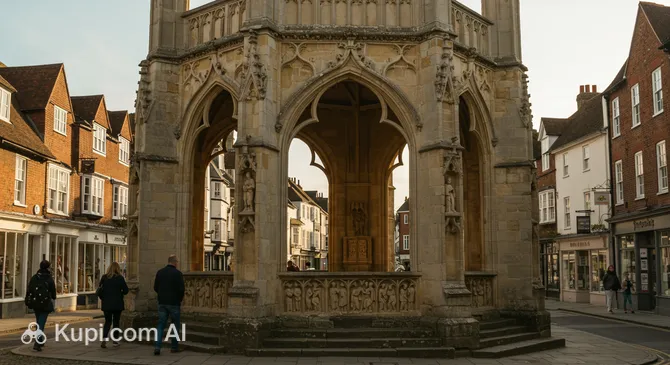
In the very heart of the commercial life of the ancient city of Winchester stands an elegant medieval monument — the Buttercross, or City Cross. This magnificent example of Late Gothic architecture, dating back to the early 15th century, is a tall, multi-pinnacled monument set upon five octagonal steps. Today, it is recognized as a cultural heritage site and is under special state protection.
Buttercross
Buttercross. Иллюстрация. Источник: Kupi.com AI

This landmark earned its unusual name from its historical function. Centuries ago, Great Britain knew such crosses as gathering places for farmers. Residents of the surrounding villages would bring fresh butter, milk, and cheese here to sell right at the foot of the shrine.

Today, the Buttercross is considered one of the city's most recognizable landmarks and a popular meeting spot. Its intricate architecture, featuring numerous niches and figures, draws the eyes of passersby, serving as a reminder of Winchester's rich past as an important regional trade and religious center.

Contacts

For those planning a visit to this historical location, basic contact information will be helpful. The site is located outdoors and is always accessible for viewing.

For the latest news on cultural events in the city center, it is recommended to check the official tourism portal, Visit Winchester.

How to contactContact
Address106a High St, Winchester SO23 9AH, Великобритания

What to Do

The main reason to visit the Buttercross is the opportunity to see the unique work of medieval stonemasons up close. The monument is adorned with twelve sculptural figures. If you look closely, you can see the figures of saints and kings peering out from their niches at different heights, creating a complex and harmonious composition.

For photography enthusiasts, this place is a real gem. Thanks to its prime location on the High Street, you can capture excellent angles that combine ancient stone with the modern energy of the city. Visitors often stop here to rest on the steps of the plinth, watching the flow of city life, just as people have done for six centuries.

A visit to the cross is easily combined with a walking route through the historic center. From here, it is just a short walk to Winchester Cathedral or the famous College, making the Buttercross an ideal starting point for a full discovery of local legends and architectural masterpieces.

Getting There

Finding the Buttercross is easy, as it is located on the pedestrianized High Street, right in the heart of the historic quarter. This is a lively area always bustling with locals and tourists alike.

If you are arriving in the city by train, the walk from Winchester railway station takes about 10–15 minutes and is a pleasant stroll. Simply head down High Street towards The Square. Regular buses also serve the city center, with stops located just a few minutes' walk from the monument.

For those who prefer comfort, local taxis are always available to drop you off as close as possible to the pedestrian zone boundary, from which it is only a short walk of a few dozen meters to the cross.

Ближайший город: Winchester

History & Facts

The history of the Buttercross is full of fascinating events. The monument acquired its current appearance, close to its original Gothic style, in 1865 thanks to a restoration led by the famous architect Sir George Gilbert Scott. The tiers of the cross feature 12 sculptures: eight figures of saints, including the Virgin Mary and St. Swithun, the city's patron saint.

Particular attention should be paid to the four large figures at the bottom. Three of them were replaced in the 19th century and depict great personalities of the past: William of Wykeham, Mayor Lawrence de Anne, and the legendary King Alfred the Great. However, the most valuable statue—that of St. John the Evangelist—has been preserved since the 15th century and is considered the oldest part of the monument.

Interestingly, in 1770, the monument almost vanished from the city map. The local Paving Commission sold it to a private individual, Mr. Dummer, who intended to move the monument to his estate. However, the city's residents staged a fierce protest, blocking the road and refusing to allow the symbol of their community to be destroyed. Thanks to their determination, we can still see this medieval masterpiece today.

Time Needed

Typically, tourists need about 15 to 30 minutes to view the Buttercross itself. This is plenty of time to examine the masterfully carved stonework in detail, find all the saints on the tiers, and take some memorable photos against the backdrop of the spires.

However, given that the monument is surrounded by cafes and shops and is just a stone's throw from the famous cathedral, we recommend setting aside at least 2–3 hours for visiting this area. This will allow you not only to enjoy the architecture but also to feel the rhythm of life in this ancient English city.

Working Hours

As the Buttercross is an outdoor monument and part of the public urban space, it is accessible for viewing 24 hours a day, daily. You can admire its details in bright daylight or in the evening, when street lighting adds a special touch of mystery to the Gothic spires.

No tickets are required to visit the site; however, before your trip, it is worth checking the official city website for the schedule of festive markets, which are sometimes held in the adjacent area and may restrict access directly to the steps of the cross.

Круглосуточно

Nearby

Thanks to the monument's central location, a walk around it allows you to see many of the city's iconic landmarks in a single day. Exploring the area around the Buttercross is a chance to immerse yourself in the atmosphere of England's ancient capital.

NameDistance
Turtle Bay0.1 km
Winchester Cathedral0.2 km
The Great Hall0.3 km
Josie's0.3 km
King Alfred the Great Statue0.4 km
Incognito0.4 km
Wolvesey Castle (Old Bishop's Palace)0.5 km

Reached the end of the page?

That means the route is fully explored