Support

America's Packard Museum

About

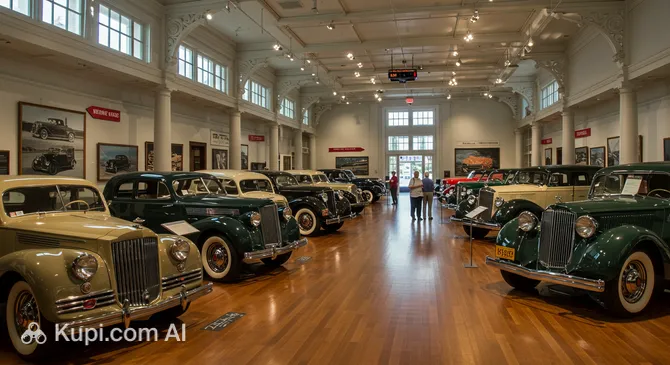
Imagine a place where time has stood still in an era of impeccable style and engineering triumph. America's Packard Museum is not just a car exhibition, but a one-of-a-kind restored dealership located in the city of Dayton, USA. Housed in a magnificent historical building from 1917, this museum is recognized as the world's largest public collection of automobiles from the legendary Packard brand.
\n\n
America's Packard Museum. Source: Kupi.com AI
\n\n

The main feature of this place lies in its authenticity. The building was designed as a service and demonstration center for the Citizens Motor Car Company, and during the restoration, original decorative elements were successfully preserved: from the floor tiles and elegant light fixtures to the vintage freight elevator and even the radio in the manager's office. This creates a unique atmosphere of the early 20th century, turning an ordinary tour into a true journey through time.

\n\n

The exhibition includes over 50 superbly preserved automobiles. Here you can trace the entire evolution of the brand: from the first models of the early 1900s with brass details to the luxurious limousines of the 1930s and elegant post-war cars. The museum is rightfully considered a must-visit for anyone who appreciates automotive history and the aesthetics of American luxury.

Contacts

For those planning a visit to America's Packard Museum, we have gathered the essential contact information. This will help you clarify details in advance or book a special tour.

\n\n \n \n \n \n \n \n \n \n \n \n \n \n
Address420 S Ludlow St, Dayton, OH 45402, USA
Phone+1 937-226-1710
Official Websiteamericaspackardmuseum.org

What to Do

The main reason to visit the museum is, of course, a walk among the gleaming Packards. You will be able to examine more than fifty models in detail: from early examples of the "Brass Era" to the futuristic cars of the 1950s. Pay attention to the engineering innovations and unique design that once made the brand a symbol of success and high status in American society.

\n\n

In addition to the cars themselves, entire themed zones have been recreated here. You can look into the original showroom with its historical decor or walk through the service department, where equipment from those years is presented. The sense of reality is enhanced by green ceiling lamps brought directly from the Packard plant in Detroit and authentic documents: from advertising brochures to technical service logs.

\n\n

History buffs will find it interesting to study the section dedicated to the company's role in world wars, and families with children will certainly appreciate the Junior Executive Suite—a special play area. And don't forget to take photos in this authentic Art Deco space—it looks incredibly cinematic. If you're lucky, for an additional fee, you can even arrange a short ride in one of the classic Packards to experience the smooth ride for which these cars were famous.

Getting There

Finding this unique museum is easy—it is located in the heart of Dayton, at the intersection of Ludlow and Franklin Streets. If you are traveling by car, this is the most convenient way: visitor parking is available next to the museum. The drive from neighboring Cincinnati or Columbus via interstates I-75 or I-70 takes very little time.

\n\n

For those flying into the region, the nearest hub is Dayton International Airport (DAY). A taxi or rental car ride from the terminal to the museum doors takes about 20–25 minutes. Within the city, you can also use public transportation—the RTA bus system, with stops located within walking distance in downtown.

\n\n

If you are already in the city center, a pleasant walk or bike ride is a great addition to your route. Your main landmark will be the famous neon Packard sign, which is clearly visible from a distance on the corner of the building.

History & Facts

The history of this site began in 1917 when the Citizens Motor Car Company decided to build a modern facility for the distribution of Packard automobiles. The $80,000 project was cutting-edge for its time: a completely fireproof concrete and steel frame with wide spans made it a model of industrial architecture. The project was designed by local architect Albert Pretzinger, who was inspired by the work of the famous Albert Kahn, the architect behind the Packard plants in Detroit.

\n\n

After 1937, the building changed owners several times, serving as a parts warehouse and a showroom for other brands, until it was purchased in the early 1990s by collector Robert E. Signom II. He set an ambitious goal: to return the building to its original Art Deco glory. On June 30, 1992, the museum's grand opening took place, marked by a parade of 100 Packard cars driving through the city.

\n\n

Over the years, the museum has only grown and developed. In 1994, an adjacent pavilion was acquired, and in 2004, the organization received the prestigious James Bradley Award from the Society of Automotive Historians for its contribution to heritage preservation. Today, the founder's work is continued by his son, Robert Signom III, maintaining its status as the world's largest public collection of this legendary brand.

Time Needed

To leisurely enjoy the vintage car aesthetics and explore the historical interiors, most visitors need about 2 to 3 hours. This time is quite sufficient to view the main exhibition, look into the service department, and study unique documents in the library.

\n\n

The museum is fairly compact, making it an ideal itinerary item for the afternoon. If you are traveling with children, be sure to set aside an extra 20–30 minutes for the "Junior Executive Suite" area, and photography enthusiasts will definitely want to linger by the rarest models from the 1930s.

Working Hours

Currently, the exact operating hours of America's Packard Museum may vary depending on the season or special events. Before visiting, we strongly recommend checking the museum's official website or calling the contact number.

\n\n

Typically, such private collections are open during the day, but confirming the current schedule will help you avoid disappointment and better plan your route through Dayton.

Nearby

Dayton is a city with a rich historical past, so a visit to the car museum can easily be combined with exploring other iconic sites. A walk through the neighborhood will allow you to dive deeper into the atmosphere of the "city of innovation" and see sites associated with the birth of aviation and the development of American industry.

\n\n\n \n \n \n \n \n \n \n \n \n \n \n \n \n \n \n \n \n \n \n \n \n \n \n \n \n \n \n \n \n \n \n \n \n \n \n \n \n \n \n \n \n \n \n \n \n \n \n \n
Attraction NameDistance (km)
Dayton Arcade0.5
Memorial Hall1.1
Woodland Cemetery and Arboretum1.6
Dayton Aviation Heritage National Historical Park1.7
Original Site of Wright Brothers Home1.7
St Anne's Hill1.7
Paul Laurence Dunbar House2.4
Carillon Historical Park2.8
Davis-Linden Building3.0
Orville Wright Hawthorn Hill3.7

Reached the end of the page?

That means the route is fully explored