Support

Dayton Aviation Heritage National Historical Park

About

The place where humanity found its wings — that is the best way to describe the Dayton Aviation Heritage National Historical Park. Located in the city of Dayton, USA, this unique complex is dedicated not only to technical progress but also to the outstanding individuals who created it. The park brings together six sites telling the story of brothers Orville and Wilbur Wright, as well as the famous poet Paul Laurence Dunbar.
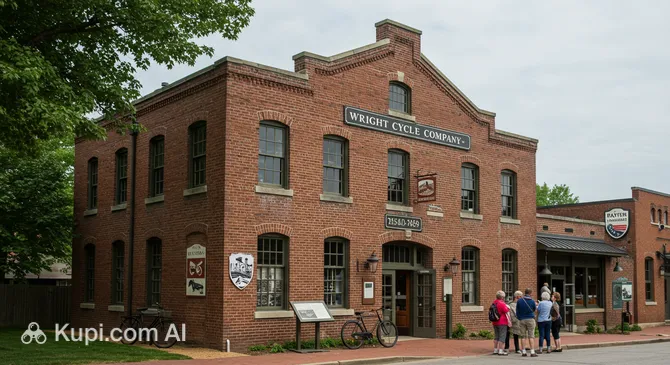
Dayton Aviation Heritage National Historical Park. Source: Kupi.com AI

The heart of the park is the Wright-Dunbar Interpretive Center. Here, visitors can see the original Wright Cycle Company bicycle shop, where the Wright brothers applied their engineering skills to develop the first prototypes of flying machines. The exhibits meticulously recreate the atmosphere of an era of innovation, when Dayton was considered the world leader in patents per capita.

Of particular value is the 1905 Wright Flyer III — the world's first airplane to prove its practicality. In addition to aviation achievements, the park includes the home-museum of Paul Laurence Dunbar, the first internationally recognized African American writer, whose work became an important part of America's cultural code. This combination of industrial history and literary heritage makes the park a must-visit for all history enthusiasts.

Contacts

For up-to-date information on special events or group tours, you can use the following contact details:

Address 16 S Williams St, Dayton, OH 45402, USA
Phone +1 937-345-0433
Official Website www.nps.gov/daav

What to Do

Start your journey at the Wright-Dunbar Interpretive Center, where you can watch a fascinating 30-minute film about the lives and trials of the Wright brothers. Afterward, be sure to visit the original bicycle shop across the street — park rangers lead engaging tours there, explaining how parts for two-wheeled transport were transformed into components for the first airplane. On the second floor of the center, you'll find the Parachute Museum, which will surprise you with rare exhibits from the history of aeronautics.

For those who prefer outdoor walks, the Huffman Prairie Flying Field is perfect. This is a vast meadow where the brothers conducted hundreds of test flights in 1904–1905. The spirit of the first discoveries can still be felt here. At Carillon Historical Park, a meeting with a legend awaits you — the original Wright Flyer III, displayed in the specially designed Wright Hall.

The park is excellent for family vacations: admission to the main center is free, as is parking. Children will love the interactive exhibits, while adults will appreciate the chance to combine the visit with a trip to the nearby National Museum of the U.S. Air Force. You can conclude your walk at the Wright Brothers Memorial, which offers a scenic view of the surrounding area.

Getting There

The main entry point to the park is the Wright-Dunbar Interpretive Center, located at 16 S Williams St in Dayton. This location is just west of the downtown area. For those traveling by private or rental car, free parking is available directly behind the center building: to reach it, drive past the main entrance, turn left onto the side street, and then left again into the parking lot.

Since the park's sites are scattered across different parts of the city and its surroundings, the most convenient way to get around is by car or taxi. For example, the famous Huffman Prairie Flying Field is located northeast of the city on the grounds of Wright-Patterson Air Force Base. While public transportation exists in the city and connects the center with major neighborhoods, it may be less convenient for moving quickly between all six historical points.

History & Facts

The history of this place is inextricably linked with the names of Wilbur and Orville Wright. Working in a regular bicycle shop in Dayton, these talented self-taught men revolutionized science by developing the foundations of aerodynamics. It was here that they studied wing lift and created the first flight control systems. Following their early experiments in Kitty Hawk, the brothers returned to their native Ohio to prove at Huffman Prairie in 1904–1905 that man could fly in circles, arcs, and over long distances.

A landmark exhibit of the park is the Wright Flyer III — the world's first practical airplane. In October 1905, it demonstrated the ability to stay in the air for nearly 40 minutes. This machine was later meticulously restored under the personal supervision of Orville Wright. Interestingly, during that era, Dayton was a true "forge of inventors" and led in patents per capita, giving the world not only the airplane but also such common items as the portable stepladder.

The park also preserves the memory of Paul Laurence Dunbar, an outstanding African American poet and writer who was a close friend of the Wright brothers. His home, part of the complex, serves as a reminder of the struggle for equality and the city's cultural flourish in the early 20th century. Bringing these different yet significant lives together within one national park highlights the region's unique innovative and literary heritage.

Time Needed

To get a general impression and visit the main information center along with the bicycle shop, you will need about 1–1.5 hours. This is a great option for a brief introduction to the city's heritage.

However, if you plan to see all six key sites, including a trip to the Huffman Prairie flying field and a visit to Carillon Historical Park, where the original Wright Flyer III is located, it's better to set aside a full day (4 to 6 hours). The distances between the sites require travel time, and each exhibit deserves thoughtful exploration.

Working Hours

The main Wright-Dunbar Interpretive Center usually welcomes visitors from Wednesday to Sunday, 9:00 AM to 4:00 PM. Please note that the center is closed on Mondays and Tuesdays.

Other park sites, such as Carillon Historical Park or the Dunbar House, may have their own operating hours, which sometimes change depending on the season or holidays. Before your trip, we highly recommend checking the current schedule on the official National Park Service (NPS) website.

Nearby

Exploring the surroundings of the National Historical Park will allow you to dive deeper into the atmosphere of the "city of inventors" and see how the people who changed the course of history lived and worked. Nearby are many sites related to both aviation and Ohio's architectural heritage.

Name Distance (km)
Original Site of Wright Brothers Home 0.1
Paul Laurence Dunbar House 0.7
Dayton View Historic District 1.3
Dayton Arcade 1.7
Memorial Hall 2.1
Woodland Cemetery and Arboretum 3.1
Carillon Historical Park 3.2
St Anne's Hill 3.4
Davis-Linden Building 4.7
Orville Wright Hawthorn Hill 4.8

Reached the end of the page?

That means the route is fully explored