Support

Wright Brothers National Museum

About

In the heart of Ohio, within the scenic Carillon Historical Park, lies a place where the history of conquering the skies comes to life. The Wright Brothers National Museum (John W. Berry, Sr. Wright Brothers National Museum) is a unique collection of authentic artifacts documenting the lives and triumphs of Wilbur and Orville Wright. It houses the world’s most extensive collection of items belonging to the famous family of inventors.
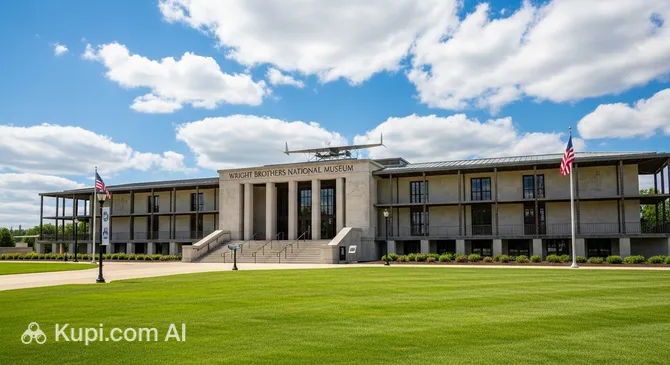
Wright Brothers National Museum. Source: Kupi.com AI

The museum's crown jewel is the 1905 Wright Flyer III. This is not just a replica, but the original aircraft, which the Wright brothers themselves considered their most important achievement. This machine became the first practical aircraft in history, capable of sustained, controlled flights. Today, it is recognized as a National Historic Landmark in the USA and the official state aircraft of Ohio.

In addition to the legendary plane, visitors to Dayton can see a recreation of the brothers' bicycle shop, where the blueprints for the first gliders were born. The exhibition includes thousands of items: from tools and family heirlooms to the Korona V camera that captured the historic moment of the first flight in 1903. The museum is part of the Dayton Aviation Heritage National Historical Park, highlighting the city's status as the birthplace of global aviation.

Contacts

To confirm current information before your visit, you can use the museum's official contact details.

Address Unnamed Road, Dayton, OH 45439, USA (within Carillon Historical Park)
Phone +1 937-293-2841
Official Website daytonhistory.org

What to Do

The main highlight that makes a visit worthwhile is the opportunity to see the Wright Flyer III up close. Visitors can examine the design of the first practical airplane in detail and imagine Orville Wright piloting this fragile-looking craft. Be sure to stop by the replica of the brothers' fifth bicycle shop, recreated in its 1901 appearance, where original Van Cleve bicycles built by the brothers themselves are on display.

The exhibition is filled with unique interactive elements and personal items that reveal the human side of these geniuses. Here, you can see a Victrola phonograph modified by Orville, as well as touching family heirlooms: a knitted cape belonging to the inventors' mother and an ancient Bible from 1668. Of particular interest is the camera used to take the photograph of the very first flight—a true "Holy Grail" for history buffs.

After exploring the indoor galleries, it is pleasant to stroll through Carillon Park itself. It is a great spot for atmospheric photos against a backdrop of historic buildings, offering a chance to dive into the era when man first began to conquer the sky. For families and technology enthusiasts, educational programs are often held here, providing a deeper understanding of the physics of flight and the process of invention.

Getting There

The Wright Brothers National Museum is located within Carillon Historical Park. If you are traveling by car, it is easily accessible via I-75: simply take the SR-4 or SR-35 exit toward downtown and follow the signs. The drive from Dayton International Airport takes about 10–15 minutes, and free parking is provided for visitors.

For those who prefer public transportation, RTA buses operate in the city of Dayton. Routes 1, 6, or 8 will take you to the central areas, from where the museum is within walking distance or a short taxi ride. By car, it is about a 20-minute drive from the National Museum of the U.S. Air Force.

Travelers also frequently use ride-sharing services like Uber or Lyft. A trip from the airport costs approximately 20–30 USD. If you are already downtown, the walk to the park takes about 20–30 minutes, allowing you to enjoy Ohio's architecture along the way.

History & Facts

While the famous first flight took place at Kitty Hawk, Dayton was the true "cradle" of aviation. Wilbur and Orville Wright conducted their primary research and testing in their modest bicycle shop. The mechanical skills they gained from working with two-wheeled vehicles became the foundation for their aircraft control system. Interestingly, Orville Wright personally helped design Wright Hall and oversaw the preservation of family relics until the end of his life.

The central exhibit—the Wright Flyer III—is considered the culmination of the brothers' work. Unlike its 1903 predecessor, this machine was the first truly practical airplane, capable of sustained and controlled maneuvers. Orville considered this model the most important achievement of his life. In 1948, he helped restore the aircraft for display so that future generations could see the original in detail.

The Wright family history is full of intriguing details: for example, their mother, Susan, possessed remarkable mechanical abilities that she passed on to her sons, and their father, Bishop Milton Wright, always encouraged his children's intellectual curiosity. In 2018, the museum officially received national status, solidifying its role as a vital guardian of USA aviation heritage.

Time Needed

To thoughtfully explore all the exhibits, guests usually need 2 to 3 hours. This is enough time to see the legendary Wright Flyer III, visit the bicycle shop replica, and view the Wright family's personal belongings on display.

If you plan to combine your visit with a walk through the rest of Carillon Historical Park, which houses many other historic buildings, it is best to set aside 3–4 hours or even half a day. This will allow you to take photos without rushing and fully immerse yourself in the atmosphere of early 20th-century Dayton.

Working Hours

The museum typically welcomes visitors from Wednesday to Sunday. The doors are open from 9:00 AM to 4:00 PM. Please note that the exhibition is closed to the public on Mondays and Tuesdays.

Operating hours may change during holidays or due to special events at the park. It is recommended to check the official website of Carillon Historical Park before your trip to confirm the current hours of operation.

Nearby

A visit to the Wright Brothers Museum is just one part of immersing yourself in the region's rich history. The surrounding area offers many places to learn about the lives of great inventors and writers, as well as to enjoy the architecture of the last century.

Name Distance (km)
Dayton Aviation Heritage National Historical Park 0
Original Site of Wright Brothers Home 0.1
Paul Laurence Dunbar House 0.7
Dayton Arcade 1.6
Memorial Hall 2.1
Woodland Cemetery and Arboretum 3.1
Carillon Historical Park 3.2
St Anne's Hill 3.4
Davis-Linden Building 4.7
Orville Wright Hawthorn Hill 4.8

Reached the end of the page?

That means the route is fully explored