Support

Fernbank Forest

About

Imagine a corner of pristine nature preserved almost in the very heart of a modern metropolis. Fernbank Forest is a unique 25-hectare (65-acre) tract of mature mixed forest located in Decatur, USA. As part of the Fernbank Museum of Natural History, this forest is considered one of the few surviving remnants of old-growth forests in the Piedmont region.
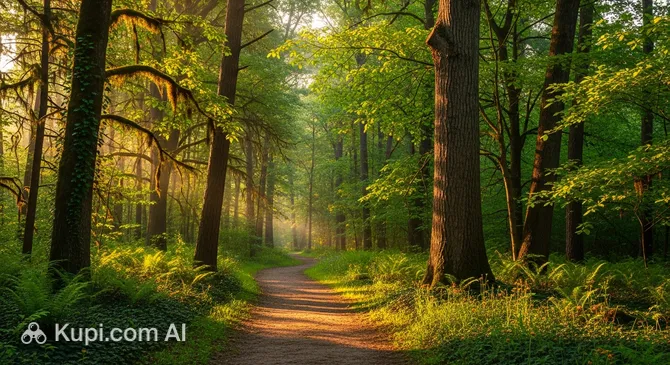
Fernbank Forest
Fernbank Forest. Иллюстрация. Источник: Kupi.com AI

Here, you can see truly majestic trees, such as white oaks and tulip poplars, which reach impressive heights of up to 48 meters. The forest serves not only as a place for peaceful relaxation but also as an important base for scientific research, representing a living ecosystem that is carefully protected and restored from invasive plant species.

Fernbank is more than just a walking area; it is the fourth oldest non-profit environmental organization in the country. Combining the roles of an educational center and a nature reserve, it offers visitors a rare opportunity to feel the rhythm of nature without straying far from the busy streets of Atlanta.

Contacts

For more information about events or group tours, you can use the following contact details:

How to contactContact
Address767 Clifton Rd NE, Atlanta, GA 30307, США
Phone+1 404-929-6300
Websitewww.fernbankmuseum.org

What to Do

The main reason to visit Fernbank Forest is to walk along its winding footpaths. Visitors can explore the forest independently or join excursions led by professional environmental guides. These walks are particularly educational: you will learn about the unique local flora and fauna, as well as how scientists are restoring the ecosystem by reintroducing rare native plants.

For nature enthusiasts, the forest provides ideal conditions for birdwatching and observing small woodland wildlife. With a variety of trails suitable for all fitness levels, everyone can find a route to their liking — from short introductory loops to longer treks among centuries-old trees.

In addition to forest walks, guests can enjoy interactive outdoor educational programs and access the museum's primary scientific exhibits. It is an excellent spot for photoshoots against a backdrop of wilderness and for quiet relaxation away from city noise, making it a popular choice for family outings and educational trips.

Getting There

Reaching this natural sanctuary is quite simple, as it is located in the Decatur area, just a few minutes' drive from downtown Atlanta. If you are planning to travel by car, the most convenient routes are via I-85 or I-20. Free visitor parking is available on the Fernbank Museum grounds.

For those preferring public transport, the nearest access point is the MARTA — Kensington Station (blue line). From the station, you can reach the museum in about 15–20 minutes on foot or take a taxi or Uber, which will take no more than 5 minutes. A drive from downtown Atlanta (Peachtree Center) typically takes about 20–30 minutes.

If you are in neighboring areas such as Druid Hills or Poncey-Highland, the forest is easily accessible by bicycle or on foot via well-maintained sidewalks. We recommend planning your route in advance using navigation apps to find the most convenient way.

Ближайший город: Decatur

History & Facts

The history of this protected site began in 1939, when a group of concerned citizens purchased the land from Colonel Z. D. Harrison. The central figure in saving the forest was his daughter, Emily Harrison. She was so passionate about protecting these trees from developers after World War II that neighbors jokingly called her a "witch" for her unwavering resolve. Thanks to her efforts, Fernbank, Inc. was established, turning the forest into a "living textbook" for children.

In 1964, the trustees entered into a significant agreement with the DeKalb County School Board to manage the forest in exchange for free public access. The official opening took place in 1967, and Emily Harrison lived to see her dream fulfilled. Over the decades, three generations of Scouts have trained here, learning the fundamentals of forestry and ecology in the field.

The modern era for the forest began in 2012, when management was fully returned to the Fernbank Museum of Natural History. Following an extensive four-year restoration aimed at reviving native flora, the forest reopened to the public in September 2016. Today, it stands as one of the region's most significant cultural and natural landmarks, harmoniously blending science and recreation.

Time Needed

To take a leisurely stroll along the shaded trails and enjoy the tranquility of the ancient forest, you will typically need 1.5 to 2 hours. This is enough time to cover the main routes and take beautiful photographs of the centuries-old oaks.

If you plan to combine your walk with a visit to the main Fernbank Museum exhibits, you should budget about 3–4 hours for your visit. For families with children, who will likely want to explore every corner of the outdoor educational zones, we recommend setting aside a full half-day.

Working Hours

Fernbank Forest is open to visitors daily from 10:00 AM to 4:30 PM. Access to the grounds is included with Fernbank Museum of Natural History tickets, so the walking schedule is directly tied to the main complex's operating hours.

Please note that hours may vary on holidays or during special events. Before your trip, it is recommended to check the latest information on the museum's official website to ensure your visit is as comfortable as possible.

10:00–16:30

Nearby

A visit to the forest can easily be combined with exploring other interesting sites nearby. The area is rich in historic architecture and charming parks that will complement your trip and allow you to delve deeper into the atmosphere of old Georgia.

Below are some attractions located in the immediate vicinity:

NameDistance
Oakhurst Dog Park2.2 km
Brick Store Pub2.7 km
The Iberian Pig2.7 km
Decatur Square2.7 km
The S.O.S. Tiki Bar2.8 km
Glenlake Park3.1 km
Suburban Plaza Shopping Center4 km

Reached the end of the page?

That means the route is fully explored