Support

Fort Riley (Marshall AAF)

About the Airport

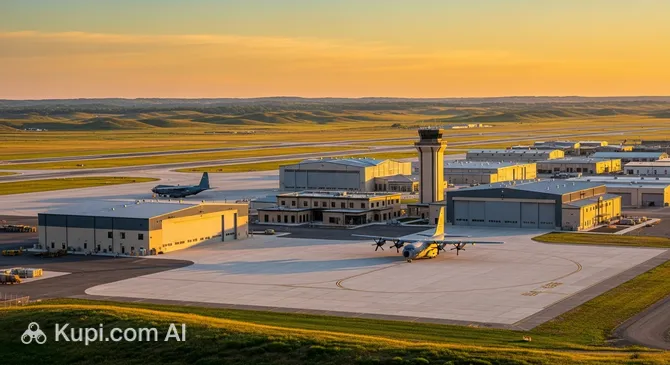
Fort Riley (Marshall AAF). Source: Kupi.com Binoculars

Marshall Army Airfield is not just a transport hub, but a true gateway for the legendary 1st Infantry Division of the US Army, known as "The Big Red One." You won't find the usual bustle of tourists or duty-free shops here: every takeoff and landing is subject to strict discipline and service objectives. The airfield combines a rich history, being one of the oldest in the country, with modern technologies ensuring the rapid deployment of troops and equipment to any point in the world.

IATA Code FRI
ICAO Code KFRI
City Fort Riley
Distance to Centre On base territory (~6 km to Junction City)
Status Military
Annual Passengers Data classified (military contingent only)
Schedule Regulated by military command

Strategic Importance and Capabilities

Marshall Airfield is unique in its specialization. As a purely military facility, it is equipped to handle heavy transport aircraft, such as the C-17 Globemaster III, allowing for large-scale logistics operations. However, the main "workhorses" here are helicopters: the airfield serves as a base for army aviation, including the famous Apaches, Black Hawks, and Chinooks, which conduct training flights around the clock.

Infrastructure for Personnel

Although the airport is closed to commercial flights, special conditions have been created here for military personnel. The terminal is designed for the rapid processing of large groups of people (Mass Deployment), bypassing standard civilian formalities. One of the main features is the presence of a special USO recreation zone, where soldiers and their families can spend time in comfort before their flight, taking advantage of free internet and snacks, creating a homely atmosphere even whilst on official duty.

Historical Heritage

Marshall AAF is living history of American aviation. Opened back in 1921, it has seen the evolution from biplanes to ultra-modern unmanned systems. Named in honour of Brigadier General Francis Marshall, the airfield preserves the spirit of tradition while remaining a critically important element of modern defence.

Contact Information

It is important to understand that Marshall Airport (Marshall AAF, FRI) is primarily a military airfield serving the Fort Riley base. Passenger transport here is generally of a charter or special nature, so standard services found at civilian airports may be absent or operate differently. Here is the main contact information:

  • Official Airport Website: As this is a military facility, there is no separate website for passengers. All official information is published on the Fort Riley military base portal.
  • Information Desk Phone: There is no unified enquiry service for passengers. For all questions regarding schedules, tickets, and flight check-in, you must contact the airline organizing the flight directly.
  • Airport Address: Marshall Army Airfield, Fort Riley, Kansas, USA.
  • Email and Social Media: Specialized accounts for passengers are absent. Up-to-date information should be sought on the official resources of the military base.
  • Lost Luggage Information: Issues regarding the search for lost or damaged luggage are handled by the customer support service of your air carrier.
  • Passenger Support Contacts: Support for passengers regarding all flight-related issues is provided exclusively by the airline operating the flight.

How to Get to the Airport

When planning a trip to Fort Riley, it is important to understand the specifics of local air transport. Marshall Army Airfield (FRI), located directly on the military base, primarily serves the needs of the USA Army. Access for civilians and commercial flights is extremely limited, and standard tourist routes do not lead here. Therefore, for most travellers, the main way to reach this region is to fly into one of the nearest commercial airports.

Taxi, Transfer, and Car Rental

Since public transport, such as buses or trains, does not directly connect major airports with the Fort Riley military base, a car becomes the most convenient option. You can book a transfer in advance or use taxi services; however, the most flexible and often the most cost-effective solution is car rental directly at the arrival airport. This will give you freedom of movement not only to Fort Riley but also throughout the picturesque region of Kansas.

Nearest Commercial Airports

For travel to Fort Riley, several main airports are worth considering. The closest major hub is Manhattan Regional Airport (MHK), located just a 20-30 minute drive away. Other convenient options located at a greater distance include:

Parking and Specifics

If you are arriving in a rented or personal vehicle, remember that Fort Riley is an active military base. To enter the territory, identification documents and a pass may be required. Parking rules for visitors may change, so it is recommended to check current information on the base's official website in advance. Overall, planning a trip via one of the commercial airports and renting a car is the most reliable and convenient way to get to Fort Riley.

Terminals and Map

Marshall Airport (Marshall Army Airfield, FRI), located on the territory of the Fort Riley military base in the USA, has its own specific nature as it primarily serves military needs. Its structure differs significantly from familiar civilian airports.

Terminals and Their Purpose: In fact, Marshall Airport operates with one main building that functions as a passenger terminal. It is not divided into multiple terminals like large international hubs. This building is designed for check-in, security screening, and waiting for flights by military personnel, their families, and other authorized staff. Commercial civilian flights are not serviced here.

Map and Navigation: Thanks to its compact size, navigation inside the terminal is intuitive. All key zones — check-in counters, security screening area, waiting lounge, and boarding gates — are located in one building and within walking distance of each other. Complex maps and long transfers between terminals are absent, as there is only one terminal.

Departure and Arrival Zones: Processes for departing and arriving passengers are organized within a single space. Departure and arrival zones are functionally separated but physically located close together. The waiting hall is usually equipped with basic amenities, but one should not expect a wide variety of shops or restaurants typical of civilian airports.

Procedures and Time: The time required to pass through check-in and security can vary greatly. It depends on the type of flight (for example, a mass troop deployment or a small charter) and current security protocols. Screening procedures comply with strict military standards, which may differ from civil aviation rules. It is recommended to arrive at the airport strictly at the time indicated in your orders and to have all necessary documents with you, including military ID and travel orders.

Airport History

The history of Fort Riley's airport, officially known as Marshall Army Airfield (MAAF), is closely tied to the development of military aviation in the USA. Although the first flights on the fort's territory began as early as 1921 to support the cavalry school, the official opening of the airfield took place in 1928. It was named in honour of Brigadier General Francis K. Marshall, Assistant Chief of Cavalry, who tragically died in a plane crash a year earlier. This name symbolized the airfield's initial mission — to provide air support to ground forces.

In the early stages, the airfield was a modest flying field for small reconnaissance aircraft. It underwent significant development during World War II, when it became an important training and transit point. It was from here that units of the famous 1st Infantry Division, known as "The Big Red One," departed for the front. In the post-war years, the airfield continued to grow, adapting to new challenges and technologies, including the advent of helicopters, which significantly expanded its operational capabilities.

The modern phase of Marshall Airfield's history is marked by large-scale renovations that have turned it into one of the US Army's key transport hubs. The runway was lengthened and reinforced to accommodate heavy transport aircraft such as the C-17 Globemaster III and C-5 Galaxy, capable of transporting troops and equipment anywhere in the world. A new modern air traffic control tower and a terminal for arriving and departing troops were built, making deployment and homecoming processes more efficient and comfortable.

An interesting fact: Marshall Airfield is not a commercial airport, but exclusively a military facility playing a central role in the life of the Fort Riley garrison. Its history is a reflection of the evolution of the American army: from supporting horse cavalry with biplanes to the global deployment of mechanized brigades on jet transports. Today, the airfield continues to serve as the main air harbour for soldiers departing on missions around the world and returning home.

Services and Facilities

Marshall Airport (FRI) on the Fort Riley military base offers a set of basic services focused on the comfort of military personnel, their families, and other authorized passengers. Although the selection here is not as wide as in major international airports in the USA, you will find everything necessary for waiting for a flight. Small cafes and retail points are available in the terminal where you can have a snack and purchase essential goods.

One of the key features of the airport is the presence of a USO Lounge. This is a special recreation area for military personnel and their families where one can relax in a comfortable setting, watch TV, and enjoy complimentary snacks. Throughout the terminal, passengers have access to free Wi-Fi, as well as numerous charging stations for electronic devices, ensuring you always stay connected.

ATMs are installed at the airport for financial transactions. The terminal is fully equipped for travellers with disabilities in accordance with ADA standards, including accessible restrooms and ramps. Families with children can use specially equipped baby care rooms, making the wait for a flight more comfortable.

On the territory of the Fort Riley base itself, there are accommodation options, such as IHG Army Hotels. Additionally, a large selection of hotels can be found in nearby cities such as Junction City and Manhattan. Although there are no specialized business centres at the airport, basic business services, such as access to a computer and printer, may be available in the USO lounge for authorized visitors.

Where to Eat

When planning a trip through Fort Riley airport (Marshall AAF, FRI), it is important to understand that this is an active military airfield, not a large commercial airport. Consequently, the infrastructure and services for passengers, including dining outlets, differ significantly here from familiar civilian aviation hubs in the USA.

In the Marshall AAF terminal building, you will not find restaurants, cafes, or bars with extensive menus. Dining options are generally very limited. Passengers may have access to vending machines with drinks, sandwiches, and light snacks. Specialized dietary options, such as vegetarian, gluten-free, or halal dishes, are not presented here.

For a full lunch or dinner, it is recommended to plan your meals outside the airfield. The main dining establishments are located on the territory of the Fort Riley military base (access to them may be limited for civilians) or in the nearest city, Junction City, located a few minutes' drive away. There you can find a variety of fast-food restaurants and cafes offering American cuisine.

Thus, the best advice for travellers is to eat well in advance of arriving at the airport or be prepared for the fact that you will only be able to snack on items from a machine. All establishments with a full menu are located outside Marshall AAF, so plan your time taking into account the need to travel to them.

Travel Tips

Flying through Marshall Airfield (Marshall AAF), which serves the Fort Riley military base, has its own specifics. Procedures here may differ from standard civilian airports. To ensure your journey, whether related to service or relocation, goes smoothly, check out our recommendations prepared specifically for military personnel and their families.

Document Preparation: This is the most important step. Always keep your military ID (CAC card), official travel orders (PCS/TDY orders), and passports for all family members ready. These documents will be required at several stages, including entry to the base territory and flight check-in.

Verifying Flight Information: Standard commercial services, such as online check-in or mobile apps, may be unavailable. It is strongly recommended to contact your air carrier directly (especially if it is a charter flight) or your unit's transportation office (TMO) in advance to confirm departure time, baggage allowance, and check-in rules.

Arrival Time and Security: Plan to arrive at the airport at least 2-3 hours before departure. Given the facility's status, screening procedures and document checks may take longer than at a regular airport. Arriving calmly and in advance will help avoid unnecessary stress.

Luggage and Hand Luggage: Although general Transportation Security Administration (TSA) rules of the USA apply here, such as restrictions on carrying liquids (containers up to 100 ml), additional restrictions may apply, especially regarding military gear. Be sure to clarify all details with your carrier or the TMO.

In Case of Flight Delay: If there is a change in the schedule, first contact the airline representative or the airfield operations centre for information. It is also extremely important to notify your command or transportation office. They will provide further instructions and assist with organizational issues, which is especially important during official duty travel.

Reached the end of the page?

That means the route is fully explored