Support

Greensboro History Museum

About

The Greensboro History Museum invites you to immerse yourself in North Carolina's rich past — it is the largest institution of its kind in the region. Located in the picturesque city of Greensboro, this museum occupies a majestic Romanesque Revival building that served as the First Presbyterian Church in the late 19th century. Today, it is an official Smithsonian Affiliate, confirming its high status and significance.
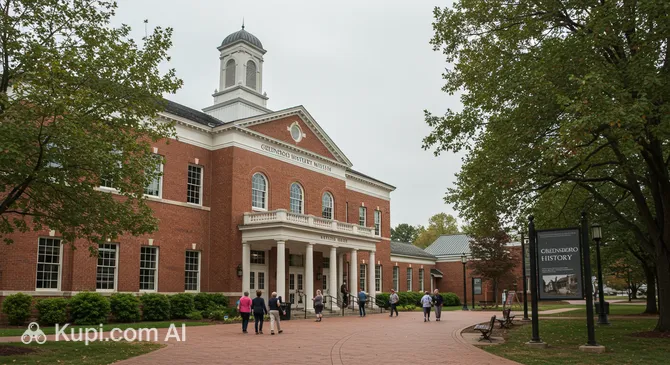
Greensboro History Museum. Source: Kupi.com AI

Within the museum's walls, US history comes alive through the lens of local communities: from Quakers and Native Americans to African American leaders and German settlers. The exhibits span a vast period of time, offering visitors over 17,000 square feet of exhibition space filled with unique artifacts and stories.

The site's architecture, with its distinctive cruciform roof and high tower, along with an old cemetery founded in 1831, creates a special atmosphere. This museum is not just a collection of objects, but a true guardian of the cultural code of the Piedmont Triad region, attracting thousands of tourists every year with its bold and relevant exhibitions.

Contacts

For more information about special exhibitions or to plan a group visit, you can use the museum's official contact channels.

Address 130 Summit Ave C, Greensboro, NC 27401, USA
Phone +1 336-373-2043
Website http://www.greensborohistory.org/
Facebook facebook.com/GHMuseum

What to Do

The highlight of your visit will be the permanent exhibition Voices of a City. This is an interactive journey through the centuries, telling the story of the city's transformation through rare artifacts, newsreels, and personal stories. You can see how the way of life for various communities changed and appreciate the local residents' contributions to the state's economy and culture.

Art and lifestyle enthusiasts should look out for the decorative arts and textile collections. The museum's archives house unique family papers and photographs from the first half of the 20th century, as well as personal belongings of famous natives such as the writer O. Henry and First Lady Dolley Madison. For researchers, access is open to rare documents and diaries of historical figures.

In addition to exploring the exhibits, the museum regularly hosts educational programs and themed events, such as 1920s-style evenings. You can finish your walk at the cozy gift shop on the ground floor, which sells books on regional history and handmade souvenirs. A nice bonus is the lack of an admission fee — the museum operates on the basis of voluntary donations.

Getting There

Finding your way to the museum is easy, as it is located in the heart of Greensboro at 130 Summit Ave. If you are traveling by car on I-40 or US-29, simply follow the signs toward Summit Ave. For the convenience of visitors, free parking is available behind the museum building.

For those who prefer public transportation, routes from the PART (Piedmont Authority for Regional Transportation) system are available. If you are arriving from another region, the nearest airport, Piedmont Triad International (GSO), is approximately a 20-minute ride by taxi or Uber.

Thanks to its central location, the museum is within easy walking distance of many other cultural sites in the city. You can also use Google Maps to find the best route from your current location.

History & Facts

The Greensboro History Museum traces its roots back to 1924, when a group of volunteers founded a historical society. A year later, the first modest exhibition opened, consisting of only 200 artifacts. Major changes occurred in 1939, when the collection moved to the Richardson Civic Center, which had previously served as a library.

A significant milestone was the museum building's inclusion in the National Register of Historic Places in 1985. The architectural complex, which combined the former Presbyterian church and the Smith Memorial Building, is a valuable monument of the Romanesque Revival style in its own right. In 1990, thanks to municipal bonds, the museum added a new wing, which allowed it to expand its exhibition space.

In recent years, the museum has continued to gain national recognition. For example, in 2021, its "Pieces of Now" project received a prestigious award. Today, it is not just a repository of antiquities, but a dynamic center that is solemnly celebrating its centennial in 2024–2025, bringing together generations of residents and visitors alike.

Time Needed

To explore all 17,000 square feet of exhibits at a leisurely pace, the average visitor will need between 2 to 4 hours. This is enough time to see the key exhibitions and browse the gift shop.

For those who are seriously interested in history and plan to work with archival documents or study genealogical collections in detail, a visit could last an entire day. If you are short on time, we recommend focusing on the main exhibition, "Voices of a City."

Working Hours

The museum welcomes visitors from Tuesday to Sunday, though the schedule varies depending on the day of the week. On Mondays, the museum is closed to the public.

From Tuesday to Saturday, the exhibits are open from 10:00 AM to 5:00 PM. On Sundays, the museum operates on a reduced schedule from 2:00 PM to 5:00 PM. Since the schedule may change on holidays, it is recommended to check the official website before visiting.

Nearby

The museum's location in the historic center makes it an ideal starting point for further exploration of the city. A walk through the surrounding area will allow you to see architectural monuments and landmarks that complete the historical picture of the region.

Below are some interesting sites located within walking distance or a short drive from the museum:

Attraction Name Distance (km)
Jefferson Standard Building 0.4
International Civil Rights Center & Museum 0.5
Greensboro Historic District Adm 0.8
Dunleath Historic District 0.8
February One : A&T Four Monument 0.9
Nathanael Greene Statue 0.9
Dudley Memorial Building 1
The Historic Magnolia House 1.1
Double Oaks Bed & Breakfast 1.3
Reef Architects 3.1

Reached the end of the page?

That means the route is fully explored