Support

International Civil Rights Center & Museum

About

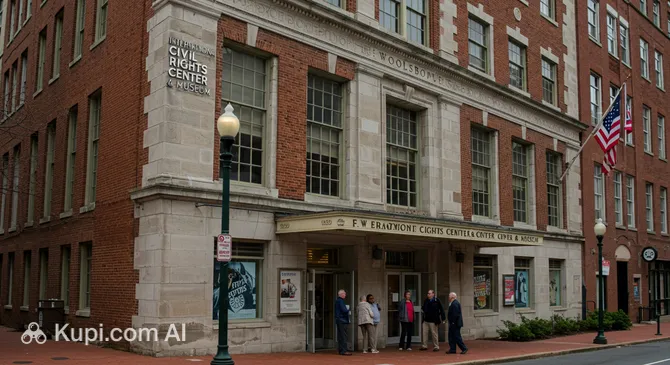
In the heart of Greensboro lies a unique place that serves as a living reminder of the struggle for human dignity. The International Civil Rights Center & Museum is housed in the historic F.W. Woolworth department store building, which became the stage for events that changed the course of U.S. history.
\n
International Civil Rights Center & Museum. Source: Kupi.com AI
\n

Spanning an impressive 30,000 square feet, the museum is not just an exhibit of artifacts, but a powerful educational and archival institution. It opened on February 1, 2010, coinciding with the 50th anniversary of the famous sit-in protests that began within these very walls. This site inspires every visitor to reflect on equality, justice, and the power of collective action.

\n

The center's exhibition is dedicated not only to local events in North Carolina but also to the international struggle for human rights. By combining historic interiors with modern technology, the museum creates a deep emotional impact, making the lessons of the past relevant for contemporary society.

Contacts

To plan your visit to the International Civil Rights Center & Museum, it is helpful to have current contact information on hand. This will help you clarify details about special events or book a group tour.

\n

Below is the main contact information for reaching the museum administration:

\n\n \n \n \n \n \n \n \n \n \n \n \n \n
Address134 S Elm St, Greensboro, NC 27401, USA
Phone+1 (336) 274-9199
Official Websitewww.sitinmovement.org

What to Do

Within the museum's walls, visitors can expect a captivating journey into the past through interactive exhibits and multimedia installations. One of the most impressive parts of the collection is "The Battlegrounds" galleries. Here, history comes to life through audio and video narratives, authentic artifacts, and recreated protest scenes shown on large screens.

\n

Particular attention should be paid to the original lunch counter and stools from the Woolworth diner, which have been preserved in their original form. Visitors can see the exact spot where the fight against racial segregation began. The museum also features a recreation of the "Colored Entrance" from the local railway station, providing a vivid look at the realities of that era and exploring the roles of schools, churches, and courts in the civil rights movement.

\n

The museum offers several ways to experience its collection:

\n
    \n
  • Guided Tours lasting approximately 60–75 minutes;
  • \n
  • Sit-in Tours, which include a themed film screening and a self-guided exploration (90–105 minutes);
  • \n
  • Interactive Virtual Tours for those who wish to participate in a discussion with a museum docent remotely.
  • \n

Getting There

Finding the International Civil Rights Center & Museum is easy, as it is conveniently located at 134 S Elm St, Greensboro, NC 27401. Situated in the heart of the downtown historic district, the museum building itself is a major landmark for travelers.

\n

You can reach the site by car or by using Greensboro's public transportation. If you are staying in the downtown area, a walk to the museum is a pleasant addition to your tour. You can also use taxi or rideshare services, which will quickly take you to the entrance of the historic Woolworth building.

\n

Visitors are recommended to plan their route to arrive no later than 4:00 PM Eastern Time. This ensures you have enough time to explore the exhibits before the museum closes. Exact GPS coordinates for navigation are: 36.0716667, -79.7905556.

History & Facts

The history of this site is inextricably linked to the momentous event that took place on February 1, 1960. Four Black college students — David Richmond, Franklin McCain, Ezell Blair, and Joseph McNeil — challenged the system by staging a sit-in at the lunch counter of Woolworth's, which at the time served white patrons only. This courageous and non-violent action sparked a powerful wave of protests across the country.

\n

The F.W. Woolworth building itself opened on August 10, 1939. At the time, it was considered the largest and most modern store in the chain in the southern United States, featuring a 69-seat lunch counter. After the department store closed in 1994, the building was at risk, but thanks to the efforts of the local organization Sit-in Movement, Inc., it was preserved and restored.

\n

Today, the building holds the status of a National Historic Landmark. The museum, founded in 1993, officially opened its doors to the general public on February 1, 2010 — exactly half a century after the famous protest by the "Greensboro Four."

\n

Interestingly, when creating the museum, architects and historians sought to preserve as many authentic details as possible. That is why, upon entering, you are immersed in a mid-20th-century atmosphere that helps you better understand the significance of the changes that occurred here.

Time Needed

To make your visit as rewarding and informative as possible, it is worth considering in advance how much time you want to spend exploring. Typically, a basic tour of the main exhibits takes visitors between 60 and 105 minutes, depending on the tour format chosen.

\n

If you plan on a full immersion into the history, including a detailed study of archival documents and viewing all video materials, it is recommended to set aside 2-3 hours for your visit. This will allow you to explore all the interactive halls without rushing and truly absorb the atmosphere of the site.

Working Hours

The doors of the International Civil Rights Center & Museum are open to visitors from Monday to Saturday. Operating hours are from 10:00 AM to 6:00 PM. Please note that the museum is closed on Sundays.

\n

The administration strongly recommends that guests arrive no later than 4:00 PM to ensure they have enough time to view the exhibits before closing. Before your visit, it is also advisable to check the museum's official website for information regarding holiday hours.

Nearby

The museum's location in the historic city center allows tourists to easily combine their visit with other interesting sites. A stroll through the surrounding area will help you dive deeper into the state's atmosphere and see how the modern pace of life intertwines with a rich past.

\n

Within walking distance of the civil rights center, you will find architectural landmarks, historic buildings, and monuments dedicated to the region's prominent figures and events.

\n\n \n \n \n \n \n \n \n \n \n \n \n \n \n \n \n \n \n \n \n \n \n \n \n \n \n \n \n \n \n \n \n \n \n \n \n \n \n \n \n \n \n \n \n \n \n \n \n \n
NameDistance (km)
Jefferson Standard Building0.1
Greensboro Historic District Adm0.3
Nathanael Greene Statue0.4
The Historic Magnolia House0.8
Double Oaks Bed & Breakfast1.1
Dudley Memorial Building1.2
February One : A&T Four Monument1.2
Dunleath Historic District1.3
Statue of Minerva1.7
Reef Architects3.6

Reached the end of the page?

That means the route is fully explored