Support

Hilo International Airport

About the Airport

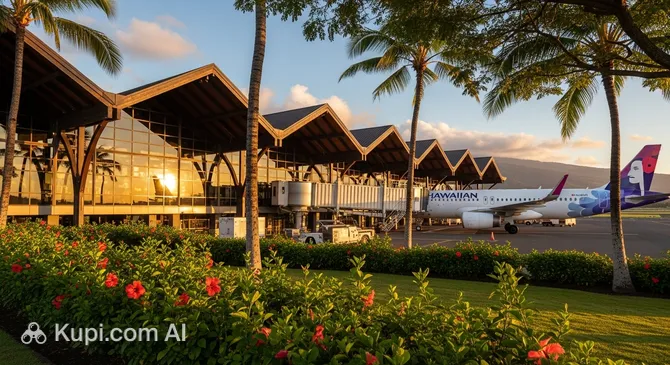
Hilo International Airport. Source: Kupi.com Binoculars
Hilo International Airport (ITO) is not merely a transport hub, but a true tropical gateway to the Big Island of Hawaii. Instead of the usual glass walls and air-conditioned air, here you are welcomed by an open-terminal layout, allowing you to enjoy the warm breeze and the scent of flowers immediately upon landing. The airport is surrounded by lush gardens and is located just a few minutes' drive from famous waterfalls and majestic volcanoes, setting the tone for your entire journey in the "Aloha" style.
IATA Code ITO
ICAO Code PHTO
City Hilo
Distance to Centre approx. 5 km
Status International
Annual Passengers ~1.4 million
Schedule Online Board

Features and Advantages of the Airport:

Hilo Airport stands out for its unique architecture and relaxed atmosphere, which is so unlike the hustle and bustle of major metropolises. This is a place where the journey turns into a holiday from the very first minute.

  • Open-Air Design: A significant part of the terminal is designed without external walls, allowing natural light and fresh air to flow freely inside, creating a sense of unity with nature.
  • Tropical Gardens: Beautiful zones with local plants and flowers are laid out within the airport grounds, where passengers can relax before their flight.
  • Historical Heritage: Formerly known as "General Lyman Field", the airport preserves the region's aviation history, and an exhibition dedicated to its past can be found in the terminal.
  • Convenient Location: The terminal is located very close to the city and serves as an ideal starting point for trips to the Hawaii Volcanoes National Park.

Contact Information

For your convenience, we have compiled key contact information for Hilo International Airport (ITO).

  • Official Website: airports.hawaii.gov/ito. Here you will find the most up-to-date information on flights, services, and airport rules.
  • Information Desk Phone: (808) 961-9300. This is the main number for general information and inquiries.
  • Airport Address: 2450 Kekuanaoa St, Hilo, HI 96720, USA.
  • Email: The airport does not provide a direct email address for general inquiries. It is recommended to use the contact form on the official website to communicate with the administration.
  • Social Media: News and updates regarding the airport are usually published on the general accounts of the Hawaii Department of Transportation.
  • Lost and Found: If you have lost personal items within the terminal building, contact the airport's Lost and Found office at (808) 961-9300. If your items or luggage were lost on board the aircraft, you should contact your airline's representative office directly.
  • Passenger Support Service: For all general questions and assistance, you may contact the airport's main information desk phone number.

How to Get to the Airport

Getting to Hilo International Airport (ITO) is quite simple, as it is located just a few kilometres from the city centre of Hilo. Travellers can choose the most suitable method depending on their budget, amount of luggage, and plans for further travel around the island. The trip from the central part of the city usually takes no more than 10-15 minutes.

Public Transport is the most budget-friendly option. The local bus system, Hele-On Bus, operates routes passing through the airport. This is an excellent choice for tourists with light luggage who wish to save money. The fare is only a few dollars. However, it is worth checking the schedule in advance, as buses run at specific intervals which may be extended in the evenings and on weekends.

Taxis and Rideshare Services, such as Uber and Lyft, are the fastest and most convenient way to reach the terminal. This is an ideal option if you have many suitcases or are travelling with family. The trip from the centre of Hilo will be short, but the cost will be significantly higher compared to the bus. You can book a car in advance or find one at designated stands in the city.

Car Rental is a popular solution for those planning to actively explore the Big Island in the USA. Many travellers rent a car for the entire duration of their stay and return it to the company's office right at the airport before departure. This eliminates transfer worries and gives complete freedom of movement. If you arrive at the airport in your own or a rented vehicle, parking is at your service. The territory features both short-term and long-term parking zones located in immediate proximity to the terminal building.

Terminals and Map

Hilo International Airport (ITO) boasts a compact and easy-to-navigate structure consisting of one main terminal. This saves travellers from the need to move between different buildings and makes orientation within the airport as easy as possible.

A key feature of the airport is its unique open architecture, typical of many Hawaiian airports. A large part of the building consists of covered galleries and waiting halls under the open sky, allowing you to enjoy the island's warm climate right while waiting for your flight. The terminal layout is linear and intuitive: airline check-in counters, the security screening zone, and boarding gates are located sequentially and connected by spacious walkways.

Departure and arrival zones are clearly separated. After check-in and luggage drop-off, passengers pass through a single security checkpoint leading to the secure zone with boarding gates. The arrival zone is on the same level; baggage carousels are located in an easily accessible part of the terminal, from where there are exits to the parking lot, shuttle stops, and car rental points. Since there is only one terminal, no special transfers between different parts of the building are required — everything is within walking distance.

Check-in and screening procedures at Hilo Airport generally proceed quite quickly compared to major international hubs. On average, this takes about 30-45 minutes. Nevertheless, it is recommended to arrive at the airport at least 1.5 hours before domestic flights within Hawaii and 2 hours before flights to the mainland USA to calmly complete all formalities and find your boarding gate.

Airport History

The history of Hilo International Airport (ITO) is closely intertwined with the development of the entire Big Island of Hawaii. Its journey began in 1927 when a small private airfield was opened on this site. Soon, it came under the management of the Territory of Hawaii and became known as Hilo Airport. A modest beginning was set, but events lay ahead that would forever change its scale and significance.

A key stage in the airport's development was World War II. In 1941, the facility was transferred to the jurisdiction of the US Air Force, which carried out a massive reconstruction and expansion of the runways. The airport was renamed General Lyman Field in honour of General Albert K. B. Lyman, the first American general of Hawaiian descent. During the war years, it served as an important pilot training base and a transit point for aircraft heading to the Pacific Theatre of Operations.

After the war, the airport returned to civil use while retaining the improved infrastructure. With the growth of tourism in Hawaii in the 1950s and 60s, a need arose for a more modern terminal capable of servicing jet liners. In 1976, a new terminal complex was opened, which is still in use today. Its open architecture with tropical gardens between terminals creates a feeling of being on the islands for passengers from the very first minutes of arrival.

In 1989, the airport received its modern name — Hilo International Airport — to reflect its ability to receive flights from abroad. Although regular international routes are rare today, it remains the second busiest airport on the Big Island and plays a critically important role in its life. Besides passenger transport, it is an important cargo hub for the export of local produce, such as orchids and macadamia nuts, as well as a popular starting point for helicopter tours over the famous volcanoes of the USA.

Services and Amenities

Hilo International Airport (ITO) offers passengers a basic set of services necessary for a comfortable wait before departure. Despite its compact size, the airport is thought out for traveller convenience. Here you can find several cafes and snack bars serving drinks and light meals, as well as newsstands and gift shops selling Hawaiian souvenirs and travel goods.

For those for whom staying connected is important, free Wi-Fi is available throughout the terminal. Charging stations for mobile phones and other electronic devices are provided in the waiting lounges. Although there are no dedicated VIP lounges at the airport, the general waiting areas are sufficiently spacious and comfortable. In emergencies, first aid is available, and ATMs are installed for financial transactions. Please note that currency exchange points may be unavailable, so it is better to arrange this in advance.

The airport is fully adapted for the needs of passengers with reduced mobility: ramps, accessible toilets, and elevators are available. Assistance with boarding and disembarking can be requested in advance through your airline. Travellers with small children can use the nursing rooms, making the wait for the flight more comfortable for the whole family.

There are no hotels on the territory of Hilo Airport itself, but many accommodation options are located just a few minutes away by taxi or shuttle. Specialised business centres or conference rooms for business meetings are also not provided in the terminal; however, free Wi-Fi allows for addressing urgent work matters directly in the waiting hall.

Dining

When planning a snack or a full lunch at Hilo International Airport (ITO), it is important to remember that this is a small regional airport, and the choice of establishments reflects this. The main dining points are concentrated in the main terminal building and are available to both departing and arriving passengers (in the zone before security control).

The central place to eat is the Laniakea Restaurant and Bar. This establishment offers guests both quick snacks and full hot meals. Here you can order classic American sandwiches, burgers, and salads. If you wish to try something local before flying out of Hawaii, look for the Hawaiian "plate lunch" — a traditional dish consisting of rice, macaroni salad, and a main protein component, for example, teriyaki chicken or Kalua pork. This is an excellent option for a hearty lunch.

Regarding special dietary needs, the choice may be limited. Vegetarians will likely find salads or meat-free sandwiches on the menu; however, please note that specialised vegan, gluten-free, or Halal dishes may not be available. If you have strict dietary restrictions, it is recommended to bring food with you. For a quick snack at the airport, there are also vending machines with drinks and snacks located in different parts of the terminal.

Prices in the restaurant correspond to the average level for airports in the USA — be prepared to pay slightly more than in city cafes. The establishment's operating hours are usually tied to the flight schedule: they open in the morning and work until the departure of the last evening plane. This allows passengers of all flights to grab a bite before departure.

Travel Tips

To ensure your journey through the airport of Hilo city goes smoothly, make use of several useful tips. It is recommended to arrive at the airport at least 1.5-2 hours before the departure of domestic flights. Hilo International Airport is not very large, but it is better to have a time buffer, especially during peak seasons. To save time, complete online check-in and print or save your boarding pass on a mobile device in advance.

Passing security control in the USA is subject to strict Transportation Security Administration (TSA) rules. All liquids in carry-on luggage must be in containers of no more than 100 ml and packed in a single clear bag. Be prepared to remove laptops and other large electronics from your bag for separate scanning. Preparing items in advance will help you pass the screening significantly faster.

When choosing a seat on the plane, especially on inter-island flights or flights to the mainland, prefer a window seat. It offers stunning views of the volcanic landscapes of the Big Island, the coast, and the ocean. This is a great opportunity to take some unforgettable photos at the beginning or end of your journey.

Pay special attention to Hawaii's customs and agricultural regulations. All passengers arriving on the islands (even from the mainland part of the country) are required to complete a special declaration. The import of fresh fruits, vegetables, and plants is strictly restricted to protect the unique ecosystem of the islands. Your carry-on and checked luggage may be inspected for prohibited products.

If you have a layover in Hilo, navigating the airport will be effortless thanks to its compact size. In case of a flight delay, first contact your airline representative or check information via the mobile app. They will provide current data on the new departure time and, in some cases, may offer meal vouchers.

To save money, bring an empty reusable water bottle with you — it can be filled after passing security control. Prices for food and drinks at the airport can be high, so snacks permitted for carriage (such as nuts or biscuits) will help avoid extra expenses. Also, research transfer options from the airport in advance — pre-booking a shuttle or taxi is often more cost-effective than finding transport on the spot.

Reached the end of the page?

That means the route is fully explored