Support

Point Fermin Lighthouse

About

On the southern edge of the San Pedro district in Long Beach, you'll find one of the most charming coastal landmarks—the Point Fermin Lighthouse. This is more than just a navigational aid; it's a magnificent example of Victorian architecture, built in 1874. There are few such buildings left in the USA where living quarters and a signaling tower are combined into a single, elegant structure made of redwood and fir.
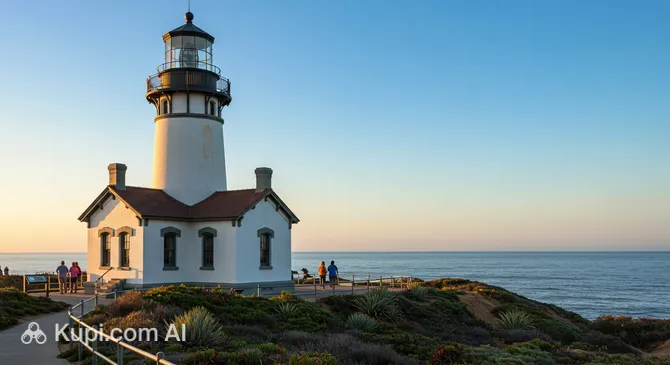
Point Fermin Lighthouse
Point Fermin Lighthouse. Иллюстрация. Источник: Kupi.com AI

Today, this historic site functions as a museum, offering guests a unique opportunity to peek into the past of the Pacific coast. The building, with its central five-story tower, is recognized as one of the oldest lighthouses on the West Coast preserved in its original form. Surrounded by blooming gardens, it serves as a vivid reminder of an era when the lantern's light was the only guide for ships entering the port.

Visitors appreciate this spot not only for its historical significance but also for its incredible aesthetics. The graceful lines of the facade, meticulously restored interiors, and its status as a cultural heritage site make the lighthouse a must-see for anyone interested in maritime romance and 19th-century architecture.

Contacts

For more information about visiting or to book a tour, you can use the following official details:

According to traveler reviews, the site has a high rating of 4.7 out of 5, confirming its popularity and the quality of the museum exhibits.

How to contactContact
Address807 W Paseo Del Mar, San Pedro, CA 90731, USA
Phone+1 310-241-0684
Websitewww.laparks.org

What to Do

The highlight of a visit to the lighthouse is undoubtedly a tour inside the historic building. You can walk through the rooms where the keepers once lived and see how the daily lives of those dedicated to maritime navigation changed over time. Of particular interest is the climb up the tower itself, which houses the famous fourth-order Fresnel lens—a complex optical device that once sent a beam of light many miles into the ocean.

The museum's exhibits detail the evolution of lighting systems: from the use of whale oil to the transition to electricity. You will learn about the vital role the lighthouse played in the development of the region's infrastructure. After touring the interior, be sure to stroll through the flower gardens that surround the building. It’s an ideal spot for photos, where the Victorian "gingerbread" architecture harmonizes beautifully with vibrant California flora.

Don't forget to walk to the very edge of the bluff. From here, you’ll find breathtaking panoramic views of the Pacific Ocean and the bustling harbor. On a clear day, you can spend hours watching passing ships while enjoying the fresh sea breeze and the atmosphere of tranquility that this historic site provides.

Getting There

The most convenient way to reach this secluded coastal spot is by car. Follow the scenic Paseo Del Mar, which stretches along the shoreline. Parking is available for visitors directly next to the lighthouse at 807 W Paseo Del Mar.

If you prefer public transportation, Los Angeles municipal buses run to the San Pedro area from various parts of the city. However, travelers are advised to check current schedules and routes in advance, as the journey from downtown can take a significant amount of time.

For maximum comfort, you can use taxi services or ride-sharing apps like Uber and Lyft. The trip from the city center usually takes 30 to 40 minutes, though you should account for regional traffic, which can be quite heavy.

Ближайший город: Long Beach

History & Facts

The story of this site began with Phineas Banning, often called the "Father of the Port of Los Angeles." As early as 1854, he began lobbying for a lighthouse to ensure the safety of ships entering the harbor. However, due to bureaucratic delays and land disputes, construction did not start until February 1874. By December 15 of that same year, a lantern fueled by whale oil first lit the way for sailors.

Technology at the lighthouse was constantly improved: whale oil was replaced by kerosene, and in 1925, the site was fully electrified. The powerful lamp installed allowed the beam to be projected up to 22 miles out to sea. Interestingly, the lighthouse's operation was abruptly interrupted on December 7, 1941—the light was extinguished for security reasons for the duration of the conflict.

In the postwar years, the building was nearly demolished as its functions were replaced by modern radar. The historic landmark was only saved in 1972 when it was added to the National Register of Historic Places. Volunteers made an enormous contribution to its restoration, and in the early 2000s, the city allocated more than $2 million for a large-scale renovation that returned the lighthouse to its original Victorian appearance.

Time Needed

To leisurely explore the Point Fermin Lighthouse and its surroundings, most tourists find 1 to 2 hours to be sufficient. This is plenty of time to study the museum rooms and climb the tower as part of a guided tour.

If you plan to stroll through the surrounding gardens or have a photo session against the backdrop of the ocean, you should budget a bit more time. Given that the lighthouse is situated on a beautiful cape, many visitors linger here just to admire the panoramic views of the Pacific Ocean.

Working Hours

The museum welcomes visitors on a specific schedule that should be considered when planning your trip. The Point Fermin Lighthouse is open to the public from Tuesday to Sunday in the afternoon—from 1:00 PM to 4:00 PM.

The museum is closed on Mondays. Please note that access to the tower may be restricted during inclement weather or special events, so it is recommended to check for updates on the official website before your visit.

DayWorking hours
ПонедельникЗакрыто
Вторник1:00 – 16:00
Среда1:00 – 16:00
Четверг1:00 – 16:00
Пятница1:00 – 16:00
Суббота1:00 – 16:00
Воскресенье1:00 – 16:00

Nearby

The lighthouse's location on the picturesque coast makes it easy to combine a visit with other interesting sites. A walk around the area will help you dive deeper into the region's maritime history and enjoy the natural beauty of the California shore.

NameDistance
Korean Friendship Bell0.5 km
Cabrillo Marine Aquarium1 km
Cabrillo Beach1.1 km
White Point Beach2.2 km
Battleship USS Iowa Museum4.4 km
Ken Malloy Harbor Regional Park8.7 km
Terranea Resort10.3 km

Reached the end of the page?

That means the route is fully explored