Support

Tryon Palace

About

On the scenic banks of the Trent River in New Bern stands the magnificent Tryon Palace — a living embodiment of US colonial history. This grand structure is a faithful reconstruction of the original 1770 mansion that once served as the residence of North Carolina's Royal Governor, William Tryon, and the colony's first official capital.
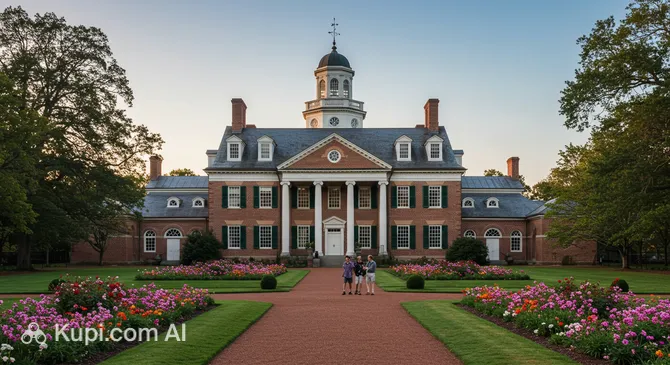
Tryon Palace. Source: Kupi.com AI

Designed by British architect John Hawks, the palace was rightfully considered "the most beautiful public building in the colonies." Its English Palladian style architecture impressed contemporaries with its balance and elegance. Today, the complex operates as a world-class museum, allowing visitors a glimpse behind the scenes of 18th-century political and social life.

Although the original building was lost to fire in the late 18th century, the current palace was masterfully restored in 1959. The reconstruction was based on original blueprints, allowing the atmosphere of former grandeur to be recreated with striking accuracy, making this site a must-visit for all history enthusiasts.

Contacts

To plan your visit or for more information, you can use the official contact details for the historic site's administration.

Address 529 S Front St, New Bern, NC 28562, USA
Phone +1 800-767-1560
Website tryonpalace.org
Google Rating 4.6 out of 5 (based on 1869 reviews)
Maps View on Google Maps

What to Do

Visiting Tryon Palace feels like a true journey back in time. You can take a detailed tour of the two residential floors and the basement, which was renovated in strict accordance with architect Hawks' letters. Costumed guides add a special touch to the walk, bringing the era's daily life and customs to life rather than just reciting facts.

Be sure to stop by the kitchen wing to see the "modern" conveniences used by cooks in 1770, and visit the historic stables. Inside the palace itself, look for original fragments of marble, plaster, and brass that were discovered by archaeologists during excavations of the original foundation and carefully integrated into the interior.

The palace gardens are an equally impressive part of the complex. Landscaped in impeccable 18th-century style, they are the perfect place for a stroll among blooming flowerbeds and manicured hedges. Educational programs and rotating exhibits make every visit unique, offering a deeper understanding of how the history of the future United States was forged.

Getting There

Finding Tryon Palace is easy: it is located in the heart of the historic downtown area, right on the banks of the Trent River at the foot of George Street. The exact address for your GPS is 529 S Front St, New Bern, NC 28562.

If you are traveling by car, head toward the city center where designated parking areas are available for museum visitors. You can also use the following GPS coordinates: 35.1058011, -77.0443019.

For those arriving from further away, the nearest major airport is in Raleigh (approximately 100 km away). From there, the most convenient way to reach the palace is by renting a car or using an intercity taxi service. Within New Bern itself, the palace is an easy walk from most downtown hotels or a quick local taxi ride.

History & Facts

The history of this majestic building began in 1767 when the foundation of the future residence was laid by order of Governor William Tryon. The project was designed by the talented English architect John Hawks. The palace's opening on December 5, 1770, was a grand event celebrated with a lavish ball. The building served not only as the governor's home but also as the first permanent capital of the North Carolina colony.

During an era of great change, the palace hosted many historical figures. After the departure of British Governor Josiah Martin in 1776, the building was taken over by revolutionaries and became the capital of the new state. One of the most distinguished guests here was the first president, George Washington, who visited New Bern in 1791 and enjoyed a formal dinner within these walls during his famous Southern tour.

Unfortunately, the original building was almost completely destroyed by a devastating fire in 1798 — only the kitchen and stables survived. For a long time, a school and residential buildings occupied the site. It was only in the mid-20th century, thanks to the efforts of local enthusiasts and the discovery of Hawks' original drawings in London, that a large-scale restoration began.

In 1959, the renewed Tryon Palace reopened its doors, becoming "North Carolina's first great public history project." Today, it is more than just a replica; it is a meticulously recreated symbol of the colonial past, where every architectural and interior detail transports visitors back to the 18th century.

Time Needed

To explore all the corners of this historic complex without rushing, most guests need 2 to 3 hours. This is usually enough time to see the main interiors, the outbuildings, and take a stroll through the magnificent gardens.

If you plan to join a themed guided tour or want to study every exhibit in the basement and stables in detail, it is better to set aside half a day. The colonial-era atmosphere invites you to relax and take your time appreciating the details.

Working Hours

Tryon Palace welcomes guests daily, offering a convenient visiting schedule. From Monday to Saturday, the complex is open from 10:00 AM to 5:00 PM. On Sunday, the museum's doors open a bit later — from 12:00 PM to 5:00 PM.

Please note that operating hours may change slightly depending on the season or special historical events, so checking the official website before your trip is recommended.

Nearby

A stroll through the palace's surroundings allows you to dive even deeper into the atmosphere of this historic town. The historic district is rich in architectural landmarks and charming spots that perfectly complement your tour.

Exploring the neighboring streets will reveal interesting house museums, historic memorials, and picturesque parks, all located within walking distance of the main residence.

Name Distance (km)
Robert Hay House 0.1
New Bern Historical Society 0.3
Baxter Clock 0.4
The Gardens at Isaac Taylor 0.5
The Alleyway Fountain on Pollock Street 0.5
Benjamin Ellis House Bed & Breakfast 0.6
Blades House 0.8
George St Park Sprayground 0.9
Caleb D Graham grave memorial 0.9
James City Historical Marker 1.4

Reached the end of the page?

That means the route is fully explored