Support

Smith Creek Park

About

Imagine a corner of serene nature tucked away in the northern part of the bustling city of Wilmington. Smith Creek Park is a picturesque area stretching around the creek of the same name, which carries its waters into the Northeast Cape Fear River. This place is rightfully considered a true oasis for those looking to escape the city's hustle and bustle and connect with the wilderness of North Carolina in the USA.
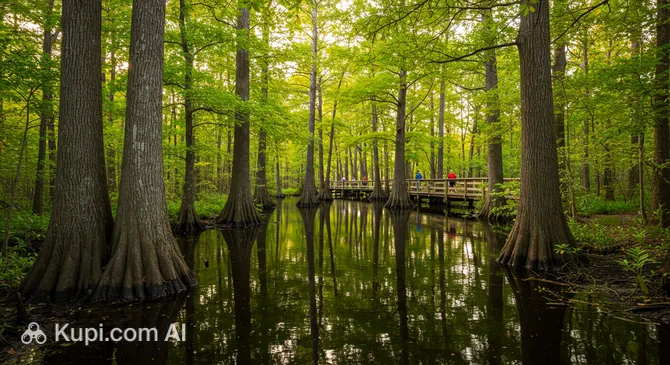
Smith Creek Park. Source: Kupi.com AI

One of the most captivating features of this area is its unique ecosystem. Smith Creek is widely known as a true sanctuary for alligators. Observing these ancient reptiles in their natural habitat attracts naturalists and photographers from across the region. Here, characteristic coastal landscapes blend harmoniously with the richness of local flora and fauna.

Beyond its biological value, the park is an essential part of the New Hanover County ecological framework. It is not just a place for walks, but a living example of how nature maintains its majesty in close proximity to civilization. A visit here offers a rare opportunity to see the pristine beauty of the Southern states without needing to travel far into the backcountry.

Contacts

For up-to-date information on visiting rules or events at Smith Creek Park, you can use the official contact details of the New Hanover County Parks Department.

Below is the primary contact information:

Phone +1 910-798-7275
Website parks.nhcgov.com
Address 633 Shenandoah St, Wilmington, NC 28411, USA
Google Maps View on map

What to Do

At Smith Creek Park, everyone will find something to enjoy, especially if you appreciate active outdoor recreation. The main draw for visitors remains alligator watching. These majestic reptiles are frequently found in the creek's waters, making the park one of the best spots in the region for safe wildlife viewing and unique photography.

For hiking enthusiasts, there are trails that allow for a closer look at the local flora. Walking along the shore, you can spot rare bird species and enjoy the tranquility of the water. Fishing enthusiasts will also find cozy spots here, but be sure to check local regulations and seasonal restrictions before casting your line.

If you are interested in history, Smith Creek offers food for thought. This geographical feature has appeared on maps since the early 18th century, making a stroll here a kind of journey through time. The park’s silence invites meditative contemplation and the study of the coastal biodiversity of North Carolina.

Getting There

You can reach this scenic natural spot in Wilmington quickly, as it is located in the north-central part of New Hanover County. The exact address for navigation is 633 Shenandoah St, Wilmington, NC 28411.

The most convenient way to get around this area is by personal or rental car. The drive from the city center takes about 15–20 minutes. You can also use local taxis or popular rideshare services. If you plan to use public transport, it is recommended to check the bus routes passing through this area at a local tourist information center in advance.

Access to Smith Creek is possible through several entry points, allowing you to choose the most convenient path depending on which part of the nature area you want to explore. Parking coordinates: 34.2841014° N, -77.8526401° W.

History & Facts

The history of the name Smith Creek Park dates back to the mid-18th century. According to the New Hanover County Public Library's historical department, the creek was named after William Smith, a local planter who acquired an impressive 1,000-acre plot of land along the banks of the waterway in 1754.

However, there is another version among historians. Researcher Claude V. Jackson III, in his work on the maritime history of the Cape Fear rivers, suggests that the waterway might have been named after Thomas Smith—another landowner who lived here as early as the early 1700s. This highlights the long-standing importance of the area to the region's early settlers.

The creek itself, which is sometimes marked as Smiths Creek on old maps, began appearing in official documents and navigational charts in the early 18th century. For centuries, this waterway has remained a vital element of the landscape, preserving its natural state despite the development of the surrounding city.

Time Needed

For a leisurely walk along the park trails and to enjoy the creek views, 1–2 hours is sufficient for most visitors. This time is enough to explore the main natural locations and take several beautiful photos.

If your goal is wildlife watching, alligator photography, or a deep dive into the local flora, you should plan for a half-day visit. Morning or twilight hours are especially good for observing animal and bird activity, so a walk during these times may last longer.

Working Hours

Official operating hours for Smith Creek Park may vary depending on the season and weather conditions. Generally, these types of natural areas are open to the public during daylight hours—from dawn to dusk.

To ensure your visit goes perfectly, we highly recommend checking the official website of the New Hanover County Parks Department just before your trip. There, you can find the latest information on any maintenance closures or special events.

Nearby

If you have decided to spend time visiting this natural area, we suggest not limiting yourself to just a walk by the water. The surrounding area offers many opportunities for recreation—from active entertainment to diving into the region's colonial history.

Exploring nearby sites will provide a more complete picture of life in North Carolina, combining ecotourism with cultural discovery. Below is a list of interesting places located nearby:

Attraction Distance (km)
Flip N Fly 4.9
Jungle Rapids Family Fun Park 8.6
Long Leaf Park Splashpad 8.9
Poplar Grove Plantation 9.0
Bellamy Mansion Museum 9.9
Thalian Hall Center for the Performing Arts 10.0
The Cotton Exchange 10.2
The Exit Games | Escape Room Wilmington 10.3
Battleship North Carolina 10.7
Carolina Beach Boardwalk Amusement Park 28.1

Reached the end of the page?

That means the route is fully explored