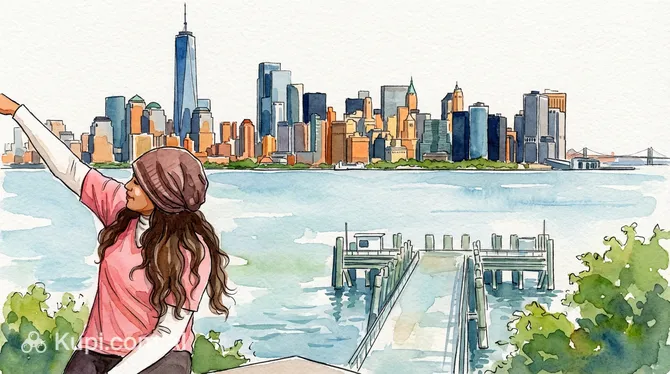
New York is not just a city, but a true legend located in the USA. Boasting a unique energy, this metropolis attracts millions of travelers with its skyscrapers, cultural diversity, and an atmosphere of endless possibilities. The area corresponding to the coordinates of Upper Manhattan offers guests a calmer yet no less sophisticated look at life in the "Big Apple."
New York City. Illustration.
Source: Kupi.com AI
The city's geographic position on the Atlantic coast determines its climatic features, while the dense development of Manhattan creates a unique urban landscape. By exploring the rich heritage of this place, one can trace its journey from a small settlement to one of the primary financial and cultural centers of the planet.
Key highlights include the proximity to the legendary Central Park and the famous museum miles. This city invites everyone to find something of their own here—whether it's quiet walks along shaded alleys or the dazzling lights of Times Square. A visit to this place will be an unforgettable adventure, revealing new facets of American culture.
Weather Overview
New York is characterized by a humid continental climate with a clearly defined change of seasons. Winters here can be quite cold, with an average temperature of about -3°C, while summer brings warmth, with the thermometer often rising to 24-28°C. It is worth noting that due to the dense development of Manhattan, an "urban heat island" effect occurs, making the city center a few degrees hotter than park areas.
Precipitation in the metropolis is distributed fairly evenly throughout the year, so an umbrella will be a useful accessory in any season. For those who want to check the detailed weather in New York, it's important to remember the high humidity, which can make the frost feel sharper and the heat more stifling. Spring and autumn are considered the most comfortable periods for long walks through Central Park.
Average monthly temperature
Average monthly precipitation
Interesting Facts
Code Mystery: In international aviation classification, the IATA code ZNC, specified for this location, is not officially registered to any civil airport, adding an aura of mystery to the place.
Sporting Echo: The acronym NYAC, which sounds similar to the location's context, is often associated with the prestigious New York Athletic Club, founded back in the 19th century.
Geographic Center: The specified coordinates lead straight to the heart of the Upper West Side, one of Manhattan's most prestigious and cinematic neighborhoods.
Island Effect: Due to the dense development and massive amount of concrete, the temperature here is on average 1–2 degrees higher than in the wooded suburbs—a phenomenon known as the "urban heat island."
How to Get There
New York has one of the largest transportation networks in the world, making it easily accessible for travelers from any corner of the globe. If you are planning a visit to the Upper Manhattan area, the primary mode of travel will be the well-developed system of underground and surface transport. The city is connected to major aviation hubs that ensure a constant flow of guests.
For fast movement within the metropolis, the New York City Subway is the most convenient option. The A, B, C, and D lines run through the city, allowing you to reach your desired point in Manhattan in just 20–40 minutes from the center. During rush hours, consider the high passenger volume, though the frequency of trains allows you to plan your trips effectively.
Rail service also plays an important role in the transportation scheme. Major stations receive trains from all over the East Coast, providing comfortable access for those who prefer to travel by land. From the stations, it is easy to reach any area of the city via MTA buses or official taxis.
New York is world-famous for its cultural landmarks. One of the brightest gems of the area is the American Museum of Natural History, located on the edge of Central Park. This place captures the imagination with its dioramas, dinosaur skeletons, and vast collections covering the entire history of life on Earth. Tourists come here to touch the mysteries of nature and see the famous "Blue Whale."
Right nearby is another technological masterpiece—the Hayden Planetarium. This modern research center uses the latest projection technologies to take visitors on a virtual journey to the farthest reaches of the universe. For lovers of architecture and spirituality, the Cathedral of St. John the Divine is a must-visit, impressive for its scale and whimsical blend of Gothic and Romanesque styles.
While this neighborhood is often perceived as residential, its proximity to Central Park makes it an ideal starting point for walks. Here, you can enjoy both the tranquility of nature and views of classic Manhattan architecture that create an atmosphere of old cinema. Visiting these places allows you to feel the intellectual and historical depth of the city.
Local Cuisine
Cuisine in New York is an incredible melting pot of flavors and traditions, where within a single block you can find dishes from all over the world. In this neighborhood, the influence of multinational culture is particularly felt: from classic Italian trattorias with homemade pasta to Chinese eateries and exquisite French bistros. The city's gastronomic scene is constantly evolving, offering tourists both haute cuisine and iconic street food.
Be sure to try the legendary New York pizza with its thin, crispy crust and fluffy bagels with cream cheese—these are true symbols of the city. Street hot dogs and classic American burgers are also an integral part of the local diet. For those who prefer a healthier approach, there are many cafes in the area offering organic food and fresh juices.
The food culture here is closely tied to the rhythm of the metropolis: many residents prefer to have breakfast in small coffee shops (such as famous local chains) or take food to go. In the evening, restaurants fill up with people looking to spend time over a leisurely dinner. Don't forget to try the local coffee, which for many New Yorkers is the primary fuel for the workday.
Travel Tips
Traveling to New York requires careful planning, and these practical tips will help make your trip as comfortable and safe as possible.
Clothing and Essentials: New York weather can be capricious, so it's best to dress in "layers." Be sure to bring comfortable shoes, as you will be walking a lot. Don't forget a Type A/B power adapter for American-style outlets.
Transport: Install the MTA app to track subway trains and buses in real-time. In Manhattan, the subway is the fastest way to get around, while taxis are best called through apps.
Finances: The main currency is the US Dollar (USD). Cards are accepted almost everywhere, but it's worth having a small amount of cash for minor purchases at street stalls. Note that it is customary to leave a tip of 18-22% in restaurants.
Health and Safety: New York is generally safe, but at night it's better to stick to well-lit and crowded streets. Pharmacies (CVS, Walgreens) stay open late and are found at every turn.
Communication: English is the primary language. Wi-Fi is available in many parks, coffee shops (like Starbucks), and at some subway stations. It is recommended to purchase a local SIM card for stable internet.
Local Etiquette: New Yorkers value speed and brevity. In lines and on the subway, try not to take up too much space or hold up the flow of people.
What to Avoid: Do not stop suddenly in the middle of the sidewalk to take a photo—this irritates locals who are in a hurry. Also, avoid empty subway cars on a crowded train; there is usually an unpleasant reason for it.
Additional Tip: To visit popular museums like the Museum of Natural History, book your tickets online in advance to avoid long lines.
May your introduction to New York be filled only with positive emotions and bright discoveries!
Entertainment & Nightlife
Entertainment in this part of New York is more relaxed and intellectual compared to the bustling center. Most activity is concentrated around walking areas and cultural venues. During the day, tourists and locals alike prefer to spend time at outdoor sports sections or on picnics, enjoying views of the urban architecture. For those seeking theatrical arts, the proximity to Times Square allows for a quick trip to the best Broadway productions.
The nightlife in Upper Manhattan is not as sprawling as in SoHo or Brooklyn, but you can find cozy local bars and pubs here. Establishments in this area focus on a soulful atmosphere and quality conversation. The crowd consists mainly of locals and city connoisseurs, which helps avoid the tourist rush and allows you to enjoy a true New York evening with a glass of craft beer or a classic cocktail.
In terms of safety, this neighborhood is considered quite favorable for nighttime walks, especially on the well-lit main avenues. If you decide to head to busier parts of the city, you can always use taxis or Uber and Lyft services, which operate 24/7. For those looking for loud clubs and dance floors until dawn, it's better to plan a trip to Midtown, which is just a few subway stops away.
Parks & Museums
The main treasure of this area is undoubtedly Central Park—a colossal green oasis amidst concrete and glass. Occupying a vast area, it offers endless opportunities for recreation: from boat rides on the lake to free outdoor concerts and plays. It is the perfect place to escape the city bustle and enjoy the silence in the very heart of Manhattan.
Culturally, the area is dominated by the American Museum of Natural History. It is one of the largest and most respected museums in the world, housing unique exhibits: from rare minerals to giant animal models. Visiting its halls is a fascinating journey through time that will be interesting for both adults and children. The museum also houses a modern planetarium, which has become an important educational spot on the city map.
The greenery of the Upper Manhattan area is considered among the best in the city due to its proximity to the park zone, making walks here particularly pleasant. In addition to large museums, you can find small galleries and cultural centers that reflect the spirit of intellectual New York. The combination of massive parks and world-class cultural institutions makes this a must-visit for every tourist.
Getting Around
The public transportation system in New York is one of the most extensive and efficient in the world. The backbone of travel is the legendary subway, which operates 24 hours a day. In the Upper Manhattan area, the A, B, C, and D lines carry the main load. Subway trains allow you to quickly bypass traffic jams and reach any part of the city. Remember that some routes may be express trains and skip certain stations, so always check the direction and train type on the platform display.
Fares are paid using the OMNY system (contactless payment by card or smartphone) or a traditional MetroCard. The cost of a ride is fixed and does not depend on the distance. The MTA bus network complements the subway, providing access to corners of the district that are further from the underground stations. Buses run regularly, but their speed is highly dependent on Manhattan's traffic volume.
Alternatively, many prefer to use taxis or popular Uber and Lyft services, which are available at any time of day. New York's cycling infrastructure is actively developing, and Citi Bike rental stations are easy to find in the Central Park area. This is a great way to combine a stroll with quick movement around the neighborhood while enjoying views of the city's architecture.
Accommodation
The housing stock in Upper Manhattan consists mainly of classic apartment buildings, many of which are architectural landmarks. There aren't as many large hotel chains here as in Midtown, which creates a more private and authentic atmosphere. Most accommodation options are cozy apartments or small boutique hotels that offer guests a chance to feel like real New Yorkers.
Those who value proximity to parks and museums should look at options within walking distance of Central Park. This is one of the most convenient and prestigious areas to stay. Housing prices here are traditionally high, though they can be slightly more affordable than in the immediate vicinity of Times Square. Rentals through popular services like Airbnb are in high demand here.
When planning a trip to New York, it is crucial to book accommodation in advance, especially during holidays or major events. This not only guarantees availability but also allows for significant savings. When choosing a place, always pay attention to its proximity to the A or C subway line stations to ensure mobility and easy access to other parts of the city.
Nearby Cities
New York serves as a magnificent starting point for exploring nearby cities and the scenic banks of the Hudson River. Right across from Manhattan, on the other side, are cozy towns in New Jersey that offer stunning panoramic views of the skyline and their own unique attractions.
One of the most popular destinations is Hoboken, known for its historical architecture and as the birthplace of Frank Sinatra. A trip here takes very little time by ferry or PATH train. It is also worth visiting Weehawken, where you can walk along the waterfront with the best views of New York's skyscrapers, and quiet West New York, famous for its parks on the cliffs.
For those ready to venture a bit further, the region offers plenty of options—from the ethnic diversity of Queens to the botanical gardens of the Bronx. Exploring the surroundings allows you to see America beyond the usual tourist center and discover the charm of small coastal settlements.
Shopping & Souvenirs
Shopping in Upper Manhattan is geared more toward locals and those who appreciate a relaxed shopping experience rather than mass tourism. Instead of massive, glowing malls, small boutiques, cozy bookstores, and specialty shops prevail here. The main shopping points are located along the central avenues, where you can find everything you need—from designer clothes to rare vinyl records.
If you are looking for major shopping centers and global brands, you can reach Midtown or the Times Square area in 30–40 minutes by subway. In Upper Manhattan itself, it's worth checking out high-quality food markets like Whole Foods or Trader Joe's, as well as local pharmacies and shops with organic cosmetics. This is a great place to buy goods for daily life in New York.
As souvenirs from this area, people often bring back books from local independent stores or branded merchandise from the American Museum of Natural History. Shops usually stay open from morning until late evening, and card payments are accepted everywhere. Don't forget that sales taxes are usually not included in the price tag and are added at the checkout.