Support

John F. Kennedy International Airport

About the Airport

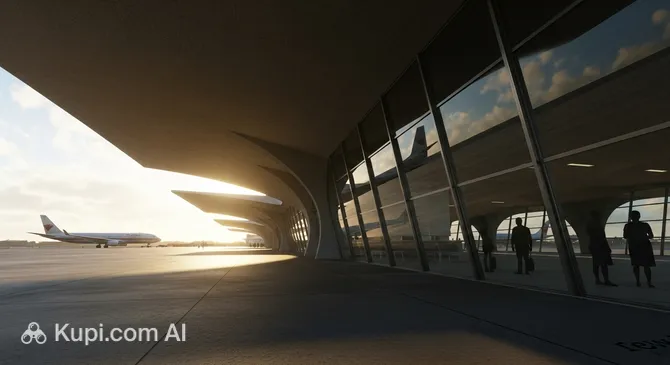
John F. Kennedy International Airport. Source: Kupi.com Binoculars

John F. Kennedy International Airport (JFK) is not merely the main aerial gateway to New York and the entire United States, but a veritable city within a city, pulsating with the rhythm of one of the world's most dynamic metropolises. For millions of travellers, their introduction to America begins here, and JFK strives to make this first encounter as comfortable and memorable as possible. This gigantic hub, receiving flights from every corner of the planet, is a symbol of travel, global connections, and the American Dream. Every year, it serves tens of millions of passengers, ranking as one of the busiest airports in North America for international traffic.

IATA Code JFK
ICAO Code KJFK
City New York
Distance to Centre Approx. 26 km to Manhattan
Status International
Annual Passengers Over 62 million (2023)
Popular Airlines Delta Air Lines, American Airlines, JetBlue Airways.
Schedule online flight board "John F. Kennedy International Airport"

A key feature of Kennedy Airport is its sheer scale and developed infrastructure. It consists of six terminals, each functioning as a complete mini-airport with its own range of services, shops, and restaurants. To facilitate easy movement between them, as well as connections to the city's transport system, the automated AirTrain JFK monorail operates around the clock. It allows passengers to move between terminals free of charge and provides quick access to subway and commuter train stations, from where you can reach Manhattan and other boroughs of New York.

The airport offers travellers a wide spectrum of services: from numerous VIP lounges and spa centres to dedicated play areas for children and pet relief areas. One of the unique attractions is the TWA Hotel, located in the restored building of the former 1962 TWA terminal. Connected to Terminal 5, it immerses guests in the atmosphere of the "Golden Age" of aviation, offering not just accommodation but also museum exhibits, restaurants, and even a rooftop pool with views of the runways. All this makes JFK not just a transit point, but an important part of the journey.

Contact Information

For your convenience, we have compiled key contact information for John F. Kennedy International Airport (JFK).

  • Official Website: You can find the most complete and up-to-date information on the airport's official website – www.jfkairport.com.
  • Inquiry Phone: For general information about the airport, flight schedules, and services, call: (718) 244-4444.
  • Address: John F. Kennedy International Airport, Queens, NY 11430, USA.
  • Social Media: Follow airport news and operational updates on the official pages on X (Twitter), Facebook and Instagram.
  • Lost & Found: If you have lost items on the plane or at the boarding gate, contact your airline first. For items lost in public areas of the terminals, parking lots, or on the AirTrain, you must fill out a special form on the official airport website in the "Lost and Found" section.
  • Passenger Support: Information desks are located in the arrivals zones of each terminal, where staff are ready to answer your questions and provide assistance.

How to Get to the Airport

Reaching John F. Kennedy International Airport (JFK) from the centre of New York is possible via multiple methods suitable for any budget and preference. The airport has excellent transport links with the city, but it is important to plan your route in advance to avoid delays, especially during peak hours.

Public Transport — the most economical and predictable way to avoid traffic jams.

  • Subway and AirTrain: This is the most popular option. You need to take the subway lines A (to Howard Beach station) or E, J, Z (to Sutphin Boulevard/Archer Avenue station). At these stations, you transfer to the automated AirTrain JFK, which runs between all airport terminals. The journey from midtown Manhattan will take 60-90 minutes. The cost consists of the subway fare plus the AirTrain fare (approximately $8.50).
  • LIRR Train and AirTrain: Long Island Rail Road (LIRR) is a faster, albeit more expensive, method. Trains depart from Penn Station in Manhattan to Jamaica station, where you also transfer to the AirTrain. Total travel time is about 35-50 minutes. This option is ideal if you are in a hurry.
  • Buses: City buses (routes Q3, Q10, B15) connect the boroughs of Brooklyn and Queens with the airport. This is the cheapest but also the slowest method, more suitable for locals than for tourists with luggage.

Taxi, Ridesharing, and Transfers — a comfortable "door-to-door" option.

  • Taxi: Famous yellow cabs offer a fixed rate (flat fare) for trips between Manhattan and JFK Airport, which is around $70 (excluding tolls and tips). Travel time depends heavily on traffic and can vary from 45 to 90 minutes.
  • Ridesharing (Uber/Lyft): The cost of a trip via apps can be either lower or higher than the taxi fare depending on demand and time of day. This is a convenient alternative with the ability to choose the car class.
  • Private Transfer: A pre-booked car is an excellent choice for families or large groups with bulky luggage, guaranteeing comfort and a fixed price.

By Car and Parking

If you plan to travel by rental or personal car, be prepared for the famous New York traffic. JFK Airport has several types of parking: short-term near the terminals and more budget-friendly long-term parking lots, from which terminals can be reached via the free AirTrain. For the best rates, it is recommended to book parking online in advance. It is also worth remembering that New York's transport system includes other major air hubs, such as LaGuardia Airport and Newark Liberty International Airport, each of which has its own transport accessibility features.

Terminals and Map

John F. Kennedy International Airport (JFK) is a vast complex consisting of five active passenger terminals: Terminal 1, Terminal 4, Terminal 5, Terminal 7, and Terminal 8. It is worth noting that the airport is constantly being modernized, and numbering may change: for example, the old terminals 2, 3, and 6 were demolished to build new ones. The terminals are arranged in a horseshoe shape around a central area containing parking and infrastructure facilities.

A key element of navigation between terminals is the automated AirTrain system. This is a free and the most convenient way to move around the airport territory. The AirTrain operates 24/7 on three routes: one connects all terminals, while the other two lead to subway stations (Jamaica and Howard Beach) and long-term parking lots. Signs for the AirTrain are found throughout the airport, making navigation intuitive.

Each terminal has its own specialization and serves specific airlines:

  • Terminal 1: Serves primarily international flights of major global carriers, such as Air France, Lufthansa, Korean Air, and Turkish Airlines.
  • Terminal 4: One of the largest and most modern terminals. It is a major international hub for Delta Air Lines, as well as a base for many other airlines from around the world (Emirates, Etihad, Singapore Airlines). It operates around the clock and offers a huge selection of shops and restaurants.
  • Terminal 5: Home to JetBlue Airways. The terminal is known for its modern design and direct access to the famous TWA Hotel, located in the historic building of the former TWA terminal.
  • Terminal 7: The main terminal for British Airways, also serving flights of other international carriers, including Aer Lingus, Iberia, and Icelandair.
  • Terminal 8: The main hub for American Airlines and its Oneworld alliance partners, such as Finnair, Qatar Airways, and Royal Jordanian. This is a large and well-equipped terminal.

The structure of each terminal is standard: the Departures area with check-in counters and security checkpoints is usually on the upper level, while the Arrivals area with baggage claim and access to ground transport is on the lower level. Due to the large size of some terminals (especially T4 and T8), the walk from the check-in counter to the gate can take a significant amount of time, so always check your gate number in advance.

The time required to complete procedures varies greatly depending on the terminal, time of day, and season. For international flights, it is recommended to arrive at the airport at least 3-4 hours before departure. For domestic flights, 2-2.5 hours is usually sufficient. Queues for passport control upon arrival and security screening upon departure can be very long, especially during peak morning and evening hours.

Main recommendations for navigation at JFK: always check in advance which terminal your flight departs from, as airlines may use different terminals for different destinations. Upon arrival at the airport, look for AirTrain signs immediately to move between terminals. Use online airport maps on your smartphone to orient yourself inside the large terminals and find your boarding gate.

Airport History

The history of John F. Kennedy International Airport (JFK) is the history of aviation development and New York itself. Construction of the airport began in 1942 on the site of the Idlewild golf course. It officially opened on July 1, 1948, under the name New York International Airport, but was popularly known simply as Idlewild for a long time. Its main task was to relieve LaGuardia Airport, which could no longer cope with the growing volume of international traffic.

A key moment in the airport's history was its renaming. On December 24, 1963, a month after the assassination of the 35th President of the USA, the airport was officially renamed John F. Kennedy International Airport in his honour. In the 1950s and 60s, a unique "Terminal City" concept was implemented here, where each major airline built its own architecturally unique terminal. The most famous of these was the futuristic TWA Flight Center, opened in 1962, which is today a recognized architectural monument.

JFK Airport has always been at the forefront of aviation technology. In 1970, it received the first commercial Boeing 747 flight, and on November 22, 1977, it made history as one of the few airports in the world to start serving supersonic Concorde liners, which cut flight time to Europe by half. As passenger traffic grew, the airport was constantly modernized. One of the largest projects was the replacement of the old International Arrivals Building with the modern Terminal 4, which opened in 2001 and has been expanded multiple times since.

Other significant development stages include the launch of the AirTrain JFK system in 2003. This automated train connected all terminals to each other and to New York's subway and commuter train systems, significantly improving the airport's transport accessibility. For decades, JFK has maintained its status as one of the busiest international passenger hubs in North America, serving tens of millions of travellers from all over the world annually.

Among interesting facts from the airport's history, it is notable that its original territory was larger than the entire borough of Manhattan. And the famous TWA terminal, after the airline's closure, was not demolished but carefully restored and turned into the unique TWA Hotel, allowing guests to immerse themselves in the atmosphere of the "Golden Age" of aviation.

Services and Amenities

John F. Kennedy International Airport (JFK) offers passengers a full range of services and amenities to make waiting for a flight as comfortable as possible. In the numerous terminals, you will find a huge variety of restaurants and cafes — from fast food outlets to fine dining establishments where you can have a full dinner. Shopping areas include classic Duty-Free stores with perfumes, confectionery, and souvenirs, as well as boutiques of world-famous clothing and accessory brands.

For those who value enhanced comfort, waiting lounges and VIP lounges of various airlines and alliances operate at the airport. Access to them is usually granted to business class passengers or loyalty card holders, but some lounges offer paid entry for all visitors. Free Wi-Fi is available throughout the airport, and numerous charging stations for electronic devices are located in waiting areas and at boarding gates, allowing you to stay connected at all times.

Financial matters can be easily resolved right at the airport: branches of banks, ATMs, and currency exchange points operate here. For emergencies, medical stations and pharmacies are provided. Travellers with children will appreciate the presence of mother and child rooms and dedicated play areas. The airport is also fully equipped for passengers with reduced mobility: assistance with movement is provided, and ramps and specially equipped restrooms are available.

If you have a long layover or an early flight, you can stay at one of the hotels located in the immediate vicinity of the terminals. The most famous of them is the legendary TWA Hotel, located right on the airport grounds and offering a unique mid-20th-century atmosphere. For business travellers, business centres and conference rooms are available in some lounges and hotels, where you can hold a meeting or work in a quiet environment.

Where to Eat

John F. Kennedy International Airport (JFK) offers a huge variety of dining options for every taste and budget, from a quick snack to an exquisite dinner. Regardless of which terminal you are in and how much time you have, you will certainly find something suitable.

Quick Snacks and Cafes

For those in a hurry, there are plenty of options in every terminal. The most popular, without a doubt, is Shake Shack in Terminal 4 (airside, after security), where you can try one of New York's best burgers. Starbucks coffee shops, Dunkin' Donuts, and kiosks with "grab-and-go" sandwiches and salads are also found everywhere. This is an ideal choice if there is little time left before departure. Most such establishments operate around the clock or from early morning until late at night.

Restaurants for a Full Meal

If you have time for a leisurely lunch or dinner, JFK will not disappoint. In Terminal 8 (airside), Bobby Van's Steakhouse is located, offering classic American dishes in an elegant setting. In Terminal 4 (airside), you can visit The Palm Bar & Grille, known for its steaks and seafood. Terminal 5, serving JetBlue, is famous for a good selection of restaurants, for example, La Vie with French cuisine. Most full-service restaurants are located in the "clean" zone (airside) and operate on a standard schedule, closing in the evening.

Special Dietary Needs and Local Cuisine

Many establishments at JFK accommodate passengers with special dietary requirements. Finding vegetarian, vegan, and gluten-free dishes is not difficult — look for them on the menu or simply ask the staff. For instance, many cafes offer salads, bowls, and sandwiches that can be adapted to your needs. Halal options may be limited, but select fast-food outlets offer certified dishes. To get a taste of New York, try not only a burger at Shake Shack but also look for establishments serving authentic local flavours.

Prices and Location

Be prepared that food prices at JFK, as in any major US airport, are above average. A cup of coffee will cost $4-6, and a full lunch in a restaurant — from $30-40 per person. The overwhelming majority of both the best and most diverse establishments are located in the zones after security control (airside). In the public area (landside), the choice is more limited, with the exception of the food court in Terminal 4 and the unique restaurants in the TWA Hotel, which can be accessed before checking in for a flight.

Travel Tips

Travelling through one of the busiest airports in the world, John F. Kennedy International Airport (JFK) in New York, requires good preparation. By following these tips, you can make your trip more comfortable and predictable.

Arrival Time and Check-in: For international flights, arrive at the airport at least 3-4 hours before departure, and for domestic flights — 2-3 hours. Queues for check-in and security at JFK can be very long, especially during peak hours. To save time, complete online check-in and print or save your boarding pass to your phone in advance. If you are travelling with hand luggage only, this will allow you to head straight to the security checkpoint.

Passing Security Control: Be prepared in advance. Pack all liquids up to 100 ml in a transparent bag, and remove laptops and other large electronics from your bags. If you travel frequently to the USA, consider participating in TSA PreCheck or Global Entry programmes, which significantly speed up the screening process.

Seat Selection and Hand Luggage: When choosing a seat on the plane, consider your preferences: a window seat offers beautiful views during takeoff and landing, while an aisle seat allows you to stand up freely without disturbing neighbours. Be sure to take all valuables, documents, medicines, and portable chargers (power banks) in your hand luggage. Remember standard restrictions: no sharp objects and liquids in containers larger than 100 ml.

Tips for Passengers with Transfers: JFK is a huge airport with several terminals connected by the AirTrain. Carefully check which terminal your next flight departs from. Note that you may need time not only to move between terminals but also to go through security control again. Allow at least 2-3 hours for transfers for domestic flights and 3-4 hours for international ones.

Customs and Passport Control: Upon entering the USA, be ready to answer questions from the customs officer about the purpose of your trip and the duration of your stay. Have your passport, visa, and other necessary documents ready. The process can be sped up by using Automated Passport Control (APC) kiosks or the Global Entry programme.

Economy and Comfort: Food and drink prices at the airport are traditionally high. To save money, bring an empty water bottle and fill it after passing security. Transport from the airport is better booked online in advance — this is often cheaper than taking a taxi on the spot. Use the free AirTrain to move between terminals.

In Case of Flight Delay: If your flight is delayed, contact your airline representative first for information and possible options (e.g., rebooking on another flight). Find out about your rights as a passenger — in some cases, you may be provided with vouchers for meals or hotel accommodation. Most JFK terminals offer free Wi-Fi, shops, and restaurants to brighten up the wait.

Reached the end of the page?

That means the route is fully explored