Support

Princeton

About

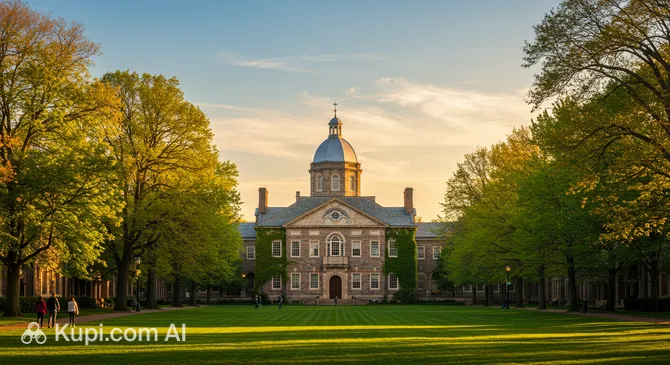
Princeton is a unique corner of New Jersey where academic grandeur harmoniously coexists with small-town charm. Located just 80 kilometers southwest of bustling New York City, this town offers travelers a completely different, leisurely pace of life. Here, in the USA, you will find a wonderful combination of nature and architecture spread across picturesque hills among parks and lakes.

Princeton. Illustration.
Source: Kupi.com AI

Despite a relatively small population of just over 36,000 people, the town possesses immense cultural influence. Its streets are permeated with a special intellectual energy, as it is home to the legendary Princeton University. This place attracts not only students and professors but also tourists from all over the world who want to experience the atmosphere of one of the oldest and most prestigious universities in the country.

The rich history of Princeton is reflected in its historic buildings and well-kept alleys. Besides strolling through the university campus, guests can visit various museums and art galleries or simply enjoy the beauty of the local landscapes. Princeton is ideal for those seeking inspiration, who appreciate culture, and want to relax surrounded by intellectual heritage and natural beauty.

Weather Overview

The climate in Princeton is characterized by distinct seasonality, allowing tourists to enjoy a variety of nature throughout the year. Summer here is generally warm and sometimes hot: the average temperature in July is about 26.0°C, and on the hottest days, the air warms up to 30.4°C. However, be prepared for precipitation, as the summer months have the highest number of rainy days (up to 17 days in July).

Winters in the region are cool but usually milder than in many northern states. In January, averages hover around 4.2°C, and minimum temperatures rarely drop below 0.5°C. Expect a warm summer with occasional rain and cool winters with a moderate amount of wet days.

Many travelers find spring and early autumn to be the ideal times to visit. In May and September, a comfortable temperature range of 18–21°C is established, which is perfect for long walks on the university campus. To plan your trip properly and choose the right clothing, we recommend checking the current weather in Princeton before you leave.

Average monthly temperature

Average monthly precipitation

Interesting Facts

Princeton is a city where history intertwines with legends, and every corner holds its own unique secrets. Beyond the world-famous university, there are many curious details and hidden gems that make a visit truly unforgettable.

  • A living witness to history. The famous Washington Oak grows within the city. This tree was planted in the very year the USA Constitution was signed. The mighty oak is not just a plant, but a true living monument that "saw" the birth of American statehood.

  • A home for geniuses. Princeton is inextricably linked with the names of the greatest minds. Albert Einstein, Woodrow Wilson, and mathematician John Nash—whose life inspired the film "A Beautiful Mind"—all lived and worked here. Strolling through the quiet streets, it’s easy to imagine these legendary figures once rushing about their business here.

  • Open-air art. The city is famous for the amazing Grounds for Sculpture, spanning 42 acres. This place has become a magnet for lovers of unusual photo shoots: dozens of statues, ranging from classic to shockingly realistic and avant-garde, are hidden among the greenery.

  • A world-class library. The Firestone Library at the university is not just a book depository, but one of the largest libraries in the world. Its walls house millions of books and rare manuscripts, making it a true treasure trove for researchers.

  • A mystical side. Princeton's ancient architecture has given rise to many urban legends. Locals enjoy telling stories about ghosts that are rumored to still haunt the historic campus buildings, adding a touch of mystery to the town.

How to Get There

When planning a trip to this university center, it is important to think through the logistics in advance. The city enjoys a favorable geographical location between two metropolises, offering travelers many route options. You can find out more about how to get to Princeton by exploring the available transport hubs in the region.

Princeton itself does not have its own major airport, but its proximity to international hubs makes flying a convenient option. One of the most popular choices is Newark Liberty International Airport (EWR). It is located in the New York City region, about 56.1 km from Princeton. It is a major aviation hub with huge passenger traffic, receiving flights from all over the world. A taxi or shuttle trip from there will take about 50–60 minutes, depending on traffic.

Another excellent option is Philadelphia International Airport (PHL). It is located in Philadelphia, 72.2 km from the center of Princeton. This is also a major airport with a well-developed infrastructure. A drive from this terminal to the university campus takes approximately 1 hour and 10 minutes.

If you prefer domestic flights or want to land as close as possible, consider Trenton-Mercer Airport (TTN). Formally part of the Philadelphia metro area, it is only 15.6 km from Princeton. This is a small regional airport, and a taxi ride will take only about 20–25 minutes.

For convenience, here is a summary of the main airports:

AirportPassenger trafficDistance
Trenton-Mercer Airport601 00016 km
Newark Liberty International Airport49.1 mln56 km
New York Skyports Seaplane Base45 00072 km
Philadelphia International Airport30.9 mln72 km
Lehigh Valley International Airport1.0 mln74 km

Rail travel is also a popular way to reach the region. The nearest major station is the Trenton Transit Center. Although it may be listed under the Philadelphia region, it is actually only 16.8 km from the center of Princeton. It is a convenient transfer hub for those traveling from the south. A taxi ride from the station takes about 20–30 minutes.

For travelers arriving from New York, the key point is often Penn Station. It is located in New York City, 71.5 km from Princeton. This is one of the busiest stations in the world, with trains departing toward New Jersey. The total driving time from this station to Princeton is about 1.5–2 hours, so many prefer to switch to local commuter trains.

Below is information on the nearest railway stations:

StationPassenger trafficDistance
Trenton Railway Station386 52817 km
Philadelphia 30th Street Station5.1 mln62 km
Penn Station219 mln72 km
Wilmington Railway Station1.2 mln102 km
Atlantic City Railway Station180 000111 km

Main Attractions

Princeton is a city best explored slowly, enjoying every step. Although its name is inextricably linked to the academic world, there are many places here that can surprise even the most seasoned traveler. From majestic architecture to historic battlefields, the city's attractions offer an immersion into the rich past and vibrant present of this corner of New Jersey.

Princeton University is the undisputed dominant feature of the city and a magnet for tourists worldwide. A walk through the campus feels like a journey through time: ivy-covered neo-Gothic buildings create the atmosphere of old England. Nassau Hall is a must-see—the university's oldest building, which briefly served as the nation's Capitol in the 18th century. The campus grounds are open to the public, and you can spend hours admiring the sculptures, arches, and manicured courtyards.

For those who want to feel the pulse of urban life, Palmer Square is the perfect spot. Located right across from the main university gates, it is a hub for locals and visitors alike. Colonial-style architecture, paved walkways, cozy boutiques, and restaurants create a special, almost European atmosphere. It is the best place to grab a coffee, buy souvenirs, or simply watch the town go by.

History buffs should visit Princeton Battlefield State Park. It was here in 1777 that one of the decisive battles of the Revolutionary War took place, where George Washington's troops secured an important victory. Today, it is a picturesque park where, among ancient trees and green lawns, you can see the historic Clarke House and the famous colonnade. This place is perfect for both studying history and enjoying peaceful nature walks.

Another gem of the city is the Morven Museum & Garden. This elegant mansion, built in the 1750s, was once home to a signer of the Declaration of Independence and later served as the New Jersey Governor's mansion. Today, it hosts exhibitions dedicated to the region's cultural heritage, and the surrounding gardens are stunningly beautiful, especially during the spring bloom.

Local Cuisine

Princeton's gastronomic scene is surprisingly diverse and fully reflects the multicultural spirit of this university town. Here, at the intersection of tradition and modern trends, tourists can find establishments for every taste: from cozy family cafes to fine dining restaurants. Local chefs pay special attention to the quality of ingredients, which is why a culture of fresh farm products flourishes in the city.

The core of the culinary experience is traditional American cuisine. Travelers should definitely try the local juicy burgers and steaks, which are prepared here with great skill. BBQ lovers will also find plenty to enjoy: fragrant grilled meat is a frequent guest on local menus. Additionally, thanks to its proximity to the coast and inland waters, you can enjoy excellent seafood dishes in restaurants, especially those located near Lake Carnegie.

For those who want to immerse themselves in an authentic atmosphere, a visit to the farmers' markets is a must. The most famous is the Pennsylvania Dutch Farmers Market. This is a place where you can not only buy the freshest vegetables, fruits, and farm cheeses but also try homemade pastries and meat delicacies prepared according to old recipes.

Street food culture in Princeton is equally vibrant. You can often find food trucks on the streets offering a quick and tasty snack: from classic hot dogs and sandwiches to hearty burritos. In the summer, the city's gastronomic life reaches its peak thanks to numerous festivals and fairs where local chefs present their new signature creations outdoors.

The city's coffee shops and bakeries add a special charm. Many of them are located in historic buildings, turning a simple morning cup of coffee into a small journey through time. It is common to order desserts with your drinks: be sure to try the classic apple pie or one of the signature cakes that local pastry chefs are famous for.

Travel Tips

Welcome to Princeton! To make your acquaintance with this academic center and its historic streets as comfortable as possible, we have prepared a list of practical recommendations to help you avoid minor inconveniences and focus on your experience.

  1. Clothing and seasonality. New Jersey weather is changeable, so layering your clothes is the best solution, especially in spring and autumn. Since exploring the city involves long walks on campus cobblestones and park paths, be sure to bring comfortable flat shoes. There is no strict dress code in town, but smart casual style is appropriate everywhere from museums to restaurants.

  2. Transport accessibility. Central Princeton is compact and best explored on foot. To move around town, you can use the local TigerTransit bus system—these are free and available to guests as well as students. Taxi services (Uber, Lyft) work perfectly. Renting a car only makes sense for trips to the surrounding areas, as finding free parking in the center can be problematic, especially on weekends.

  3. Finance and payment. The official currency is the US dollar. Credit cards are accepted almost everywhere, from souvenir shops to cafes, though having some cash for small tips or street purchases is useful. Princeton is not the cheapest city; prices here can be higher than the state average. Remember the tipping culture: it is customary to leave 15–20% of the check amount in restaurants, as service is usually not included in the bill.

  4. Health and safety. Princeton is considered a very safe city where you can walk peacefully even in the evening. Major chain pharmacies (such as CVS) are easy to find near Nassau Street. Tap water is drinkable, but many tourists prefer bottled water. In case of an emergency, use the universal emergency number 911.

  5. Communication. The primary language is English, and locals are always ready to help if you approach them politely. Free Wi-Fi is available in many cafes, on Palmer Square, and in university guest areas. For constant connectivity, it is recommended to purchase a local SIM card (T-Mobile, AT&T) or use roaming, as offline maps may not show current local transport schedules.

  6. Local etiquette. Princeton has a polite and intellectual atmosphere. It is customary to greet staff when entering a shop or cafe. Since the town is inextricably linked with the university, try to keep quiet on campus grounds and not disturb students, especially near libraries and classrooms. Photography is allowed almost everywhere, but avoid close-up shots of people without their permission.

  7. What to avoid. Do not try to enter private residential colleges or "eating clubs" on Prospect Avenue without an invitation—these are private property. It is also strongly discouraged to cross the road in the wrong place: local drivers are disciplined, but police also strictly monitor pedestrian compliance with rules.

  8. Planning tip. Before your trip, be sure to check the university events calendar. During Commencement or Reunions, the town is packed, and housing prices skyrocket. If you are not participating in these events, it is better to choose quieter dates for your visit to enjoy the city's atmosphere without the hustle.

We hope these tips help you easily plan your trip and make you feel at home in Princeton. This city is open to guests and ready to give you many warm memories and inspiring moments!

Entertainment & Nightlife

Entertainment and nightlife:

Princeton's nightlife has a special charm: you won't find massive nightclubs with deafening music here, but you will discover many atmospheric gastropubs, cozy bars, and stylish lounges. Evening leisure in this town is imbued with an intellectual spirit, perfect for long conversations over a glass of craft beer or a signature cocktail. Most of the activity is concentrated along the city's main artery, Nassau Street, and around the elegant Palmer Square.

The crowd in these establishments is very diverse: you might see professors discussing scientific theories at one table, while students or tourists relax at the next. The dress code in most places is casual or smart casual, though you might want to dress a bit more elegantly for dinner at some restaurants. Most bars stay open until 2:00 AM, but kitchens often close by 10:00 PM, so it's wise to plan a full dinner in advance.

While many student parties take place in private "eating clubs," there are plenty of great spots available to tourists. Be sure to stop by Triumph Brewing Company, a popular brewery with a modern industrial interior serving fresh craft beer. Another legendary spot is The Alchemist & Barrister. This historic pub, with its wood panels and cozy terrace, is the true heart of the city's evening life, offering a classic atmosphere characteristic of the best traditional establishments in the USA.

Prices in Princeton establishments can be slightly above average: a cocktail will cost around $12–$16. Moving between bars in the center is very convenient on foot—distances are minimal, and the streets are well-lit and considered safe for nighttime walks. If you stay out late or live far from the campus, taxi services (Uber or Lyft) are available 24/7 and arrive very quickly.

Beyond the bars, the city offers a rich cultural program. You can spend an evening at the famous McCarter Theatre Center, known for its world-class productions. During the day, you can enjoy quieter entertainment: visit the University Art Museum or go shopping in the boutiques on Palmer Square to recharge for the evening's social life.

Parks & Museums

Princeton is famous not only for its academic traditions but also for its wonderful opportunities for cultural and natural leisure. The city harmoniously combines well-kept green spaces with rich museum collections, offering tourists an ideal balance between intellectual enrichment and outdoor relaxation.

Among the natural areas, Marquand Park deserves special attention. This is not just a place for walking, but a true open-air arboretum spanning over 17 hectares. More than 200 species of trees and shrubs grow here, many of which are rare for this region. Winding paths, manicured lawns, and a playground make it a favorite spot for family picnics and solitary reading in the shade of ancient oaks.

For fans of active recreation and water scenery, the Delaware and Raritan Canal State Park (D&R Canal State Park) is an ideal destination. The long trail along the historic canal attracts runners, cyclists, and paddling enthusiasts. It is a picturesque corridor of wilderness where you can spot herons and turtles while enjoying the silence away from the city noise. In autumn, the reflection of golden leaves in the water creates truly mesmerizing views.

The cultural heart of the city beats in the Princeton University Art Museum. Although it is a university institution, its collection can rival that of major city museums: it features over 100,000 exhibits, from antiquity to modern art. For tourists, this is a unique opportunity to see world-class masterpieces for free, immersing themselves in the history of civilizations through the lens of art.

Another important point on the cultural map is the Historical Society of Princeton, often based at the Updike Farmstead. This museum complex offers a glimpse into the region's agricultural past and local history through interactive exhibits and preserved buildings. This site is particularly interesting for those who want to understand how this corner of New Jersey has developed over the centuries.

If you are looking for a place hidden from most tourists, head to the Institute for Advanced Study Woods (IAS Woods). These quiet forest trails are famous because this is where Albert Einstein loved to take his daily walks while thinking through his theories. A stroll here is a chance to touch the history of science and enjoy pristine nature in an atmosphere of complete tranquility.

Getting Around

The public transport system in Princeton is compact and convenient, allowing tourists to move around easily without needing to rent a car. The city's most famous transport feature is the legendary train that locals affectionately call the Dinky. This is the shortest scheduled passenger rail line in the country, connecting the downtown station (Princeton Station) with the major transport hub at Princeton Junction in just 5 minutes. The Dinky is not just a mode of transport but a true historical symbol of the city and the fastest way to reach the main rail line.

For moving within the city and its surroundings, the TigerTransit shuttle system is an indispensable helper. Originally created for university needs, this bus network is absolutely free and open to everyone, including tourists. Comfortable buses run along several routes, covering the campus, shopping centers, and residential areas. Additionally, paid NJ Transit commuter buses pass through the city, linking Princeton with neighboring towns and shopping malls.

Fare payment systems vary by operator. For trips on the Dinky and NJ Transit regional buses, it is most convenient to use the official NJ TRANSIT Mobile App. You can purchase tickets in advance and store them on your phone. Orange ticket vending machines are also installed at railway stations, accepting credit cards and cash. If you plan to take a regional bus and don't have an electronic ticket, you can pay the driver in cash upon boarding, but be sure to have the exact amount—drivers do not provide change. As a reminder, TigerTransit shuttles do not require payment.

As an alternative to public transport, taxi and rideshare services like Uber and Lyft work excellently in Princeton. Cars usually arrive quickly, making it a convenient option for trips to the station with heavy luggage or late at night. The city is also very bike-friendly: the flat terrain and bike lanes make cycling a popular choice in warm weather. However, for exploring the historic center and the university campus, walking remains the best way to get around, as all the main attractions are within walking distance of each other.

Tourists should keep a few practical tips in mind. When using a mobile app to pay for train or bus fare, the ticket must be activated (validated) just before boarding or when the inspector appears, as it is only valid for a limited time after activation. The Dinky schedule is usually synchronized with long-distance trains at the junction station, but on weekends and late evenings, service intervals may increase, so we recommend checking the current schedule in the app or on the carrier's website.

Accommodation

When planning a trip to this academic corner, keep in mind that the lodging market here is geared toward a fairly high standard of quality. In Princeton and its immediate surroundings, travelers will mostly find mid-range hotels, comfortable chain hotels, and a few luxurious historic boutique hotels. There are virtually no budget hostels, so thrifty tourists should look at motels in neighboring towns or short-term apartment rentals.

In terms of location, the most attractive area for tourists is the historic center, especially the district around Palmer Square and Nassau Street. Staying here puts you within walking distance of the university campus, the best restaurants, and shops, allowing you to forgo a car entirely. This is an ideal choice for those who want to fully immerse themselves in the atmosphere of the old town and enjoy evening strolls.

Another popular area for accommodation is along US Route 1. Here, a few kilometers from the center, major chain hotels are concentrated, offering spacious rooms and modern amenities like swimming pools and fitness centers. This option is often chosen by families and business travelers. While the sights are not within walking distance from here, many hotels provide free shuttles to the town center, and a taxi ride takes no more than 10 minutes.

Special mention should go to the historic hotels in the center, which are attractions in their own right. For example, the famous Nassau Inn has been welcoming guests since the 18th century and preserves the charm of the colonial era combined with modern comfort. Staying in such places allows you to feel the spirit of tradition that the USA is known for.

Booking tip: Princeton lives by the university calendar, and this is critical to consider. During major events like graduation ceremonies (May-June) or reunions, the demand for housing becomes frantic, and prices can increase several times over. If your trip falls on these dates, it is necessary to book a room 6–12 months in advance. At other times, it is recommended to book a few weeks before your visit.

The price range in the city varies from medium to high. A night in the center will cost more than in hotels on the highway. For searching and booking, it is best to use popular international online platforms that allow you to compare prices and read reviews. It's also worth checking official hotel websites: they sometimes offer special rates or packages that include breakfast or parking.

Nearby Cities

For those who want to explore the surroundings, Princeton serves as an excellent starting point for day trips to several interesting nearby locations:

Just a short drive away is Trenton, the capital of New Jersey. It is a city with a rich past where history comes alive at every turn. Tourists can visit the State Museum, see the majestic State House, or stop by the famous Old Barracks Museum, preserved from the Revolutionary War. Trenton is also interesting for its art galleries and proximity to the scenic Delaware River.

For nature lovers and those seeking quiet relaxation, a trip toward Hillsborough is a great choice. This area is known for the magnificent Duke Farms—a massive nature preserve with gardens, greenhouses, and miles of walking trails. It is an ideal place for eco-tourism, cycling, and picnics away from the city bustle.

It is also worth noting Ewing and South Brunswick. These locations offer the cozy atmosphere of the "Garden State," local parks, and convenient access to regional attractions, allowing you to see American suburban life from the inside.

CityPopulationDistance
West Windsor29 2113 km
Plainsboro23 9666 km
Princeton Meadows15 4918 km
Monmouth Junction9 72810 km
Kendall Park10 56011 km

These nearby destinations provide insight into the diverse culture and landscapes of the region.

Shopping & Souvenirs

Shopping in Princeton is more of a refined pleasure and a pleasant stroll than an exhausting shopping marathon. The city doesn't aim to overwhelm tourists with giant retail spaces, instead offering an atmosphere of coziness and exclusivity. Independent boutiques, century-old bookstores, and premium clothing shops predominate here, harmoniously integrated into the historic architecture of the central streets.

The heart of the town's retail life is undoubtedly Palmer Square. This is a picturesque open-air shopping area located directly across from the university. Here, among colonial-style buildings, you'll find brand-name stores (such as J.Crew or Ralph Lauren) alongside unique local boutiques. The second important artery for shoppers is Nassau Street. This street is more oriented toward students and tourists: there are many souvenir shops, youth clothing stores, and cozy cafes where you can take a break between purchases.

While there are no massive indoor malls in the very center, fans of large-scale shopping should check out MarketFair, located on US Route 1, just a few minutes' drive from the center. This is a modern space with a good selection of clothing and home goods stores, a cinema, and restaurants. Also popular is the Princeton Shopping Center on Harrison Street—an outdoor shopping complex with beautiful landscaping where you can find everything from groceries to specialty goods.

Markets hold a special place in the city's life. During the warmer months, the Princeton Farmers Market unfolds on the plaza in front of the public library or on Franklin Avenue. People come here not only for fresh organic produce from the "Garden State" but also for unique jams, honey, homemade pastries, and flowers. It's a great opportunity to get a taste of local life and buy edible souvenirs.

Speaking of souvenirs, it's impossible to leave Princeton without clothing or accessories featuring university symbols. Hoodies, caps, and scarves in the signature orange and black colors are sold at the official Princeton University Store. Music lovers should definitely visit the legendary Princeton Record Exchange—one of the best vinyl shops in the USA, attracting collectors from all over the country. Literature enthusiasts will find true treasures at Labyrinth Books, an independent bookstore.

Shops in the center typically open at 10:00 AM and stay open until 6:00–8:00 PM; on Sundays, hours are often shorter (from 12:00 PM to 5:00 or 6:00 PM). Credit cards (Visa, MasterCard, American Express) and contactless smartphone payments are widely accepted. Cash might only be needed at the farmers market or for small purchases at street stalls.

An important detail for tourists: New Jersey has a pleasant tax rule. Clothing and footwear are exempt from sales tax here. This makes shopping in Princeton especially advantageous compared to nearby New York, allowing for significant savings when updating your wardrobe. The Tax Free system (VAT refund at the airport) common in Europe does not operate in the US, but the lack of tax on clothing is an excellent bonus in itself.
Nearby cities

Reached the end of the page?

That means the route is fully explored