Support

Provincetown Airport

About the Airport

Welcome to Provincetown Airport — the air gateway to the very tip of the Cape Cod peninsula in the USA. This is not just a transport hub, but the start of an exciting adventure. As you approach for landing, incredible views of sand dunes, lighthouses, and the picturesque harbour will unfold before you, setting the tone for your entire holiday in this unique corner of Massachusetts. Small and cosy, this airport offers the fastest and, perhaps, the most beautiful way to reach this famous resort.
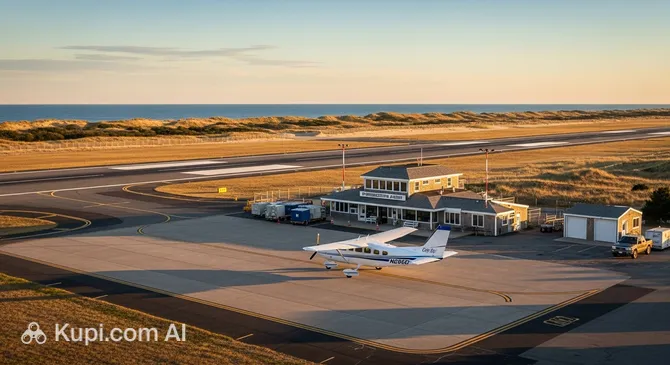
Provincetown Airport. Source: Kupi.com Binoculars
IATA Code PVC
ICAO Code KPVC
City Provincetown
Distance to Centre About 3 km
Status Domestic
Annual Passengers About 12,000 (according to FAA data for 2022)
Popular Airlines Cape Air, JetBlue (seasonal)

The main advantage of Provincetown Airport is its compactness and convenience. Forget about long queues and the hustle of large aviation hubs: here, everything proceeds quickly and calmly. The terminal is compact and intuitive, allowing you to save time and avoid stress, especially if you are travelling with children or luggage. For many tourists, particularly during the peak summer season, flying becomes a true salvation from the multi-hour traffic jams on Route 6.

Besides the incredible aerial views, the airport is renowned for its accessibility. It is located just a few minutes' drive from the city centre, which can be easily reached by taxi, shuttle, or even a rented bicycle, immediately immersing you in the resort atmosphere. Air connections are primarily provided by Cape Air, which operates regular flights from Boston, turning a two-to-three-hour car journey into a 30-minute scenic flight.

Contact Information

  • Official Website: www.provincetown-ma.gov/70/Airport
  • Information Desk Phone: +1 (508) 487-0241
  • Address: 176 Race Point Rd, Provincetown, MA 02657, USA
  • Email: It is recommended to use the feedback form on the official website or verify the current address via phone.
  • Social Media: Dedicated social media accounts for the airport may be unavailable. The main source of information is the official website.
  • Lost Luggage Information: For questions regarding lost luggage, please contact the airline you flew with directly. Regarding items left in the terminal, contact the airport administration via the main phone number.
  • Passenger Support Contacts: For assistance and answers to questions, please contact the main airport information desk number.

Getting to the Airport

Provincetown Municipal Airport (PVC) is located just a few kilometres from the lively city centre, making the journey there quick and convenient. Regardless of the chosen transport, the trip from central Provincetown to the terminal rarely takes more than 5–10 minutes.

Taxis or ridesharing services (such as Uber and Lyft) are the fastest and most comfortable way to get to the airport. This is an ideal option if you are travelling with luggage or value comfort. The trip will be inexpensive due to the short distance, although prices may vary depending on demand and the time of day. Local taxi services also operate in the city.

For budget-conscious travellers, public transport is available. The Cape Cod Regional Transit Authority (CCRTA) offers a flexible "Flex" bus route that can stop at the airport upon request. This is a great way to save money, but it is worth checking the schedule and availability of the stop in advance, as it is more of an on-demand service than a bus with a fixed route through the airport.

If you plan to explore all of Cape Cod, renting a car is the best solution. You can drive to the airport in your rental car before departure and return it there. Provincetown Airport provides convenient parking located just a few steps from the terminal. There are spaces for both short-term and long-term parking, which is convenient for those arriving in their own vehicle.

Given the compactness of Provincetown and its cycling culture, some tourists travelling light get to the airport by bicycle. This is not only the most economical but also the most scenic way. In general, the choice of transport depends on your budget and amount of luggage: taxi for speed, bus for savings, and a car for maximum freedom of movement.

Terminals and Map

Provincetown Airport (PVC) is a small and very convenient regional airport distinguished by its simplicity and compactness. Instead of a complex system of multiple buildings, you will be welcomed by one main terminal that serves all domestic flights, both arrivals and departures. Such a structure makes it incredibly easy to navigate and eliminates the need to search for transfers between terminals.

The airport layout is extremely simple. Essentially, the entire terminal building is one logical space where key zones are within walking distance of each other. Immediately after entering, you will find the airline check-in counters. The departure zone is a cosy waiting lounge with sufficient seating. The arrival and baggage claim area is also located right here, allowing you to quickly collect your belongings and leave the airport.

One of the main advantages of Provincetown Airport is the speed of completing all formalities. Flight check-in and security screening usually take significantly less time than in large international hubs. Long queues are rare here, making the process as comfortable as possible. Nevertheless, especially during the height of the tourist season, it is recommended to arrive at the airport approximately 60-90 minutes before departure to go through all procedures without haste.

Navigating the terminal requires no special effort. All signs are clear, and staff are always ready to help. The main advice is to simply follow the flow of passengers or ask the staff at the information desk. Thanks to the airport's compactness, there is no risk of getting lost or missing your flight, creating a calm and relaxed atmosphere at the very beginning of your journey through picturesque Cape Cod.

Airport History

The history of Provincetown Municipal Airport (PVC) is a fascinating tale of how a remote corner of the USA became more accessible to the world. Although the airport was officially opened on August 18, 1948, air connections with the city began much earlier. As early as the 1920s and 1930s, brave aviation pioneers landed seaplanes right on the beaches by the harbour, delivering the first tourists and mail. The construction of a proper airfield after World War II marked a new era in the development of tourism on Cape Cod.

A key stage in the airport's history was its development from a simple runway into an important transport hub. In 1989, the airline Cape Air launched regular year-round flights to Boston, which radically changed the accessibility of Provincetown, especially in the winter months. This event turned the airport into a vital artery for local residents and the tourism industry. The airport's uniqueness is highlighted by its location — it is situated entirely within the Cape Cod National Seashore, which imposes strict environmental requirements on its operation and development.

To meet modern standards and growing passenger traffic, the airport has been modernized repeatedly. In 1998, a new, more comfortable terminal was built to replace the old building. The runway also underwent several reconstructions to improve flight safety. Today, Provincetown Airport is one of the smallest in the country serving scheduled commercial flights, and the flight to Boston is one of the shortest in the USA, taking only about 25 minutes.

Among the interesting facts from the airport's history, it is worth noting that its operation depends heavily on the whims of nature. Due to its location at the very edge of the peninsula, it is often shrouded in thick fog, which leads to flight delays, especially in spring and summer. Despite its modest size, the airport has played and continues to play a huge role in the economy and cultural life of Provincetown, making this famous art town and resort easily accessible to travellers from all over the world.

Services and Amenities

Provincetown Airport (PVC) is a small and cosy regional airport designed for quick and convenient passenger service. Given its compact size, there are no large shops or a wide selection of restaurants here. Typically, vending machines with snacks and drinks are available for travellers. For a full meal or shopping, it is better to allocate time in Provincetown itself before arriving at the airport.

For a comfortable wait for your flight, the terminal provides free Wi-Fi, allowing you to stay connected or handle work matters. Passengers can also find power outlets to charge their electronic devices. There are no separate VIP lounges at the airport, but the general waiting area is comfortable enough for a short stay before departure.

Please note that specialised services such as bank branches, currency exchange points, conference rooms, or business centres are absent from the terminal building. Medical assistance is limited to basic first aid. It is recommended to resolve all financial and business matters in advance, before travelling to the airport.

The airport is fully adapted to the needs of passengers with reduced mobility and complies with accessibility requirements, ensuring unimpeded movement throughout the terminal. Basic amenities are provided for travellers with small children, such as changing tables in the restrooms.

There are no hotels on the airport grounds, but thanks to its close proximity to the city, finding accommodation is not difficult. Provincetown offers a vast selection of accommodation options — from charming guest houses to modern hotels located just a few minutes' drive away.

Dining

When planning a departure from Provincetown Airport (PVC), it is important to consider that this is a very small regional airport serving mainly local flights. Consequently, the choice of dining establishments here is extremely limited and not comparable to the facilities at major aviation hubs in the USA.

There is a small café or snack bar operating within the airport offering a basic selection for a quick bite. Typically, you can purchase coffee, tea, bottled drinks, sandwiches, pastries, and light snacks like crisps. This is a convenient option for grabbing a cup of coffee before departure, but one should not count on a full lunch or dinner. Keep in mind that the café's opening hours depend directly on the flight schedule and may be reduced during the low tourist season.

At Provincetown Airport, you will not find full-service restaurants, specialised bars, or establishments offering dishes specifically for vegetarians, vegans, or those requiring Halal or gluten-free diets. The options for choice are extremely small. True culinary discoveries and famous New England dishes, such as clam chowder or lobster rolls, should be tried in the numerous establishments of Provincetown itself.

Our main advice: if you are hungry or wish to enjoy quality food, it is best to do so before arriving at the airport. The city offers a huge variety of cafés and restaurants to suit every taste and budget. Provincetown Airport is suitable only for buying a drink or a small snack for the journey. Prices for food and drinks at the airport are generally slightly higher than in the city.

Travel Tips

Travelling through a small regional airport, such as the airport in the city of Provincetown, has its own specific features. To ensure your trip goes as smoothly as possible, use our tips to help prepare for departure and save time.

Arrival at the airport and check-in. Provincetown Airport is small, so there are rarely long queues here. Nevertheless, it is recommended to arrive 1.5-2 hours before the departure of a domestic flight. This time is sufficient to check in luggage without haste, pass through security control, and reach the boarding gate. To save time, complete online check-in and save the boarding pass on your phone.

Security control and hand luggage. Screening rules at Provincetown Airport are standard for the USA. Liquids in hand luggage must be in containers of no more than 100 ml and packed in a single transparent bag. Laptops and other large electronics must be removed from bags and placed in a separate tray. Prepare your documents in advance and remove all metal items to speed up the process.

Seat selection and connections. When choosing a seat on the plane, note that flights over the Cape Cod peninsula can be very scenic, so a window seat will offer you beautiful views. If you are flying with a connection, for example, through Boston, allow at least 1.5-2 hours for the transfer. Provincetown Airport is not an international hub, so customs and border control are generally absent here, as most flights are domestic.

How to save money. One of the best ways to save is to book tickets in advance. Also, consider that the choice of cafés and shops in a small airport may be limited, and prices inflated. Bring permitted snacks and an empty water bottle, which can be filled after passing security control. For travel to or from the city, consider shuttles or public transport options, as taxis may be more expensive.

In case of flight delay. If your flight is delayed, monitor information on the departure boards and in your airline's app. In a small terminal, there may not be much entertainment, so bring a book, headphones, or a power bank for your gadgets. Check with the airline representative regarding your passenger rights — in some cases, you may be provided with vouchers for food or drinks.

Reached the end of the page?

That means the route is fully explored