Support

Provincetown

About

Provincetown, affectionately known as "P-town," is a captivating seaside town located at the extreme northern tip of Cape Cod in Massachusetts. Known for its bohemian spirit, stunning natural beauty, and welcoming atmosphere, it stands out as one of the most distinctive destinations in the United States. Although it has a modest year-round population of approximately 2,600 residents, the town transforms into a bustling hub of activity during the summer, drawing visitors who come to enjoy its scenic harbor and vibrant culture.

The town holds a pivotal place in the nation's narrative. It was here in 1620 that the Mayflower Pilgrims first made landfall and signed the Mayflower Compact before sailing on to Plymouth. Visitors can explore the history of Provincetown by visiting the iconic Pilgrim Monument, a granite tower that dominates the skyline and offers breathtaking panoramic views of the coast.

Provincetown. Source: Kupi.Binoculars

Beyond its historical significance, Provincetown is celebrated as America's oldest continuous art colony. The lively Commercial Street serves as the town's heartbeat, lined with an eclectic mix of art galleries, charming boutiques, and inviting restaurants. Nature enthusiasts will be equally enchanted by the pristine landscapes of the Cape Cod National Seashore, particularly the sweeping dunes and sun-drenched sands of Race Point Beach.

Whether you are seeking artistic inspiration, vibrant nightlife, or a peaceful retreat by the ocean, Provincetown offers a unique escape. Its blend of historic charm and open-minded creativity makes it a must-visit location for travelers looking to experience the very best of New England.

Weather Overview

Provincetown experiences a coastal climate that is heavily influenced by the surrounding ocean, resulting in distinct seasonal changes. The summer months are generally mild and pleasant, with August being the warmest month, featuring an average temperature of around 20.9°C. Winters are cold but moderated somewhat by the sea, with January seeing average temperatures dip to approximately 1.8°C and lows occasionally reaching -0.7°C.

Precipitation is fairly consistent throughout the year, though the frequency of wet days peaks in the spring. April is typically the dampest month, recording about 15 days with precipitation, while August is the driest with only 7 wet days. For travelers looking to pack the right gear, checking the current weather in Provincetown is highly recommended. Overall, expect mild, comfortable summers perfect for outdoor activities and cold winters with regular intervals of rain or snow.

Interesting Facts

Beyond the bustling harbor and the lively energy of Commercial Street, Provincetown holds a treasure trove of historical distinctions and fascinating secrets. Dig a little deeper to discover the unique stories that define this captivating tip of Cape Cod.

Pilgrim Monument and Provincetown Museum. Source: Kupi.Binoculars
  • While Plymouth Rock is often credited as the starting point of New England colonization, the Pilgrims actually made their first landfall in Provincetown Harbor in 1620. It was here, after a treacherous voyage, that they signed the historic Mayflower Compact, a document that laid the groundwork for American democracy. You can visit the spot commemorated at Pilgrims' First Landing Park.

  • The town skyline is dominated by the Pilgrim Monument and Provincetown Museum, which holds a surprising architectural record. Standing at 252 feet, it is the tallest all-granite structure in the United States and was modeled after the Torre del Mangia in Siena, Italy.

  • Provincetown is widely recognized as the oldest continuous art colony in the country. Since the establishment of the Cape Cod School of Art in 1899, the town has been a haven for creatives, attracting legendary figures like Jackson Pollock and Hans Hofmann who were drawn to the unique quality of light found at the cape's tip.

  • The shifting dunes of the Province Lands, accessible near the Province Lands Visitor Center, have historically served as a rustic retreat for literary giants. Isolated "dune shacks" in this area famously hosted playwrights such as Eugene O'Neill and Tennessee Williams, who sought solitude and inspiration amidst the sand and sea.

How to Get There

Reaching the tip of Cape Cod requires a bit of planning, but the journey is scenic and part of the experience. Whether you are flying in from afar or taking the train to a nearby hub, there are several routes to reach this unique destination. You can find more about how to get to Provincetown and choose the option that best suits your itinerary.

The city of Provincetown does not have its own major commercial airport, but international travelers typically arrive via Logan International Airport (IATA: BOS) in Boston. Located approximately 77 km from Provincetown, this large international hub offers the most extensive flight connections. The journey from the airport to Provincetown by taxi or bus takes approximately 2 hours and 15 minutes, depending on traffic. Another option for regional travelers is the Barnstable Municipal Airport (IATA: HYA) in Hyannis. It is significantly closer, situated about 44 km away, with a travel time of around 1 hour and 25 minutes by road.

For clarity, here is a summary of the main airports:

Airport Name City Passenger Traffic Km from City
Logan International Airport Boston Very High 77.0
Theodore Francis Green Memorial State Airport Providence Medium 110.0
Nantucket Memorial Airport Nantucket Low 89.2
Martha's Vineyard Airport Marthas Vineyard Low 82.0
Barnstable Municipal Airport Hyannis Low 43.9

Travelers preferring rail transport should note that the city of Provincetown does not have a railway station. The most convenient major rail hub is South Station (IATA: ZTO) in Boston, located about 79 km away. From there, you can rent a car, take a bus, or catch a seasonal fast ferry to Provincetown. The drive typically takes about 2 hours and 20 minutes. Alternatively, you can arrive at the Providence Railway Station (IATA: ZRV) in Providence, which is approximately 110 km away, with a transfer time of roughly 3 hours by road.

Below is a list of the nearest railway stations:

Station City Passenger Traffic Km to Center
South Station Boston Very High 79.1
Boston Back Bay Station Boston Medium 80.5
Providence Railway Station Providence Medium 109.5
Route 128 Station Boston Medium 81.2
New Haven Union Station New Haven Medium 243.3

Main Attractions

Provincetown is packed with diverse attractions, ranging from historic landmarks to breathtaking natural landscapes. Exploring these sites offers a deeper understanding of the town's rich heritage and its stunning location at the tip of Cape Cod.

One of the most iconic structures in the region is the Highland Lighthouse. Although it sits on the dramatic cliffs of the Cape Cod National Seashore, it is a staple of any visit to the outer cape. As the oldest and tallest lighthouse on Cape Cod, it remains a beacon of maritime history. Tourists are drawn here for the guided tours that allow visitors to climb the tower, rewarding them with sweeping views of the Atlantic Ocean and the rolling coastal terrain.

Highland Lighthouse. Source: Kupi.Binoculars

For those seeking a connection with nature, Race Point Beach is an absolute must-visit. This expansive stretch of coastline is renowned for its wild beauty, featuring vast dunes and rougher waters that contrast with the calm bay. It is a favorite spot for sunbathers and nature lovers, and because of its unique northern positioning, it is one of the few places on the East Coast where you can watch the sun set directly into the water. Keep an eye on the horizon, as whales are often spotted from the shore.

Race Point Beach. Source: Kupi.Binoculars

To get a comprehensive overview of the unique geography of the area, a stop at the Province Lands Visitor Center is highly recommended. Situated amidst the rolling dunes, the center features an outdoor observation deck that provides magnificent 360-degree views of the ocean, the dunes, and the town skyline. Inside, visitors can explore educational exhibits about the local flora, fauna, and the history of the "Province Lands," making it an excellent starting point before hiking or biking the nearby trails.

Province Lands Visitor Center. Source: Kupi.Binoculars

History enthusiasts should make time for Pilgrims' First Landing Park. Located at the rotary at the extreme end of Commercial Street, this park marks the actual site where the Mayflower Pilgrims first touched American soil in 1620, weeks before they sailed on to Plymouth. The park features a commemorative plaque and offers a scenic, peaceful view of the harbor and the long stone breakwater, serving as a quiet place to reflect on the town's pivotal role in the nation's history.

Pilgrims' First Landing Park. Source: Kupi.Binoculars

Local Cuisine

The culinary landscape of Provincetown is deeply rooted in its location at the tip of Cape Cod and its rich history as a Portuguese fishing village. Naturally, fresh seafood is the star of the show here. Visitors can expect to find some of the freshest catch in New England, with local menus dominated by lobster, scallops, and cod brought in daily by the town's fishing fleet. Whether you prefer a classic lobster roll served at a casual shack or an elegant seafood tower at a waterfront bistro, the ocean's bounty is inescapable and delicious.

Beyond standard American seafood fare, the town's Portuguese heritage offers a unique flavor profile that sets it apart from other Cape Cod destinations. A must-try dish is Portuguese Kale Soup (often listed as Caldo Verde or simply Kale Soup), a hearty broth filled with linguiça sausage, potatoes, kidney beans, and kale. It is a local staple found in many restaurants and is perfect for warming up on a breezy coastal evening. Another favorite is locally sourced oysters, particularly those harvested from the nearby flats, often served raw on the half shell with a squeeze of lemon.

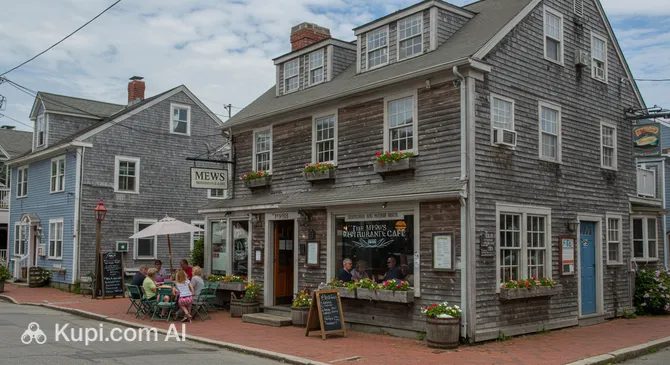
The dining scene revolves largely around the bustling Commercial Street and the waterfront, offering a mix of high-end dining and quirky, casual eateries. For those looking to enjoy a meal with a stunning view of the harbor, The Mews Restaurant & Cafe is a long-standing favorite. Known for its direct beach access and sophisticated menu, it provides a quintessential Provincetown dining experience where the sound of the waves complements the meal.

The Mews Restaurant & Cafe. Source: Kupi.Binoculars

For a more eclectic vibe that captures the town's retro and artistic spirit, travelers often visit Liz's Cafe Anybody's Bar. This spot is celebrated for its hearty breakfasts and comfort food, transitioning into a lively bar atmosphere as the day progresses. It is an excellent example of the town's friendly, unpretentious food culture where locals and tourists mingle freely.

Liz's Cafe Anybody's Bar. Source: Kupi.Binoculars

When it comes to drinks, Provincetown is famous for its vibrant social scene. The "Tea Dance" is a legendary local tradition, where visitors gather in the late afternoon for music and cocktails, often enjoying a potent Rum Punch or a Planter's Punch. The town also boasts a variety of venues that combine dining with entertainment. The Post Office Cafe & Cabaret is a prime location to grab a drink and a bite to eat while soaking in the energetic nightlife that defines Commercial Street after dark.

Post Office Cafe & Cabaret. Source: Kupi.Binoculars

Travel Tips

Welcome to Provincetown! To ensure your visit to this vibrant coastal gem is as smooth and enjoyable as the ocean breeze, we have compiled a set of essential practical tips. Whether you are here for the art, the nightlife, or the stunning nature, these suggestions will help you navigate the town like a local.

  1. Clothing and Gear: The coastal weather on Cape Cod can be unpredictable, so packing layers is the golden rule. Even in summer, evenings can be cool and breezy, so bring a light jacket or sweater. Comfortable walking shoes are a must, as you will likely spend hours exploring Commercial Street or trekking through the dunes. If you are visiting from abroad, remember that the United States uses type A and B electrical plugs, so bring a universal adapter if needed.
  2. Transportation: The best way to experience Provincetown is on foot or by bicycle. The town center is compact, and finding parking can be extremely difficult and expensive during the peak season. If you arrive by car, it is often best to park it at your accommodation or a long-term lot and forget about it. For longer distances, the local "Flex" bus system and shuttles are convenient and affordable options.
  3. Finances: The local currency is the US Dollar (USD). While credit and debit cards are widely accepted at most restaurants and shops, it is highly recommended to carry some cash. You will need it for small purchases, parking meters, and especially for tipping street performers or drag queens, which is a significant part of the local culture. ATMs are readily available throughout the town.
  4. Health and Safety: Provincetown is generally a very safe and welcoming destination. However, if you plan to hike in the dunes or the National Seashore, be mindful of ticks and poison ivy; stick to marked trails and check yourself after your walk. For medical needs, there is a local clinic, Outer Cape Health Services, but for serious emergencies, dial 911. Don't forget high-SPF sunscreen, as the sun reflects strongly off the sand and water.
  5. Communication: English is the primary language spoken. Most cafes, hotels, and public spaces offer free Wi-Fi, making it easy to stay connected. If you are an international traveler, purchasing a prepaid SIM card from a major US carrier (like T-Mobile or AT&T) before arriving in town is advisable, as local options for buying SIMs might be limited compared to major cities.
  6. Local Etiquette: Provincetown is famous for its inclusivity and "live and let live" attitude. The community is deeply rooted in LGBTQ+ culture, and open-mindedness is the norm here. Be respectful of everyone you meet. When enjoying the nightlife or street performances, remember that tipping entertainers is not just polite—it is expected and supports the local artistic community.
  7. What to Avoid: Do not attempt to drive down Commercial Street during peak summer hours unless absolutely necessary. It is often packed with pedestrians, cyclists, and performers, making driving stressful and dangerous. Also, avoid walking on the dune vegetation; the dunes are fragile ecosystems, and foot traffic damages the beach grass that holds them together.
  8. Additional Tip: If you plan to visit popular restaurants or see specific cabaret shows in July or August, book well in advance. The town fills up quickly, and "winging it" might mean missing out on the best experiences. Also, check the ferry schedule if you are traveling to Boston, as rough seas can occasionally cause cancellations.

By keeping these practical tips in mind, you will be well-prepared to relax and fully immerse yourself in the unique charm of Provincetown. Pack your sense of adventure and get ready for an unforgettable seaside escape!

Entertainment & Nightlife

As the sun sets, the artistic soul of Provincetown shines even brighter. Known as America's oldest continuous art colony, the town offers a sophisticated evening activity in the form of gallery strolls. Particularly on Friday nights during the summer season, many of the dozens of galleries along the East End and Commercial Street keep their doors open late. These events often feature wine, cheese, and the opportunity to converse directly with painters, sculptors, and photographers, providing a relaxed and cultural alternative to the high-energy club scene.

For those seeking narrative and drama, the Provincetown Theater is a cornerstone of the local culture. Honoring the town's legacy as the birthplace of modern American theater, this venue hosts a diverse array of productions throughout the year. Visitors can enjoy everything from reimagined classics and Broadway-style musicals to avant-garde premieres and playwriting festivals. It is a hub for creative storytelling that draws both local talent and visiting professionals from New York and beyond.

The streets themselves become a stage in the evenings, offering plenty of free entertainment. The town center is alive with buskers, musicians, and street performers who add to the festive atmosphere. You might encounter an impromptu violin concert, a living statue, or the vibrant "barkers"—performers in elaborate costumes handing out flyers for the night's shows. This pedestrian-friendly environment creates a communal vibe where the entertainment begins before you even enter a venue.

While the dining options at venues like the Post Office Cafe & Cabaret are a draw, their reputation is equally built on world-class live entertainment. The cabaret scene here is legendary and specific in its craft; audiences are treated to acts that go far beyond simple lip-syncing. Expect live vocals from Broadway veterans, sharp political satire, stand-up comedy, and intricate drag productions. These shows are known for being intimate and interactive, often blurring the line between the performer and the audience.

Navigating the nightlife is part of the fun. Since the entertainment district is compact, it is easy to hop from a gallery opening to a theater show and then to a cabaret performance in a single evening. For a whimsical end to the night, visitors often hail one of the many pedicabs that cruise the main strip. These bicycle taxis offer a safe and enjoyable way to wind down while watching the lively crowds that keep the town's energy high until the early morning hours.

Parks & Museums

Provincetown seamlessly blends its reputation as a world-class art colony with the raw, untamed beauty of the outer Cape. The town is surrounded by protected lands that offer a serene escape from the bustling streets, while its museums serve as custodians of a rich maritime and artistic legacy. Whether you are looking to explore the roots of American democracy or wander through enchanting forests, the local parks and cultural institutions provide deep insight into what makes this community so special.

The crown jewel of the area's natural spaces is the vast expanse of the Cape Cod National Seashore, which encircles the town. Within this protected area lies the serene Beech Forest, a hidden gem that feels worlds away from the ocean. A loop trail winds around a freshwater pond and through a dense forest of American beech trees, offering a shady retreat that is particularly popular with birdwatchers during the spring and fall migrations. It is a perfect spot for a quiet picnic or a meditative walk in nature.

For a mix of history and scenic views, Pilgrims' First Landing Park is a significant landmark located at the very end of the town. While compact, this park marks the exact spot where the Mayflower Pilgrims first came ashore in 1620. It features a commemorative plaque and offers a stunning vantage point of the harbor and the long stone breakwater. It is an ideal location for watching the sunset or simply reflecting on the town's pivotal role in history.

When it comes to museums, the skyline is dominated by the Pilgrim Monument and Provincetown Museum. The monument itself is an architectural marvel, but the museum at its base is equally compelling. It houses an eclectic collection that covers everything from the arrival of the Mayflower Pilgrims to the town's maritime history and the development of modern American theater. Visitors can view maritime artifacts, recreated 19th-century sea captain's quarters, and exhibits dedicated to the Wampanoag people.

Art lovers should not miss the Provincetown Art Association and Museum (PAAM). As the anchor of America's oldest continuous art colony, this institution showcases a comprehensive collection of works by artists who have lived and worked on the outer Cape. The museum features rotating exhibitions of contemporary art alongside historical pieces, reflecting the town's enduring status as a haven for creatives. Another fascinating venue is the Whydah Pirate Museum, which displays real pirate treasure and artifacts recovered from the shipwreck of the Whydah Gally, discovered off the coast of Cape Cod.

For a truly authentic local experience, take a walk out onto the West End Breakwater at low tide. This massive stone structure stretches over a mile across the harbor, allowing adventurous visitors to walk all the way to the tip of Long Point, where an isolated lighthouse and quiet beaches await. Just be sure to time your return carefully with the tide!

Getting Around

Navigating Provincetown is remarkably easy and often quite scenic, as the town is compact and designed with pedestrians in mind. Unlike large metropolitan areas, there is no underground metro, tram, or train system within the city limits. Instead, the public transport network relies primarily on a reliable bus service, a strong culture of cycling, and unique local alternatives that fit the town's laid-back, coastal atmosphere. For most visitors, a combination of walking and utilizing the seasonal shuttle buses is the most efficient way to get around.

The backbone of the local public transportation is the bus system operated by the Cape Cod Regional Transit Authority (CCRTA). During the peak summer season (typically late May through September), the Shuttle is the most popular option. These buses run frequent loops connecting the town center, the MacMillan Pier, and major hotels with popular destinations like Herring Cove Beach and Race Point Beach. The buses are distinctive and easy to spot, providing a stress-free alternative to driving on crowded narrow streets.

A unique feature of the regional transport system is the Flex bus route. This service connects Provincetown to neighboring towns further down the cape. What makes it special is its "flag down" policy: passengers can board or disembark anywhere along the route, not just at designated stops, provided it is safe for the driver to pull over. This flexibility is particularly useful for reaching specific trailheads or guest houses located slightly off the main commercial strips.

Regarding payment, the system is straightforward but requires some preparation. Fares for the Shuttle and Flex buses are affordable, typically costing just a few dollars per ride. Drivers usually accept cash, but you must have exact change as they cannot provide coins back. For convenience, frequent travelers can purchase day passes or multi-ride passes. Modern travelers often prefer using mobile ticketing apps like Token Transit, which allow you to buy passes on your phone and simply show the screen to the driver upon boarding.

For a more leisurely and atmospheric way to travel, pedicabs are a quintessential part of the Provincetown experience. These bicycle taxis are widely available in the town center, especially along Commercial Street in the evenings. They are perfect for short trips when your feet are tired from walking, and the drivers often provide entertaining local tips and stories. While more expensive than the bus, they offer a fun, open-air ride that captures the vibrant energy of the nightlife.

Cycling is arguably the most popular alternative to motorized transport. The town boasts an extensive network of bike paths, including the spectacular trails through the dunes of the National Seashore. There are numerous bike rental shops located near the ferry terminal and in the town center, offering everything from standard cruisers to electric bikes. Taxis are also available for direct transport, and while ride-sharing apps operate in the area, availability can be sporadic during peak times compared to major cities.

Tourists are strongly advised to avoid using personal cars within the town center whenever possible. Parking is scarce and expensive, and the narrow one-way streets are often filled with pedestrians. The shuttle buses run until late at night during the summer, ensuring you can enjoy dinner or a show without worrying about driving. Always check the current schedule on the CCRTA website or at the visitor center, as frequencies drop significantly in the off-season.

Accommodation

Where to Stay:

Finding the perfect place to stay in Provincetown is a unique experience in itself, quite different from the typical hotel search in other parts of the United States. The town is famous for its lack of large hotel chains and sprawling resorts. Instead, the accommodation landscape is defined by charming, independently owned guesthouses and inns, many of which are converted 19th-century sea captains' homes. These historic properties offer a distinct sense of place, combining New England maritime heritage with modern amenities and personalized hospitality.

For travelers who want to be in the heart of the action, staying near the central section of Commercial Street is the best choice. This area is the vibrant pulse of the town, teeming with shops, restaurants, and nightlife venues. Accommodation here ranges from waterfront rooms with stunning harbor views to cozy apartments above bustling storefronts. It is incredibly convenient for those who want to step out of their door and immediately join the festivities, but visitors should be prepared for late-night noise and crowds, especially during peak summer weeks.

If you prefer a quieter, more upscale atmosphere, the West End is widely considered the most desirable neighborhood. Located just a short walk or bike ride from the center, this area feels like a different world, characterized by beautiful gardens, historic architecture, and a serene residential vibe. The West End is home to some of the town's most luxurious inns and B&Bs, offering a peaceful retreat while remaining close to the breakwater and beaches. It is an ideal spot for couples and those seeking a romantic getaway.

On the opposite side of town lies the East End, known as the gallery district. This neighborhood strikes a balance between the energy of the center and the tranquility of the West End. It has an artsy, bohemian flair and is lined with numerous art galleries and quieter waterfront dining options. Stays here often feel more laid-back and are perfect for visitors who plan to spend their days browsing art collections or enjoying a morning coffee with a view of the bay.

Provincetown is a world-renowned LGBTQ+ destination, and the accommodation options reflect this inclusive spirit. Many guesthouses cater specifically to this community, and some are "adults-only" or men-only establishments. However, there are also plenty of family-friendly inns and motels, particularly further out along Route 6 near the beaches. It is always a good idea to check the specific policy of your chosen accommodation regarding children and pets before booking.

Booking advice for this popular seaside town is simple: plan ahead. During the peak season (July and August), and especially during theme weeks like Carnival, Bear Week, or the Fourth of July, rooms can sell out months in advance. Many inns require minimum stays of several nights during these times. For a more relaxed experience with better availability and lower rates, consider visiting in the "shoulder season" of late May, June, or September, when the weather is still lovely but the frenetic pace has slowed down.

Finally, a practical note on amenities: parking in Provincetown is a premium luxury. Many historic inns in the center do not have on-site parking spaces. If you are driving, look for accommodation that explicitly offers a parking spot, or be prepared to leave your car in one of the town's long-term municipal lots. Given the town's walkability, once you park your car, you likely won't need it again until you depart.


Nearby Cities

Nearby Cities:

While Provincetown is a destination in its own right, situated at the very tip of Cape Cod, it also serves as a gateway to other fascinating locations in Massachusetts. Travelers wishing to explore beyond the town limits will find several historic cities and charming communities within reach. These nearby places offer a mix of rich colonial history, scenic coastal views, and additional amenities, making them excellent options for day trips or the next stop on your New England itinerary.

City Population Distance (km)
Plymouth 80,034 41
Barnstable 48,556 44
Abington 58,131 63
Weymouth 57,217 65
Falmouth 32,526 66

Shopping & Souvenirs

Shopping in Provincetown is a delightful departure from the cookie-cutter malls found elsewhere in the United States. Instead of large chain stores, the town prides itself on a vibrant collection of independently owned boutiques, art galleries, and eclectic specialty shops. The retail experience here is deeply personal and creative, reflecting the town's artistic heritage and maritime history. Visitors can expect to find one-of-a-kind items ranging from high-end paintings and handcrafted jewelry to quirky nautical antiques and locally made apparel.

The heart and soul of the shopping district is Commercial Street. This bustling three-mile stretch serves as the town's main artery and is lined with the vast majority of shops. A stroll down this street offers a seamless transition between different vibes: the center is lively and packed with clothing boutiques, souvenir shops, and candy stores, while the East End is known as the "Gallery District." Here, art lovers can browse dozens of studios showcasing works by local and nationally renowned artists, honoring Provincetown's status as America's oldest continuous art colony.

Unlike many American destinations, Provincetown does not feature sprawling suburban shopping malls. However, it does offer unique indoor shopping arcades that capture the town's charm. Whaler's Wharf is a notable spot located just steps from the beach. This rotunda-style building houses a cluster of artist studios and craft shops where you can watch artisans at work. Another interesting stop is the Aquarium Marketplace, a waterfront complex filled with small food stalls and retail kiosks, perfect for browsing while enjoying the harbor breeze.

For those interested in local produce and handcrafted goods, the Provincetown Farmers Market is a seasonal highlight. Held near the Town Hall on Saturdays during the warmer months, it features vendors selling fresh Cape Cod fruits, vegetables, baked goods, and artisanal crafts. It is a lively community gathering spot where tourists can mingle with locals and pick up unique edible souvenirs like local honey or jams.

When it comes to souvenirs, Provincetown offers plenty of authentic options. Given its artistic legacy, a piece of original art—whether a small print or a large canvas—is the ultimate keepsake. For those with a sweet tooth, saltwater taffy and homemade fudge are classic Cape Cod treats that travel well. Additionally, items celebrating the town's inclusive culture, such as rainbow-themed apparel and accessories, are popular, as are nautical-themed home decor items like brass lanterns or scrimshaw reproductions.

Store opening hours in Provincetown vary significantly by season. During the peak summer months (July and August), shops often stay open late, sometimes until 10:00 PM or 11:00 PM, allowing visitors to shop after dinner. In the shoulder seasons of spring and fall, hours are more standard, typically closing around 5:00 PM or 6:00 PM. Credit and debit cards are widely accepted, though carrying some cash is useful for smaller purchases at markets or cash-only snack stands.

While the United States does not have a VAT refund system for international tourists like Europe, Massachusetts offers a distinct advantage for shoppers. The state has a sales tax exemption on individual items of clothing and footwear that cost less than $175. This means that for most casual apparel purchases, the price you see on the tag is the price you pay, making it an excellent place to update your wardrobe tax-free.

Reached the end of the page?

That means the route is fully explored