Support

Rutland Airport

About the Airport

Rutland – Southern Vermont Regional Airport is not just an air hub, but your gateway to the very heart of the Green Mountains. Located in the picturesque state of Vermont, it serves as a starting point for travellers aiming for the snowy slopes of famous ski resorts or a peaceful retreat in nature. This compact and cosy airport offers a personalised approach and eliminates the hustle and bustle of large transport hubs, making the start of your adventure in the USA as comfortable as possible.

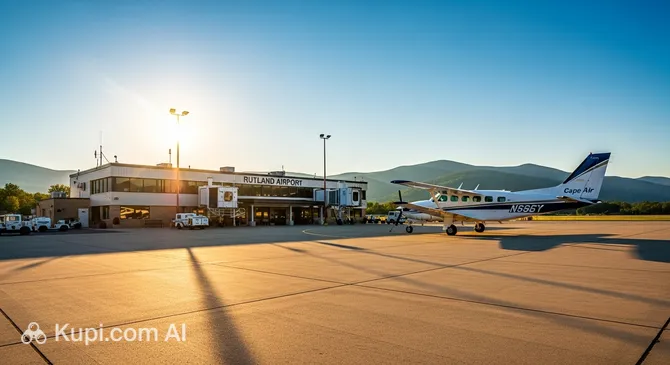
Rutland Airport. Source: Kupi.com Binoculars
IATA Code RUT
ICAO Code KRUT
City Rutland
Distance to centre approx. 10 km
Status Domestic
Passengers per year approx. 15,000
Popular Airlines Cape Air

The main advantage of Rutland Airport is its strategic location. It is situated just a half-hour drive from the world-renowned Killington and Pico ski resorts, making it an ideal choice for winter sports enthusiasts. Thanks to its modest size, check-in and baggage claim procedures are incredibly fast, allowing you to head towards your adventures without delay. The airport primarily handles flights by Cape Air, which provides convenient connections to Boston, opening access to a wide network of international and domestic flights.

Contact Information

  • Official Website: www.flyrutland.com
  • Information Desk Phone: +1 (802) 773-3348
  • Airport Address: 1002 Airport Rd, North Clarendon, VT 05759, USA (serves the city of Rutland)
  • Email: To contact the administration, it is recommended to use the contact form on the airport's official website, as a direct email address is not published.
  • Social Media: You can follow airport updates on its official page on Facebook.
  • Lost and Found Information: If you left items in the terminal building, call +1 (802) 773-3348. For luggage lost on board the aircraft, please contact your airline directly.
  • Passenger Support Contacts: For general inquiries and support, use the main information desk phone: +1 (802) 773-3348.

How to Get to the Airport

Getting to Rutland Southern Vermont Regional Airport (RUT) from the city centre of Rutland is easy thanks to its close proximity. The distance is only about 10 kilometres, and a car journey usually takes 10-15 minutes. Here are the main ways to get to the airport.

Taxis and ridesharing services, such as Uber and Lyft, are the most convenient and fastest option. This is an ideal choice if you have a lot of luggage or value comfort. A trip from the city centre will cost approximately 20-30 US dollars. It is recommended to book a car in advance, especially if you have an early flight, as the number of available drivers in a small city may be limited.

Public transport in the region is operated by the Marble Valley Regional Transit District, known as "The Bus". Although this is the most budget-friendly way to travel, direct routes to the airport may be irregular or unavailable. Travellers should check the current schedule and routes on the carrier's official website in advance to ensure a convenient trip is available. This option is best suited for tourists with light luggage and plenty of time.

Car rental is an extremely popular option in the state of Vermont, offering freedom of movement and the opportunity to explore the scenic surroundings. Many major rental companies have counters right at the airport, making it easy to pick up or return a car. If you plan to travel around the region, renting a car will be the most practical solution.

For those travelling to the airport in their own or rented vehicle, convenient parking is provided. Rutland Airport has both short-term and long-term parking zones. Parking costs here are generally significantly lower than at major international airports in the USA, making this a very affordable option.

Since Rutland Airport primarily serves regional flights, the choice of destinations may be limited. Many travellers consider larger aviation hubs located nearby as alternatives. For example, you can fly into Burlington International Airport (BTV) or Albany International Airport (ALB), and from there reach Rutland by rental car. The drive will take about 1.5-2 hours, but this opens access to a much larger number of flights.

Terminals and Map

Rutland – Southern Vermont Airport (RUT) is a small regional airport, making it extremely convenient and simple for passengers. Here you will not find the hustle and long queues typical of large aviation hubs.

The airport operates one passenger terminal, which serves both departing and arriving flights. The terminal building is compact and single-storey, so navigation within it is intuitive. All key zones — check-in counters, security screening, the waiting lounge, and the boarding gate — are within a few steps of each other. There is no separate division into zones for domestic and international flights, as the airport mainly serves local routes.

Check-in procedures and security screening usually take mere minutes. Due to the low passenger flow, queues here are a rarity. Nevertheless, it is recommended to arrive at the airport approximately 60 minutes before departure to check in luggage and complete all formalities without rushing. The arrival area is also extremely simple and consists of a small space where passengers collect their luggage.

The main tip for navigating Rutland airport: do not worry — it is practically impossible to get lost here. All infrastructure is located in one small hall, and signs are easily readable. This is an ideal choice for those who value their time and prefer a calm start to their journey across the USA.

Airport History

The history of Rutland Southern Vermont Airport (RUT), located near the city of Rutland, begins during the years of World War II. The airport was built and officially opened in 1942 as part of a federal programme to create facilities for military aviation needs. Initially, it was intended for pilot training and served as a reserve military airfield, contributing to the country's defence efforts.

After the war ended, the airport quickly re-qualified for civilian needs. As early as 1946, the first commercial passenger services began here, operated by Colonial Airlines. In the following decades, the airport was served by various regional carriers, including Mohawk Airlines, Air New England, and Commutair, reflecting changing trends in the USA aviation industry. This phase cemented Rutland Airport's status as an important air gateway for the region.

Striving to meet modern safety and comfort standards, the airport has undergone modernization multiple times. One of the key stages was the expansion and reconstruction of the main runway in the 2010s, which improved flight reliability in difficult weather conditions. In parallel, work was carried out to update the passenger terminal to make the stay at the airport more convenient for travellers.

An interesting fact: the airport plays a key role in the federal Essential Air Service (EAS) programme, which subsidises air connections to small cities. Thanks to this, residents and guests of the region have stable access to major aviation hubs. The name change from Rutland State Airport to Rutland Southern Vermont Regional Airport highlighted its increased importance for all of southern Vermont, especially for tourists heading to popular ski resorts.

Services and Amenities

Rutland Airport (RUT) is a small regional hub offering passengers a basic set of services for a comfortable wait for their flight. It is important to understand that due to the compact size of the terminal, the choice of amenities here is limited. You will not find large restaurants or shops in the airport building. Options for snacks are generally represented by vending machines with drinks and snacks.

For passenger convenience, free Wi-Fi is available throughout the terminal, allowing you to stay connected or work while waiting for departure. Power outlets for charging electronic devices are provided in the waiting lounge. There are no specialised business lounges or VIP lounges at the airport; all passengers use the general waiting area.

There are no bank branches or currency exchange points at the airport, so it is recommended to settle all financial matters in the city in advance. Medical assistance is limited to the ability of airport staff to call emergency services. For passengers with small children, changing tables may be available in the restrooms. The terminal fully complies with accessibility requirements and is equipped for the needs of passengers with reduced mobility.

There are no hotels, conference rooms, or business centres within the airport grounds. The nearest hotels and all necessary business services can be found in the city of Rutland, which is a few minutes' drive away. You can reach them by taxi or rental car.

Where to Eat

When planning a trip through the regional airport of Rutland (RUT), it is worth remembering that this is a very compact hub, and dining options on its premises are severely limited. Unlike many other airports in the USA, there is no familiar variety of cafes and restaurants here.

In fact, the only option for a snack inside the terminal is vending machines. In them, you can find a standard set of snacks: crisps, chocolate, biscuits, as well as bottled water and fizzy drinks. This may be enough to satisfy mild hunger, but one should not count on a full lunch or dinner.

There are no restaurants, bars, or cafes at Rutland Airport, so specialised offerings such as vegetarian, vegan, gluten-free, or halal dishes are absent here. Trying signature local Vermont cuisine while waiting for a flight will also not be possible.

Based on this, we strongly recommend that passengers arrange their meals in advance. The best solution would be to eat at one of the numerous establishments in the city of Rutland before travelling to the airport. The city is just a few minutes' drive away and offers a wide selection of cafes and restaurants to suit every taste and budget.

Tips for Travellers

When planning a trip through Rutland Airport, use our tips to make your journey as comfortable as possible. Despite the fact that it is a small regional airport, knowing a few nuances will help avoid unnecessary stress. For domestic flights within the USA, it is recommended to arrive at the airport approximately 1.5–2 hours before departure. This time is usually sufficient to go through all procedures without rushing, as queues here are significantly shorter than in major hubs.

To save time, complete online check-in and print or save your boarding pass to your phone in advance. The security screening procedure is standard for American airports. All electronics (laptops, tablets) must be removed from bags, and liquids in carry-on luggage must be in containers of no more than 100 ml and packed in a single transparent bag. It is prohibited to carry sharp objects and other items restricted by TSA (Transportation Security Administration) rules in the cabin.

When choosing a seat on the plane, remember the classic rule: a window seat will give you beautiful views during takeoff and landing, while an aisle seat will allow you to stand up freely without disturbing your neighbours. Since Rutland airport primarily serves short regional flights, it is rarely used as a transit hub. If you have a transfer scheduled at another, larger airport, study its map in advance and clarify whether you will need to collect and re-check your luggage.

For most passengers travelling on domestic flights, passing through customs control is not required. This procedure is relevant only for those arriving on international charter or private flights. In this case, standard entry rules for the country apply, including document checks and declaration of goods.

To save money, book tickets in advance and carefully study your airline's baggage allowance rules to avoid extra charges at the airport. You can also bring an empty reusable water bottle to fill after passing security, and pack non-liquid snacks, as food choices in small airports may be limited.

In the event of a flight delay or cancellation, first contact your airline representative for information on the flight status and possible options (rebooking, compensation). Given the modest size of the terminal, it is useful to have a book, a charged power bank, or other entertainment with you to pass the waiting time. Be sure to clarify your rights as a passenger — airlines are often required to provide vouchers for meals or accommodation during long delays.
Reached the end of the page?

That means the route is fully explored