Support

San Francisco International Airport

About the Airport

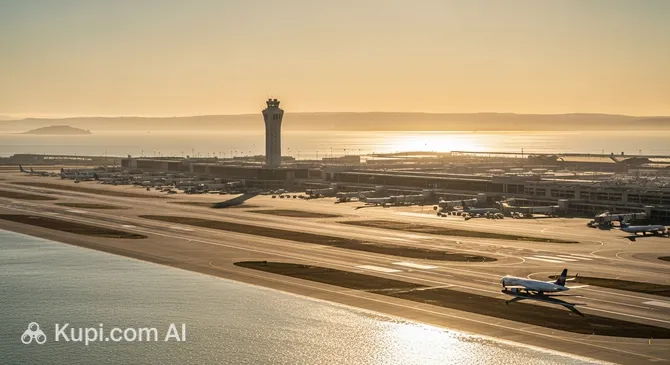
San Francisco International Airport. Source: Kupi.com Binoculars

San Francisco International Airport (SFO) is not just a transport hub, but a true gateway to the world of innovation and culture of Northern California. Located on the picturesque shores of the bay, it welcomes and bids farewell to travellers with impressive views and the atmosphere of one of the most dynamic cities in the USA. As the second busiest airport in the state, SFO is renowned not only for its scale but also for its high level of service, connecting the Bay Area with key destinations around the world. This airport highlights its long history of implementing cutting-edge technologies for passenger convenience, having been one of the first in the world to use telescopic jet bridges.

IATA Code SFO
ICAO Code KSFO
City San Francisco
Distance to Centre 21 km
Status International
Passengers per Year approx. 51.3 million (FY 2024)
Popular Airlines United Airlines, Alaska Airlines, Delta Air Lines.
Schedule Online Board "San Francisco International Airport"

San Francisco International Airport offers passengers much more than a standard set of services. Its four terminals, connected by the 24-hour automated AirTrain system, are designed for maximum comfort. Directly from the International Terminal, you can board a high-speed BART train and reach the city centre without transfers. A unique feature of SFO is its own accredited museum with art galleries within the terminals and an Aviation Museum. For those seeking relaxation before a flight, the airport is equipped with special yoga rooms, and the famous Wag Brigade programme, where passengers can interact with therapy dogs, helps to relieve stress.

Contact Information

Below is the essential contact information for San Francisco International Airport (SFO), which will help you plan your trip and resolve any questions that may arise.

  • Official Website: You can find the most up-to-date information, including flight schedules, terminal maps, and news, on the official website: www.flysfo.com
  • Information Service Phone: For general enquiries, you can call: +1 800-435-9736 or +1 650-821-8211.
  • Airport Address: San Francisco International Airport, San Francisco, CA 94128, USA.
  • Email: A direct email address for general enquiries is not provided. It is recommended to use the dedicated contact forms on the airport's official website for communication.
  • Social Media: The airport maintains active social media pages. You can find them under the username @flySFO on X (formerly Twitter), Facebook, and Instagram.
  • Lost Luggage Information: If your luggage was lost during a flight, you should primarily contact your airline's representative. If you lost personal items within the terminal, at the security checkpoint, or in the parking lot, contact the SFO Lost and Found office.
  • Passenger Support Service: Assistance to passengers is provided at information desks located in all terminals. You can also use the enquiry numbers listed above.

How to Get to the Airport

Reaching San Francisco International Airport (SFO), one of the key transport hubs in the USA, is possible via several convenient methods. The fastest and most reliable way to avoid the famous traffic of San Francisco is the BART (Bay Area Rapid Transit) train. The BART station is located directly in the International Terminal, and other terminals are easily accessible via the free AirTrain. The journey from the city centre to the airport takes about 30 minutes, and the ticket cost is approximately 10-11 dollars. A more budget-friendly alternative is the SamTrans buses (for example, routes 292, 397, ECR), which connect the city and the airport. A bus ride will cost just a few dollars but will take more time — from 50 to 90 minutes.

For those who value comfort, taxis and ride-hailing services such as Uber and Lyft are always available. Designated zones for passenger pick-up and drop-off are located on the departures level of all terminals. A trip from the city centre to the airport without traffic takes about 30-40 minutes; however, during peak hours, the time may increase to an hour or more. The cost usually varies from $45 to $65. Alternatively, you can consider shared-ride vans, which offer transport at a fixed price and can be advantageous for solo travellers or couples.

If you are travelling in a rental car, it must be returned to the dedicated Rental Car Center. From there, the free AirTrain (Blue Line) runs to the terminals every few minutes. For those arriving at the airport in their own vehicle, several types of parking are provided: short-term hourly directly at the terminals, several long-term car parks with more favourable rates and shuttles to the terminals, as well as a valet parking service. It is highly recommended to book a space in long-term parking online in advance to get the best price.

Thus, the choice of transport to SFO depends on your priorities: BART for speed and predictability, taxi for comfort, and buses for maximum savings. When planning your trip, always allow extra time for potential traffic. It is also worth noting that there are other airports in the San Francisco Bay Area. The largest alternatives are Oakland International Airport (OAK) and San Jose Mineta International Airport (SJC). Besides them, smaller airports operate in the region, such as Hayward Executive Airport, Moffett Federal Airfield, and Buchanan Field.

Terminals and Map

San Francisco International Airport (SFO) is a large and modern transport hub with a well-thought-out structure. It consists of four terminals: the International Terminal and three domestic terminals — Terminal 1 (Harvey Milk Terminal 1), Terminal 2, and Terminal 3. All of them are arranged in a ring around the central parking lots and access roads, which simplifies navigation.

To move between terminals, parking lots, the high-speed BART train station, and the Rental Car Center, the free automated AirTrain is available. It operates 24/7 on two lines: the Red Line connects all terminals and parking garages, while the Blue Line follows the same route but with an additional stop at the Rental Car Center. This is the most convenient way to get from one end of the airport to the other before passing security control.

Each terminal has its own features:

  • International Terminal: Divided into two boarding areas — Concourse A and Concourse G. The majority of international flights are serviced here. It is in this terminal that all passengers arriving from abroad go through customs and passport control.
  • Terminal 1 (Harvey Milk Terminal 1): The newest and most modern terminal, serving airlines such as JetBlue and Southwest.
  • Terminal 2: Often recognised as one of the best in the country for comfort and dining selection. Alaska Airlines and Delta are based here.
  • Terminal 3: Is the main hub for United Airlines and primarily services its domestic flights.

Some terminals are connected by pedestrian walkways after the security zone, which is convenient for passengers with transfers. For example, you can walk from Terminal 2 to Terminal 3 without exiting to the general area.

Departure zones (check-in and baggage drop) are traditionally located on the upper level of the terminals, while arrival zones (baggage claim) are on the lower level. The time required for check-in and security screening can vary greatly. On average, it is recommended to arrive at the airport 2 hours before a domestic flight and 3 hours before an international one. During peak hours, queues can be longer, so it is always better to allow extra time.

To orient yourself at SFO, check your airline's terminal and departure gate in advance. Use the information boards and signs, of which there are many in the airport. For quick transfers between distant terminals, feel free to use the AirTrain — it will save you time and energy.

Airport History

The history of San Francisco International Airport (SFO) is a journey from a modest airfield to one of the busiest and most modern aviation hubs in the world. The airport was founded in 1927 on a leased 150-acre pasture site and was originally named Mills Field Municipal Airport. In its early years, it served mainly mail and a few passenger flights.

In the 1930s, the airport witnessed a landmark event in aviation history: it was from here that Pan American Airways began operating its famous transpacific flights on the China Clipper flying boats. In 1931, it was renamed San Francisco Municipal Airport. During World War II, the facility was actively used by the military, which spurred its further development and the expansion of runways.

The post-war boom in air travel demanded radical modernisation. In 1954, a new central terminal was opened, and in 1955, the airport received its modern name — San Francisco International Airport, reflecting its growing status on the world stage. The advent of the jet age in the late 1950s and 1960s led to further construction and expansion of terminals to service larger and faster aircraft.

A key stage of reconstruction took place in the late 20th and early 21st centuries. In 2000, the new, architecturally impressive International Terminal was opened, which remains the airport's hallmark today. Its spacious, light-filled main hall and modern design have made it one of the most recognisable in the USA. In 2003, the automated AirTrain system was launched, connecting all terminals, parking garages, and the BART high-speed train station, ensuring direct rail connection with the city centre.

SFO is known not only for its scale but also for unique achievements. It became the first airport in the world to house an accredited museum — the SFO Museum. Its exhibitions dedicated to art, history, and science can be seen in various terminals. Furthermore, the airport is a leader in sustainability and environmental initiatives. And one of the most charming facts of its modern history is the "Wag Brigade," a team of specially trained therapy dogs that help passengers cope with stress before a flight.

Services and Amenities

San Francisco International Airport (SFO) offers passengers a wide range of services and amenities to make waiting for a flight as comfortable and productive as possible. In each terminal, you will find a huge variety of restaurants, cafes, and lounges to suit any taste: from fast-food outlets to establishments with exquisite cuisine where you can try famous Californian dishes. Numerous shops, including Duty Free, offer a large selection of goods — from souvenirs and books to branded clothing and electronics.

Staying connected at SFO is very simple: free Wi-Fi is available throughout the airport. Numerous power outlets and USB ports located in waiting areas and at boarding gates are provided for charging gadgets. If you are looking for enhanced comfort, VIP lounges and various airline lounges are at your service, where you can rest in quiet, have a snack, and utilise additional business services.

For financial matters, branches of banks, ATMs, and currency exchange points operate in the airport. Your health and safety are also a priority: SFO has a medical centre ready to provide first aid, and pharmacies where necessary medicines can be purchased. Automated defibrillators are also located throughout the airport.

San Francisco Airport is well-equipped for travellers with children. There are special nursery rooms for infant care, as well as play zones where young passengers can burn off energy before the flight. For passengers with reduced mobility, all necessary facilities are provided, including ramps, lifts, special restrooms, and escort services, which can be requested in advance through the airline.

For business travellers, SFO offers business centres and conference rooms equipped with everything necessary for work and meetings. If you have a long layover or an early departure, you can stay at the Grand Hyatt at SFO, which is directly connected to the terminals via the AirTrain monorail. Additionally, there are many other hotels in the immediate vicinity of the airport, easily accessible by free shuttles.

Where to Eat

San Francisco International Airport (SFO) rightfully prides itself on its gastronomic capabilities, offering passengers much more than the standard set of airport food. Here you will find plenty of options for every taste and budget — from establishments featuring Californian cuisine to award-winning restaurants and cosy cafes.

Most restaurants and cafes are located in the airside zone, that is, after passing security control. However, in the landside zone (before control), there are also several excellent places where you can have a snack while meeting or seeing off loved ones. The choice varies from fast-food outlets for those in a rush to full-service restaurants where you can leisurely have lunch or dinner while waiting for a flight.

Once at SFO, be sure to try local cuisine dishes. Look for the famous clam chowder in a sourdough bread bowl, fresh seafood, and dishes with avocado. It is a great idea to visit Napa Farms Market (Terminal 2 and International Terminal G), where you can find the best products from local farmers, sandwiches, salads, and sample local produce. Many venues also offer a wide selection of handcrafted beverages.

Great attention is paid to the diversity of dietary preferences at the airport. You will easily find vegetarian, vegan, and gluten-free dishes. For example, in establishments like Amy's Drive Thru (Terminal 1), a fully vegetarian menu is presented. Many restaurants are also ready to adapt their dishes to your needs — do not hesitate to ask the staff about this.

As for prices, they vary. You can find budget options in fast-food chains as well as more expensive dishes in full-service restaurants. On average, prices at the airport are slightly higher than in the city. Most establishments open early in the morning to serve passengers of the first flights and operate until late evening. For a quick snack, coffee shops like Peet's Coffee or Starbucks are perfect, while for a full meal, Lark Creek Grill (Terminal 2) or one of the Asian bistros in the International Terminal can be recommended.

Travel Tips

Planning a trip through San Francisco International Airport (SFO) will be easier with our tips. It is one of the busiest hubs in the USA, so advance preparation will help save time and reduce stress. To ensure your trip goes smoothly, follow these recommendations.

Arrival Time and Check-in. For domestic flights, it is recommended to arrive at the airport at least 2 hours before departure, and for international flights — 3 hours prior. Queues for check-in and security screening can be long, especially in the morning hours and on holidays. If you have access to the TSA PreCheck® programme, this will significantly speed up passing security control.

Hand Luggage and Security. Strict rules regarding the carriage of liquids apply in the USA: containers with a volume of no more than 100 ml packed in a single transparent bag are permitted. Laptops and other large electronics must be removed from your bag for separate scanning. To avoid issues, check the list of prohibited items on the Transportation Security Administration (TSA) website in advance.

Seat Selection and Transfers. If the view is important to you, choose a window seat. For those who want the freedom to stand up easily, an aisle seat is suitable. Passengers with short connections are better off choosing seats in the front of the cabin to exit the aircraft faster. At SFO, the free AirTrain runs between terminals, helping you quickly reach the required boarding gate.

Customs Control. Arriving on an international flight, you will have to pass passport and customs control. Be prepared to answer questions about the purpose of your trip and present a completed customs declaration (often filled out electronically at kiosks upon arrival). After passing control, you will collect your luggage and can either exit to the city or transfer it at the counter for your next flight if you have a connection.

Savings and Flight Delays. To save on travel to the city, use the BART high-speed train system, the station for which is located directly in the International Terminal. This is faster and cheaper than a taxi. In case of a flight delay, SFO offers many amenities: from free yoga rooms and an aviation museum to various cafes and shops. Do not forget to check with your airline if they provide vouchers for meals or hotel accommodation during lengthy delays.

Reached the end of the page?

That means the route is fully explored