Support

Moffett Federal Airfield

About the Airport

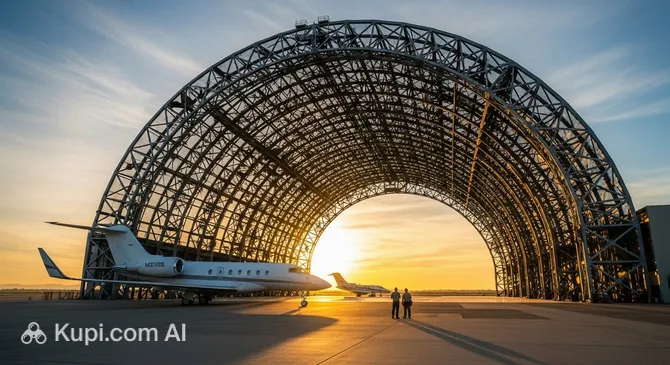
Moffett Federal Airfield. Source: Kupi.com Binoculars

Moffett Federal Airfield is not merely an airport, but a true icon of Silicon Valley, located in the very heart of the city of Mountain View. Its history began in the 1930s with the era of airships, a legacy still commemorated today by the giant and globally recognisable Hangar 1. Today, it is a unique facility managed by the NASA Ames Research Center, serving as a gateway not for tourists, but for scientists, military personnel, and high-tech pioneers.

IATA Code NUQ
ICAO Code KNUQ
City Mountain View, USA
Distance to Center Approximately 6 km
Status Civil-military.
Passengers per Year It is not a public commercial airport; it serves private and government flights. Official passenger traffic statistics are not published.
Popular Airlines The airport does not serve scheduled commercial airlines. The main operators are NASA, the California Air National Guard, and private corporate jets, including the Google fleet.
Schedule Online Board "Moffett Federal Airfield"

Features and Advantages of Moffett Federal Airfield

The main advantage of the airfield is its strategic location in Silicon Valley, making it a key transport hub for tech giants and research centres. Its territory houses the NASA Ames Research Center, emphasising its scientific and innovative focus. The airfield is equipped with two long runways capable of accommodating large aircraft, including the presidential Air Force One during visits to the region.

The hallmark of Moffett Field is Hangar 1 — one of the largest freestanding structures in the world, a historical monument visible for many kilometres. Although the airfield is closed to commercial passenger transport, it plays a crucial role in supporting private aviation, government missions, and military operations; notably, the 129th Rescue Wing of the California Air National Guard is based here. This is a place where aviation history meets the future of technology.

Contact Information

Moffett Federal Airfield is a private and military airfield that does not serve regular commercial flights. It is jointly managed by NASA and private companies. For this reason, standard passenger support services found in major airports are absent here. You can contact the administration through the NASA Ames Research Center.

  • Official Website: The airfield is part of the Ames Research Center. The most up-to-date information is available on the official NASA Ames website.
  • Information Desk Phone: The main number for contacting the Ames Research Center is +1 (650) 604-5000. This is the general line for the centre, not a dedicated airport helpdesk.
  • Airport Address: Moffett Field, Mountain View, CA 94035, USA.
  • Email: A specialised email for general inquiries is not provided. It is recommended to use the contact forms on the NASA website.
  • Social Media: Official accounts related to the airfield's activities belong to NASA Ames. You can find them on popular social networks, such as X (formerly Twitter) and Facebook.
  • Lost and Found Information: Since the airport does not serve commercial passenger airlines, there is no unified lost luggage service. For questions regarding lost items, you must contact the operator of your charter or private flight directly.
  • Passenger Support Contacts: There is no centralised support service. All flight-related questions should be addressed to the company or organisation operating the flight.

How to Get to the Airport

Getting to Moffett Federal Airfield, located in the city of Mountain View, is quite simple thanks to the developed transport network of Silicon Valley. Depending on your budget, time, and preferences, you can choose one of several convenient methods. A trip from the city centre by car usually takes no more than 10-15 minutes.

Public Transport is the most economical option. The cost of a single trip on light rail or a VTA (Valley Transportation Authority) bus is usually around $2.50. The VTA light rail has a stop called Moffett Park, which is located in the immediate vicinity of the airfield. This is a convenient way to get here from San Jose and other neighbouring cities. Be sure to check the current schedule and fares before travelling.

Taxis and Ridesharing Services, such as Uber and Lyft, are a popular and convenient way to get around the region. A trip from the centre of Mountain View will cost approximately $15-25. If you are travelling from major regional airports, be prepared for higher expenses: a transfer from the nearest San Jose Mineta International Airport (SJC) will cost about $30-50, while a trip from San Francisco International Airport (SFO) or Oakland International Airport (OAK) ranges from $70 to $100 and above, depending on the time of day and demand.

Car Rental provides maximum freedom of movement around the USA and is especially convenient for those planning to explore not only Mountain View but also other parts of California. Moffett Federal Airfield is located next to the major US-101 highway, making access very convenient. Regarding parking, it is important to remember that Moffett Field is an active federal facility, and access may be restricted. Parking for visitors to events or museums on the territory is usually available, but is often paid. It is strongly recommended to check parking rules and costs in advance for your specific visit.

Terminals and Layout

It is important to understand that Moffett Federal Airfield (NUQ) is not a standard commercial airport for regular passenger flights. It is used primarily for private, corporate, government, and military aviation. Therefore, there are no numbered terminals here familiar to tourists, as seen in major international hubs.

Instead of public terminals, the servicing of private and charter flights is carried out through so-called FBOs (Fixed-Base Operators) — business aviation service complexes. This is where all pre-flight and post-flight formalities take place. Passengers arrive at the FBO, where they are met, assisted with luggage, and escorted to comfortable waiting lounges. Departure and arrival zones are effectively combined within one such centre.

Registration and security screening procedures at Moffett Federal Airfield are organised completely differently from commercial airports. Thanks to the exclusive nature of the service, there are no long queues here. The entire process, including document checks and security screening, takes place maximally quickly and confidentially, taking just a few minutes. Everything is organised so that passengers can arrive shortly before departure and proceed immediately to the aircraft.

The airfield layout includes runways, hangars (including the famous historic Hangar 1), and technical buildings. However, for private passengers, navigation is extremely simple: all their movements are limited to the FBO building and the apron where their aircraft is located. Access to the rest of the airfield territory is restricted.

The main recommendation for travellers flying from Moffett Field: follow the instructions provided by your air carrier or FBO. They will inform you of the exact address for arrival, access rules, and all necessary details. The entire service is built around the client's convenience and privacy, so it is practically impossible to get lost or encounter difficulties with navigation.

Airport History

The history of Moffett Federal Airfield is inextricably linked with the development of aviation and technology in the USA. Officially opened in 1933 as Naval Air Station Sunnyvale, it was soon renamed in honour of Rear Admiral William A. Moffett, a pioneer of naval aviation. Initially, the airfield was created to base airship carriers, and for these purposes, the famous Hangar 1 was built here — one of the largest freestanding structures in the world, which became a landmark of the airfield and all of Mountain View.

In the early years of its existence, the airfield served as the home for the USS Macon airship, which tragically crashed in 1935. During World War II, Moffett Field played a key role in coastal patrols using blimps and aircraft. In the Cold War era, it became an important centre for anti-submarine aviation, where the famous P-3 Orion aircraft were based. This phase cemented its status as one of the most important military facilities on the West Coast.

A significant turn in the airfield's history occurred in 1994, when the facility was transferred from the US Navy to the management of the NASA Ames Research Center. From that moment, it received its modern name — Moffett Federal Airfield. Infrastructure modernisation was aimed at supporting NASA's aviation and space research. Today, the airfield is used for testing unmanned aerial vehicles, aviation technologies, and as a base for aircraft participating in scientific missions, such as the SOFIA stratospheric observatory.

Among the interesting facts is the unique architecture of Hangar 1, which is so large that its own weather phenomena, such as fog, can form inside it. The airfield has also become a platform for private aerospace initiatives and is used by aircraft of major technology companies located in Silicon Valley. Thus, the history of Moffett Field reflects the evolution of technology in the 20th and 21st centuries: from the era of airships to advanced space research.

Services and Amenities

It is important to understand that Moffett Federal Airfield (NUQ) is not a standard commercial airport with regular passenger flights. It serves mainly private, corporate, and government aviation. Consequently, the range of passenger services differs from what can be found in major international hubs, and most amenities are provided through ground handling operators (FBOs).

You will not find traditional restaurants, cafes, or duty-free shops on the airfield territory. Passengers are advised to take care of dining and shopping in advance in nearby cities, such as Mountain View or Sunnyvale. Similarly, there are no bank branches or currency exchange points here, so all financial transactions should be completed before arrival at the airfield.

For passengers flying on private or charter flights, FBO operators provide comfortable private lounges. These lounges usually offer access to free Wi-Fi, charging stations for gadgets, and provide beverages and light snacks. Conference rooms and business services may be available for business travellers, but these must be booked in advance through your airline or servicing operator.

The airfield is equipped to accommodate passengers with reduced mobility in accordance with federal standards. However, to receive special assistance, it is recommended to notify your carrier in advance. Specialised services for passengers with children, such as play areas or baby care facilities, are generally absent. First aid in emergency cases can be provided on-site.

There are no hotels directly on the territory of Moffett Field. However, thanks to its location in the very heart of Silicon Valley, a wide selection of hotels to suit any taste and budget is available within a few minutes' drive in Mountain View, Sunnyvale, and Santa Clara.

Where to Eat

When planning a trip through Moffett Federal Airfield (NUQ), it is important to consider its special status. It is not a commercial passenger airport in the usual sense, but a facility used primarily for military, government (NASA), and private purposes. In this regard, infrastructure for the general public is practically non-existent here.

There are no public restaurants, cafes, or food courts on the territory of Moffett Federal Airfield intended for ordinary passengers. You will not find the standard division into terminals with departure and arrival zones where food outlets are located. Any canteens or cafeterias on the premises are intended exclusively for staff and are not accessible to visitors.

Travellers whose routes pass through this airfield are strongly advised to take care of meals in advance — eat before arrival or plan a meal after leaving its territory. Nearby cities, such as Mountain View and Sunnyvale, offer a wide selection of establishments for every taste: from fast-food chains for a quick snack to restaurants where you can enjoy a leisurely lunch or dinner.

Tips for Travellers

Travelling through Moffett Federal Airfield in Mountain View has its own specifics, as it is not a typical commercial airport, but a facility used for private, corporate, and military aviation. Nevertheless, general tips will help you prepare for your flight and make it as comfortable as possible.

Arrival Time and Check-in. For private and charter flights, the arrival time is usually coordinated in advance with the flight operator. As a rule, it is recommended to be on-site 1–1.5 hours before departure. Registration and security control procedures here are significantly faster than in major airports, but TSA (Transportation Security Administration) rules remain in force. Ensure that all liquids in hand luggage are in containers of no more than 100 ml and packed in a transparent bag.

Seat Selection and Hand Luggage. Seat selection depends on the aircraft configuration. If possible, a window seat will offer you beautiful views of the San Francisco Bay during takeoff or landing. Rules for carrying hand luggage on small aircraft may be stricter, so be sure to clarify the permissible dimensions and weight with your carrier. Sharp objects, weapons, and flammable substances are standardly prohibited in the cabin.

Customs Control and Transfers. When arriving on an international flight, you will have to undergo customs and border control. Have your passport, visa, and other necessary documents ready. Moffett Federal Airfield usually serves as a final destination, and transfers are not provided here. If you need to continue your journey, you will likely need to get to one of the major international airports nearby — San Francisco (SFO) or San Jose (SJC).

Saving Time and Actions in Case of Delay. The best way to save time is to book a taxi or transfer to your destination in advance. In case of a flight delay, immediately contact a representative of your operator or the crew. They will provide up-to-date information and help coordinate further actions. Having your operator's contacts at hand is a key moment for resolving any unforeseen situations.

Reached the end of the page?

That means the route is fully explored