Support

Spirit of St. Louis Airport

About the Airport

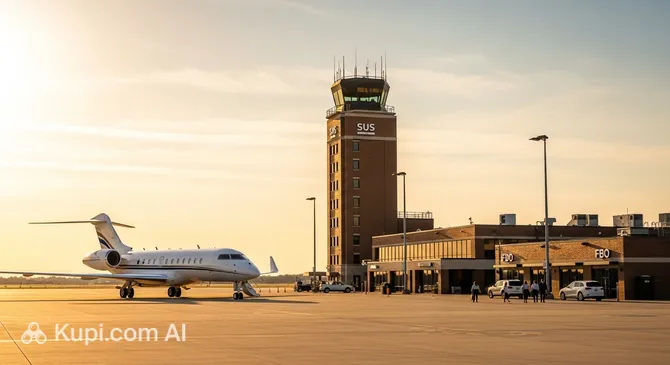
Spirit of St. Louis Airport. Source: Kupi.com Binoculars

Spirit of St. Louis Airport is not merely a transport hub, but a truly exclusive aerial gateway to the Midwest, where the atmosphere of aviation romance meets the pragmatism of big business. Unlike noisy commercial hubs, the silence of VIP terminals reigns here, and time flows according to the passengers' rules, not the schedule. Located in the picturesque Chesterfield Valley, this airport has become a "secret weapon" for top executives, private pilots, and celebrities who value privacy and speed above all else.

IATA Code SUS
ICAO Code KSUS
City St. Louis (Chesterfield)
Distance to Centre ~27 km
Status International (Business Aviation)
Annual Passengers ~145,000 takeoffs/landings per year (exact passenger statistics are confidential)
Schedule Individual schedule (private and charter flights only)

Airport Features and Advantages

Spirit of St. Louis is rightfully considered one of the best general aviation airports in the country. Its main advantage is the uncompromising saving of time: the absence of long security queues and the ability to drive practically up to the aircraft steps make the flight as comfortable as possible. The presence of a 24-hour customs service allows for the reception of international private flights, ensuring the status of a full-fledged port of entry into the USA.

The airport's infrastructure is tailored to the highest service standards. Premium operators (FBOs) such as Tac-Air and Signature Flight Support operate here, offering luxurious lounge zones, conference halls, and concierge services. Furthermore, the proximity to the Chesterfield business district and convenient access to the highway allow you to reach important regional business centres in mere minutes, bypassing city traffic.

Contact Information

If you need to contact the administration of Spirit of St. Louis Airport (SUS), which serves the city of St. Louis and its surroundings, please use the current contact information provided below. Here are the main channels for communication with various airport services.

  • Official Website: spiritairport.com
  • Information Desk Phone: +1 (636) 532-2222
  • Address: 18270 Edison Ave, Chesterfield, MO 63005, USA
  • Email: info@spiritairport.com
  • Social Media: Follow airport news and updates on official pages on Facebook, X (formerly Twitter) and LinkedIn.
  • Lost & Found: For questions regarding lost and found items, please contact the main airport phone number.
  • Passenger Support Service: For general information and assistance, you can contact the administration via the phone or email listed above.

How to Get to the Airport

Spirit of St. Louis Airport (SUS) is located in the western suburb of Chesterfield, approximately 37 kilometres from the city centre of St. Louis, USA. This airport mainly serves private and business aviation, so transport accessibility differs from major international hubs. When planning a trip, it is worth thinking about the route in advance, and the most convenient way to get to the terminal is by car.

By Car: Rental and Private Transport

Traveling by private or rented car is the most popular and convenient option. The airport is located next to the major I-64 (US-40) highway, providing quick access from any point in the city. The trip from the centre of St. Louis will take approximately 30–45 minutes depending on traffic conditions. Renting a car gives you freedom of movement throughout the region, and rental company counters can be found both at the airport and in the city.

Parking at the Airport

For those arriving in their own vehicle, parking zones are provided on the territory of Spirit of St. Louis Airport. Options for both short-term and long-term parking are usually available. Parking costs here are generally lower than at the city's main airport. It is recommended to check current rates and availability on the airport's official website.

Taxi, Uber, and Lyft

Calling a taxi or ordering a car via Uber and Lyft apps is a comfortable way to get to the airport without needing to drive. The cost of a trip from the city centre will be approximately $40–60, and the travel time will be the same as by private car — about 30–45 minutes. You can also use the services of private transfer companies that offer fixed rates and meet-and-greet services, which is especially convenient for business travellers.

Public Transport

Direct public transport routes, such as buses or MetroLink trains, do not run to Spirit of St. Louis Airport. Attempting to get here by public transport would require several transfers and take a lot of time, making this option extremely inconvenient, especially if you are travelling with luggage. For most tourists and business passengers, this method is not recommended. The main transport hub for commercial flights and the primary public transport hub is St. Louis Lambert International Airport.

Terminals and Map

Spirit of St. Louis Airport (SUS) is one of the leading business aviation airports in the USA, and its structure differs significantly from traditional commercial airports. There are no large passenger terminals with numbers here, as in major international hubs. Instead, passenger service for private and charter flights is carried out through high-class complexes known as Fixed-Base Operators (FBO).

Each FBO is essentially a separate private terminal. Several such operators operate on the airport grounds, including Tac-Air and Signature Flight Support. These modern buildings offer passengers exclusive service: comfortable lounges, meeting rooms, business centres, concierge services, and a personalised approach. The airport layout is simple — each FBO has its own entrance and parking, so navigation comes down to knowing exactly which operator handles your flight.

Departure and arrival processes here are optimised to the maximum. Forget about long queues for check-in and security screening. Passengers arrive at their FBO building, where they are met by staff. The check-in and document verification procedure takes just a few minutes. After that, you are either escorted to the aircraft, which is a few steps from the exit to the apron, or driven in a comfortable car directly to the steps. On average, all pre-flight formalities take no more than 15-20 minutes.

Since each FBO is a self-sufficient complex, the concept of "transferring between terminals" is irrelevant for passengers here. Your entire trip, from arrival at the airport to boarding the plane, takes place within a single building. The main advice for travellers flying from Spirit of St. Louis: check with your air carrier or broker in advance for the name of the FBO that will handle your flight. This is key information that will ensure quick and comfortable navigation upon arrival at the airport.

Airport History

The history of Spirit of St. Louis Airport (SUS) is inextricably linked with one of the greatest achievements in aviation, although it began decades later. The airport was founded in 1964 by the St. Louis County administration and was named in honour of the legendary aircraft "Spirit of St. Louis". On this monoplane, Charles Lindbergh made the first solo non-stop transatlantic flight in history in 1927. Although Lindbergh himself did not take off from this field, his flight was financed by businessmen from St. Louis, and the airport's name became a tribute to this historic event and the spirit of innovation it symbolised.

Since its opening, Spirit of St. Louis Airport has developed as a key centre for business and private aviation. One of the most significant tests in its history was the Great Flood of 1993. Located in the Chesterfield Valley, the airport was under threat of flooding, but thanks to a sturdy levee built for its protection, it was able to continue operations while many surrounding areas went underwater. This event highlighted the strategic importance of the airport and the reliability of its infrastructure.

In subsequent decades, the airport underwent several stages of modernisation, transforming into one of the busiest and best-equipped airports for private and corporate aviation in the USA. New hangars were built, runways were extended, and navigation systems were updated. Today, Spirit of St. Louis is a thriving aviation complex with two runways, 24-hour customs, and numerous companies providing a full range of services for private jets. It continues to play a key role in the economic life of the region, serving as an aerial gateway for business and private travellers.

Services and Amenities

Spirit of St. Louis Airport (SUS) is one of the largest and busiest business aviation airports in the USA, so its services are primarily oriented towards passengers of private and corporate flights. Most amenities are provided through ground handling operators known as FBOs (Fixed-Base Operators), which have their own terminals and lounges.

Several dining options can be found on the airport grounds. For example, The Landings at Spirit Golf Club restaurant offers guests a full menu and a pleasant view of the airfield. Cafés and areas with snacks and beverages are also available in the FBO terminals. Specialised shops, with the exception of pilot supplies, are virtually absent here, so shopping is best planned in St. Louis itself.

Passengers are served in private VIP lounges provided by FBOs such as TAC Air and Signature Flight Support. These lounges offer a high level of comfort, privacy, free Wi-Fi, work zones, and relaxation areas. Charging stations for electronic devices are available throughout the airport and in the waiting halls. For business travellers, conference rooms and meeting rooms are available for rent directly on the airport premises.

Specialised services such as currency exchange points or bank branches are absent at the airport, so financial matters are recommended to be settled in advance. Medical assistance is limited to first aid in emergency situations. There are no separate play areas for passengers with children, however, the comfortable environment of the private lounges allows families to spend time conveniently before departure. All terminals are equipped for passengers with reduced mobility, and FBO staff are always ready to provide necessary assistance during boarding and disembarking.

Although there are no hotels directly within the airport buildings, numerous hotels for every taste and budget are located in the immediate vicinity, in the Chesterfield area. The trip to the nearest hotel usually takes no more than 5-10 minutes by car, making waiting for a flight or resting after a journey as convenient as possible.

Where to Eat

When planning a trip through Spirit of St. Louis Airport (SUS), it is important to consider its specific nature. It is primarily a centre for business and private aviation, so the choice of catering establishments here differs from large international airports. There are no multitudes of terminals with dozens of cafés, but travellers can eat comfortably at the main restaurant located on the premises.

The main and practically the only place for a full lunch or dinner at the airport is The Landings at Spirit restaurant. It is located in the main building and is accessible to all visitors (pre-security zone). This establishment is popular not only with pilots and passengers but also with locals due to its unique atmosphere and beautiful view of the runway. It is an ideal place for a leisurely meal while waiting for a flight.

The menu at The Landings at Spirit features classic American cuisine. Here you can order hearty burgers, sandwiches, fresh salads, and hot main courses. If time is limited, snacks from the lounge menu are suitable for a quick bite. Prices in the restaurant can be described as average. Operating hours usually cover breakfast, lunch, and dinner, but it is recommended to check the current schedule on the restaurant's official website before visiting.

Regarding special dietary requests, standard vegetarian options are generally present on the menu. However, for more specific needs (vegan, gluten-free, or Halal dishes), the selection may be limited. It is recommended to contact the restaurant in advance to check the availability of suitable items for you. If you require a wider choice of establishments, including fast food and coffee shops, it is worth considering options in the nearby city of Chesterfield, which is just a few minutes' drive from the airport.

Travel Tips

Travelling through Spirit of St. Louis Airport has its own special features, as it is oriented mainly towards private and business aviation. This means that many standard procedures here take place significantly faster and more comfortably than in large commercial airports. To ensure your trip from St. Louis, USA, goes smoothly, use the following tips.

Arrival Time, Check-in, and Security. Despite the accelerated procedures, it is recommended to arrive at the airport at least 60-90 minutes before departure. For international flights, it is worth allowing extra time. Check-in and security screening processes here follow standard rules but usually without queues. Check arrival time recommendations with your operator or charter company in advance.

Hand Luggage and Seat Selection. Rules for carrying hand luggage are universal: liquids in containers of no more than 100 ml, packed in a transparent bag, as well as a ban on sharp objects. Be prepared to take out electronics for screening. Seat selection on the plane is usually discussed with the flight operator, as the layout of private and corporate jets is individual and differs greatly from standard airliners.

Transfers and Customs Control. Transfers at Spirit of St. Louis Airport are rare; most flights are direct. If you have a connecting flight planned, coordinate it directly with your air carrier. Upon arrival from abroad, you will have to go through customs and passport control. Thanks to the low passenger flow, this procedure usually takes mere minutes.

Saving Time and Money. The best way to save time is to prepare all necessary documents in advance and clarify flight details with the operator. Since this is a business aviation airport, many services, such as catering, may already be included in the cost of the flight. This eliminates the need to spend money on food and beverages before departure.

In Case of Flight Delay. If your flight is delayed, the main source of information will be the representative of your charter company or the crew. Unlike large airlines, here you receive a more personalised service, which allows emerging issues to be resolved much faster. Contact your operator to receive current information and discuss possible alternatives.

Reached the end of the page?

That means the route is fully explored