Support

Paul W. Bryant Museum

About

For those who want to experience the legendary sports history of Alabama, the Paul W. Bryant Museum is a true discovery. This specialized museum is dedicated entirely to the triumphant journey of the University of Alabama's American football team. Located in the city of Tuscaloosa, it is rightfully considered a major pilgrimage site for sports enthusiasts from across the USA.
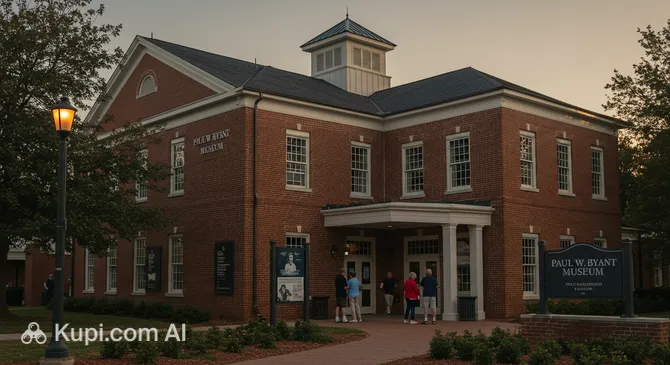
Paul W. Bryant Museum. Source: Kupi.com AI

The central figure of the exposition is the great coach Paul "Bear" Bryant, whose name the museum proudly bears. Here you will find a unique collection of memorabilia: from early 20th-century leather helmets to modern high-tech trophies. The museum serves not just as an archive, but as a living monument to the achievements of the Crimson Tide program, attracting thousands of visitors annually with its high-quality displays and deep respect for tradition.

Situated in close proximity to the massive Bryant-Denny Stadium, the museum complements the campus atmosphere where football is not just a game, but a vital part of local identity. Whether you are a sports fan or simply interested in Southern culture, this place allows you to feel the true spirit of American college sports.

Contacts

For more information about special events or group tours, you can use the museum's official contact details.

Address 300 Paul W Bryant Dr, Tuscaloosa, AL 35401, USA
Phone +1 205-348-4668
Website bryantmuseum.com

What to Do

Inside the museum, guests can enjoy a fascinating journey through time. You can see national championship trophies, gold watches, and "Bear" Bryant's famous houndstooth hat. Be sure to spend time at the modern multimedia displays: they broadcast recordings of decisive touchdowns and emotional interviews that let you feel the intensity of great matches from the past.

For those who love detail, the halls showcase the evolution of sports gear and equipment. You can trace how player uniforms have changed over more than a hundred years. Interactive zones allow visitors to dive deeper into the tactical schemes used by legendary coaches to achieve victory on the field.

After exploring the interior halls, a walk along the Walk of Champions near the stadium is highly recommended. It is a great spot for commemorative photos against the statues of legendary coaches. At the museum gift shop, you can purchase unique University of Alabama merchandise, which makes an excellent gift for any football fan.

Getting There

Finding the Paul W. Bryant Museum is quite simple, as it is located in the heart of university life on the University of Alabama campus. The exact address is: 300 Paul W Bryant Dr, Tuscaloosa, AL 35401. If you are traveling by car, it is most convenient to drive from the city center via University Blvd and then turn onto Paul W Bryant Dr—parking spaces are provided for visitors right next to the museum.

For those arriving from other regions, the nearest major transport hub is Birmingham-Shuttlesworth International Airport (BHM), which is about an hour's drive away by rental car or taxi via I-20/I-59 W. Tuscaloosa National Airport (TCL) is much closer, just a 15–20 minute drive.

Public transportation in the city is provided by Tuscaloosa Transit Authority buses, which serve the campus area. You can also always use taxis or popular ride-sharing services to quickly reach the museum entrance from anywhere in the city or nearby hotels.

History & Facts

The history of this place is inextricably linked to the name of the greatest coach in the history of American football. The Paul W. Bryant Museum opened its doors to its first visitors on October 8, 1988. This was five years after the passing of the legendary Paul "Bear" Bryant, whose leadership transformed the local Crimson Tide team into a true national symbol of success.

Bryant led the team from 1958 to 1982, during which time he guided his players to 323 victories and 6 national championships. His influence on the sport was so immense that the museum became more than just a collection of awards; it is a repository of traditions and the winning spirit passed down to new generations of students and athletes.

Interestingly, the museum's exhibits cover a period much broader than the "Bryant era." It carefully preserves artifacts dating back to 1892—the birth of the University of Alabama's football program. Tuscaloosa itself, having served as the state capital in the mid-19th century, has always been a center for the region's cultural and sporting development, which helped the museum become one of the most visited sports attractions in the USA.

Time Needed

To explore all the halls without rushing, examine the uniforms from different decades, and watch archival videos of great matches, most guests need 1 to 2 hours. This is sufficient for a standard tour of the exhibits and a visit to the gift shop.

However, if you are a true fan of American football or the Crimson Tide program, plan to spend about 3 hours here. The interactive displays and wealth of historical details can be quite engrossing, especially if you decide to combine your visit with a stroll along the neighboring Walk of Champions.

Working Hours

The museum's doors are usually open to visitors from Tuesday to Sunday, 9:00 AM to 4:00 PM. The museum is closed on Mondays, so it is worth planning your visit for other days of the week in advance.

It is important to note that the schedule may change on home game days or public holidays. To ensure your trip goes perfectly, it is recommended to check the official museum website for the current schedule before visiting.

Nearby

A visit to the museum is just one part of immersing yourself in the atmosphere of this wonderful university city. Exploring the surrounding area will allow you to better experience the history and culture of the region, as many iconic sites are located nearby.

Attraction Distance (km)
Denny Chimes 0.7
Baumhower's Victory Grille 1.6
The University Club 2
Jemison-Van De Graaff Mansion 2.4
Battle-Friedman House & Gardens 2.5
Medeiros Point 3.1
Horace King Historical Marker 3.1
Captain Benjamin F. Eddins Historical Marker 3.2
Historic Alabama Capitol 1826-1846 3.2
Carson Place 4.1

Reached the end of the page?

That means the route is fully explored