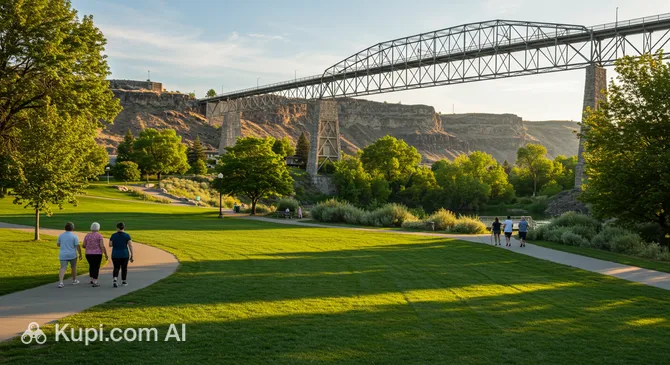
Imagine a quiet green oasis nestled in the heart of a bustling city. Twin Falls City Park is more than just a recreation area; it's the historic heart of the city of Twin Falls, located in the USA. Established back in 1904, it covers about 5.5 acres and is a vital part of the region's cultural landscape.
Twin Falls City Park. Illustration.
Source: Kupi.com AI
Traveler photos:
The park draws visitors with its well-kept grassy lawns, winding walking paths, and century-old trees. One of the main features of this location is its unique setting: the park serves as the core of a historic district featuring buildings in Neoclassical and Spanish Mission styles. This creates a wonderful atmosphere where natural beauty blends harmoniously with the architectural heritage of the early 20th century.
Today, this spot serves as a popular venue for family picnics, leisurely strolls, and community events. Here, you can not only take a break from the city bustle to the soothing sound of water but also connect with the history of these lands by examining commemorative markers and enjoying picturesque views of the surroundings.
Contacts
For details about events or more information on park rules, you can contact the city administration. Below is the current contact information, including the exact address and the official website of the Parks and Recreation Department. When planning your visit, you can always check the map for the best route.
There is something for everyone in this park. Those seeking a peaceful getaway can take a leisurely stroll along the manicured paths, breathing in the fresh air and listening to the distant sound of water. The spacious grassy lawns are perfect for spreading out a blanket for a picnic in the shade of the trees while watching the play of light and shadow.
For those interested in culture, the park offers a kind of open-air museum. Historical markers have been placed here, telling the story of the region's past. Be sure to notice the surrounding buildings: viewing the majestic county courthouse and historic churches will give you a feel for the spirit of old America. Photographers will find plenty of great angles here—from lush greenery and flowers to the clean lines of historic structures.
Families with children will appreciate the modern playgrounds, where young travelers can burn off some energy. After your walk, it's worth stopping by the cozy shops or small restaurants located within walking distance to try local cuisine and fully embrace the atmosphere of this friendly place.
Getting There
The attraction is located in the heart of the city at 400 Shoshone St E, Twin Falls, ID 83301. Thanks to its central location, the park is easy to find—it is a major landmark for both locals and tourists.
If you are traveling by car, you can easily reach the site via the city's main thoroughfares. Free parking is usually available nearby, making your visit as convenient as possible. For those staying downtown, a pleasant walk to the park will take only 5–10 minutes.
Public transportation in the region is not very extensive, so many tourists prefer to use taxis or popular rideshare services. The trip from Twin Falls Airport (TWF) or major hotels will be quick and comfortable.
Nearest city: Twin Falls
History & Facts
The history of this site began in 1904, when the Twin Falls Land and Water Company set aside the territory for public use as part of a massive irrigation project. The creation of the park was part of a deliberate urban planning effort aimed at transforming arid lands into a blooming oasis. By 1925, the park had earned the status of a "Beauty Spot" and became the main center of social life.
The area around the park quickly filled with significant buildings: the county courthouse, schools, and churches were established here. Most of the surrounding structures were built between 1909 and 1920. The architectural character of the district is highly diverse, including elements of Gothic, Neoclassical, and Spanish Mission styles, creating a unique atmosphere reminiscent of cozy New England town squares.
Today, Twin Falls City Park and the adjacent historic district are listed on the U.S. National Register of Historic Places. This recognition underscores the park's important role in the development of the Magic Valley region and the preservation of the cultural heritage of the early settlers who built their future on agriculture and irrigation.
Time Needed
A quick tour of the park and a short walk through its shaded alleys usually takes about 30–45 minutes. This is enough time to enjoy the tranquility, take a few photos, and see the main historical markers.
If you plan to have a full picnic on the grass or want to study the architecture of the surrounding historic district in detail, we recommend setting aside about 2–3 hours for your visit. This will allow you to browse the nearby shops or grab a coffee at one of the local cafes without rushing, fully immersing yourself in the city's relaxed atmosphere.
Working Hours
The park is open daily, offering guests the chance to enjoy nature at sunrise or in the evening. The schedule remains the same throughout the week:
Monday – Sunday: 5:00 AM – 11:00 PM.
Such flexible hours make Twin Falls City Park an ideal spot for an early morning jog or a romantic stroll under the starlit sky.
5:00 – 23:00
Nearby
A stroll around the park allows you to dive deeper into the city's atmosphere and discover its rich architectural heritage. Exploring the surrounding historic neighborhoods and cozy establishments will complement your visit with vivid impressions and allow you to feel the true rhythm of life in Idaho.