Support

University

About

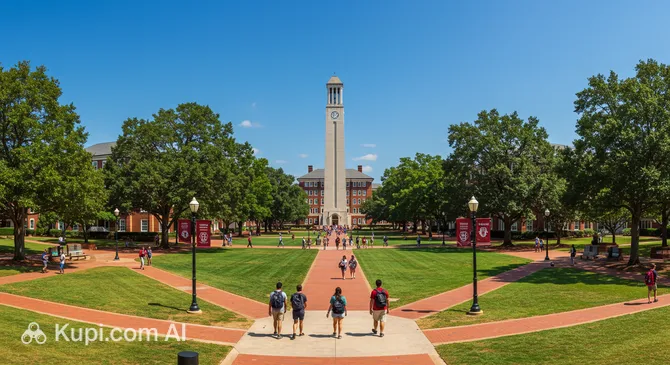
The appropriately named University district is more than just a spot on the map; it is the true heart of picturesque Albuquerque in the state of New Mexico. Situated at the base of majestic mountains and along the banks of the historic Rio Grande, this vibrant corner of the Southwestern USA attracts travelers with its authenticity. It is home to the famous University of New Mexico (UNM), around which life revolves, making the area a primary hub for students and visitors alike.

University. Illustration.
Source: Kupi.com AI

With a population of about 65,643, this place is incredibly dynamic, with life continuing day and night. The district's architectural appearance is particularly noteworthy: modern buildings stand harmoniously alongside structures in the unique Pueblo Revival style, inspired by indigenous traditions. The rich history of the University district is inextricably linked to the development of education and science, creating a unique cultural space.

A special atmosphere of creativity and openness reigns in "University." It is an ideal destination for those looking to combine educational tourism with immersion in the flavor of the American Southwest. Travelers come here to enjoy the views, explore the campus, and feel the spirit of freedom and knowledge. If you are looking for inspiration and want to see the real New Mexico, this lively district must be on your itinerary.

Weather Overview

The climate in this area is characterized by pronounced seasonality and mountain freshness, so you should choose your wardrobe carefully. When planning your trip, be sure to check the weather in University to be prepared for cool evenings even in the height of summer.

Winters here are frosty and invigorating: in December and January, the average temperature stays around -6°C, and at night, the mercury often drops to -12°C. Summer arrives gradually and delights with mild warmth without exhausting heat. In July, the warmest month, average figures are about 14.8°C, and the daytime high rarely exceeds a comfortable 21.6°C.

Expect fresh summers with occasional precipitation and cold but not overly snowy winters. Although the amount of precipitation is small (only 1–3 mm), cloudy or rainy days occur regularly—up to 16 days in July, so a waterproof windbreaker will be your faithful companion.

Average monthly temperature

Average monthly precipitation

Interesting Facts

In addition to its status as a major educational center, University holds many fascinating stories and features that make it a unique place to visit. This district is a true treasure trove for those wanting to learn more about the region's culture and nature.
  • The university campus is a recognized architectural gem built in the unique Pueblo Revival style. According to local legends, ancient Native American rituals were considered during the design of some buildings to ensure the structures were in complete harmony with the surrounding nature and the history of this land.

  • The school's territory is officially an arboretum. Rare botanical collections are gathered across nearly 800 acres, and the picturesque duck pond has become a favorite spot for strolls and relaxation for students and tourists alike.

  • The university is famous for its incredible multicultural atmosphere. It ranks in the top 2% of the world's universities and is 19th in the USA for ethnic diversity, being home to many representatives of Hispanic and Native American cultures.

  • The history of this place began back in 1889. Over more than a century of history, the university has transformed from a small educational institution into the cultural heart of the region, producing many famous scientists, artists, and prestigious award winners.

How to Get There

Planning a trip to this picturesque corner of the USA requires attention to logistics, as there are no direct flights to the town itself. To plan the perfect itinerary, we recommend learning more about how to get to University using nearby transport hubs and ground transportation.

There is no airport in University itself, but you can fly into Gunnison-Crested Butte Regional Airport (IATA: GUC), located in the city of Gunnison. This is the nearest air gateway, situated about 45 km from the destination. Despite being a small regional airport, it is convenient for travelers. Travel time by taxi or transfer will take about 1 hour and 30 minutes, allowing you to reach your destination fairly quickly.

Another convenient option is Aspen/Pitkin County Airport (IATA: ASE), located in the city of Aspen. The distance to University is about 56 km. This is a larger transport hub with developed infrastructure. The journey from here by car will take approximately 1 hour and 45 minutes, allowing you to enjoy the beautiful mountain scenery of Colorado along the way.

For clarity, here is a summary of the main airports:

AirportPassenger trafficDistance
Gunnison Airport75 00045 km
Aspen Airport698 00056 km
Eagle County Airport579 734100 km
Montrose Regional Airport570 000123 km
Telluride Regional22 000152 km

Main Attractions

A journey to this region of Colorado is primarily an immersion into the wilderness of the Rocky Mountains. Here, far from the city bustle, the main attractions are majestic landscapes and historical echoes of the Wild West era. The area is perfect for those seeking solitude and active outdoor recreation.

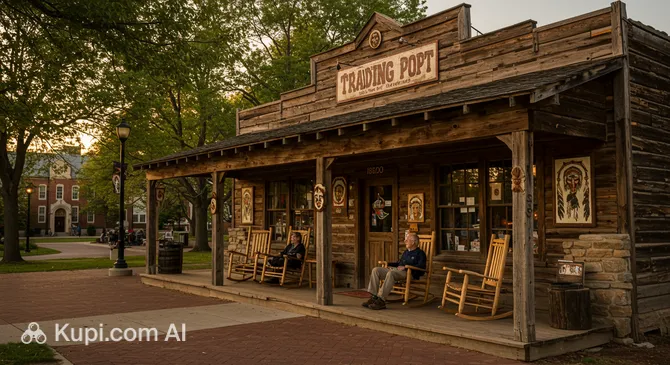
The heart of tourist life in the county and an important landmark is the Taylor Park Trading Post. This colorful spot serves as an excellent starting point for travelers: here you can restock supplies, rent a cabin, or learn more about local trails. The post preserves the atmosphere of old America and is a popular meeting point for off-roading and camping enthusiasts.

Taylor Park Trading Post. Illustration.
Source: Kupi.com AI

Traveler photos:

Just a stone's throw from the trading post lies the picturesque Taylor Park Reservoir. This massive body of water, surrounded by mountain peaks, draws anglers from across the country hoping to catch large northern pike or trout. Even if you aren't into fishing, a walk along the shore with views of the reflecting Sawatch Range peaks will provide unforgettable impressions and great photos.

Panorama lovers should head to Cottonwood Pass. It is one of the highest paved roads over the Continental Divide. A drive along the switchbacks offers dizzying views of valleys and snow-capped peaks, and at the highest point, you can feel the true power of the high mountains.

For history buffs, the nearby Tincup ghost town will be an interesting discovery. This is an old mining settlement where wooden buildings from the late 19th century have been preserved. A stroll through its streets allows you to travel back in time and imagine how gold prospectors lived in the harsh conditions of the Colorado mountains.

Local Cuisine

The gastronomic hallmark of the University district is the vibrant and original New Mexican cuisine, which wonderfully intertwines Spanish, Mexican, and Native American traditions. The main star of the local table is invariably the chili pepper. Travelers should definitely try enchiladas, served here with signature green or red sauce, as well as posole—a rich, thick soup with meat and corn prepared according to old recipes.

The food culture in this area is largely defined by its student atmosphere. Many cozy cafes and casual restaurants are concentrated around the campus buildings, where the emphasis is on local spices and fresh ingredients. Huge burritos with green chili and spicy roasted pepper salsa are particularly popular. Sweet lovers will enjoy hot churros with cinnamon—the perfect accompaniment to your morning coffee or an evening stroll.

For those who prefer a quick snack, numerous food trucks serving tacos and fajitas operate on the streets. Locals also love to visit farmers' markets to buy fresh fruits, vegetables, and homemade sweets brought by farmers from the surrounding areas. If you're lucky, you might catch one of the regular food festivals dedicated to chili or corn, featuring cooking workshops and fun competitions.

Travel Tips

Welcome to a picturesque corner of Colorado! To ensure your trip to University and its surroundings goes as smoothly as possible, we have prepared a list of important practical recommendations. This region is famous for its wilderness and high-altitude climate, so proper preparation is the key to a great vacation.

  1. Clothing and Gear: The Layering Principle. The weather in the Colorado mountains is changeable. Even if the forecast promises a sunny day, be sure to bring a raincoat or windbreaker. Temperatures can drop sharply after sunset, so a fleece jacket and a warm coat will come in handy even in summer. Footwear should be comfortable with a non-slip sole; trekking boots are ideal for walking on rough terrain.

  2. Transport: Freedom of Movement. Public transport in this mountainous area is poorly developed. The most reliable way to explore the surroundings is by renting a car. For trips to remote natural attractions such as Cottonwood Pass, it is highly recommended to choose a crossover or SUV (4WD/AWD), as some roads may be gravel or difficult to navigate.

  3. Finances: Cash Doesn't Hurt. The official currency is the US Dollar (USD). Cards are accepted everywhere in large establishments, but in small trading posts (like Taylor Park) or campgrounds, terminals may not work due to a lack of connection. Always carry a supply of cash in small bills. Tipping in the USA is an important part of the culture: it is customary to leave 15–20% of the bill in cafes and restaurants.

  4. Health and Safety: The Altitude Factor. University is located at a significant height above sea level. To avoid altitude sickness, drink plenty of water (more than usual), limit alcohol consumption in the first few days, and use sunscreen with high SPF—the mountain sun is very aggressive. The nearest pharmacies and hospitals may be in neighboring large towns, so pack a first-aid kit with basic medications.

  5. Connectivity and Navigation: Be Prepared to Go Offline. The main language of communication is English. Mobile service often disappears in the mountains, especially in valleys and canyons. Download offline maps and routes to your navigator in advance. Free Wi-Fi is usually available in hotels and cafes, but you shouldn't rely on it in the wilderness.

  6. Local Etiquette: Respect Nature. In Colorado, an unwritten code of "Leave Only Footprints" applies. All trash must be taken with you, and you must not stray from marked trails to avoid damaging the fragile ecosystem. Locals are very friendly: it is customary to greet fellow hikers on trails and drivers on narrow mountain roads.

  7. What to Avoid: Do Not Feed Wild Animals. Encounters with deer, elk, or even bears are quite real here. Under no circumstances should you approach animals for photos or try to feed them—this is dangerous for both you and them. Also, avoid lighting fires outside of specially equipped areas, especially during dry periods.

  8. Additional Tip: Watch the Sky. Afternoon thunderstorms often occur in the mountains during the summer. Plan your climbs and long walks for the first half of the day so that by 1:00–2:00 PM you have already begun your descent or returned to a safe place. Lightning in open high-altitude spaces poses a serious threat.

By preparing for the specifics of the mountain climate and logistics, you will be able to fully enjoy the region's majestic beauty. University and its surroundings will give you unforgettable memories of unity with nature, pure air, and breathtaking panoramas. We wish you a safe and inspiring journey!

Entertainment & Nightlife

Nightlife in the University district is strikingly different from the usual rhythm of major metropolises. You won't find bustling blocks with neon signs and flashy nightclubs open until dawn. Evening leisure in this corner of Colorado is infused with Wild West romance, the coziness of mountain lodges, and the grandeur of nature. The main focus here is on relaxed rest after an active day, socializing, and contemplating the starry sky, which looks simply incredible at these latitudes.

The Taylor Park Trading Post remains the center of attraction and a social hub of the area. Although it is not a nightclub in the traditional sense, this is where life thrives until sunset and in the early evening hours. Travelers gather to exchange news, restock for an evening barbecue, or simply discuss routes for the next day. The atmosphere here is as casual and friendly as possible: there is no dress code, and comfortable hiking gear, fleece jackets, and trekking shoes are welcomed.

If your heart craves more classic entertainment, such as bars with live music or billiards, you should look to venues at local guest ranches or head to nearby larger towns like Gunnison or Crested Butte. In the University district itself, the "night program" often consists of sitting by a campfire at a campsite, singing songs with a guitar, and observing the Milky Way, which is clearly visible here due to the lack of light pollution.

Practical tips for evening leisure:

  • Transport: Mountain roads require extra attention at night. Ride-sharing services (Uber or Lyft) practically do not operate in this remote area. If you plan a trip to a bar in a neighboring town, arrange for a designated driver in your group in advance.
  • Safety: The area is considered very safe in terms of crime; however, the main danger at night is wild animals that may wander onto roads or near campsites. Always carry a flashlight.
  • Prices: The cost of dinner or drinks in local establishments (lodge cafes) is usually average for the state, but due to the region's remoteness, food prices may be slightly higher.

As for daytime entertainment, it is inextricably linked with an active lifestyle. Instead of traditional theaters and amusement parks, guests will find exciting hiking trails, ATV rentals, and boat rentals. This place is ideal for those seeking inspiration in the silence of the mountains, considering a sunset over the Sawatch Range peaks to be the best "show."

Parks & Museums

The University area and its adjacent territories are a unique space where the boundaries between natural splendor and historical heritage are practically blurred. You won't find classic museum districts or manicured city squares in the traditional sense here. Instead, the region offers travelers vast conservation areas and true open-air museums that preserve the memory of the Gold Rush and Colorado's first settlers.

The primary green treasure of the area is the vast Gunnison National Forest. It is not just a park but a giant ecosystem surrounding the district. Tourists come here for the endless coniferous forests, blooming alpine meadows, and crystal-clear air. Hundreds of kilometers of hiking trails are laid out here, suitable for both leisurely walks and serious climbs. The forest gives a sense of complete unity with nature and a silence broken only by the sound of the wind in the treetops.

Another significant natural area is the territory around the reservoir, often simply called Taylor Park. This spot is perfect for picnics on the shore and wildlife watching. During the summer season, the green banks become home to many birds, and the open spaces allow for panoramic views of the Sawatch Range. This is an excellent location for those who want to escape civilization without going far from the main roads.

Cultural life and the region's history are concentrated in historical buildings that serve as living galleries of the past. A striking example is the Taylor Park Trading Post. While technically an active commercial site, it is a true historical monument. The building and the surrounding atmosphere transport visitors back to the early 20th century, demonstrating the lifestyle and traditions of that time. For tourists, it is an opportunity to touch the authentic culture of the American West.

The famous Tincup ghost town should also be considered an open-air historical "museum." Walking among the preserved wooden buildings—the old town hall, the church, and prospectors' houses—one can literally read the history of the rises and falls of the region's mining industry. This place attracts photographers and history enthusiasts with its mystical beauty and preserved frontier-era architecture.

Insider Tip: If you want to see something special, go in search of the old Tincup Cemetery, located on a hill among the pines. This quiet and atmospheric place (essentially a historical memorial) tells the stories of the people who built this region better than any guide, and the views from there are simply stunning.

Getting Around

The public transport system in the city of University is quite compact and represented mainly by bus routes. Given the size of the city and its location in the mountainous region of Colorado, there are no subways, trolleybuses, or trams. The primary role in passenger transport is played by municipal buses and special shuttles that run between residential neighborhoods, shopping areas, and key attractions. Often, these routes are synchronized with the schedules of educational institutions and activity in the city center.

Fares are organized as conveniently as possible for users. Most buses are equipped with validators for electronic cards or mobile apps that can be downloaded in advance. This is the easiest way to avoid searching for change. If you prefer cash, remember an important rule for American buses: drivers do not give change, so you must have the exact change. Discounted passes are often available for students and young people, and on some central routes, travel may even be free.

As a popular alternative to public transport, taxi and ride-sharing services are widely developed in University. Uber and Lyft apps work stably, ensuring quick car arrivals anywhere in the city, which is especially relevant in the evening or on weekends when bus intervals increase. For short trips, locals and tourists often choose bicycles: the city has rental points and convenient bike lanes, allowing you to enjoy the views while riding.

Tourists are recommended to plan their movements using navigation apps like Google Maps or specialized local services that show real-time transport movement. Boarding the bus is usually through the front door, where payment or ticket validation is made. If you plan a trip with a bicycle, note that many buses in Colorado are equipped with special racks for transporting them on the front bumper.

Accommodation

Where to stay:

The choice of accommodation in the University district and its surroundings is dictated by the specifics of the area: this is a land of wilderness, high mountains, and active recreation. You won't find the usual high-rise hotels of international chains or luxury city apartments here. The primary lodging format consists of cozy wooden cabins, atmospheric rustic-style lodges, guest ranches, and numerous campgrounds for those who prefer to sleep under the starry sky.

The center of tourist life and perhaps the most famous place to stay in close proximity to the main natural beauties is the Taylor Park Trading Post. It is not just an attraction, but a complete complex offering travelers cozy cabins of various capacities for rent. Staying here puts you in the center of the action: near the store, cafe, and the start of popular ATV and snowmobile trails. This is an ideal option for those who want to wake up and immediately head off on an adventure.

If you are looking for more comfortable conditions or classic hotel service, it makes sense to consider accommodation options in nearby larger settlements like Gunnison or Crested Butte and travel to the University area for the day. However, for full immersion in the Colorado atmosphere, tourists more often choose to rent private cottages or stay in organized RV parks located along the region's scenic roads.

Booking Tip: Given the seasonality of vacations (peak being summer and early fall, as well as hunting season), housing demand here is extremely high. Cabins and the best spots in campgrounds are often booked 3–6 months before the trip. If you plan a visit in July or August, take care of your accommodation well in advance.

The price range varies from budget (tent sites or RV hookups) to mid-range and higher (fully equipped cottage rentals). Booking is most often available through official lodge websites or by phone, as many authentic backcountry spots may not be listed on major international aggregators.

Nearby Cities

For those who want to explore the surroundings, University serves as an excellent starting point for day trips to several interesting nearby places. For example, history buffs can head to Georgetown, famous for its well-preserved Victorian architecture and the famous narrow-gauge railroad that allows you to experience the atmosphere of the Gold Rush era. Those who prefer active outdoor recreation should visit Winter Park—a popular resort offering excellent skiing in winter and exciting mountain biking trails in summer. And Montrose will attract travelers with its proximity to the impressive Black Canyon of the Gunnison and various tourism opportunities.

CityPopulationDistance
Crested Butte1 70640 km
Gunnison6 70044 km
Aspen7 00050 km
Leadville2 60055 km
Salida14 69055 km

These nearby destinations provide insight into the diverse culture and landscapes of the region, making your journey even richer and more memorable.

Shopping & Souvenirs

Shopping in the University district has its own unique character, dictated by its location in the heart of the Colorado mountains. You won't find the usual multi-story malls or high-fashion boutiques here. The region's commercial sphere is fully oriented toward the needs of travelers, outdoor enthusiasts, and those who want to take home a piece of the Wild West atmosphere. Shopping here is more about a necessity to restock provisions or equipment, as well as a pleasant opportunity to purchase authentic souvenirs.

The central and perhaps most important retail site for all guests is the Taylor Park Trading Post. This place serves not only as a store but also as a kind of community center. You can find literally everything here: from fresh produce and firewood to fishing tackle and warm clothing. The store's assortment is carefully selected for harsh mountain conditions, so if you forgot your raincoat or flashlight at home, you will likely find them here.

There are no large shopping centers in the district itself. For large-scale shopping, brand-name clothing, and electronics, locals and tourists must head to the nearest major cities. However, the lack of malls is more than compensated for by the charm of local shops. Small stores at campsites and lodges often sell essential goods and unique items that cannot be found in chain supermarkets.

Markets in the usual urban sense are absent here, but in the summer season, small sales points for farm products or local artisans' crafts may appear near popular tourist trails. This is a great chance to try homemade forest berry jams or buy jerky, which makes an ideal snack during long walks.

Speaking of souvenirs, it's worth paying attention to goods reflecting the spirit of Colorado. From a trip to University, tourists most often bring home:

  • High-quality outdoor gear with local symbols.
  • Handmade wood or leather items in western style.
  • Fishing tackle, which is considered some of the best here.
  • Collectible pins, magnets, and postcards with views of mountain peaks and the reservoir.

Shops in this area usually open early in the morning, adjusting to the rhythm of life for anglers and tourists (often from 7:00 or 8:00 AM), and close around 6:00–7:00 PM. During the winter season, hours may be reduced. As for payment, bank cards are accepted at major points like the trading post. However, given possible connectivity issues in the mountains, it is highly recommended to always carry a supply of cash, especially small bills.

The Tax Free system (VAT refund) in the USA works differently than in Europe. Sales tax is set by the state and local municipalities and is generally not refundable to foreign tourists upon departure. Therefore, the price you see on the tag will likely be lower than the final total at the checkout, and you should not count on a refund of these expenses.
Reached the end of the page?

That means the route is fully explored