Support

Simon Bolivar International Airport

About the Airport

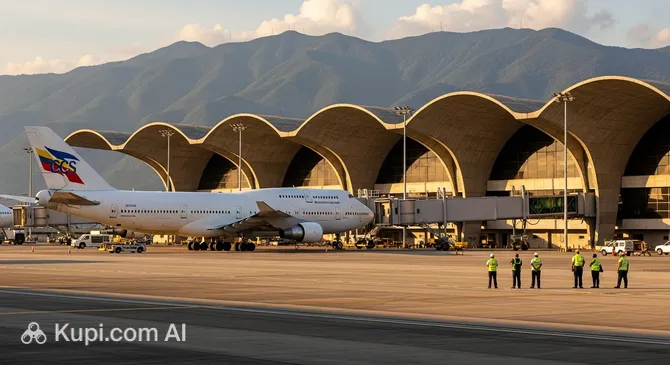
Simon Bolivar International Airport. Source: Kupi.com Binoculars

Simon Bolivar International Airport, often simply referred to as "Maiquetía", is the main air gateway to Venezuela and the country's key transport hub. Located on the Caribbean coast, it offers travellers a breathtaking view upon landing: on one side, an endless expanse of water, and on the other, majestic mountains separating the airport from the capital. This place is known not only for its vital role in air travel but also for its unique artistic design, turning the terminal into a recognisable symbol of the nation.

IATA Code CCS
ICAO Code SVMI
City Maiquetía (serves Caracas)
Distance to Centre ~26 km
Status International
Annual Passengers ~4 million (2023 estimate)
Schedule Check the official website

Airport Features and Highlights:

The airport's main calling card is the famous floor in the main hall, adorned with a work by Venezuelan artist Carlos Cruz-Diez titled "Cromointerferencia de Color Aditiva". This mosaic of coloured tiles creates an optical illusion of movement and has become an iconic backdrop for traveller photographs.

The airport consists of two main terminals: National (for domestic flights) and International. They are within walking distance of each other, simplifying transit. The complex is equipped with everything necessary for waiting for a flight, including Wi-Fi zones, cafes serving local cuisine (be sure to try Venezuelan arepas), and souvenir shops.

The road from the airport to Caracas follows a scenic route through the mountains. For safety and comfort, tourists are strongly advised to use only official taxis (usually black SUVs with yellow signs), whose counters are located in the arrival area, or an organised transfer.

Contact Information

To ensure your journey through Simon Bolivar International Airport (CCS) goes smoothly, we have prepared a list of useful contacts. This information will help you orient yourself easily and quickly find answers to any questions.

  • Official Website: You will find the most up-to-date information on flight schedules, services, and terminal maps on the airport's official portal: www.iaim.gob.ve.
  • Information Service Phone: For immediate advice and assistance, you can call the numbers: +58 (0212) 303.13.29 or +58 (0212) 303.14.83.
  • Airport Address: The airport is located at: Avenida Intercomunal del Aeropuerto Internacional, Maiquetía, Vargas, Venezuela.
  • Email: An email address exists for written enquiries, however, for quick and accurate information, it is strongly recommended to use the telephone service.
  • Social Media: It is convenient to follow important announcements and airport news on its official page on X (formerly Twitter): @IAIM_VE.
  • Lost Luggage Information: If you do not find your luggage on the conveyor belt, contact your airline's representative immediately. If you have forgotten personal items within the airport, the Lost and Found service or the information desk will assist you.
  • Passenger Support Contacts: For all general questions regarding navigation in the terminals, available services, and assistance, please contact the main airport information service numbers.

How to Get to the Airport

There are several ways to get from Caracas to Simon Bolivar International Airport (CCS), located in the coastal city of Maiquetía. The choice of the best option depends on your budget, time, and amount of luggage. The most popular and safe method is considered to be a taxi or private transfer. It is strongly recommended to use the services of official, licensed taxis or book a car through your hotel. This is the most comfortable, albeit the most expensive option. The trip guarantees door-to-door delivery and minimises stress.

For more budget-conscious travellers, there is public transport in the form of express buses. The UCAMC company operates regular flights between the airport and several points in Caracas, including Parque Central square. This is the most economical way, but it may be less convenient, especially with a large amount of luggage. Schedules and routes should be checked in advance, as they may change.

If you value independence, you can use a car rental service. Rental offices operate at the airport and in the city. However, it is worth noting that driving in Venezuela and, in particular, in the capital, has its own specifics and can be difficult for an unprepared driver due to heavy traffic. For those arriving at the airport in a private or rented car, paid parking with zones for short-term and long-term parking is provided.

Travel time from the city centre to the airport depends heavily on traffic conditions and averages from 45 minutes to 1.5 hours. During rush hours and holidays, it is better to allow at least two hours for the journey. Key recommendation: always plan your trip with plenty of time to spare to avoid missing your flight.

When planning a route around the country, it is also worth considering other airports. For travel to the western regions, a convenient hub might be Arturo Michelena International Airport, located in Valencia, and for the eastern coast — General José Antonio Anzoátegui International Airport.

Terminals and Map

Simon Bolivar International Airport in Caracas (CCS), also known as Maiquetía Airport, has a simple and clear structure consisting of two main passenger terminals: International (Terminal Internacional) and Domestic (Terminal Nacional). They are located in separate buildings situated in close proximity to each other.

The International Terminal handles all flights arriving from abroad and departing outside Venezuela. It is a more modern and larger building where the main services are concentrated: check-in counters for international airlines, border and customs control zones, Duty Free shops, various cafes, and waiting lounges. Departure and arrival zones are generally located on different levels for passenger convenience.

The Domestic Terminal, as the name suggests, is designed to serve flights within the country. It is somewhat older and smaller in size, and the range of services here is more modest. It houses the offices of local carriers and boarding gates for flights to other Venezuelan cities. Despite a smaller selection of shops and restaurants, everything necessary for comfortably waiting for a domestic flight is available here.

Movement between terminals is organised quite conveniently. The buildings are connected by a covered pedestrian walkway, and the walk from one to the other takes approximately 10–15 minutes. For those travelling with heavy luggage or preferring a more comfortable method, a free shuttle bus runs between the terminals. Signs will help you find both the walkway and the bus stop.

When planning your departure, consider that completing all formalities can take considerable time. For international flights, it is strongly recommended to arrive at the airport at least 3-4 hours before departure. Queues for check-in, passport control, and security screening can be long, so sufficient extra time will help avoid rushing. For domestic flights, 2 hours is usually enough.

To navigate the airport, pay attention to signs, although many of them may be in Spanish only. The main advice is to check with your airline in advance which terminal your flight operates from (international or domestic) so you can head straight to the correct building. If you have a connection between an international and a domestic flight, allow extra time for the transfer between terminals and passing through security control again.

Airport History

The history of Simon Bolivar International Airport, located near Caracas, begins with its official opening on January 1, 1945. Originally named Maiquetía Airport, it was built to replace an old airfield and was intended to become the main transport hub of Venezuela. The initial infrastructure was modest, but it laid the foundation for future growth.

The airport's true heyday came in the 1960s and 1970s when, thanks to the oil boom, Venezuela experienced an economic upswing. During this period, large-scale modernisation was carried out: modern international and domestic terminals were built, and runways were significantly lengthened to accommodate wide-body jet aircraft. It was then that the airport received its current name in honour of the national hero Simon Bolivar. One of the brightest moments in the airport's history was the regular flights of the supersonic airliner Concorde by Air France on the Paris — Caracas route, which operated from 1976 to 1982. This made Caracas one of the few cities in the world to host this legendary aircraft.

At the end of the 20th century, the airport faced serious challenges. In December 1999, it found itself at the epicentre of the Vargas tragedy — devastating floods and landslides. Despite the damage sustained, the airport played a key role in rescue operations and the evacuation of victims. This event served as a catalyst for a new stage of modernisation, which began in the 2000s. As part of the project, the international terminal was reconstructed and expanded, infrastructure was updated, and navigation systems were improved, bringing the airport in line with modern international standards.

Interesting fact: the airport is located on a narrow coastal strip between the Caribbean Sea and the majestic El Ávila mountain. Such a picturesque location makes landing and take-off particularly impressive, but also creates certain meteorological challenges for pilots. For decades, Simon Bolivar Airport has been one of the busiest and most important in Latin America, serving as a bridge between South America, the Caribbean, North America, and Europe.

Services and Amenities

Simon Bolivar International Airport offers passengers all necessary services for a comfortable wait for their flight. The terminals house numerous cafes and restaurants where you can have a snack with local and international dishes, as well as enjoy a coffee. For those wishing to shop, stores are available, including Duty Free, offering souvenirs, perfumes, and other goods.

For a more comfortable wait, passengers can use the services of VIP lounges. They offer a secluded atmosphere, complimentary snacks and beverages, as well as the latest press. Wi-Fi is available throughout the airport, and waiting areas are equipped with charging stations for mobile devices, allowing you to stay connected.

Financial matters can be resolved right at the airport: bank branches, ATMs, and currency exchange points are available. In case of need, passengers can visit the medical point for first aid. For travellers with children, mother and child rooms are provided, and for passengers with reduced mobility, conditions have been created for convenient movement around the terminal and boarding.

If you have a long layover or an early flight, several hotels offering comfortable accommodation are located in the immediate vicinity of the airport. For business travellers, conference rooms and business centres may be available, allowing you to hold a meeting or work in a quiet environment.

Where to Eat

At Simon Bolivar International Airport, travellers will find various dining options, allowing for both a quick snack before departure and a leisurely lunch or dinner. Food and beverage outlets are located in both the international and national terminals, offering menus to suit every taste and budget.

Most cafes and restaurants are concentrated in the departure zones, after passing through passport control and security (airside). Here you can find both food court-style venues and restaurants with table service. Before check-in (landside), the selection is usually more modest and consists mainly of small coffee shops and snack points.

This is a great opportunity to get acquainted with local cuisine. Be sure to try traditional Venezuelan dishes such as arepas (cornmeal cakes with various fillings) or empanadas (fried pastries). For those who prefer more familiar food, there are establishments at the airport offering pizza, burgers, sandwiches, and other international cuisine.

For a quick snack, coffee shops are ideal, where you can order aromatic Venezuelan coffee and fresh pastries. If you have time for a full lunch, pay attention to restaurants offering a wider range of hot dishes. Also, in the departure zones, there are lounges where you can relax with a beverage while waiting for your flight.

Prices at the airport are generally higher than in the city. The opening hours of most establishments are adapted to flight schedules; many of them are open from early morning until late at night. Travellers with specific dietary needs (vegetarian, gluten-free) are recommended to check the availability of suitable dishes directly with the cafe and restaurant staff; in establishments with international cuisine, finding such options is usually easier.

Travel Tips

To ensure your journey through the main airport of Caracas leaves only pleasant impressions, make use of a few tips. When choosing a seat on a plane departing from or arriving in the capital, opt for a window seat. Depending on the flight path, an unforgettable view of the contrast between the azure Caribbean coast and the majestic mountain range surrounding the city may open up to you. This is a wonderful opportunity to take the first or last photos of your trip.

Passing through customs control upon entering Venezuela requires attention. Be prepared to fill out migration and customs declarations. Honestly declare all imported goods and cash to avoid misunderstandings and fines. Keep not only your passport handy but also your hotel booking confirmation and return ticket — border control officers may request them.

Passengers in transit should check in advance whether they need to leave the sterile area. For most international connections, this is not required, which saves time. In the transit zone, there are several cafes and rest areas where you can comfortably wait for your next flight.

Here are a few hacks for saving money. Prices for food and drinks at the airport can be quite high, so a light snack brought with you won't hurt. Also, bring an empty reusable bottle — after passing security control, you can fill it with drinking water. Keep some cash in small denominations (US dollars or local currency) for small purchases, as cards are not accepted everywhere or change may not be available.

Reached the end of the page?

That means the route is fully explored