Support

Mazar-I-Sharif Airport

About the Airport

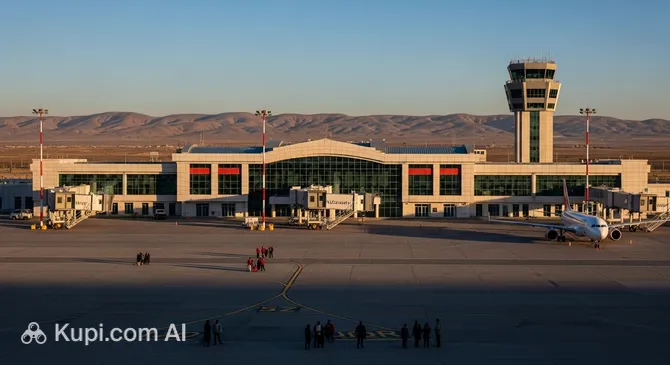
Mazar-I-Sharif Airport. Source: Kupi.com Binoculars

Mazar-I-Sharif Airport (MZR) is not merely a transport hub, but the true air gateway to the mysterious north of Afghanistan. It is here that the journey to the legendary Blue Mosque and the ancient ruins of Balkh begins—places where the histories of great civilisations intertwine. Renovated and modern, this airport stands out against the backdrop of rugged mountain landscapes, offering travellers a level of infrastructure unexpected for the region. It serves as a strategic bridge connecting the cultural heritage of the north with the rest of the world.

Key Details

IATA Code MZR
ICAO Code OAMS
City Mazar-I-Sharif
Distance to City Centre ~9 km
Status International
Annual Passengers Up to 400,000 (projected capacity)
Schedule Check airline website

Features and Advantages

Strategic Location
The airport, also known as Maulana Jalaluddin Balkhi International Airport, is the largest aviation hub in the north of the country. Its proximity to the border with Uzbekistan (only about 60 km to Termez) makes it an important transit point not only for tourists but also for the region's economic ties.

Modern Infrastructure
The airport's main pride is the new international terminal, opened after a large-scale reconstruction in 2013. Thanks to foreign investment and German construction quality, passengers can utilise modern check-in systems and comfortable waiting lounges, which favourably distinguishes MZR from many other regional airports.

Safety and Capacity
The airport possesses one of the longest runways in the country, capable of accommodating large international liners. The separation of flows into domestic and international flights in different buildings helps avoid overcrowding and speeds up formalities, making the start of the journey calmer and more organised.

Contact Information

Finding up-to-date and publicly available contact information for the airport in Mazar-I-Sharif can be challenging. Most flight-related issues are resolved directly through the airlines. Nevertheless, here is a summary of the main contact details:

  • Official Website: At the moment, the airport does not have a consistently functioning official website for passengers. It is recommended to check all information regarding flights, rules, and services on your airline's website.
  • Help Desk Phone: There is no single public telephone number for the airport inquiry service. For information on flight status, please contact your air carrier.
  • Airport Address: The airport is located approximately 9 kilometres east of the city centre of Mazar-I-Sharif, adjacent to the main road.
  • Email and Social Media: Official email addresses or social media pages for passenger communication are not maintained.
  • Lost Luggage Information: If your luggage has been lost or damaged, you should immediately contact your airline's Lost & Found service at the arrival airport.
  • Passenger Support Contacts: For all enquiries, including booking, ticket changes, and special requests, please contact the support service of the airline you are flying with.

How to Get to the Airport

Getting to Mazar-I-Sharif International Airport (MZR), located approximately 9 kilometres east of the city centre of Mazar-I-Sharif, can be done in several ways. A journey by car usually takes about 15-20 minutes, although travel time may vary depending on traffic conditions and the time of day.

Taxi and Private Transfer

The most convenient and common method for tourists is a taxi. A car can be found in any part of the city. It is extremely important to agree on the fare with the driver in advance, as taximeters are rarely used. For greater safety and comfort, it is recommended to book a transfer through your hotel or a local travel agency. This option, though slightly more expensive, guarantees a fixed price and reliability. This is the best choice for those travelling to Afghanistan for the first time.

Car Rental

Renting a self-drive car is generally not recommended for foreign tourists due to the specifics of local traffic and safety considerations. A more practical solution would be renting a car with a local driver. Such a service can be arranged through hotels or travel companies. This will allow you not only to reach the airport comfortably but also to have reliable transport for your entire stay in the city.

Public Transport and Parking

The public transport system in Mazar-I-Sharif is not always convenient for tourists. Direct bus routes to the airport may be absent or their schedules unpredictable. Locals often use shared taxis (minibuses), but for a foreigner without knowledge of the language, this can be difficult. Regarding parking, there is a car park on the airport territory for private vehicles, where you can leave a car during departure or when meeting passengers.

Alternative Airports

When planning a trip to this region, it is worth considering airports in neighbouring countries. The nearest major international hub is Termez Airport (TMJ) in Uzbekistan, located approximately 65 km away. Also within a few hours' drive are airports in Tajikistan, including Dushanbe Airport (DYU).

Terminals and Map

Mazar-I-Sharif Airport (MZR) is a compact and relatively simple aviation hub to navigate, avoiding the complexities typical of major global hubs. Its structure is clear and logical, making your stay here comfortable.

The main structure of the airport consists of two terminals: the new international one and the old one serving domestic flights. The new terminal, built with international support, meets modern standards and handles all international flights. The old terminal is used for flights within Afghanistan.

The airport layout is extremely simple. The terminals are separate buildings located in immediate proximity to each other. Moving between them is done on foot and takes just a few minutes. No special transport is required to move between the international and domestic zones, which significantly simplifies transit.

Departure and arrival zones are clearly separated. In the international terminal, the departure zone is on one level and includes check-in counters, passport control, and security screening points. The arrival zone is located separately and includes passport control, the baggage claim area, and customs inspection. Due to the small size of the airport, all procedures are completed quite quickly. It is recommended to arrive 2-2.5 hours before an international flight and 1-1.5 hours before a domestic one.

To navigate Mazar-I-Sharif Airport, simply follow the signs, which are usually duplicated in English. Staff are generally ready to help and direct passengers. Since the entire infrastructure is very compact, getting lost here is practically impossible. The main advice is to check in advance which terminal (international or domestic) your flight departs from, so you can head straight to the correct building.

Airport History

The history of Mazar-I-Sharif Airport (MZR) is closely linked to the development of the northern regions of Afghanistan. It was built in the 1960s with technical support from the Soviet Union and was originally intended to serve domestic civil flights. Located near the city of Mazar-I-Sharif, the airport quickly became a key transport hub connecting Balkh province with the capital and other major cities of the country.

Throughout its history, the airport has experienced various phases reflecting the general situation in the country. During certain periods, its operations were limited, but its strategic importance to the region always remained high. By the early 2000s, it became obvious that the existing infrastructure could not cope with growing demands and required radical modernisation to meet international standards.

The most significant stage in the airport's history began in the 2010s with a large-scale expansion and reconstruction project. A key event was the construction of a new international terminal, which was completed and officially opened in 2013. This project, realised with significant financial and technical support from Germany and the UAE, transformed the airport into a modern aviation complex. The new terminal was equipped with aerobridges, modern check-in systems, and baggage handling facilities, allowing it to receive international flights and serve passengers at a high level.

Today, Mazar-I-Sharif Airport is one of the largest and busiest in the country, playing a crucial role in the economic and social life of northern Afghanistan. It serves as the main air gateway for pilgrims, tourists, business people, and humanitarian missions, providing a vital link between the region and the rest of the world. The modernisation of the airport has become a symbol of revival and development, significantly increasing its throughput capacity and safety standards.

Services and Facilities

Mazar-I-Sharif Airport (MZR), being the key air port in the north of Afghanistan, provides passengers with a basic set of services necessary for waiting for a flight. Although the infrastructure here is simpler than in major international hubs, travellers will find all the essentials.

Inside the terminal building, there are several small cafes and snack bars where you can have a bite to eat, or drink tea or coffee. There are also shops selling local souvenirs, press, and essential goods. The selection in the shops is modest but sufficient for a short wait.

General waiting halls are available for all passengers. Information regarding the availability of business class lounges or VIP halls is scarce, but airports of this type often have a separate area of increased comfort, access to which can be obtained for an additional fee or by invitation from the airline.

Options for connecting to Wi-Fi may be limited, and the service itself may be paid. Points for charging electronic devices are infrequent, so tourists are recommended to carry a portable battery (power bank).

Currency exchange points function at the airport, where major world currencies can be exchanged for local money. Also located within the terminal is a medical point for providing first aid if necessary.

Families with children and passengers with reduced mobility should contact their airline in advance to book assistance services. Although airport staff will provide whatever help they can, specialised facilities such as children's playrooms or mother-and-child rooms may not be available here.

There are no hotels directly on the airport territory. The nearest accommodation options are in the city of Mazar-I-Sharif, which can be reached by taxi. Conference room rental or business centre services are not provided at the airport.

Dining

The dining infrastructure at Mazar-I-Sharif Airport (MZR) corresponds to its status as a regional transport hub. Passengers have access to basic options for a snack or waiting for a flight over a cup of tea; however, the choice of establishments here is limited. Do not expect a large food court or international chain restaurants; the existing food outlets focus on satisfying the basic needs of travellers.

The main place to eat is a small cafe, usually located in the departure zone after passing security control (airside). Here you can order simple hot dishes typical of local cuisine, for example, pilaf or other rice-based dishes with meat. For a quick snack, sandwiches, pastries, as well as local snacks such as nuts and dried fruits are offered. Beverages always available include tea, coffee, and bottled water.

Regarding dietary preferences, it is important to consider local customs. Practically all food offered at the airport is Halal. Vegetarians may find it more difficult to find a variety of dishes, but a rice option with vegetables or fresh pastries is usually available. Travellers with strict dietary restrictions (vegans, people with gluten intolerance) are strongly advised to carry their own snacks, as a specialised menu is not provided at the airport.

Prices in cafes and kiosks are moderate, but for convenience, it is recommended to have cash in local currency, especially for small purchases. Opening hours of establishments are usually tied to the flight schedule, so they may be closed during quiet periods. If you need a full meal, it is better to count on the cafe in the secure area, while small retail outlets, which may also be found in the public area before screening, are suitable for a light snack.

Travel Tips

Travelling through the airport of Mazar-I-Sharif requires some preparation. To ensure your flight goes smoothly, use these tips to help navigate local specifics and avoid unnecessary stress.

Arrival and Check-in: It is strongly recommended to arrive at the airport at least 3-4 hours before your international flight departs. Check-in and security control procedures can take longer than in major international hubs. Prepare all necessary documents in advance—passport, visa, and printed tickets—to speed up formalities.

Hand Luggage and Screening: Be especially attentive to hand luggage regulations. Restrictions on liquids (no more than 100 ml per container) and the ban on sharp objects are observed very strictly. It is better to check any questionable items into your luggage immediately, as screening can be multi-stage and thorough. Unnecessary questions and repeated checks can take up a lot of time.

Seat Selection and Flight Delays: When checking in online, choose a window seat to enjoy views of the mountain landscapes of Afghanistan. In case of a flight delay or cancellation, contact your airline representative immediately. It is recommended to have a portable battery, snacks, and water in your hand luggage to wait out any potential delays more comfortably.

Transfers and Customs Control: If you have a connecting flight, allow at least 3-4 hours for the transfer. This will give you a sufficient time margin to pass all control procedures. When going through customs, behave calmly and confidently, answer questions clearly, and prepare in advance to declare valuable items if required. A full and honest declaration will help avoid problems.

Saving Time and Money: The best way to save is good organisation. Check baggage allowances with your airline in advance to avoid surcharges for excess weight. Pack all liquids and gadgets so they can be easily removed for screening. This will save you precious minutes and nerves.

Reached the end of the page?

That means the route is fully explored