Support

In Salah

About

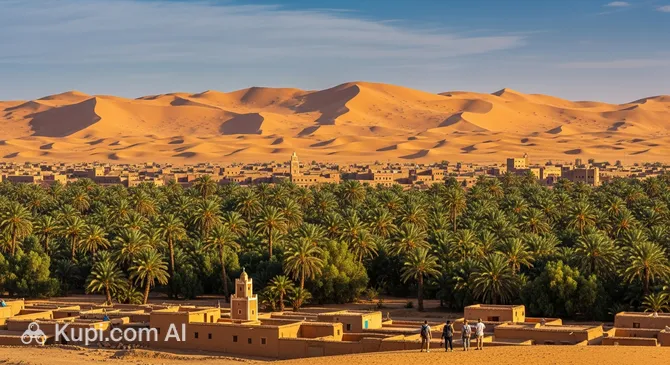
In Salah is a captivating oasis town located in the heart of the Sahara Desert, offering visitors a profound glimpse into life within one of the world's most extreme environments. Situated in central Algeria, this settlement is renowned for its distinctive red-ochre architecture which stands in striking contrast to the surrounding golden sands. With a population of approximately 32,600 people, it serves as a vital administrative and cultural center in the province, acting as a gateway for those venturing deeper into the desert.

In Salah. Source: Kupi.Binoculars

The town is geographically defined by its battle against the elements, particularly the "creeping dunes" that constantly shift and reshape the landscape. Exploring the history of In Salah reveals its long-standing importance as a strategic hub on the ancient trans-Saharan trade routes, where caravans once paused for respite. Today, the climate remains arid and hot, yet the enduring spirit of the local community and the lush palm groves create a welcoming atmosphere for intrepid travelers.

Tourists are often drawn to the unique landscape where the desert meets the oasis. Key attractions include the traditional ksar fortifications and the sprawling palm gardens that produce high-quality dates. The mesmerizing sunsets over the dunes offer a moment of tranquility that defines the Saharan experience. For those seeking an authentic adventure off the beaten path, In Salah provides an unforgettable journey into the heart of the desert.

Weather Overview

In Salah experiences a classic hyper-arid desert climate, defined by intense heat and persistent dryness. Travelers should be prepared for scorching conditions during the summer months, particularly from June to August, when daily highs frequently soar above 43°C and can peak around 45°C. For those looking to avoid the most extreme temperatures, consulting the detailed forecast for the weather in In Salah is highly recommended before scheduling a trip.

In contrast, the winter season from December to February offers a much milder and more comfortable environment. During this period, daytime temperatures are pleasant, typically reaching highs between 21°C and 24°C, which is ideal for outdoor activities. However, nights can still be cool, with temperatures dropping to around 8°C to 11°C. Rainfall is exceptionally rare in this region, with data showing 0mm of precipitation and zero wet days for nearly the entire year, ensuring consistently clear and sunny skies.

Interesting Facts

Beyond the main attractions, In Salah holds many fascinating secrets that reveal the town's unique battle with nature and its deep geological history. Visitors who look closer will find that this desert outpost is defined by more than just its red architecture and heat.

  • The Town Split by Sand: One of the most unusual features of the city is the massive sand dune that literally cuts the settlement in two. This "creeping" dune advances steadily each year, driven by the prevailing winds, forcing the local community to constantly adapt and defend their homes from being swallowed by the desert.

  • Echoes of a Green Past: Just outside the town limits, specifically in the surrounding Tidikelt region, travelers can discover the remains of a petrified forest. These fossilized tree trunks serve as silent proof that this hyper-arid landscape was once a lush, green environment covered in vegetation.

  • A Scientific Pioneer: In Salah is well-known in the global energy sector for hosting one of the world's first industrial-scale Carbon Capture and Storage (CCS) projects. This innovative facility was designed to reduce emissions by reinjecting carbon dioxide extracted from natural gas back into the underground reservoir.

How to Get There

Reaching this remote desert oasis is an adventure in itself, with air travel being the most practical option for covering the vast distances of the Sahara. Visitors planning their journey can find more about how to get to In Salah, including detailed routes and tips, on our dedicated page.

The city is primarily served by In Salah Airport (INZ), which is conveniently located just 6.6 km from the town center. This regional hub handles domestic flights and provides the quickest access to the area; a taxi or transfer from the terminal typically takes about 30 minutes. Alternatively, travelers might consider Adrar Airport (AZR), though it is important to note that this airport is located in the city of Adrar, approximately 273 km away. Choosing this option requires a significant overland journey through the desert, taking roughly 7 hours by car or bus.

For clarity, here is a summary of the main airports:

Airport Name City Passenger Traffic Km from City
Adrar Airport Adrar Medium 273.0
In Salah Airport In Salah Medium 6.6

Since there are no railway lines extending deep into this part of the Sahara, road transport remains the primary alternative to flying. Long-distance buses and shared taxis connect In Salah to northern cities and neighboring oases via the Trans-Sahara Highway, offering a scenic but lengthy travel experience.

Main Attractions

In Salah offers a unique set of sights that are deeply rooted in its geography and history. While it may not have the bustling museums of a capital city, its attractions are powerful reminders of nature's force and human resilience. The town itself is a visual marvel, characterized by its distinctive red-ochre buildings designed to withstand the harsh desert climate. A walk through the streets reveals the traditional Neo-Sudanese architecture, where the warm tones of the clay structures contrast beautifully with the bright blue sky and golden sands.

One of the most defining features of the area is the Great Sand Dune. This massive natural formation is not just a backdrop but an active part of the landscape, slowly shifting and encroaching upon the settlement. For visitors, it presents a spectacular opportunity for photography, especially during sunrise or sunset when the light casts dramatic shadows across the ripples of sand. Climbing the dune offers a panoramic view of the oasis, providing a clear perspective on how the town is literally carved out of the desert.

For a change of pace, the Palmeraie of In Salah offers a refreshing escape from the intense sun. These lush palm groves are the lifeblood of the oasis, protected from the wind by fences made of dried palm fronds. Walking among the thousands of date palms is a serene experience, allowing tourists to observe traditional irrigation methods and the cultivation of the region's famous dates. It is a peaceful spot to appreciate the silence of the Sahara and the cooling shade of the trees.

A short excursion outside the town leads to the Petrified Forest, a geological wonder located in the Tidikelt region. This site contains the fossilized remains of ancient trees, serving as a silent testament to a time when this arid region was a humid, green forest. Wandering among these stone trunks is like stepping back millions of years, offering a fascinating experience for nature lovers and those interested in the Earth's climatic history.

Local Cuisine

The local cuisine of In Salah is a reflection of its identity as a Saharan oasis, blending traditional Algerian flavors with the resourcefulness of desert life. The most iconic product of the region is undoubtedly the date. Harvested from the surrounding palm groves, these fruits are exceptionally sweet and high in quality. They are served as a sign of hospitality to welcome guests, eaten as a quick energy boost, or incorporated into various local desserts and savory meals.

For main courses, visitors can expect hearty and nourishing dishes designed to sustain life in an arid climate. Couscous is the staple, typically steamed and served with tender lamb or chicken and seasonal vegetables like carrots and zucchini. A more distinctively desert dish is Chakhchoukha, which consists of torn pieces of flatbread soaked in a rich, spicy tomato stew. Adventurous foodies might also seek out Taguella (sand bread), a traditional Tuareg bread baked beneath the hot sands and often shared communally with a meat sauce or camel milk.

The beverage culture in In Salah revolves entirely around mint tea. Often jokingly referred to as "Saharan whisky," this non-alcoholic drink is central to social interaction. It is brewed strong, sweetened generously with sugar, and poured from a height to create a thick layer of foam. Coffee is also popular, but tea remains the undisputed king of the desert. Travelers should be aware that alcohol is not part of the local diet due to cultural and religious observances, so meals are typically accompanied by water, soda, or tea.

Dining out in In Salah offers a glimpse into the town's warm and unpretentious character. There are no luxury dining complexes; instead, you will find small, family-run restaurants and roadside eateries that serve authentic, home-style food. The atmosphere is relaxed and communal, with a strong emphasis on sharing. A visit to the local market is also highly recommended to see the variety of spices and fresh produce that define the local palate.

Travel Tips

Visiting In Salah offers a rare opportunity to experience the authentic rhythm of life in the Sahara, but the extreme environment and distinct local culture require some thoughtful preparation. To help you make the most of your journey to this red-ochre oasis, here is a set of practical guidelines designed for travelers venturing into the deep desert.

  1. Clothing and Gear: Given the conservative nature of the region and the harsh sun, lightweight, loose-fitting clothing that covers your shoulders and knees is essential for both men and women. Natural fabrics like cotton or linen work best. Don't forget a wide-brimmed hat and high-quality sunglasses to protect against the glare. Since desert temperatures drop significantly after sunset, always pack a warm fleece or jacket for the evenings.
  2. Transportation: Within the town center, many areas are walkable, but for longer distances, shared taxis are the primary mode of public transport. There is no metro or tram system here. If you plan to explore the surrounding dunes or the Petrified Forest, hiring a 4x4 vehicle with a local driver is strictly necessary, as standard cars cannot navigate the sandy terrain.
  3. Finances: The local economy operates almost entirely on cash. The currency is the Algerian Dinar (DZD). While there are a few ATMs in town (typically at the post office or major banks), they can be unreliable or out of service. It is highly advisable to carry sufficient cash for your entire stay. International credit cards are rarely accepted at shops or local eateries.
  4. Health and Safety: The biggest risk in In Salah is dehydration and heatstroke. Always carry more water than you think you need, especially during excursions. Pharmacies are available in the town center and are usually marked with a green cross, but they may close during the afternoon heat. Stick to bottled water for drinking and avoid tap water.
  5. Communication: The primary languages are Arabic and French; English is not widely spoken outside of major hotels or tour agencies. Learning a few basic phrases in Arabic, such as greetings, will go a long way. It is recommended to purchase a local SIM card (Mobilis, Djezzy, or Ooredoo) in a larger city or at the airport upon arrival in Algeria, as connectivity can be sporadic in remote areas.
  6. Local Etiquette: In Salah is a traditional community where hospitality is paramount. When greeting locals, a handshake is common among men, but wait for a woman to extend her hand first. Always use your right hand for eating or passing objects. If invited into a home, remember to remove your shoes at the entrance.
  7. What to Avoid: strictly avoid taking photographs of military installations, police stations, or government buildings, as this is prohibited and can lead to serious legal issues. Additionally, always ask for permission before taking photos of local people, especially women, to respect their privacy.
  8. Respect the "Siesta": Due to the intense midday heat, life in In Salah often pauses between 1:00 PM and 4:00 PM. Many shops and businesses close during these hours as locals retreat indoors to stay cool. Plan your activities for the early morning or late afternoon to align with the local rhythm and avoid the peak sun.

By keeping these tips in mind, you will be well-equipped to navigate the unique challenges and rewards of this desert outpost. Embracing the local customs and preparing for the climate will ensure that your time in In Salah is safe, respectful, and truly memorable.

Entertainment & Nightlife

Entertainment and nightlife in In Salah offer a stark contrast to the bustling, neon-lit scenes found in coastal cities or Western capitals. In this conservative desert oasis, "nightlife" is defined by social connection, relaxation, and the cooling relief that comes after sunset. Travelers looking for nightclubs, bars with alcohol, or loud discos will not find them here. Instead, the evening entertainment revolves around traditional tea houses, open-air gatherings, and the serene beauty of the Saharan sky.

The heart of the town's social life beats in its cafés and tea shops. These venues serve as the local equivalent of pubs, where residents gather to watch football matches, discuss local news, and enjoy endless glasses of strong, sweet mint tea. The atmosphere is laid-back and welcoming, though predominantly male-centric in the traditional establishments. For tourists, joining the locals in these spots is the best way to experience the authentic culture of the region. The dress code is casual but modest; long trousers and shirts are respectful choices.

The most bustling area in the evening is typically around the Central Market and the main thoroughfares that cut through the town. As the temperature drops, families and friends emerge to shop, stroll, and eat. While there are no specific "night districts" in the commercial sense, the streets near the town center become lively social hubs. You might find makeshift stalls selling grilled corn, nuts, or sweets, creating a small but vibrant night market atmosphere.

For a truly unique evening experience, the best "venue" is often the desert itself. Many visitors opt to spend their nights on the edge of the town or in the nearby dunes to engage in stargazing. Without the light pollution of a major metropolis, the Milky Way is often visible to the naked eye. Some local guides offer evening excursions that include a traditional dinner cooked over a fire in the sand, accompanied by Tuareg music and storytelling.

From a practical standpoint, the best time to venture out is after 8:00 PM, when the air is cooler. Prices for tea, coffee, and snacks are very affordable. Getting around is best done on foot for short distances within the center, or by hailing a local taxi for longer trips. The town is generally very safe for night walks, but it is advisable to stick to well-lit areas and carry a flashlight if you wander near the outskirts, as street lighting can be sparse.

Regarding daytime entertainment, options are low-key and cultural. Before the sun reaches its peak, visitors can explore the local architecture or visit the small libraries and cultural centers that sometimes host exhibits on desert history. The primary daytime activity remains exploring the natural wonders, such as the palm groves and the encroaching dunes, before retreating to the shade to wait for the lively, tea-filled evening to begin.

Parks & Museums

In Salah is a destination where the concept of a "museum" or "park" takes on a different meaning. Rather than enclosed buildings or manicured lawns, the town's cultural treasures are woven directly into its streets and structures. The entire region serves as an open-air gallery, offering visitors an immersive experience that highlights the heritage of the Saharan trade routes and traditional desert life.

The most significant "living museum" in the area is Ksar Badjouda. This historic fortified village is a masterpiece of red-ochre clay architecture, standing as a tangible link to the region's past. Exploring its narrow, winding alleyways allows visitors to observe the ingenious construction techniques that have protected locals from the harsh climate for generations. It is not just a relic, but a vibrant testament to the resilience and adaptation of the community.

For a deeper dive into the intellectual history of the Sahara, travelers should seek out the Khizana, or traditional manuscript libraries. Unlike standard public museums, these are often family-run repositories that preserve thousands of ancient texts covering topics from astronomy to Islamic jurisprudence. These traditional family libraries offer a rare glimpse into the scholarly legacy of the region, acting as custodians of centuries-old knowledge. Access typically requires a local guide or prior arrangement, adding to the exclusivity of the experience.

Another architectural highlight that functions as a cultural landmark is the City Gate (Bab In Salah). Built in the distinct Neo-Sudanese style, this structure serves as a symbolic entrance to the town and beautifully encapsulates the aesthetic identity of In Salah. It combines defensive history with artistic desert masonry, making it a focal point for those appreciating the town's unique design.

While the lush Palmeraie and the ancient Petrified Forest provide natural green spaces and geological wonders, it is the Ksar, the libraries, and the historic gates that truly define the cultural landscape of this oasis. Together, they offer a profound insight into how civilization has flourished in one of the world's most challenging environments.

Getting Around

Navigating In Salah is a straightforward experience that differs significantly from the complex transit networks of major metropolitan areas. Due to the town's modest size and desert setting, there is no metro, tram, or extensive municipal bus system. The backbone of local public transport consists of shared taxis and privately operated minibuses. These vehicles provide essential connections between the town center, residential districts, and the immediate outskirts, offering a flexible and informal way to get around.

The payment system is exclusively cash-based. There are no electronic travel cards, transport apps, or pre-purchased tickets available in the city. Fares are generally fixed and very affordable. Passengers pay the driver directly, typically upon reaching their destination. It is essential for tourists to carry small change in the local currency, as drivers frequently do not have enough cash on hand to break large banknotes.

For visitors, the most common way to catch a ride is simply to flag down a vehicle on the side of the road. Shared taxis operate like a carpool service, picking up multiple passengers heading in the same direction along the main thoroughfares. If you require more privacy or are traveling to a specific location off the main route, you can negotiate a private trip, known locally as a "course," for a slightly higher price. Operating hours are generally from early morning until late evening, though availability decreases noticeably during the afternoon "siesta" hours when the heat is at its peak.

Alternatives to these taxis are limited. There are no international ride-hailing apps, car-sharing services, or bicycle rental schemes in In Salah. Walking is a viable and pleasant option for exploring the compact town center, particularly during the cooler morning and evening hours. However, for any travel beyond the paved roads of the town—such as visiting the surrounding dunes—standard public transport is unsuitable. In these cases, hiring a 4x4 vehicle with a local driver is the only practical and safe solution.

Accommodation

Accommodation options in In Salah are relatively limited and functional, reflecting its status as a remote desert outpost rather than a mainstream tourist resort. Visitors should not expect international luxury chains or sprawling all-inclusive complexes. Instead, the town offers a modest selection of establishments, ranging from simple, state-run hotels to smaller, privately owned guesthouses. These accommodations are generally designed to serve practical needs, catering largely to workers in the energy sector and travelers passing through the Sahara.

The most convenient area to stay is the town center. Being centrally located allows for easy access to the main market, local eateries, and transport stops. Since In Salah is quite compact, staying in the heart of the town means that most essential services are within walking distance. There are virtually no accommodation options on the outskirts or near the dunes, so travelers looking for a "desert camp" experience would typically need to arrange this as a specific excursion rather than a standard hotel stay.

Most hotels in the city fall into the budget to mid-range price categories. The amenities are usually basic, providing air conditioning—a non-negotiable necessity in this climate—and private bathrooms, though hot water and Wi-Fi reliability can vary. The decor often features traditional Algerian touches, but the overall standard is modest compared to northern coastal cities. Prices are generally affordable, though they can be slightly higher than expected for the quality provided due to the scarcity of competition and the logistical costs of operating in the desert.

Booking accommodation in In Salah requires some advance planning. Many local establishments do not have a significant presence on major international booking platforms. Direct booking via phone or through a reputable Algerian travel agency is often the most reliable method. It is highly recommended to secure your room before arrival, especially if you are traveling during the cooler winter months when desert tourism is at its peak. Additionally, travelers should be prepared to pay in cash (Algerian Dinar), as credit card facilities at front desks are rare or frequently out of service.

Nearby Cities

In the vast expanse of the Algerian Sahara, the concept of a "neighbor" takes on a different meaning. In Salah is situated in a remote central location, yet it serves as a crucial link between several major desert hubs. While the distances between settlements are significant, traveling to these nearby cities offers a chance to explore the diverse landscapes and cultures of the region, from the red oases of the west to the mountainous terrain of the deep south.

The closest major settlement is Adrar, located approximately 284 km to the west. Like In Salah, Adrar is famous for its distinctive red-mud architecture and traditional irrigation systems, making it a fascinating next stop for those interested in Saharan heritage. Traveling further south, about 577 km away, lies Tamanrasset. This city acts as the gateway to the Hoggar Mountains and offers a completely different geological setting, with its dramatic volcanic peaks and Tuareg culture.

To the north and northeast, the routes connect to other historic and industrial centers. Ghardaia, situated 598 km away, is a UNESCO World Heritage site known for the stunning M'zab Valley and its five fortified cities. Similarly, Ouargla (595 km) and Hassi Rmel (640 km) serve as key economic hubs, bridging the gap between the deep desert and the northern regions of the country. Given the vast distances, journeys between these cities are typically undertaken by long-distance bus, taxi, or domestic flight.

Here is a summary of the nearby cities, their distances from In Salah, and their approximate populations:

City Distance (km) Population
Adrar 284 68,276
Tamanrasset 577 76,000
Ouargla 595 133,024
Ghardaia 598 120,000
Hassi Rmel 640 100,000

Shopping & Souvenirs

Shopping in In Salah is a deeply traditional experience that reflects the town's role as a desert oasis rather than a modern commercial hub. Visitors will not find sprawling shopping complexes or international luxury brands here. Instead, the retail scene is intimate and functional, focused on local necessities, fresh produce, and artisanal goods. For tourists, browsing the local shops offers a chance to engage with the community and discover the authentic products of the Algerian Sahara.

The main commercial activity is concentrated in the town center, particularly along the primary thoroughfares that bisect the settlement. Walking down these streets, you will find small, family-owned general stores, bakeries, and kiosks selling everything from household items to phone credit. This area serves as the daily lifeline for residents and is the best place for travelers to stock up on water, snacks, and basic supplies before heading out on excursions.

Travelers should be aware that In Salah does not feature modern shopping malls or department stores. The retail infrastructure is built around independent merchants and small boutiques. If you are looking for specific electronic goods or specialized outdoor gear, it is highly advisable to purchase these items in larger northern cities or at the airport before arriving in the deep desert.

The highlight of the local shopping scene is undoubtedly the Central Market (Souk). This bustling open-air marketplace is the heart of the town's social and economic life. Here, farmers from the surrounding oasis bring their harvest, including fresh vegetables, fruits, and aromatic spices. It is a vibrant place to wander, observe the local bargaining culture, and appreciate the variety of produce grown in such an arid environment.

When it comes to souvenirs, the region is most famous for its dates. In Salah produces some of the finest dates in the world, known for their sweetness and quality. Buying a box of fresh dates directly from the market is a must-do for any visitor. Other popular keepsakes include sand roses (crystallized rock formations found in the desert), traditional Tuareg jewelry made from silver, and locally woven textiles or scarves (cheche) that are practical for protection against the sun.

Store hours in In Salah strictly follow the rhythm of the desert climate. Shops typically open early in the morning, around 8:00 AM, but close during the hottest part of the day, usually from 1:00 PM to 4:00 PM or 5:00 PM. They reopen in the late afternoon and stay open until late evening when the temperature is cooler. On Fridays, which is the holy day of the week, most businesses are closed or have significantly reduced hours.

Payment is almost exclusively made in cash (Algerian Dinar). Credit cards are rarely accepted in shops, markets, or small restaurants. While there may be a few ATMs in the town, they can be unreliable, so it is essential to carry sufficient cash for all your purchases. Tax-free shopping or VAT refund schemes are not available in In Salah, as the retail environment is informal and local.
Nearby cities

Reached the end of the page?

That means the route is fully explored