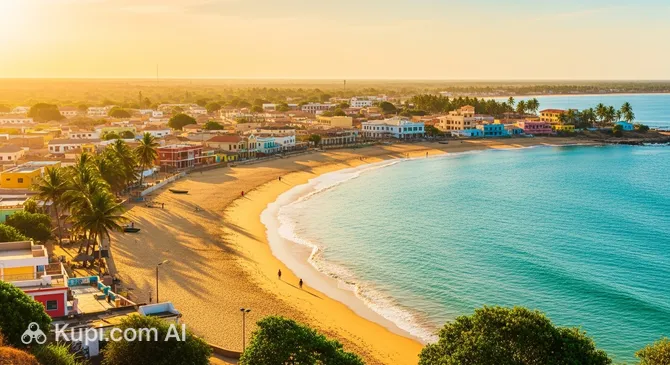
Located on the picturesque Atlantic coast, Sumbe is the administrative center of the Cuanza Sul province in Angola. This city charms travelers with its peaceful atmosphere and natural beauty, offering a rare opportunity to witness authentic life in a coastal region away from busy tourist routes. Sumbe harmoniously combines features of a modern regional center and a cozy settlement where time seems to flow a little slower.
Sumbe. Illustration.
Source: Kupi.com AI
The city's geographic location defines its unique character: urban development sits alongside dramatic rocky cliffs and stretching sandy beaches. With a population of about 280,000 people, Sumbe maintains a relaxed pace of life. A close connection to the region's history, formerly known by the Portuguese name Novo Redondo, is felt in the architectural details and the cultural traditions of the local residents.
The city's natural wealth remains the main magnet for visitors. The pristine waters of the Atlantic and the quiet rivers in the surrounding areas create ideal conditions for those seeking solitude and inspiration among untouched landscapes. We invite you to discover this hospitable corner, where simple living and the majesty of nature merge into one, promising an unforgettable and authentic experience.
Weather Overview
The climate in Sumbe is characterized as tropical arid, which is significantly influenced by the proximity of the Atlantic Ocean. Throughout the year, the city enjoys abundant sunlight and consistently warm temperatures. If you are planning a trip, keep in mind that rainy seasons and dry periods are clearly defined here. More detailed information about the climate of Sumbe can be found on specialized forecast pages.
Expect a hot and humid summer lasting from November to April, when average temperatures reach 26–28°C. Peak precipitation usually occurs in March and April, which should be considered when planning a beach holiday. The winter months (from June to August) are characterized by drier and moderately warm weather with average readings around 21–23°C. During this period, there is practically no rain, creating ideal conditions for excursions and nature walks.
The city's coastal location provides pleasant natural ventilation thanks to ocean breezes, which somewhat temper the daytime heat. However, high solar activity requires the use of protection at any time of year. The average annual temperature is about 23.8°C, making Sumbe an attractive destination for sun lovers almost year-round.
Average monthly temperature
Average monthly precipitation
Interesting Facts
Before Angola gained independence in 1975, the city bore the Portuguese name Novo Redondo, highlighting its colonial past.
Sumbe is an important spiritual center for the region: it is home to the cathedral of the Roman Catholic Diocese, whose architecture reflects historical Portuguese influence.
The city's coastal landscape is unique for its rocky cliff faces, which change their shade depending on the lighting, creating natural backdrops for photographers.
Despite its status as a provincial capital, Sumbe retains the charm of a provincial town, where almost every resident knows their neighbors and an atmosphere of safety prevails on the streets.
Between 1975 and 1981, the city was officially called Ngunza-Cabolo before receiving its current name.
How to Get There
The accessibility of Sumbe largely depends on air travel and the regional road network. Located in western Angola, the city serves as an important link on the Atlantic coast. It is worth looking into the most convenient ways to get there in advance, as the transport infrastructure may have its own particularities.
A key facility for travelers is Sumbe Airport (IATA: NDD). This regional aviation hub connects the city with other parts of the country, including the capital. The airport is located in close proximity to the city, making transfers to the center quick and convenient. Most tourists arrive here on flights from Luanda operated by local carriers.
Railway communication in this area is less developed than air or road transport. Currently, most passenger flows are served by motor vehicles and domestic airlines. For planning overland trips, it is recommended to use buses or taxis, taking into account the condition of the roads in Cuanza Sul province.
Station
Passenger traffic
Distance
Catumbela train station
1
139 km
Bungo station
4
274 km
Main Attractions
The main attractions of Sumbe are inextricably linked to its unique natural landscape. One of the city's most impressive features is the dramatic rock cliffs that tower over the coastline. These natural formations provide breathtaking views of the Atlantic Ocean, especially during sunset when the rocks are painted in warm golden and crimson hues. Walking along the edge of these cliffs allows visitors to fully appreciate the grandeur of the African coast.
For those who love seaside relaxation, the city offers miles of beaches with fine sand and clear water. Unlike popular resorts, the beaches around Sumbe remain uncrowded, making them an ideal place for quiet contemplation and relaxation to the sound of the surf. The natural beauty of the coast has not been spoiled by mass development, preserving its pristine appeal for ecotourism enthusiasts.
Another interesting feature of the region is the calm rivers that flow into the ocean near the city. These waterways cut through picturesque valleys, creating green oases amidst the arid landscape. River excursions provide an opportunity to get to know the local flora and fauna, as well as see the traditional way of life of fishing communities. Sumbe is a place where nature acts as the chief architect, creating landmarks that are impossible to forget.
Local Cuisine
The culinary identity of Sumbe is dictated by its proximity to the ocean. The foundation of the local menu consists of the freshest seafood and fish, which are delivered to markets and restaurants every morning. Traditional Angolan recipes are often complemented here by Portuguese touches, creating a unique gastronomic fusion. Be sure to try dishes made with sea bass or shrimp, grilled with local spices.
Cassava (or muamba) and corn flour play an important role in the residents' diet, used to prepare side dishes that accompany almost every meal. One of the region's iconic dishes is a thick sauce with fish and vegetables served with funge—a traditional starch paste. Such a meal is hearty and provides a chance to touch the roots of Angolan food culture.
As for drinks, fresh tropical fruit juices and local beer are popular in Sumbe. The food culture in the city is centered around small family-run restaurants where the atmosphere is always homey and relaxed. A visit to the local food market will also be an interesting experience: here you can not only buy fruit but also see the ingredients used to prepare real home-cooked meals in this coastal land.
Travel Tips
A visit to Sumbe promises to be a bright adventure if you prepare in advance for the specifics of life in the Angolan provinces. These practical tips will help you feel confident and enjoy every moment of your trip.
Clothing and Essentials: Choose light clothing made from natural fabrics (cotton, linen), as the climate in the city is hot and humid. Don't forget comfortable shoes for walking on sandy beaches and rocks, as well as sunglasses and a wide-brimmed hat.
Transport: It is best to use taxis for traveling around the city. Always agree on the price before starting the trip. If you plan longer excursions to neighboring cities, it is most reliable to book a car with a driver through your hotel.
Finance: The primary currency is the Angolan Kwanza. International payment system cards are accepted very rarely, so be sure to carry a sufficient supply of cash. Exchange money only at official banks or legal exchange offices.
Health and Safety: Use mosquito repellent and drink only bottled water. During sunny hours, be sure to apply sunscreen with a high SPF to avoid burns.
Communication: The official language is Portuguese. English is not widely spoken, so learn a few basic phrases (greetings, thank you, asking about price). This will greatly endear you to the locals.
Local Etiquette: Greetings are an important part of the culture. A short "Bom dia" (good morning/day) and a smile will help you quickly establish contact. Be polite and show respect for traditions.
What to Avoid: It is not recommended to walk alone in unlit areas at night. Also, refrain from photographing strategic and government sites without special permission.
Additional Tip: Book domestic flights in advance, as regional flight schedules can change and the number of tickets to Sumbe is limited.
Following these simple rules will make your visit to Sumbe comfortable and safe. We wish you an enjoyable introduction to this amazing city!
Entertainment & Nightlife
Entertainment in Sumbe is predominantly quiet and contemplative, reflecting the city's overall atmosphere. Most activity is concentrated in the coastal zone, where locals and visitors like to spend their evenings enjoying the ocean breeze. Walking along the waterfront is the primary way to spend leisure time, allowing you to feel the steady rhythm of the Angolan province.
As for nightlife, it is represented by small local cafes and bars where you can try local drinks and listen to traditional music. These establishments usually have a friendly and relaxed atmosphere, and the lack of pretension makes them an excellent place to get to know the country's culture from the inside. It is worth noting that there are few classic nightclubs with international discos here, as the city is more oriented toward quiet relaxation.
For daytime activities, Sumbe offers opportunities for nature tourism and amateur fishing. In the city center, you can find several cozy squares and parks where everyday life buzzes. Despite the absence of large entertainment centers, the city attracts visitors with its sincerity and the chance to take a break from the hustle and bustle of large metropolises, immersing themselves in the atmosphere of authentic Angola.
Parks & Museums
While Sumbe may not boast an abundance of classic museums with huge halls, nature itself and the urban environment serve as the main museum here. The city's primary recreational zones are its coast and river estuaries, which serve as places for relaxation and walks. These boundless natural parks allow you to observe local fauna and enjoy typical tropical landscapes in their natural state.
The city's cultural heritage is reflected in its architecture, especially in its religious buildings. Walking through the center, you will discover old colonial-era buildings that are exhibits in their own right, telling the story of the province's past. Local Catholic churches deserve special attention as symbols of spiritual continuity and the historical influence of Portugal on this region.
In the city's surroundings, you can find unique geological sites, such as rock massifs, which attract nature photography enthusiasts and researchers. The absence of large man-made parks is more than compensated for by the possibility of wild tourism: exploring the surrounding beaches and cliffs gives tourists far more impressions than a walk through a standard art gallery. Sumbe is a city for those who appreciate authenticity and prefer cultural discoveries in the fresh air.
Getting Around
Public transport in Sumbe is mainly represented by a network of route taxis, which are called "candongueiros" here. This is the most popular way to get around among local residents, allowing you to reach any point in the city and its suburbs. The minibuses are easily recognizable by their characteristic appearance, and stops usually occur at the request of passengers at key junction points.
For tourists, the most convenient and safe transportation option is a standard taxi. A car can be found at special stands in the city center or called through a hotel administrator. It is customary to agree on the fare for a taxi ride in advance, as meters are rarely used. This is a great way to quickly get to the beach or the airport without having to figure out the intricacies of local transport routes.
If you plan to explore the surroundings of Sumbe on your own, it is worth considering renting a car. This will provide you with full freedom of movement; however, remember that the condition of roads outside main highways can be variable. Bicycle rentals and car sharing are not yet developed in the city, so traditional modes of transport remain the primary helpers for travelers in this coastal region.
Accommodation
The hospitality sector in Sumbe is primarily oriented toward those seeking an authentic experience and tranquility. You won't find massive skyscrapers of international chains here; however, the city offers a decent selection of guest houses and small, cozy hotels. Most accommodation options are concentrated either in the city center or along the coastline, allowing guests to enjoy ocean views directly from their rooms.
For travelers planning a longer stay, a popular option is renting apartments. This provides an opportunity to dive deeper into local life and feel like part of the urban community. It is worth noting that the level of service in Sumbe may differ from standard European expectations, but this is more than compensated for by the hospitality of the staff and their sincere desire to help every guest.
Due to the limited number of high-quality accommodation spots, we strongly recommend booking your stay in advance, especially if your trip coincides with local holidays or vacation seasons. The price range in Sumbe is considered average by Angolan standards, making the city accessible to a wide range of tourists. When choosing a place to stay, look for the availability of air conditioning and proximity to the city's main transport hubs.
Nearby Cities
Sumbe is an excellent starting point for exploring Cuanza Sul province. The region around the city is rich in picturesque settlements and natural spots that are ideal for day trips. Traveling around the surroundings will allow you to see a variety of landscapes—from coastal plains to mountainous areas inland.
Just a few dozen kilometers away is the city of Porto Amboim, which is also famous for its coastal charm and historical heritage. For those who prefer higher and cooler areas, an interesting destination is Gabela, known for its coffee plantations and impressive natural views. It is also worth visiting towns such as Ucu Seles and Conda, each of which possesses its own unique character.
Exploring neighboring cities provides a more complete picture of life in Angola. We recommend planning your route in advance and arranging for local drivers or renting a car to be able to visit the most interesting places in the region and enjoy the freedom of moving along the scenic roads of Cuanza Sul.
Shopping & Souvenirs
Shopping in Sumbe is primarily an introduction to local life and traditions. You won't find huge shopping malls with global brands here, but the city is famous for its colorful markets. It is in the markets that you can find the most interesting goods: from the freshest exotic fruits to handicrafts. It is an ideal place for those who want to bring home a piece of real Angola.
Among the most popular souvenirs, it is worth highlighting woven products and wooden figurines made by local artisans. These craft goods reflect the unique style of the Cuanza Sul region and are distinguished by high-quality handmade work. Tourists also often buy traditional fabrics with bright African patterns, which can be found in small shops in the city center.
Main retail outlets are geared toward the daily needs of residents, so shopping here is practical in nature. Shops usually operate from morning until early evening, and many may be closed on Sundays. When paying, it is preferable to have cash in local currency (Kwanza), as bank cards are not accepted everywhere. Visiting Sumbe's markets will be more than just a shopping trip; it will be a real cultural adventure.