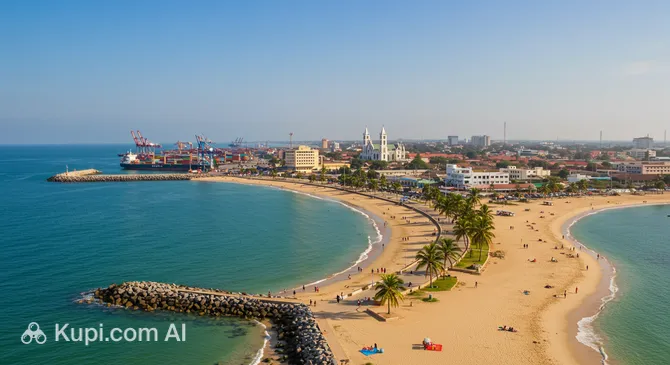
Lobito is a dynamic port city located in Benguela Province on the picturesque Atlantic coast. As one of the key economic centers of Angola, the city fascinates with its unique atmosphere, where industrial power meets colonial heritage and the endless blue of the ocean. With a population of about 393,000, Lobito serves as a vital transport hub connecting maritime trade routes with the continent's interior.
Lobito. Illustration.
Source: Kupi.com AI
The city's geographic location is unique: it stretches along a deep-water natural harbor protected from the open ocean by a long sandspit known as the Restinga. Exploring the history of the city's development, one can learn that it was founded by the Portuguese in 1843 and eventually became the terminus of the famous Benguela Railway. For decades, this railway served as a "gateway" for exporting mineral wealth from the heart of Africa.
For the traveler, Lobito is primarily interesting for its contrasts. Here you can see massive port cranes alongside old buildings from the Portuguese era, stroll through lively markets, and enjoy the fresh sea breeze on the waterfront. Despite its predominantly industrial status, the city possesses a special charm, inviting visitors to experience the real, unvarnished life of modern Angola. Visiting Lobito is an opportunity to see the country's economic heart beating amidst magnificent Atlantic landscapes.
Weather Overview
The climate in Lobito is distinctly tropical, with two clear seasons. The wet period lasts from November to April, when temperatures often reach +28°C…+30°C and humidity increases noticeably. Peak rainfall usually occurs in March, bringing refreshing but sometimes quite heavy downpours.
The dry season, known as casimbo, lasts from May to October. During this time, the weather in Lobito becomes more comfortable and stable. Temperatures drop slightly, averaging +21°C…+25°C, and rain virtually stops. Thanks to the proximity of the Atlantic Ocean and the open coastline, the city is well-ventilated by sea breezes, making the heat easier to bear.
The optimal time to visit the city is between June and September. Expect warm sunny days with a pleasant cool in the evenings and almost complete absence of precipitation. However, it is worth remembering that due to active port activities and dry air during this period, there may be dust in the air, so people with sensitive respiration should be more cautious.
Average monthly temperature
Average monthly precipitation
Interesting Facts
Lobito possesses one of the best natural deep-water harbors on the entire west coast of Africa, reliably protected from powerful ocean waves by a five-kilometer sandspit.
The famous Benguela Railway, completed in 1928, spans 1,289 kilometers and historically connected the Atlantic port with copper mines in the Democratic Republic of the Congo and Zambia.
One of the country's largest investment projects is being implemented in the city—the construction of the Sonangol refinery, worth approximately $6.6 billion, which is set to turn the city into a major energy hub for the region.
The city is famous for its regional carnival, which is considered one of the most authentic in the province and attracts participants from all over the coast.
Lobito is not just a port, but also an important fishing center with traditions dating back to the colonial period when seafood cooperatives began to develop actively here.
How to Get There
Lobito is one of the most accessible cities in Angola thanks to its status as a key logistics hub. The main flow of travelers arrives here via Lobito International Airport (also known as Nova Lisboa, IATA: LLT). It serves regular flights from the capital, Luanda, with a flight time of about an hour and a half. From the airport, the city center can be easily reached by official taxi in just 15–20 minutes.
For those who prefer land transport, it is possible to travel by bus or car from Luanda via the EN100 highway. The journey of about 500 km usually takes between 7 and 9 hours, depending on road conditions and traffic density. It is also worth considering a flight to the airport in neighboring Benguela, from where Lobito can be reached by taxi or minibus in 30–45 minutes. Useful information about routes and tickets can be found on the page dedicated to how to get to Lobito.
Railway communication is represented by the legendary Benguela line. Although the railway currently focuses primarily on freight transport, passenger trains periodically connect the coast with the country's interior. The city station is an important landmark and architectural monument; however, it is recommended to check the current schedule before planning a train trip, as it may be limited.
Station
Passenger traffic
Distance
Catumbela train station
1
7 km
Main Attractions
Unlike classic tourist centers, the attractions of Lobito are inextricably linked to its industrial and port grandeur. One of the most iconic locations is the Restinga sandspit. This narrow strip of land separates the ocean from the harbor and is the hub of much of the city's life. Here you can find cozy spots to relax by the water, small restaurants, and places where locals practice traditional fishing, creating an authentic picture of everyday life.
The heart of the city remains the Port of Lobito—one of the largest and most significant on the entire west coast of Africa. Watching the movement of huge vessels and the operation of the terminals provides an idea of the scale of international trade. Equally important is the historic Benguela Railway Station, which recalls the region's glorious engineering past and its role in the development of the African continent.
Architecture enthusiasts should stroll through the central quarters, where fragments of colonial Portuguese-style buildings have been preserved. The squares and administrative buildings of that era give the city a sense of structural order and historical depth. Also of interest is the Catumbela Estuary, located nearby: this spot attracts those seeking quieter natural landscapes and a break from the noise of the industrial hub.
Local Cuisine
The culinary traditions of Lobito are a delightful mix of Angolan, Portuguese, and indigenous African flavors. The stars of the local gastronomic scene are the gifts of the Atlantic. Due to the city's port status, you can always try the freshest fish, giant prawns, calamari, and crabs. Tuna steaks and seafood barbecues are the "trademark" of local coastal restaurants.
Among the traditional dishes, you must try mucuua—flavorful stewed meat or fish with vegetables—as well as funge. The latter is a thick porridge made from corn or cassava flour, usually served with a variety of rich sauces. These dishes form the basis of the local diet and allow you to deeply experience the flavor of regional cuisine.
Establishments such as Zulu Restaurante Bar, famous for its steaks, or Batuk, which offers an excellent selection of European and Portuguese dishes, are great for exploring the local food. For pizza and light snacks, you can stop by Angelos or O Caldas. Popular drinks include the local Cuca beer and traditional palm wine, which can often be found in the markets.
Travel Tips
Planning a trip to this important Angolan port hub? Here are a few practical tips to help make your stay in Lobito comfortable and safe.
Clothing and Essentials: Choose lightweight clothing made from natural fabrics, as the city has a tropical climate with high humidity. Don't forget comfortable walking shoes and sunglasses. When visiting official institutions or religious sites, it is worth adhering to a modest style.
Transport: To get around the city, it is best to use official taxis. Public transport is represented by candongueiro minibuses, but they are often overcrowded. For long-distance trips (for example, to Benguela), it is convenient to rent a car with a driver.
Finances: The official currency is the Angolan Kwanza. International payment cards are only accepted in major hotels and some restaurants, so always carry a sufficient supply of cash. ATMs may operate intermittently.
Health and Safety: A vaccination certificate against yellow fever is mandatory. Drink only bottled water. From a safety perspective, avoid walking in the port area and on the outskirts after dark, and keep valuables out of sight.
Communication: The official language is Portuguese. English is not widely spoken, so learn a few basic phrases or install an offline translator. A SIM card from a local operator can be bought at the airport or mobile phone shops.
Local Etiquette: Angolans are very friendly and appreciate a polite greeting. When entering an establishment or starting a conversation, be sure to say hello. Ask for permission before taking photos of local residents.
What to Avoid: It is strictly forbidden to photograph military and government facilities, bridges, and the port area—this can lead to serious problems with the police.
Additional Tip: Book accommodation in advance through platforms like Tripadvisor, as there are few quality options in the city, and they fill up quickly with expats and business travelers.
By following these simple rules, you can focus on exploring the unique rhythm of Lobito and gain only positive impressions from visiting this Atlantic port!
Entertainment & Nightlife
The entertainment scene in Lobito largely reflects its character as a major port hub. While there are no massive night clubs or noisy discos that stay open until dawn, the city offers a decent selection of venues for evening relaxation. Most activity is concentrated in restaurants and bars, such as Luna Lounge & Ocean Bar or Zulu Restaurante Bar. These places are popular with locals, expats, and port workers, offering a relaxed atmosphere for dinner with a drink to the sound of the surf.
Nightlife in the city is quite calm, with most establishments closing by midnight. The brightest event of the year is the local carnival, when the streets fill with music, dancing, and colorful costumes—during this time, Lobito is transformed, showcasing the richness of Angolan culture. At other times, locals' leisure often involves socializing in neighborhood pubs or walking along the coast.
Daytime entertainment mainly includes beach relaxation on the Restinga spit and amateur fishing. If you are looking for a more intensive cultural program or modern entertainment centers, many prefer to take a short trip to neighboring Benguela. However, for those who value authenticity, an evening in a Lobito port bar with a view of the harbor will be a memorable experience.
Parks & Museums
Lobito is primarily an industrial and logistics center, so there are virtually no classic museums with extensive exhibitions here. The city's cultural and historical heritage is reflected not in gallery halls, but in its very architecture and layout. The role of an "open-air museum" is played by the historic center and the Benguela Railway station building, which tell the story of the region's colonial past and industrial development.
The situation with traditional parks and green zones in the city is also modest. Due to dense construction and the priority given to port infrastructure, the number of landscaped squares is limited. The main place for walking and outdoor recreation for the 393,000 residents of Lobito is the Restinga sandspit and the embankments along the estuary. These natural recreational areas serve as the urban alternative to traditional parks.
The coastal areas are ideal for evening strolls, watching the sunset over the Atlantic, and meeting local fishermen. Despite the lack of large-scale greenery, the proximity to the ocean and open horizons provide enough space for relaxation and quiet contemplation of the seascape.
Getting Around
The public transport system in Lobito is mainly represented by shuttle minibuses, known locally as candongueiros, and private taxis. Minibuses are the cheapest and most popular way to get around, connecting residential areas with the port and city center. However, tourists should keep in mind that they can be very crowded during peak hours, and there is no fixed schedule.
Taxis are a more comfortable but also more expensive alternative. In Lobito, it is customary to negotiate the fare in advance, as meters are rarely used. For moving around the central part of the city or along the Restinga spit, many prefer walking, as the main points of interest are located quite compactly.
One of the features of the city's transport situation is periodic traffic jams near the port and the railway station, caused by heavy truck traffic. Bicycles are not very popular as a mode of transport due to the heat and the nature of the traffic, so for tourists, the best choice remains renting a car with a driver or using official taxi services.
Accommodation
The hospitality sector in Lobito is primarily geared toward business travelers and specialists working in the port and industrial sectors. Apartments and guesthouses are predominant here, often chosen for long-term stays. Nevertheless, tourists can also find suitable mid-range hotel options offering a basic set of amenities, including Wi-Fi and air conditioning, which is essential in the local climate.
The most convenient area to stay is the Restinga spit and the central part of the city near the port. This is where the main dining establishments and transport hubs are concentrated. When choosing accommodation, it is worth paying attention to its proximity to the ocean—the sea breeze helps to more easily tolerate the heat and high humidity.
The price range in the city is considered moderate compared to the capital. Since the choice of quality hotels is limited, it is recommended to book in advance through trusted platforms like Tripadvisor or by contacting guesthouse owners directly. During peak periods, such as the carnival, the demand for accommodation increases significantly.
Nearby Cities
Lobito serves as an excellent starting point for exploring the coastal region of Benguela Province. Proximity to other interesting cities allows tourists to diversify their itinerary and see different facets of life in this part of the country.
The most popular destination for a day trip is the city of Benguela, located just 30–35 kilometers to the south. It is the administrative center of the province, famous for its relaxed atmosphere, beautiful colonial buildings, and magnificent beaches. It can be reached by taxi or minibus in less than an hour. It is also worth visiting the town of Catumbela, located very nearby—it is known for its historic bridge and picturesque river mouth. For those seeking a more secluded getaway by the water, Baía Farta is ideal, where the coastline is particularly beautiful.
Traveling through the surroundings allows for a better understanding of the historical and economic connection between these cities. Each of these places has its own character: from the business rhythm of the port hub to the calm resort aesthetic of neighboring settlements.
Shopping & Souvenirs
Shopping in Lobito is a fascinating immersion into the city's daily life, where trade is concentrated in busy markets and small shops. There are almost no large Western-style shopping centers, but the markets near the port offer a unique experience. Here you can find the freshest seafood, exotic fruits, and essential goods exchanged between sailors and local traders.
Major shopping activities unfold on the central streets and in the areas adjacent to the port. In small shops, you can purchase clothing, electronics, and goods from Portugal and other countries. Special attention should be paid to the local markets, which are the heart of the city's economy and a meeting place for different cultures.
As souvenirs from Lobito, it is worth bringing back items made by local artisans: wooden figurines, woven baskets, or African-style jewelry. Items related to the fishing industry are also popular. Most shops operate with a siesta break, and payments are mainly accepted in cash in the local currency—Kwanzas—as bank cards do not work everywhere.