A journey into Patagonia's prehistoric past becomes a reality within the walls of this fascinating scientific center. The Bariloche Paleontological Museum is a specialized institution in the city of Bariloche that invites visitors to meet the region's ancient inhabitants. The museum is known for its cozy atmosphere and rich collection of artifacts of immense value for understanding Earth’s history.
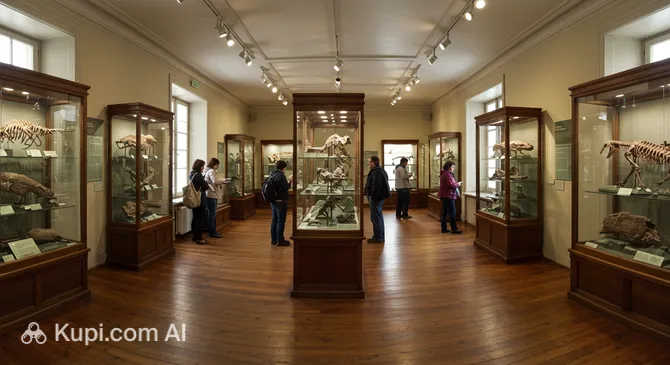
Bariloche Paleontological Museum. Иллюстрация. Источник: Kupi.com AI
The exhibition features unique fossils, skeleton fragments, and other finds discovered across Argentina. Visitors can see evidence of the evolution of life in the Andes and the surroundings of Lake Nahuel Huapi, including rare specimens of flora and fauna that existed millions of years ago. The museum building is designed in the traditional alpine style of the area, adding a special local charm to the visit.
Thanks to its compact size and accessible information, the museum has become a popular spot for educational tourism. It is an ideal location for those looking to add variety to their stay in the Lake District and learn more about South America's paleontological heritage.
Contacts
To contact the museum administration or confirm current information before your visit, you can use the communication channels listed below:
The main reason to visit this museum is the opportunity to examine authentic fossils and ancient animal bones in detail. Here, you can trace the path of evolution from simple marine organisms to the giant reptiles that once ruled Patagonia. The dinosaur exhibits are particularly impressive, featuring egg finds and massive skeleton fragments.
For curious visitors, the museum provides detailed descriptions for each display. It's an excellent way to learn what the Andes were like millions of years ago and how climate changes affected the region's inhabitants. The compact layout of the halls allows you to study each item closely without feeling fatigued, making it a comfortable trip even for the youngest explorers.
In addition to the displays, visitors can learn about the work of paleontologists in the field. Discovering the history of Lake Nahuel Huapi’s flora and fauna through a scientific lens helps one better understand Bariloche's modern nature. Don't forget to look at the details: some plant and insect impressions in stone are so clear it looks as if time stopped for them only yesterday.
Getting There
The museum is located in the central part of San Carlos de Bariloche at Av. 12 de Octubre, R8400, in the immediate vicinity of the Nahuel Huapi lakeshore. If you are staying in the center, you can reach the exhibition on foot in just 10–15 minutes while enjoying views of the lake and local alpine architecture.
For those who prefer public transport, buses run along the city's main streets with routes passing very close to the museum. You can also always use taxis, which operate quickly and reliably in Bariloche.
Travelers arriving from Bariloche International Airport (BRC) can reach the museum by rental car or taxi in about 20 minutes. The distance is approximately 15–20 km, and the road follows comfortable paved highways directly into the heart of the city.
Ближайший город: Bariloche
History & Facts
The museum's history is closely intertwined with the annals of San Carlos de Bariloche itself, founded in the early 20th century. The name of the area has deep roots, originating from the Mapuche word “Vuriloche”, which translates to “people who live behind the mountains.” This region has long been famous for its natural riches, but interest in its paleontological heritage surged after the 1930s.
The city's development as a tourist and scientific center is largely thanks to European immigrants from Germany, Austria, and Switzerland. They brought a culture of natural science study and mountaineering, which led to the discovery of numerous fossils in the foothills of the Andes. The establishment of Nahuel Huapi National Park in 1934 provided the necessary foundation for preserving the region's unique finds.
While the Bariloche Paleontological Museum itself is a modern institution, its collection has been gathered over decades. Every bone and every ancient plant impression within its walls is the result of the labor of many researchers who sought to document the evolution of life in this part of Patagonia. Today, the museum serves as an important link between modern tourists and our planet's incredibly distant past.
Time Needed
Despite its scientific importance, the Bariloche Paleontological Museum is quite an intimate venue. For a standard tour of the main exhibits and reading the information plaques, most tourists need about 1 hour.
This duration makes the museum an excellent addition to a general city sightseeing route. It doesn’t require a whole day, so a visit can easily be scheduled before lunch or during a walk along the waterfront. Even if you are traveling with children, they are unlikely to get tired, yet they will gain plenty of vivid impressions from encountering dinosaurs.
Working Hours
When planning your visit, keep in mind that the museum is primarily open in the afternoon. The main working hours are from Monday to Saturday, from 1:00 PM to 5:30 PM.
Please note that Sunday is a day off, and the museum doors will be closed to the public. It is recommended to arrive at least an hour before closing to have enough time to explore all the halls comfortably.
Day
Working hours
Понедельник
1:00 – 17:30
Вторник
1:00 – 17:30
Среда
1:00 – 17:30
Четверг
1:00 – 17:30
Пятница
1:00 – 17:30
Суббота
1:00 – 17:30
Воскресенье
Закрыто
Nearby
Exploring the area around the Bariloche Paleontological Museum will help you get an even better feel for the atmosphere of this amazing city. After meeting the ancient fossils, it will be pleasant to shift focus to the modern life of the region by walking along the waterfront or visiting cozy local spots.
Numerous interesting locations are concentrated near the museum—from gastrobars to scenic viewpoints—allowing you to create a full itinerary for the whole day.