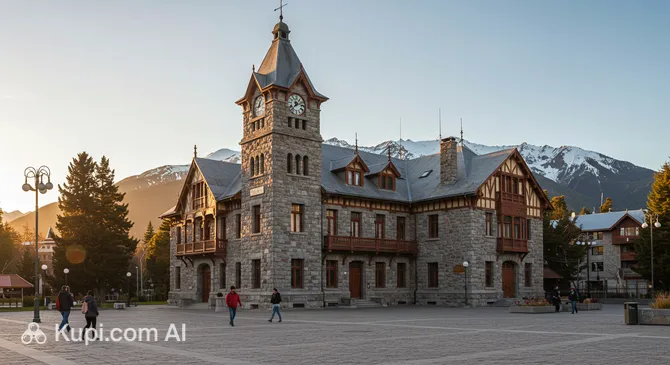
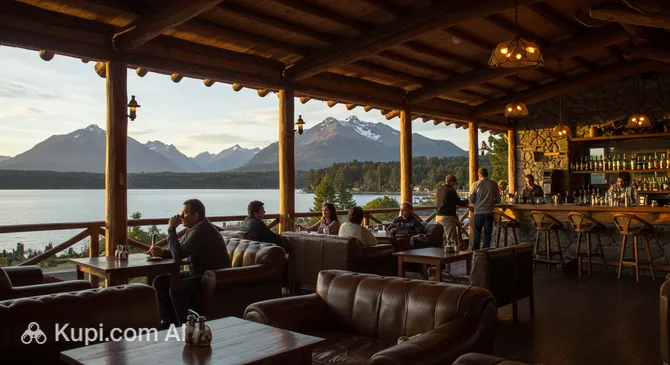
San Carlos de Bariloche, commonly referred to simply as Bariloche, is one of the most picturesque destinations in South America. Nestled in the foothills of the Andes within the Río Negro Province, this city offers a stunning combination of crystal-clear lakes, soaring mountain peaks, and lush forests. It is a premier tourist hub in Argentina, drawing visitors year-round with its breathtaking natural beauty and distinct alpine atmosphere.
Often called the "Little Switzerland of the Andes," the city is renowned for its European-style architecture made of wood and stone. This unique aesthetic is deeply rooted in the history of Bariloche, which was significantly influenced by Swiss and German immigrants who settled in the area. Today, the city serves as the gateway to the magnificent Nahuel Huapi National Park, offering endless opportunities for outdoor adventures.
Bariloche. Illustration.
Source: Kupi.com AI
Bariloche is famous for being the chocolate capital of the country, with numerous artisanal chocolate shops lining the streets, particularly along Mitre Avenue. For adventure seekers, it is home to Cerro Catedral, one of the most important ski centers in the Southern Hemisphere. In the warmer months, the region transforms into a paradise for trekking, kayaking, and fishing, allowing visitors to fully immerse themselves in the pristine Patagonian landscape.
With a population of approximately 112,000 residents, the city maintains a welcoming and lively vibe while providing modern amenities for travelers. Whether you are looking to hit the ski slopes, indulge in delicious local cuisine, or simply admire the panoramic views from the Civic Center, Bariloche promises an unforgettable travel experience.
Weather Overview
The weather in Bariloche varies significantly throughout the year, creating distinct seasons that shape the local landscape and activities. Located in the Andes, the city experiences a climate characterized by cool, wet winters and mild, dry summers, making it a year-round destination for different types of travelers.
During the summer peak in January and February, the conditions are ideal for hiking and exploring the lakes. Average temperatures hover around 14°C, with daily highs reaching up to 20.3°C. This period is remarkably dry, with precipitation levels dropping to just 1mm and only about 6 wet days per month, ensuring plenty of sunshine for outdoor adventures.
Winter, spanning from June to August, brings a dramatic change as the region transforms into a winter sports hub. Temperatures drop considerably, with average lows dipping to -2.3°C in July. While the precipitation volume remains relatively low (around 6-8mm), the frequency of precipitation increases sharply, with June seeing up to 20 wet days. This colder weather supports the snow cover needed for the area's famous ski slopes.
The transitional months offer a mix of conditions. Spring and autumn are generally cool, with average temperatures ranging from 4°C to 11°C. Travelers should expect mild, sunny summers perfect for sightseeing and cold, snowy winters designed for skiing and cozying up indoors.
Average monthly temperature
Average monthly precipitation
Interesting Facts
Beyond its famous ski slopes and chocolate shops, Bariloche holds many fascinating secrets and local legends that add depth to its alpine charm. Here are some intriguing details about this Patagonian gem that often go unnoticed by the casual visitor.
The iconic clock tower at the Civic Center Bariloche features a unique mechanical show. Every day at noon and 6:00 PM, four wooden figures emerge from the tower to rotate, representing the historical figures of the region: an indigenous person, a priest, a soldier, and a settler.
The vast Nahuel Huapi Lake is the setting for Argentina's own version of the Loch Ness Monster legend. Known as "Nahuelito," this mysterious aquatic creature has been the subject of rumored sightings and local folklore since the early 20th century, adding a layer of mystery to the deep blue waters.
A persistent local legend claims that the magical Arrayanes Forest, located nearby, inspired the setting for Walt Disney's classic movie Bambi. While historians debate the accuracy of this claim, Disney did visit the region, and the forest's orange-hued trees certainly evoke a fairytale atmosphere.
The city takes its reputation as a chocolate capital seriously, culminating in the annual Chocolate Festival. During Easter, a colossal chocolate egg, often standing over 10 meters tall, is constructed in the main square and later cracked open to be shared with thousands of attendees, a tradition celebrated even by the local Chocolate Museum.
Civic Center Bariloche. Illustration.
Source: Kupi.com AI
Traveler photos:
How to Get There
Planning a trip to the heart of Argentina's Lake District is an exciting prospect, and there are several ways to reach this alpine paradise. Most visitors choose to fly, taking advantage of the region's connectivity. For a detailed breakdown of all transport options and routes, you can read more about how to get to Bariloche to help organize your itinerary.
The most convenient entry point is the San Carlos de Bariloche International Airport (IATA: BRC), located just 13 km from the city center. As a major international airport serving the region, it handles a significant volume of passengers annually. Upon arrival, a taxi or shuttle transfer to the downtown area typically takes approximately 40 minutes, depending on traffic conditions.
Travelers planning a broader tour of Patagonia might also consider arriving at Chapelco Airport (IATA: CPC) in the city of San Martín de los Andes. Although this airport is smaller and located about 118 km from Bariloche, it offers a scenic alternative for those who wish to drive through the breathtaking Seven Lakes route. The transfer from San Martín de los Andes to Bariloche generally takes around 3 hours and 20 minutes by car.
For clarity, here is a summary of the main airports in the vicinity:
Besides air travel, Bariloche is well-connected by a network of long-distance buses that link the city to major hubs like Buenos Aires and Mendoza. Driving is another popular option, particularly for those who want to explore the stunning landscapes of the Río Negro Province at their own pace.
Main Attractions
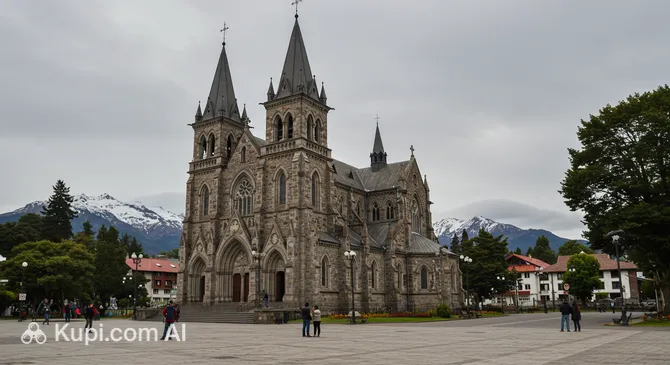
Bariloche is brimming with cultural sites and natural wonders that captivate visitors from the moment they arrive. A standout landmark in the city's skyline is the Cathedral of Our Lady of Nahuel Huapi. Designed by architect Alejandro Bustillo, this imposing Neo-Gothic structure features beautiful stained glass windows and sits majestically by the lake, offering a serene environment for reflection and photography.
Cathedral of Our Lady of Nahuel Huapi. Illustration.
Source: Kupi.com AI
Traveler photos:
For those interested in the region's rich heritage, the Francisco Moreno Museum of Patagonia is an essential stop. Located within the iconic Civic Center, this museum provides a deep dive into the natural history and cultural evolution of Patagonia. Exhibits range from indigenous artifacts to geological displays, helping tourists understand the unique identity of this southern territory.
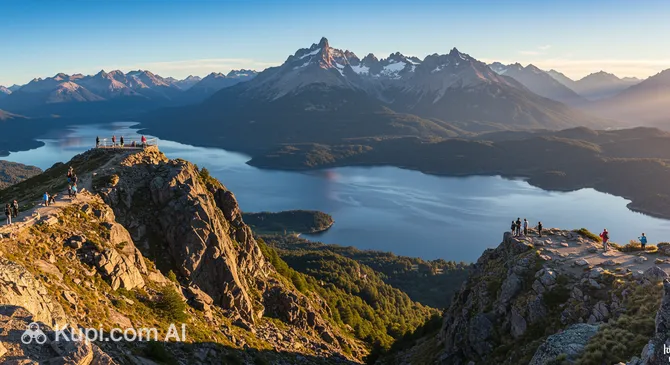
If you are looking for accessible panoramic views without a strenuous trek, Cerro Viejo is a delightful option. Visitors can take a chairlift to the top to enjoy sweeping vistas of the city and Nahuel Huapi Lake. The descent is equally enjoyable, with a path winding through a small forest of Arrayanes trees, or for the more adventurous, a fun toboggan slide back to the base.
Cerro Viejo. Illustration.
Source: Kupi.com AI
Traveler photos:
Winter sports enthusiasts and families often head to Piedras Blancas. Considered the cradle of skiing in Bariloche, this area on the slopes of Cerro Otto is famous for its sledding tracks. It offers a fun-filled day in the snow with lifts and slopes designed for recreational sledding, making it a favorite activity for visitors of all ages.
Finally, no trip to the chocolate capital is complete without visiting the Rapanui Chocolate Shop on Mitre Street. Much more than just a store, this establishment is a local institution that combines an artisanal chocolate factory with an ice cream parlor and a café. It even features an indoor ice skating rink, blending culinary indulgence with entertainment in a way that perfectly suits the city's festive spirit.
Local Cuisine
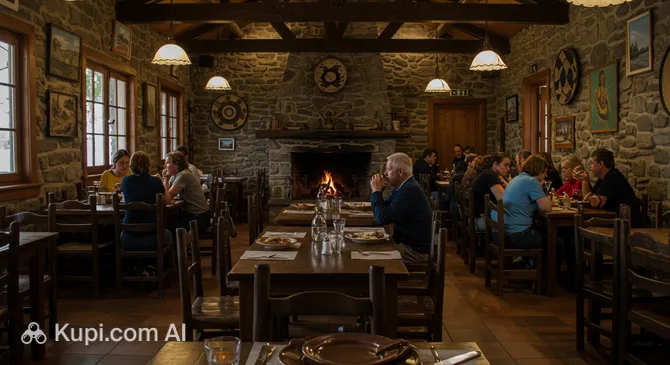
The culinary landscape of Bariloche is a delicious reflection of its history, blending indigenous Patagonian ingredients with strong Central European influences. Visitors can expect a hearty dining experience where high-quality meats and fish take center stage. The absolute star of the region is the Patagonian lamb (cordero patagónico), typically slow-roasted on an iron cross over an open fire until the skin is crisp and the meat is tender. For those seeking an authentic grill experience to try these local cuts, Alto el Fuego is a renowned steakhouse that prides itself on serving top-tier meat in a cozy, rustic setting.
Alto el Fuego. Illustration.
Source: Kupi.com AI
Traveler photos:
In addition to red meat, the region's cold lakes provide an abundance of fresh fish, with rainbow trout and salmon being local staples. These are often prepared with soft sauces made from mushrooms or Roquefort cheese. For a more casual but equally legendary meal, locals flock to La Fonda del Tío. This bustling spot is famous for its massive milanesas (breaded meat cutlets) and offers a lively, family-friendly atmosphere that captures the essence of a traditional Argentine bodegón.
La Fonda del Tío. Illustration.
Source: Kupi.com AI
Traveler photos:
Bariloche is also the undisputed capital of chocolate in Argentina. The city center smells of cocoa, and drinking a rich hot chocolate is practically a ritual, especially during the colder months. To balance the sweetness, the city has developed a thriving craft beer scene. Microbreweries abound, utilizing the pristine local water and hops. For a quick and savory snack to pair with a drink, travelers can visit Chimi Bar de Choris, a place dedicated to the choripán, Argentina’s beloved chorizo sandwich, served with a variety of gourmet toppings.
Finally, the European heritage is evident in the tradition of afternoon tea. Many tea houses scattered along Avenida Bustillo offer exquisite pastries, cakes, and jams made from local berries like elderberries and rose hips. Whether you are indulging in a cheese fondue after a day of skiing or enjoying a smoked wild boar platter, the food culture here is designed to warm the soul.
Travel Tips
Welcome to Bariloche, the gateway to Patagonia! To help you navigate this stunning alpine city with ease and make the most of your adventure, we have compiled a list of essential practical tips that cover everything from packing the right gear to understanding local customs.
Clothing and Gear: The weather in Patagonia is famously unpredictable, often shifting from sunshine to rain or snow within hours. It is best to dress in layers (the "onion style"), including a moisture-wicking base layer, a warm fleece, and a windproof, waterproof outer shell. Comfortable, sturdy hiking boots are a must if you plan to trek. Since the UV radiation is particularly strong at this latitude and altitude, always pack sunglasses and high-SPF sunscreen, even for winter visits.
Transportation: The city has a public bus system called "Mi Bus" which connects the center to key attractions like Llao Llao and the ski resorts. To use it, you must purchase and load a SUBE card at a local kiosk (kiosco) or pharmacy, as cash is not accepted on board. However, to fully explore the scenic "Seven Lakes" route or remote areas at your own pace, renting a car is highly recommended. Ride-hailing apps are available but can be less reliable than traditional remises (private taxis) which you book by phone or at an agency.
Finances: The local currency is the Argentine Peso (ARS). While credit and debit cards are widely accepted in hotels, restaurants, and larger shops (often offering a favorable exchange rate for foreign tourists known as the "MEP rate"), cash is essential for small purchases, craft markets, and tips. ATMs are available, but they may have withdrawal limits. It is customary to leave a tip (propina) of about 10% in restaurants if the service was good.
Health and Safety: Bariloche is generally a safe destination for tourists, but standard precautions against petty theft should be taken in crowded areas. Pharmacies are marked with a green cross, and those on "turn duty" (de turno) remain open 24 hours a day. Be aware that the air is very dry; stay hydrated and use moisturizer to prevent skin irritation.
Communication: The official language is Spanish. While English is commonly spoken in the tourism industry (hotels, tour agencies, major restaurants), it is less widespread in local shops and among bus drivers. Learning a few basic phrases like "Hola" (Hello), "Gracias" (Thank you), and "¿Cuánto cuesta?" (How much?) is greatly appreciated. Buying a local SIM card (Claro, Movistar, or Personal) is recommended for reliable navigation, as Wi-Fi is standard in cafes but not always fast.
Local Etiquette: Argentines are warm and social people. The standard greeting, even between casual acquaintances, is a single kiss on the right cheek. Dining times are significantly later than in many other countries; locals typically have dinner after 9:00 PM or even 10:00 PM. Do not be surprised if restaurants are empty at 7:00 PM.
What to Avoid: If you are invited to share mate (the traditional herbal tea), never stir the metal straw (bombilla) with your hand. This is considered rude and ruins the preparation. Also, avoid rushing; the pace of life in Patagonia is relaxed ("tranquilo"), and service may be slower than what you are used to in big cities.
Additional Tip: Be prepared to pay the Ecotasa (Eco Tax) upon arrival at your accommodation. This is a small municipal fee charged per night (up to a limit) to help maintain the city's tourism infrastructure. It is usually payable in cash or by card at check-in, so having some funds ready for this specific charge is helpful.
With these practical insights, you are well-prepared to enjoy the breathtaking landscapes and vibrant culture of the Río Negro Province. Whether you are here for the world-class skiing or the legendary chocolate, Bariloche promises a warm welcome and an unforgettable experience.
Entertainment & Nightlife
While Bariloche is famous for its daytime outdoor adventures, the city truly comes alive after the sun sets behind the Andes. The nightlife here is vibrant and diverse, catering to everyone from backpackers looking for a craft beer to energetic crowds seeking world-class nightclubs. The atmosphere is generally relaxed but festive, reflecting the city's identity as a premier tourist destination for both students and international travelers.
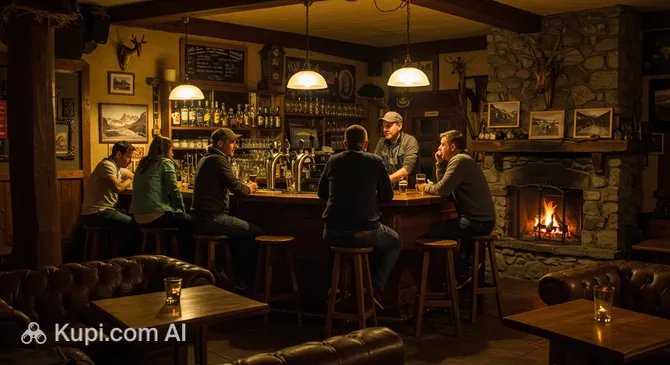
For those who prefer a laid-back evening, the "Beer District" located around Juramento and Neumeyer streets is the place to be. As Argentina's craft beer capital, the city is dotted with high-quality microbreweries and pubs. A popular spot to start the night is the Patagonia Hostel Bar. Known for its rustic wood decor and welcoming vibe, it is an excellent venue to mingle with fellow travelers while enjoying a pint of locally brewed IPA or stout. The dress code in these areas is casual; hiking boots and fleece jackets are a common sight even late at night.
Patagonia Hostel Bar. Illustration.
Source: Kupi.com AI
Traveler photos:
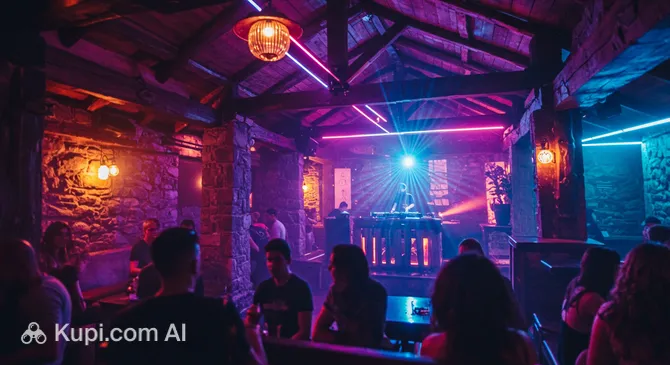
If you are looking for high-energy dancing, the city's legendary nightclubs (boliches) are concentrated along the coastline of the Nahuel Huapi Lake, specifically on Juan Manuel de Rosas Avenue. These venues are famous across the country, often hosting student graduates and tourists alike. One of the most iconic clubs is Grisú. With its unique architecture spanning several floors and stunning views of the lake, it offers different music genres in various rooms, ensuring there is something for everyone. Another staple of the local nightlife is By Pass, renowned for its impressive laser shows and state-of-the-art sound system, creating an immersive party experience that lasts until dawn.
Grisú. Illustration.
Source: Kupi.com AI
Traveler photos:
Timing is everything in Argentine nightlife. Bars and pubs typically fill up around 9:00 PM to 11:00 PM, serving as the perfect pre-party spots. However, the nightclubs do not truly get going until 2:00 AM or later. Prices vary, with nightclubs often charging an admission fee that may include a drink, while bars usually have free entry. It is advisable to bring some cash, although cards are widely accepted.
Beyond the party scene, Bariloche offers charming evening alternatives. A stroll through the Municipal Craft Fair near the Civic Center allows visitors to browse handmade goods and souvenirs in a family-friendly environment. For daytime entertainment that spills into the evening, the Galería del Sol provides a sheltered space for shopping and coffee, perfect for unwinding after a day on the slopes.
Regarding safety, the main tourist areas and nightlife districts are generally safe for walking at night, especially where there are crowds. However, after a late night out, it is recommended to take a remis (private car) or a radio taxi back to your accommodation rather than walking long distances alone. Taxis are readily available outside major clubs and can be hailed on the street or booked via hotel reception.
Parks & Museums
While Bariloche is world-famous for the vast national park that surrounds it, the city itself offers a harmonious blend of urban green spaces and cultural institutions. Visitors looking to explore the local heritage or simply relax by the water will find a variety of parks, beaches, and museums that perfectly complement the region's adventurous spirit.
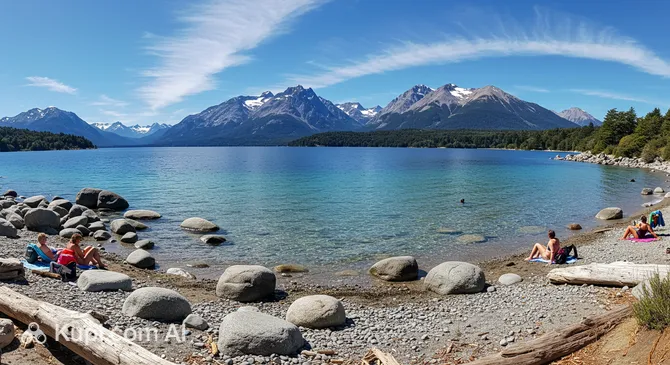
For those seeking a connection with nature without leaving the urban area, Centro Beach is the most accessible option. Located directly below the Civic Center, this stretch of coast offers panoramic views of Nahuel Huapi Lake and is a popular spot for a midday stroll or a sunset picnic. Further along the coast, at kilometer 4 of Bustillo Avenue, you will find Melipal Beach. Known for its picturesque rock formations and calmer atmosphere, it is an ideal place to sit and admire the mountains reflected in the crystal-clear water.
Melipal Beach. Illustration.
Source: Kupi.com AI
Traveler photos:
Within the city grid, Belgrano Square serves as a traditional green lung. It provides a peaceful respite from the bustling streets, featuring well-maintained paths and trees that offer shade during the summer months. It is a nice stop for families or anyone needing a quiet moment while exploring the downtown area.
Bariloche's cultural scene is equally captivating, with museums that delve into both the sweet and the ancient history of the region. The Chocolate Museum is a must-visit for those with a sweet tooth. Housed in the historic Havanna complex, it traces the history of cocoa from the Mayans to the European immigrants who made Bariloche the chocolate capital of Argentina. Visitors can see impressive chocolate sculptures and learn about the production process.
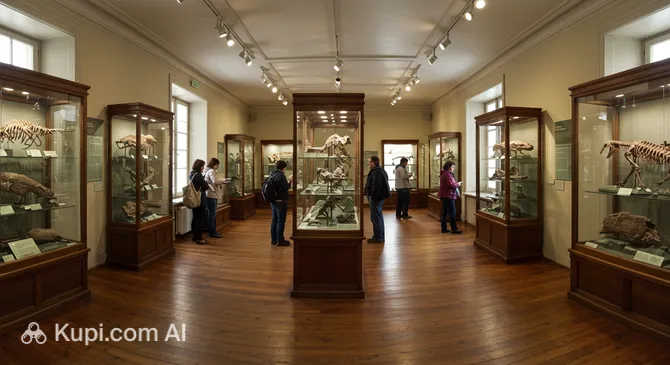
Bariloche Paleontological Museum. Illustration.
Source: Kupi.com AI
Traveler photos:
For a journey further back in time, the Bariloche Paleontological Museum offers a fascinating look at the prehistoric life of Patagonia. The museum displays a collection of fossils, including dinosaurs and ancient marine creatures discovered in the region. It is particularly interesting for children and science enthusiasts, providing insight into the geological evolution of this dramatic landscape.
In terms of historical sites, the area around the cathedral features Catedral Square. This open space allows visitors to admire the Neo-Gothic architecture of the church from different angles and enjoy the landscaped gardens that frame the lake views. It stands as a testament to the city's architectural heritage and careful urban planning.
Insider Tip: The museums are excellent alternatives for rainy days, which can be frequent in autumn and winter. If you plan to visit the beaches, keep in mind that the water in Nahuel Huapi Lake is glacial and very cold year-round; while some brave locals swim in summer, most visitors prefer to sunbathe or kayak.
Getting Around
Navigating Bariloche is relatively straightforward, as the city does not have a metro or tram system. The public transport network relies entirely on buses, known locally as colectivos. The service is operated by the company "Mi Bus" and covers the city center, the neighborhoods, and the extensive tourist corridor along Avenida Bustillo. For most visitors, the most important route is Line 20, which runs from the downtown terminal to the Llao Llao Hotel, stopping at major attractions and beaches along the lake.
To use the public bus system, you must obtain a SUBE card, the same rechargeable smart card used in Buenos Aires and other Argentine cities. It is crucial to know that cash is not accepted on board. You can purchase the card at "kioscos" (convenience stores), lottery shops, or pharmacies displaying the SUBE logo. Once you have the card, you must load credit onto it at these same locations or via digital wallets, though the latter often requires validating the credit at an automatic terminal before use.
When boarding the bus, simply tell the driver your destination so they can set the correct fare, then tap your card on the reader. Fares vary depending on the distance traveled, with the route to the airport or the ski resort at Cerro Catedral typically costing more than a short local trip. Buses generally operate from early morning until around midnight, but frequencies can vary. During peak tourist seasons (summer and winter), popular lines like Line 20 and Line 55 (to the ski slopes) can get quite crowded, so it is wise to allow extra travel time.
For those who prefer more comfort or are traveling with heavy luggage, taxis and remises are widely available. Taxis are white with yellow roofs and can be hailed on the street or found at designated ranks. Remises are private cars that look like regular vehicles; they must be booked in advance by phone or at an agency office and usually offer a fixed price for the journey. Both are safe and reliable alternatives, especially for late-night returns from restaurants or nightclubs.
Given the linear geography of the city and the distance between attractions, renting a car is an extremely popular option. It offers the freedom to explore the "Circuito Chico," the road to Mount Tronador, or the Seven Lakes route at your own pace without relying on bus schedules. Several international and local rental agencies operate at the airport and in the city center.
For a more active approach, bike rentals are a favorite activity, particularly in the Llao Llao area. Many tourists take a bus to kilometer 18 and rent mountain bikes there to ride the scenic loop. Additionally, while not used for commuting, the city's cable cars (teleféricos) and chairlifts, such as those at Cerro Otto and Cerro Catedral, are iconic modes of transport that act as major tourist attractions, lifting visitors high above the mountains for breathtaking panoramic views.
Accommodation
Where to Stay:
Accommodation in Bariloche is as diverse as its landscape, catering to every type of traveler, from backpackers on a shoestring budget to luxury seekers looking for five-star amenities. The city is particularly famous for its charming alpine-style cabins, known locally as cabañas, which offer a cozy, home-like atmosphere often featuring fireplaces and wooden interiors. In addition to these, visitors can find bustling hostels, boutique hotels, and high-end resorts nestled along the lakefront.
When choosing where to stay, location is key. The City Center is the most convenient area for those who want easy access to shops, restaurants, and the main bus terminal without needing a car. Staying here places you within walking distance of the Civic Center and the chocolate shops on Mitre Street. Conversely, the area along Avenida Bustillo, which stretches westward along the coast of Nahuel Huapi Lake, is perfect for travelers seeking tranquility and breathtaking views. This zone is dotted with hotels that offer direct access to the lake and a more immersive nature experience, though it often requires using public transport or a rental car to reach downtown.
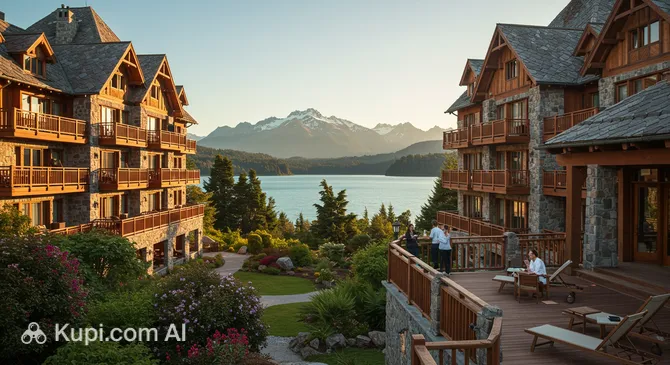
For those looking for a comfortable stay with comprehensive services, the city offers excellent resort options. One notable example is Altos del Nahuel. Situated strategically to offer both accessibility and relaxation, this hotel provides guests with a blend of modern amenities and the warm, rustic aesthetic typical of the region, making it a great base for exploring the surrounding attractions.
Altos del Nahuel. Illustration.
Source: Kupi.com AI
Traveler photos:
Regarding costs, prices fluctuate significantly depending on the season. Budget travelers can find affordable hostel beds and simple guesthouses, while mid-range and luxury options along the lake command higher prices, especially those with spa facilities and panoramic vistas. Booking platforms are widely used and recommended for securing the best rates.
Booking Tip: Bariloche has two distinct high seasons: winter (July and August) for skiing and summer (January and February) for hiking and beach activities. During these periods, accommodation can sell out weeks in advance. It is highly advisable to book your stay well ahead of time to ensure availability and better pricing.
Nearby Cities
For those looking to explore the surroundings, Bariloche serves as an excellent base for day trips to several interesting nearby locations.
For a longer adventure to the south, travelers can visit Esquel. This charming town is world-renowned as the terminus for "La Trochita," the Old Patagonian Express steam train, which offers a nostalgic journey through the vast steppe. Esquel is also the gateway to the Los Alerces National Park, a UNESCO World Heritage site famous for its ancient larch trees and emerald lakes, making it a perfect spot for nature lovers.
Heading towards the center of the province, Zapala offers a different landscape. Situated at a strategic crossroads, it serves as a jumping-off point for the Laguna Blanca National Park, a protected area known for its significant population of black-necked swans and geological formations. While it requires a longer drive, it provides a fascinating look into the arid steppe environment that contrasts with the forests of Bariloche.
These nearby destinations offer a glimpse into the diverse culture and landscapes of the region, ranging from the lush Andean forests to the expansive Patagonian steppe.
Shopping & Souvenirs
Shopping in Bariloche is a delightful experience that focuses less on international fashion chains and more on high-quality regional craftsmanship. The city is celebrated for its artisanal production, particularly in the realms of gastronomy and winter apparel. Visitors will find that browsing the local shops is an immersion into the culture of Patagonia, where wood, wool, and chocolate take center stage.
The heart of the city's commercial activity is Mitre Street (Calle Mitre), the main pedestrian-friendly artery that runs through the downtown area. This bustling avenue is often referred to as "The Avenue of Chocolate" due to the high concentration of artisanal chocolate shops lining its sidewalks. It is the perfect place to stroll, sample local sweets, and find high-end outdoor clothing suitable for the Andean climate.
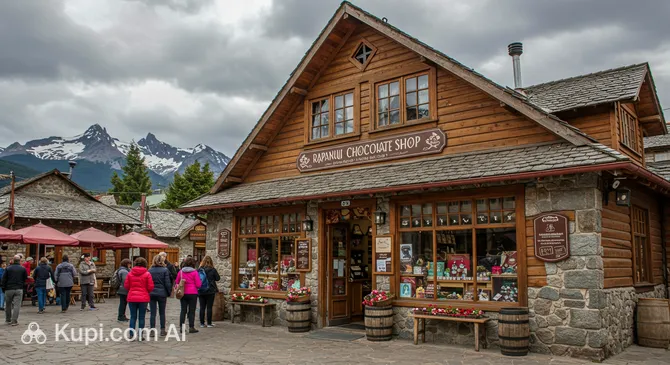
Among the most iconic stops on this street is the Rapanui Chocolate Shop. While it is a major tourist attraction, it is also a premier shopping destination where you can buy boxes of assorted chocolates, fruit jellies, and the famous Franui (chocolate-covered raspberries). The shop's beautifully designed interior makes the shopping experience feel special and exclusive.
Rapanui Chocolate Shop. Illustration.
Source: Kupi.com AI
Traveler photos:
For a more concentrated shopping experience, visitors can explore the Galería del Sol. Located directly on Mitre Street, this shopping arcade is architecturally stunning, featuring a warm wooden interior and a glass ceiling that lets in natural light. It houses a variety of boutiques selling leather goods, woolen knitwear, jewelry, and souvenirs, offering a comfortable shelter from the cold or rain while you shop.
Galería del Sol. Illustration.
Source: Kupi.com AI
Traveler photos:
If you prefer unique handmade items, the Municipal Craft Fair is an essential stop. Situated just behind the Civic Center, this market brings together local artisans who sell authentic Patagonian crafts. Here, you can find hand-carved wooden utensils, silver jewelry, woven ponchos, and ceramic mate gourds. It is the best place to find a one-of-a-kind gift that directly supports the local community.
When it comes to souvenirs, Bariloche offers several distinct options. Beyond the obvious choice of chocolate, travelers often bring back smoked delicacies such as deer, wild boar, or trout, which are vacuum-packed for travel. Products made from rosehip (rosa mosqueta), such as organic oils, creams, and jams, are also very popular and native to the region. Additionally, high-quality leather goods and Mapuche-style silverware are treasured keepsakes.
Store opening hours in Bariloche typically follow a split schedule, opening from 9:00 AM or 10:00 AM until 1:00 PM, and reopening from 4:00 PM or 5:00 PM until 9:00 PM. However, many shops along the tourist-heavy Mitre Street remain open throughout the day (horario corrido) to accommodate visitors. Regarding payment, credit and debit cards are widely accepted, but carrying some cash (Argentine Pesos) is advisable for smaller purchases or to negotiate a discount (descuento por efectivo) in some boutiques.
Foreign tourists should look for the "Tax Free Shopping" logo in store windows. Argentina offers a VAT (IVA) refund system for non-residents on purchases of locally manufactured goods exceeding a certain amount at participating stores. Be sure to ask for the refund form at the time of purchase to process it at the airport or border crossing upon leaving the country.