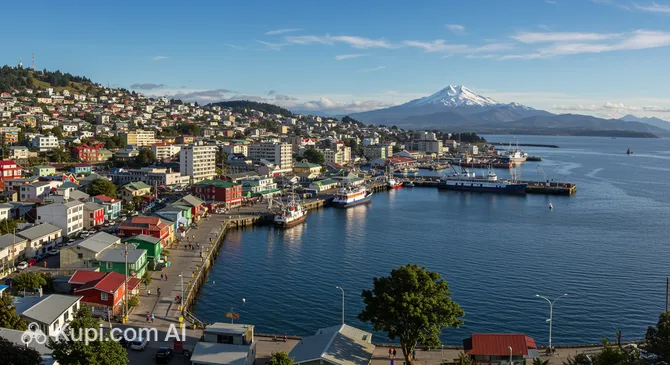
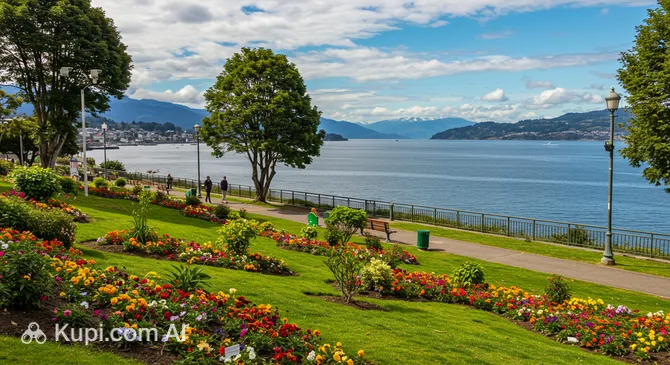
Puerto Montt is a bustling port city that serves as the gateway to the stunning fjord region of southern Chile. As the capital of the Los Lagos Region, it is a vital commercial and transport hub, offering travelers a perfect starting point for exploring the breathtaking landscapes of Patagonia and the nearby Chiloé Archipelago. With a population of approximately 170,000 inhabitants, the city combines urban energy with the raw beauty of its natural surroundings.
Puerto Montt. Illustration.
Source: Kupi.com AI
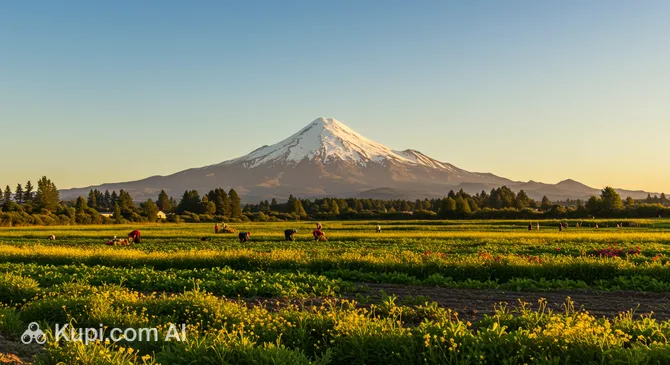
Geographically, the city sits at the northern end of the Reloncaví Sound, providing spectacular views of the ocean and the snow-capped Osorno and Calbuco volcanoes on clear days. The climate here is oceanic, characterized by cool temperatures and frequent rainfall, which contributes to the lush, green vegetation that defines the area. The history of Puerto Montt is visibly influenced by the arrival of German settlers in the mid-19th century, leaving a lasting legacy on the local architecture and culture that can still be appreciated today.
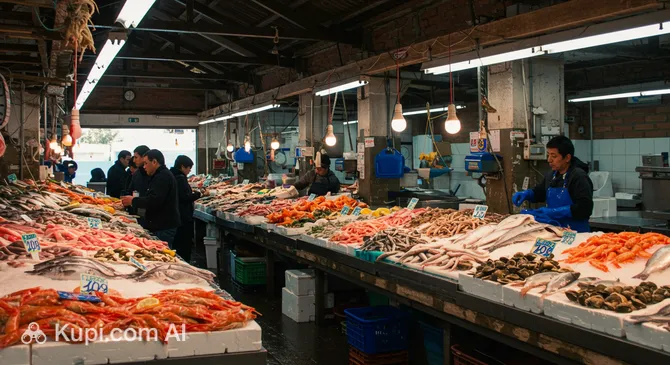
One of the city's most famous attractions is the Angelmó market, a vibrant spot where visitors can savor fresh seafood, including the region's renowned salmon, and browse for high-quality woolen handicrafts. The waterfront promenade, or Costanera, invites leisurely walks with scenic vistas of the bay. Whether you are passing through on your way to the majestic lakes or planning to stay and enjoy the local maritime cuisine, Puerto Montt offers a warm welcome and a unique glimpse into life in southern Chile.
Weather Overview
The climate in this part of the Los Lagos Region is oceanic, characterized by distinct seasonal changes that shape the travel experience. The summer season, spanning from December to March, offers the most favorable conditions for outdoor exploration. During January and February, average temperatures hover around 15°C, with daytime highs reaching nearly 20°C. Although this is the driest period of the year, visitors should still anticipate about 7 to 9 wet days per month.
As the year progresses into winter, the weather becomes noticeably cooler and wetter. From June through August, average temperatures drop to approximately 7°C, with lows dipping to around 4.5°C in July. Rainfall is a defining feature of the winter months, with June experiencing up to 23 wet days. To help you pack appropriately for these conditions, you can consult the detailed guide to the weather in Puerto Montt.
In general, you can expect mild summers with occasional rain and cool, wet winters. Given the region's weather patterns, carrying a waterproof jacket and dressing in layers is advisable year-round to ensure comfort while enjoying the scenery.
Average monthly temperature
Average monthly precipitation
Interesting Facts
Beyond its reputation as a commercial hub and gateway to the fjords, Puerto Montt holds several fascinating secrets that surprise many visitors. From ancient archaeological finds to unique geographical features, the city offers much more than meets the eye.
Puerto Montt is widely celebrated as "Kilometer Zero" of the Carretera Austral, serving as the official starting point for one of the world's most scenic and adventurous road trips through Chilean Patagonia.
Just a few kilometers from the urban center lies Monte Verde, a groundbreaking archaeological site that revealed evidence of human settlement dating back over 14,000 years, challenging long-held theories about the timeline of human migration in the Americas.
Before its modern founding, the area was known by the indigenous Mapudungun name "Melipulli," which translates to "Four Hills," a name that perfectly describes the city's distinctive layout built across four natural terraces facing the sea.
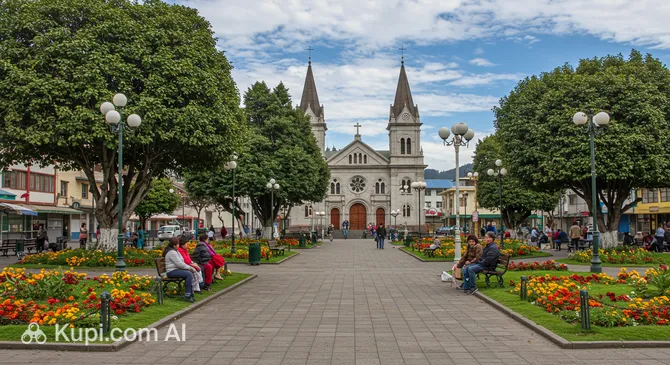
The city's historic heart, the Plaza de Armas of Puerto Montt, marks the exact location where the city was founded in 1853, symbolizing the beginning of German colonization in the region.
In the nearby Pelluco coastal area, visitors can witness a "petrified forest" during low tide, where the fossilized stumps of ancient Alerce trees—thousands of years old—emerge visibly from the sand.
Plaza de Armas of Puerto Montt. Illustration.
Source: Kupi.com AI
Traveler photos:
How to Get There
Reaching the gateway to the Chilean fjords is relatively straightforward, with air travel being the most efficient option for most visitors. For a comprehensive guide on all transport modes, you can read more about how to get to Puerto Montt.
The primary entry point is El Tepual Airport (PMC), conveniently located within the city of Puerto Montt itself, just 13.1 km from the center. As a major regional hub, it handles a significant volume of passengers, connecting the city with Santiago and other destinations. The journey from the airport to the downtown area typically takes around 40 minutes by taxi or shuttle bus. Travelers can also consider Canal Bajo Airport (ZOS) in the city of Osorno, situated approximately 96 km away. While further out, it serves as a viable alternative, with a travel time of roughly 2.5 to 3 hours by road.
Another option for those arriving from Argentina or exploring the Andes is San Carlos de Bariloche International Airport (BRC) in Bariloche. Located about 153 km from Puerto Montt, this route involves crossing the international border, so travel times can vary significantly.
For clarity, here is a summary of the main airports:
While Puerto Montt is often viewed as a transit hub, the city itself possesses several landmarks that offer insight into its culture, geography, and daily life. Exploring the urban center reveals a mix of historic architecture, bustling modern commerce, and viewpoints that take advantage of the region's dramatic topography.
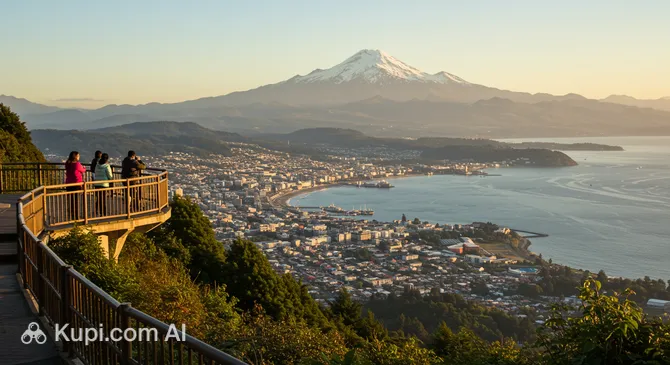
For the best panoramic perspective of the area, a visit to the Manuel Montt Viewpoint is essential. Perched on one of the city's natural terraces, this spot offers sweeping views over the Reloncaví Sound, Tenglo Island, and the busy city center below. On clear days, the backdrop of snow-capped volcanoes makes it a perfect location for photography. It is an excellent place to get your bearings and appreciate the unique geography where the city meets the sea.
Manuel Montt Viewpoint. Illustration.
Source: Kupi.com AI
Traveler photos:
The heart of the city beats at the Plaza de Armas of Puerto Montt. This central square is not only a historical marker but also a gathering place surrounded by significant buildings. The most notable structure here is the cathedral, built from native alerce wood, which stands as a testament to the region's timber heritage and German architectural influence. It is a pleasant spot to sit, observe local life, and admire the monuments that pay homage to the city's founders.
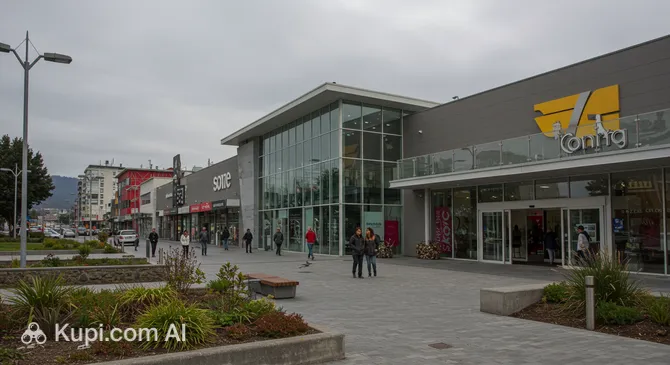
Modern life in Puerto Montt revolves heavily around the waterfront, dominated by the Paseo Costanera Mall. As one of the largest shopping centers in southern Chile, it is a major attraction for both locals and tourists, especially on the frequent rainy days typical of the region. Beyond shopping, the mall features a food court with large windows offering spectacular views of the bay, allowing visitors to enjoy a meal while watching ships navigate the harbor.
Paseo Costanera Mall. Illustration.
Source: Kupi.com AI
Traveler photos:
For those seeking a break from the urban environment, La Paloma Municipal Park provides a refreshing green escape. This expansive park is a favorite among residents for outdoor activities and family outings. It features picnic areas, walking paths, and often hosts local events and fairs, making it a great place to experience the community spirit of Puerto Montt in a relaxed, natural setting.
La Paloma Municipal Park. Illustration.
Source: Kupi.com AI
Traveler photos:
Local Cuisine
The culinary scene in Puerto Montt is deeply rooted in its maritime geography, offering some of the freshest seafood in Chile. As a major port city, the daily catch dictates the menu, with salmon, hake, and an incredible variety of shellfish taking center stage. The local gastronomy is a fascinating blend of indigenous Chiloé traditions and German colonial influences, resulting in hearty, flavorful dishes designed to provide warmth against the cool, rainy climate.
One dish that every visitor must try is Curanto. While traditionally prepared in an underground pit, in the city it is often served as Curanto en Olla (in a pot) or Pulmay. This massive stew combines shellfish like mussels and clams with smoked pork, chicken, sausages, and potato-based dumplings known as milcaos and chapaleles. Another local favorite is Cancato, a delicious preparation of roast fish—usually salmon or sierra—stuffed with cheese, tomatoes, and longaniza sausage, creating a rich fusion of flavors that perfectly represents the region.
Recomiendo Cortes Grill Restaurant. Illustration.
Source: Kupi.com AI
Traveler photos:
To accompany these rich meals, locals often choose Chilean white wines, such as a crisp Sauvignon Blanc or Chardonnay, which pair exceptionally well with the seafood. For beer lovers, the region's strong German heritage ensures a wide availability of excellent craft beers, often brewed in nearby towns. If you are looking for a place to enjoy a drink and perhaps some live music after dinner, the Barra Bass Rock and Roll Bar is a popular spot to experience the local nightlife atmosphere.
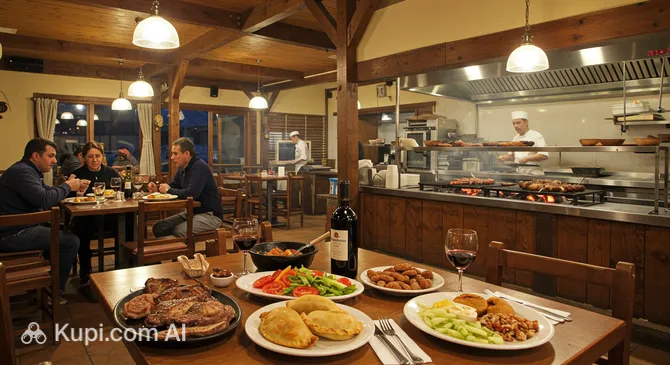
For an authentic dining experience, the Angelmó market is the legendary heart of the city's food culture. Here, numerous small kitchens or cocinerías serve steaming bowls of Paila Marina (seafood soup) directly to diners sitting on shared benches. However, if you prefer a more formal setting with a focus on grilled meats and local specialties, you might visit the Recomiendo Cortes Grill Restaurant. Whether you eat at a bustling market stall or a quiet restaurant, the food in Puerto Montt is defined by its generosity and freshness.
Travel Tips
To help you make the most of your visit to this southern port city, we have compiled a list of practical advice covering everything from packing essentials to local customs. These tips are designed to ensure your journey through Puerto Montt is as smooth and enjoyable as possible.
Prepare for All Four Seasons: The weather in this region is notoriously unpredictable and can change rapidly within a single day. Regardless of when you visit, packing a high-quality waterproof jacket and water-resistant shoes is essential. Dressing in layers is the best strategy, as it allows you to adapt to the cool mornings, warmer afternoons, and sudden rain showers that define the local climate.
Mastering Local Transport: While taxis and ride-hailing apps are available, the most authentic and economical way to get around is by using colectivos. These are shared taxis that look like regular sedans but operate on fixed routes displayed on roof signs. They are faster than buses ("micros") and offer a convenient way to navigate between the city center and residential areas.
Cash is King at Markets: While major hotels, restaurants, and the mall accept credit and debit cards, you will need local currency (Chilean Pesos - CLP) for smaller transactions. If you plan to visit the famous Angelmó market for handicrafts or seafood, carrying cash is highly recommended, as many small vendors do not have card terminals.
Language Considerations: English is not widely spoken outside of major tourist agencies and high-end hotels. Learning a few basic phrases in Spanish, such as "hola" (hello), "gracias" (thank you), and "¿cuánto cuesta?" (how much does it cost?), will go a long way. downloading an offline translation app or carrying a phrasebook can be very helpful for daily interactions.
Safety and Health: Puerto Montt is generally a safe city for tourists, but standard precautions apply. Avoid walking alone in poorly lit areas at night and keep an eye on your belongings in crowded places like the bus terminal or markets. Pharmacies are plentiful and usually marked with a green cross; major chains like Cruz Verde or Ahumada are reliable for over-the-counter needs.
Tipping Etiquette: In restaurants, it is customary to leave a tip, known locally as the propina, of 10% of the total bill. This is often suggested on the check but is voluntary. Tipping taxi drivers is not expected, though rounding up the fare is appreciated. For baggage handlers or supermarket baggers, a small tip of a few hundred pesos is polite.
What to Avoid: Do not underestimate the sun just because it feels cool or cloudy. The UV radiation in southern Chile can be extremely high due to the thinner ozone layer in this part of the hemisphere. Always wear sunscreen, even on overcast days, to avoid unexpected sunburns.
Market Dining Hack: If you decide to eat at the Angelmó cocinerías, be prepared for enthusiastic touts trying to usher you into their stalls. Take your time to walk through, check the prices, and look for the stalls that are busy with locals—this is usually the best indicator of fresh food and good value.
By keeping these practical tips in mind, you will be well-equipped to navigate the city's unique quirks and focus on the incredible experiences it has to offer. Enjoy the fresh air, the delicious seafood, and the warm hospitality that awaits you in Puerto Montt!
Entertainment & Nightlife
While Puerto Montt is often celebrated for its daytime nature excursions, the city transforms as the sun sets, offering a vibrant nightlife scene that caters to locals and travelers alike. The atmosphere here is generally relaxed and unpretentious, reflecting the warm hospitality of southern Chile. Instead of massive, impersonal nightclubs, you will mostly find cozy pubs, lively restobars, and venues where live music takes center stage. The nightlife typically kicks off later in the evening, with most locals heading out for drinks and conversation around 10:00 PM or later.
The undisputed hub of evening entertainment is the Pelluco district. Located just a few kilometers east of the city center along the coast, this seaside neighborhood is famous for its high concentration of discos, bars, and restaurants. On weekends, Pelluco comes alive with a younger crowd and party-goers hopping from one venue to another. It is the best area to visit if you are looking for a lively atmosphere where you can dance the night away or enjoy a cocktail with a view of the dark ocean.
For those seeking a specific spot to enjoy a drink, La Nube is a popular choice. This bar is well-regarded for its welcoming vibe and is a great place to mingle with residents while enjoying a selection of local and international beverages. If your musical tastes lean towards something heavier, the Barra Bass Rock and Roll Bar offers a distinct alternative. Known for its energetic rock-themed ambiance, it is a fantastic venue to grab a beer and immerse yourself in the local rock culture.
La Nube. Illustration.
Source: Kupi.com AI
Traveler photos:
When enjoying a night out, safety and logistics are straightforward. The Pelluco area is generally safe, especially around the main strip where people congregate, but it is always wise to stay in well-lit areas. For transportation, calling a taxi or using a ride-sharing app like Uber is the most reliable way to return to your accommodation, especially late at night. Prices for drinks and entry fees are usually moderate compared to the capital, making a night out here quite affordable.
Beyond the nightlife, Puerto Montt offers various forms of daytime entertainment. Culture enthusiasts should check the schedule at the Diego Rivera Theater (Teatro Diego Rivera), which hosts art exhibitions, film festivals, and theatrical performances. For those who enjoy shopping as a pastime, the Paseo Alerce Outlet provides a modern retail experience with a variety of brands and stores to explore during the day.
Parks & Museums
While Puerto Montt is primarily known for its port and commercial activity, the city and its immediate surroundings offer several green spaces and cultural institutions that provide a deeper understanding of the region's heritage and natural beauty. From sanctuaries preserving ancient forests to museums showcasing the area's diverse history, these sites allow visitors to connect with the local identity beyond the busy waterfront.
For a refreshing escape within the urban area, Valle Volcanes is a notable destination. Although largely a residential neighborhood, it features a scenic lagoon known as Laguna de los Patos, which serves as a sanctuary for various bird species. It is a tranquil spot perfect for a leisurely afternoon walk, offering a slice of nature amidst the city's expansion. The area is well-maintained and provides a stark contrast to the bustling downtown, making it a favorite among locals for family outings and relaxation.
Valle Volcanes. Illustration.
Source: Kupi.com AI
Traveler photos:
Just a short drive from the city center lies the Lahuen Ñadi Natural Monument, a protected area that is absolutely essential for nature lovers. This park is one of the few places in the central valley where you can walk among the majestic Alerce trees, some of which are hundreds of years old. A network of accessible boardwalks winds through the dense, temperate rainforest, allowing visitors to experience the lush vegetation and unique ecosystem of southern Chile without needing to travel far into the wilderness.
In terms of culture, the Museo Histórico Juan Pablo II stands as the city's primary guardian of history. Located near the port, this museum houses a fascinating collection that chronicles the region's development, from the indigenous cultures and the German colonization in the 19th century to the maritime history that defines Puerto Montt today. The exhibits include historical photographs, household artifacts from early settlers, and displays related to the 1960 earthquake, offering a comprehensive overview of the events that shaped the city.
Art enthusiasts should visit the Casa del Arte Diego Rivera. While it functions as a theater and performance venue, it also features prominent art galleries that host rotating exhibitions of painting, sculpture, and photography by local and national artists. It acts as the cultural heart of the city, frequently organizing events that reflect the vibrant artistic spirit of the Los Lagos Region.
For a unique glimpse into the past, look for the small open-air displays of railway heritage near the coastline. These remnants pay homage to the era when the train station was a pivotal part of Puerto Montt's connection to the rest of the country, adding a nostalgic touch to a walk along the bay.
Getting Around
Public transport in Puerto Montt is functional, straightforward, and offers a glimpse into the daily life of the locals. Unlike the capital city, there is no metro or tram system here. Instead, the city relies on a network of buses and shared taxis that cover the urban area and the surrounding neighborhoods efficiently. For visitors, understanding the difference between the two main modes of transport is the key to getting around smoothly.
The most popular and unique way to travel is by colectivo. These are shared taxis that look like standard black sedans but operate on fixed routes, much like a bus. You can identify them by the illuminated signs on their roofs, which display the route number and key destinations. They are faster and more comfortable than buses, making them the preferred choice for many residents. If you prefer a more traditional option, the colorful city buses, known locally as micros, are plentiful. They are generally painted blue and are a cheaper alternative, though they can be slower due to frequent stops.
When it comes to payment, the system in Puerto Montt is decidedly old-school. There are no travel cards, apps, or electronic passes for public transit here. Cash is the only method of payment. You pay the driver directly upon boarding. Fares are fixed and relatively low, typically ranging from 500 to 1,000 Chilean Pesos (CLP) depending on the distance and the time of day. It is highly advisable to carry small bills and coins, as drivers often have limited change for large banknotes.
For tourists, using the system requires a bit of active participation. To catch a micro or a colectivo, you simply wait at a designated stop or a safe corner along the route and wave your hand to signal the driver. Operating hours generally run from around 6:00 AM to 10:00 PM. Service frequency drops significantly later in the evening and on Sundays, so planning ahead is wise if you are out late.
If you prefer a more private or direct journey, standard taxis are widely available and can be identified by their black exteriors and yellow roofs. Unlike colectivos, these will take you to a specific door-to-door destination. Ride-hailing apps like Uber are also active in the city and offer a convenient alternative for those who prefer to pay via credit card or avoid the language barrier of explaining destinations to a driver. While the city center is compact enough to explore on foot, renting a car is a popular option for travelers planning to use the city as a base to explore the wider Los Lagos Region.
Accommodation
Accommodation:
Finding a place to stay in Puerto Montt is generally straightforward, as the city is well-equipped to handle the constant flow of travelers heading to Patagonia or the Chiloé Archipelago. The accommodation landscape is practical and diverse, catering to backpackers, business travelers, and families alike. Visitors can choose from a wide array of options ranging from budget-friendly hostels and family-run guesthouses—locally known as hospedajes—to comfortable mid-range hotels and fully furnished apartments.
When choosing a location, the City Center (Centro) is often the most convenient choice for those prioritizing logistics. Staying downtown places you within walking distance of the bus terminal, shopping centers like the Paseo Costanera Mall, and the main commercial streets. This area is ideal for short stays or for travelers who need quick access to transport links early in the morning. Alternatively, the Pelluco district offers a more scenic and relaxed atmosphere. Located along the coast just east of the center, this area is known for its beachside vibe, nightlife, and hotels that often feature views of the Reloncaví Sound, making it a better option for those seeking a bit more leisure.
For families or groups traveling together, renting cabañas (cabins) is a very popular and economical alternative in this region. These are often located slightly outside the dense urban core or in residential neighborhoods, providing more space, kitchen facilities, and a "home away from home" feeling. They are particularly common in the Los Lagos Region and offer a great way to experience the local lifestyle.
Regarding costs and booking, Puerto Montt offers something for every budget. Prices are generally reasonable compared to the capital, though they can rise significantly during the peak summer months of January and February. During this high season, it is highly recommended to book your accommodation in advance, as the city fills up quickly with tourists starting their journey along the Carretera Austral. While major hotels and online platforms accept credit cards, many smaller hospedajes and cabins may prefer or require payment in cash, so it is wise to have Chilean Pesos on hand.
Nearby Cities
For those looking to explore the surroundings, Puerto Montt serves as an excellent base for day trips to several interesting nearby locations:
City
Population
Distance
Alerce
42 267
9 km
Puerto Varas
26 172
17 km
Llanquihue
16 249
24 km
Calbuco
15 903
37 km
Frutillar Alto
19 400
39 km
Among these destinations, the cities located on the Chiloé Archipelago are particularly compelling for visitors. Ancud, situated at the northern tip of the island, is often the first stop for travelers crossing the Chacao Channel. It is steeped in history, home to the Fort San Antonio, one of the last Spanish strongholds in South America. Nearby, the Puñihuil Penguin Colony offers a rare opportunity to see Humboldt and Magellanic penguins nesting together.
Further south on the island lies Castro, the capital of the Chiloé Province. This city is iconic for its palafitos—colorful wooden houses built on stilts over the water—which are a favorite subject for photographers. Castro is also famous for the Church of San Francisco, a UNESCO World Heritage site known for its striking yellow and purple carpentry, representing the unique Chilote architectural style.
To the north of Puerto Montt, Osorno offers a different experience characterized by its strong German colonial heritage. Visitors can explore the city's parks, visit the Fort Reina Luisa, and admire the distinct architecture of the local houses and the modern Osorno Cathedral. It serves as a gateway to the broader lake district, offering a mix of urban history and access to agricultural landscapes.
These nearby destinations offer a glimpse into the diverse culture and landscapes of the region.
Shopping & Souvenirs
Shopping Overview:
Shopping in Puerto Montt offers a distinct mix of modern convenience and deep-rooted local tradition. As the commercial capital of the Los Lagos Region, the city serves as a primary supply hub for travelers heading further south into Patagonia. Visitors can expect to find everything from high-end international brands and outdoor gear to authentic regional handicrafts. Whether you are looking for a waterproof jacket for your trek or a hand-knitted wool sweater to take home, the city provides ample options to suit every need.
The downtown area, particularly the streets surrounding the main square and Calle Antonio Varas, acts as a bustling open-air commercial zone. Here, you will find a variety of smaller boutiques, pharmacies, and stores selling electronics and clothing. It is a lively district where locals do their daily shopping, offering a more authentic urban atmosphere compared to the enclosed centers.
For a modern retail experience, the city is dominated by the Paseo Costanera Mall. Located right on the waterfront, this massive complex is impossible to miss and serves as the city's main meeting point. It houses major department stores, a supermarket, a cinema, and a wide array of fashion brands. It is the perfect place to find international products or to take shelter and shop comfortably on a rainy day.
Travelers looking for deals or specific outlet shopping can visit the Paseo Alerce Outlet. Situated a bit further from the center, this mall gathers various factory stores offering discounted prices on clothing, footwear, and home goods. It is a good option if you have a car and want to explore options outside the busy downtown core.
Paseo Alerce Outlet. Illustration.
Source: Kupi.com AI
Traveler photos:
However, the true jewel of Puerto Montt's shopping scene is the Angelmó Market. This colorful market is the best place to find authentic souvenirs and local crafts. The stalls here are famous for their thick, hand-dyed wool sweaters, hats, and socks, which are essential for the southern Chilean climate. You will also find beautifully carved wooden items, leather goods, and jewelry made from lapis lazuli, a semi-precious blue stone found only in Chile and Afghanistan.
When it comes to souvenirs, beyond the wool and wood, consider bringing back some local culinary delights. The region is renowned for its smoked produce. Vacuum-packed smoked salmon, merken (a smoked chili spice blend), and canned shellfish are popular gifts that capture the flavors of southern Chile. Just be sure to check your home country's customs regulations regarding food products before purchasing.
Store opening hours in Puerto Montt typically run from 10:00 AM to 9:00 PM for large malls like the Paseo Costanera, which remain open on Sundays and holidays. Smaller street-side shops usually open around 9:30 AM and may close for a lunch break between 1:30 PM and 3:30 PM, closing for the day around 7:30 PM or 8:00 PM. While credit and debit cards are widely accepted in malls, supermarkets, and established restaurants, carrying cash is highly recommended for the Angelmó market and smaller street vendors.