Support

Puente Caucau

About

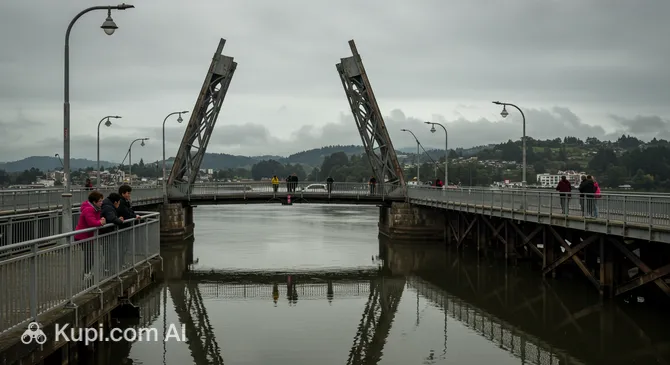
A true marvel of modern engineering in the city of Valdivia is the Cau-Cau Bridge (Puente Caucau). It is a unique bascule (drawbridge) in Chile, spanning the river of the same name. The structure plays a key role in the region's transport system, connecting the Isla Teja and Las Ánimas districts, allowing residents and tourists to reach the coast while bypassing the busy city center.
Caucau Bridge
Caucau Bridge. Иллюстрация. Источник: Kupi.com AI

The scale of the bridge is impressive: its total length is 90 meters, and its two movable sections, each 35 meters long, can rise to allow sea vessels to pass. A massive 54-meter control tower towers over the entire structure. The project was the first of its kind in the country, combining the functionality of a highway, pedestrian paths, and a dedicated lane for cyclists.

Beyond its vital infrastructure importance, the Cau-Cau Bridge has become a popular tourist destination. Its modern silhouette against a backdrop of lush greenery and river waters attracts architecture and photography enthusiasts, and its 24-hour operation makes it accessible for viewing at any time of day.

Contacts

For those planning to visit this engineering feat or wishing to learn more about its operation, the following contact information is available:

How to contactContact
AddressValdivia, Los Ríos, Chile
Websitevaldichile.com

What to Do

A visit to the bridge offers city guests many ways to spend their time. The most popular activity is walking along the dedicated paths, which offer magnificent views of the Cau-Cau River and the picturesque banks of Valdivia. It is an ideal spot for photoshoots: the bridge's dynamic lines and lifting mechanisms create an impressive backdrop, especially in the glow of the setting sun.

Active lifestyle enthusiasts will appreciate the dedicated bicycle lane. The route across the bridge connects interesting city locations, allowing for quick and comfortable travel between different parts of the city. Nearby are natural gems like the Botanical Garden of the Austral University of Chile and the Arboretum, both within a 10–15 minute walk from the bridge.

If you are traveling by car, crossing the bridge is a convenient way to reach the coastal villages of Niebla and Los Molinos, home to popular beaches and nature parks. The Cau-Cau Bridge is not just a crossing, but an excellent observation platform that lets you see a complex mechanism at work while enjoying the tranquility of the water surrounded by Chilean nature.

Getting There

Located in the picturesque Los Ríos region, the Cau-Cau Bridge is easily accessible from the city center. A trip by car or public transport from the heart of Valdivia toward the Isla Teja or Las Ánimas districts takes only about 5–10 minutes. For navigation, you can use the coordinates POINT(-73.2521763 -39.8009617).

If you prefer public transport, take the buses heading to Isla Teja—their stops are within walking distance of the bridge. For travelers arriving from Valdivia Airport, it is most convenient to book a taxi or transfer, which will take approximately 20–30 minutes (a distance of about 20 km).

For active travelers, a walk or bike ride is an excellent option. The bridge is located just 1.4 km from the popular Feria Fluvial market. Additionally, this crossing is a key link for those who want to reach the coast quickly while avoiding traffic jams in the city center. Parking areas are available for motorists on both banks of the river.

Ближайший город: Valdivia

History & Facts

The history of this landmark dates back to the mid-20th century. The idea for its construction first emerged after the devastating 1960 earthquake, when the Calle-Calle Bridge was seriously damaged. Initially, authorities considered a temporary pontoon bridge project, but due to a lack of funding, the plans were delayed for decades.

The project received new momentum in 1991 and 2001 when the city municipality re-initiated discussions about the crossing. In 2011, a Spanish company won the construction tender, and Chilean President Sebastián Piñera ceremoniously laid the first stone. This project became an important part of the "Legado Bicentenario" program, aimed at modernizing the country's infrastructure for its bicentennial.

The construction process involved complex engineering tasks requiring innovative solutions. After additional technical work to calibrate the mechanisms in 2017, the bridge was officially opened for full operation in August 2018. Today, it is considered one of the most iconic modern structures in the region, symbolizing the progress and resilience of the city's infrastructure.

Time Needed

For a standard visit to the Cau-Cau Bridge, 30–60 minutes is usually sufficient. This is plenty of time to take a leisurely stroll along the pedestrian section, snap panoramic photos of the river, and appreciate the scale of the 54-meter control tower.

If you plan to combine your visit to the bridge with a walk through nearby natural areas, such as the Botanical Garden or the Arboretum, we recommend setting aside about 2 hours for this route. This will allow you to enjoy the atmosphere without rushing, especially if your visit coincides with sunset, when the structure looks most impressive.

Working Hours

The Cau-Cau Bridge functions as a piece of urban infrastructure and is open to the public 24 hours a day. You can cross it on foot, by bicycle, or by car at any time convenient for you, as it is open daily from Monday to Sunday without breaks.

Please note that the raising of the bridge sections for vessel passage follows a specific schedule, which may affect traffic; however, the site remains accessible for general viewing and walks around the clock.

Круглосуточно

Nearby

Exploring the surroundings of the Cau-Cau River can significantly enrich your trip. The area around the bridge is famous not only for its engineering projects but also for its green spaces, historical monuments, and cultural centers that allow you to feel the atmosphere of southern Chile more deeply.

Below are interesting locations located in the immediate vicinity of the bridge that are worth including in your walking route:

NameDistance
UACh Botanical Garden0.5 km
Lotus Lagoon0.5 km
Bar Bundor1 km
Entrebrasas1.2 km
Santa Inés Park1.2 km
Mesa Incógnita1.3 km
Maurice van de Maele Historical and Anthropological Museum1.4 km

Reached the end of the page?

That means the route is fully explored