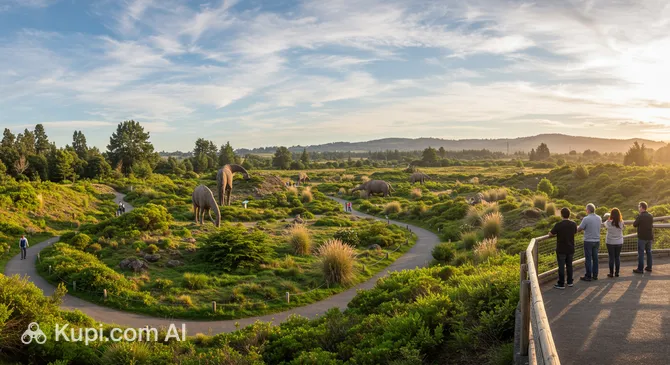
Imagine a journey through time that takes you back tens of thousands of years. This is exactly what Chuyaca Pleistocene Park offers—a remarkable natural and educational site located on the outskirts of Osorno. This destination in Chile is rightly considered a must-visit for anyone fascinated by the history of Earth and ancient ecosystems.
Pleistocene Park Chuyaca. Illustration.
Source: Kupi.com AI
Traveler photos:
The park represents a harmonious blend of a protected nature area and an open-air museum. Here, visitors can not only enjoy the picturesque landscapes of the Los Lagos region but also see realistic reconstructions of the ancient inhabitants of South America who lived in this area during the Pleistocene epoch.
The project's main mission is to popularize knowledge about prehistoric megafauna. You will encounter representations of giant sloths, majestic mastodons, and dangerous saber-toothed tigers. The park's exhibits clearly demonstrate how ice ages shaped the modern face of nature and the role climate change played in this process.
Contacts
To inquire about current events or arrange a group visit, you can contact the park administration directly. Staff members are always happy to provide details about available educational programs.
Official contact information for the attraction is provided below:
Upon entering, you will find yourself on well-maintained trails that lead through a world of antiquity. One of the main activities is walking, during which you can examine information boards that describe the flora and fauna of the Pleistocene epoch in detail.
Of particular interest are the guided tours. Professionals share fascinating facts about paleontological finds made right in this region and explain how mastodons and other giants of the past lived. You will be able to see impressive skeleton reconstructions of extinct animals that are truly striking in scale.
For those who prefer active participation, the park hosts archaeological workshops and educational programs, which are especially popular with schoolchildren and family groups. This is a great chance to try your hand as a researcher and learn the secrets of ancient civilizations and ecosystems while enjoying the fresh air and views of the Osorno countryside.
Getting There
Getting to this unique location is quite simple if you are already in the Los Lagos region. The city of Osorno is located approximately 900 kilometers south of the country's capital, Santiago. The fastest way to get here is to take a domestic flight to the local Canal Bajo Airport and then continue by land transport.
The park itself is situated very close to the city. A trip from downtown Osorno by car or taxi takes about 20–30 minutes. Drivers are usually well-acquainted with the route, as it is a popular destination for family outings and educational trips.
If you prefer public transportation, it is best to check the schedules of local suburban buses heading toward the nature area in advance. However, the most convenient option remains renting a car or booking a transfer as part of an organized tour group, which allows you to travel independently of bus schedules.
Nearest city: Osorno
History & Facts
The creation of this site was driven by the desire of scientists and local authorities to preserve and promote the unique archaeological heritage of the region. The surroundings of Osorno have long attracted the attention of researchers due to numerous discoveries of ancient animal bones that inhabited these lands during the Pleistocene epoch.
Paleontological excavations conducted in the Los Lagos region throughout the 20th and 21st centuries yielded sensational results. Scientists discovered the remains of mastodons and other representatives of giant megafauna that roamed here tens of thousands of years ago. These discoveries formed the basis for the park's concept.
Thanks to the meticulous work of archaeologists, today we can see a detailed reconstruction of life in the prehistoric period. The information on the park's displays is not merely fiction, but the result of serious scientific work that allows us to trace how South America's climate and ecosystem changed under the influence of ice ages.
Interestingly, the park continues to evolve, integrating new finds and research into its exhibits. This makes it a living monument to history, connecting our planet's distant past with the present.
Time Needed
To leisurely explore all the key areas and soak in the prehistoric atmosphere, it is recommended to set aside 2 to 4 hours for your visit. This is the optimal amount of time to walk all the routes and study the informational materials.
If you plan to participate in educational workshops or book a full guided tour, your length of stay may increase. Families with children should also budget an extra hour, as the interactive zones and large-scale animal reconstructions usually spark great interest in young explorers, making them want to stay longer.
Working Hours
The park is welcomingly open to visitors every day, making it easy to include in your travel itinerary on any day of the week. The operating hours are very convenient for both morning walks and evening visits.
Opening Hours:
Monday — Sunday: 9:00 – 21:00.
9:00 – 21:00
Nearby
Exploring the park's surroundings will allow you to dive deeper into the culture and history of the Los Lagos region. After meeting the prehistoric giants, it will be interesting to switch to exploring architectural monuments and modern landmarks of the city.
Nearby, you can find both cozy gastronomic spots and locations related to the ethnographic heritage of Chile's indigenous peoples. Here is a list of sites within walking distance or a short drive: