Support

Francisco Moreno Museum of Patagonia

About

In the heart of the picturesque city of Bariloche, occupying the eastern wing of the famous Civic Center, is the Francisco Moreno Museum of Patagonia. This unique research and cultural space is dedicated to the natural history and anthropology of the most mysterious southern region that Argentina is famous for.
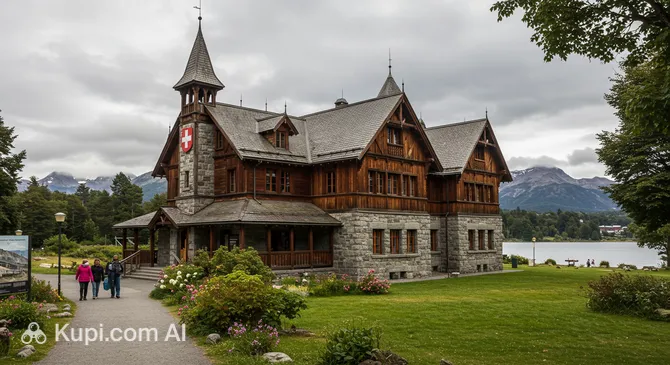
Francisco Moreno Museum of Patagonia
Francisco Moreno Museum of Patagonia. Иллюстрация. Источник: Kupi.com AI

The museum building itself is a work of art: it is constructed from polished green tuff, cypress, and fitzroya wood, and its roof is decorated with traditional slate. This architectural ensemble is officially recognized as a national historic monument, highlighting its significance to the country's cultural heritage.

The exhibition bears the name of the legendary explorer Francisco P. Moreno, whose discoveries allowed the world to better understand the nature of the Andes. The museum serves as an important link between the past and the present, offering guests a deep dive into the secrets of Patagonian lands through rich collections of artifacts and scientific documents.

Contacts

When planning your visit, it’s helpful to have the organization's current contact information on hand. The museum is located in the very heart of the city and is always ready to welcome curious travelers to learn about the region's history. You can contact the staff for more details via the phone number provided or simply visit the address during working hours.

How to contactContact
AddressCentro Cívico S/n, R8400 San Carlos de Bariloche, Río Negro, Argentina
Phone+54 294 442-2309

What to Do

A visit to the museum offers a fascinating journey through four main thematic halls. In the Aboriginal History Hall, you will see rare artifacts from the Mapuche, Tehuelche, and Yámana cultures, including everyday tools and amazing objects used by ancient inhabitants for stargazing. This provides a unique opportunity to connect with the spiritual world of the region's indigenous peoples.

The path then leads through the Regional History Hall, covering the period from Spanish colonization to independence, and the San Carlos de Bariloche Hall, which details how the city has developed and grown since 1885. Particular attention should be paid to the National Parks hall, dedicated to Lake Nahuel Huapi and the first conservation initiatives in these parts.

In addition to the permanent exhibitions, the museum frequently hosts temporary art exhibitions, cultural festivals, and educational workshops. For those who want to learn more, the library and archives are open, housing valuable maps and diagrams. Exploring the collection of Patagonia's fossils, flora, and fauna will be an excellent addition to your walks around the city itself.

Getting There

Finding your way to the museum is easy, as it is located in the city's most famous architectural complex — the Civic Center (Centro Cívico). This ensemble is situated on the main square overlooking the lake and serves as the starting point for most tourist routes. The exact address is Centro Cívico S/n, R8400 San Carlos de Bariloche.

If you are staying in the central part of the city, the walk to the museum will take only a few minutes. The walking routes here are very picturesque, offering views of the mountains and architecture. For those coming from more distant areas, public transport is a great option — most city bus routes pass through the center or have a stop nearby.

You can also always use a taxi or local ride-sharing apps. Drivers know this location well, as it is a landmark of the region. If you are traveling by rental car, look for the coordinates POINT(-71.3097323 -41.1333868), though keep in mind that parking in the very center can be difficult during peak hours.

Ближайший город: Bariloche

History & Facts

The museum's grand opening took place on March 17, 1940. This event coincided with the completion of the entire Civic Center complex in Bariloche, which was designed to transform the remote settlement into a modern and attractive resort. The author of this ambitious architectural project was Ernesto de Estrada.

The museum was named in honor of the prominent explorer, scientist, and geographer Francisco Pascasio Moreno. He made an invaluable contribution to the study of the Andes and Patagonia. Notably, in 1903, Moreno donated the land around Lake Nahuel Huapi to the state, which marked the beginning of Argentina's first national park. His legacy became the foundation for the entire exhibition.

The institution's first director was Enrique Amadeo Artayeta. It was his private anthropological and historical collection that formed the basis of the first exhibitions. The museum's structure was largely inspired by the traditions of the famous La Plata Museum, founded with the participation of Francisco Moreno himself at the end of the 19th century. In 1987, the museum building, as part of the entire Civic Center, was declared a national historic monument.

Time Needed

To leisurely explore all four thematic halls, view the temporary exhibitions, and study the unique artifacts, visitors usually need about 1.5 to 2 hours. This is enough time to thoughtfully read the descriptions and appreciate the scale of the collection dedicated to the nature and history of the region.

If you have a deep interest in anthropology or plan to visit the museum's library and archives, it's worth setting aside a bit more time — about half a day. For the average tourist wishing to get a general overview of Patagonia, the standard two hours will be quite sufficient for a full immersion into the exhibition.

Working Hours

The museum welcomes visitors on weekdays, offering a convenient schedule with a lunch break. Please note that the institution is closed on Saturdays and Sundays, so plan your cultural leisure in advance for the work week.

Opening Hours:

  • Monday – Friday: 10:00 – 12:30 and 14:00 – 17:00
  • Saturday and Sunday: Closed

DayWorking hours
Понедельник10:00 – 12:30, 2:00 – 17:00
Вторник10:00 – 12:30, 2:00 – 17:00
Среда10:00 – 12:30, 2:00 – 17:00
Четверг10:00 – 12:30, 2:00 – 17:00
Пятница10:00 – 12:30, 2:00 – 17:00
СубботаЗакрыто
ВоскресеньеЗакрыто

Nearby

Its location in the heart of the city makes the museum an ideal starting point for further exploration of the surrounding area. A stroll through the adjacent streets will allow you to soak up the atmosphere of an alpine town, try the famous local chocolate, or relax in cozy venues.

Exploring nearby sites will help you get a fuller picture of the region's culture and gastronomy. Below is a list of interesting places within walking distance or a few minutes' drive.

NameDistance
Civic Center Bariloche0 km
Centro Beach0.2 km
Nahuel Huapi Lake Viewpoint0.2 km
Municipal Craft Fair0.2 km
Chimi Bar de Choris0.3 km
By Pass0.3 km
Rapanui Chocolate Shop0.3 km

Reached the end of the page?

That means the route is fully explored