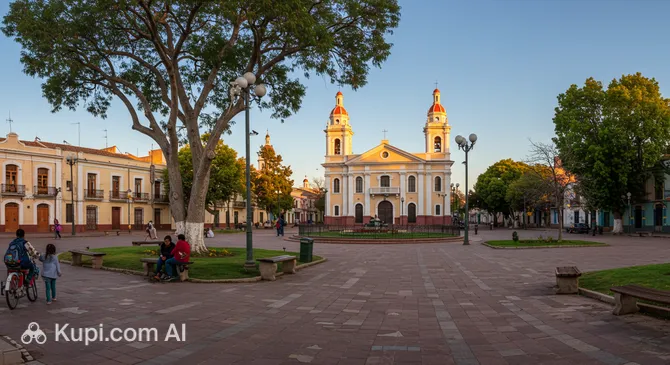
Florencio Varela is a dynamic and welcoming city located in the southern part of the Greater Buenos Aires metropolitan area. As an important cultural and social center of the eponymous municipality in Argentina, it attracts visitors with its authentic atmosphere, where old-world traditions are closely intertwined with the rhythm of modern life. The city was founded on January 30, 1891, on the site of the San Juan settlement and received its current name in honor of the prominent Argentine writer and politician Florencio Varela.
Florencio Varela. Illustration.
Source: Kupi.com AI
Geographically, the city is situated on the flat terrain characteristic of the Buenos Aires province and covers an area of about 190 km². With a population of over 426,000, Florencio Varela is a typical suburban area where residential neighborhoods sit alongside green zones and lively commercial streets. The unique heritage and development of this place are inextricably linked to the expansion of the railway and waves of immigration from Europe, which left an indelible mark on local architecture and the way of life. You can learn more about how the character of this region was shaped in the section dedicated to the city's history.
One of the main architectural landmarks and the social heart of the city is the Parish Church of San Juan Bautista, located opposite the central square. Although the city is primarily perceived as a residential "bedroom community," its lively energy, sporting traditions, and the genuine hospitality of the locals make it an interesting destination for those who want to see the authentic, non-touristic side of Argentine life. Visiting this city is an excellent opportunity to feel the everyday rhythm of the region and enjoy leisurely strolls along its shady streets.
Weather Overview
The climate in Florencio Varela is classified as humid subtropical, which is characteristic of the entire metropolitan region of Argentina. Travelers can expect hot and humid summers, lasting from December to February, with average daytime temperatures around +25°C to +29°C. Winters here are quite mild and moderate: in July, the coolest month, the temperature usually ranges from +7°C to +14°C, although the air can feel colder due to high humidity.
Precipitation is distributed relatively evenly throughout the year, however, the spring and autumn months can be rainier. The wind is usually moderate, which helps clear the air in conditions of dense urban development. Before your trip, it is recommended to check the current city's climate to correctly choose your wardrobe and plan outdoor activities.
Average monthly temperature
Average monthly precipitation
Interesting Facts
The city of Florencio Varela possesses its own unique character and a history that hides several interesting facts:
The city received its current name in honor of Florencio Varela—a famous 19th-century Argentine writer, journalist, and political figure whose ideas had a significant impact on the country's development.
Before its official renaming, the settlement was known as San Juan, a name that is still preserved in the title of the city's main cathedral.
The local football club "Defensa y Justicia" is a source of immense pride for the residents; its stadium is located within the city limits and is considered an important social site.
The historical impetus for the development of this territory was the construction of the Southern Railway, which connected agricultural settlements with the capital at the end of the 19th century.
The cultural appearance of the city was formed thanks to a unique blend of traditions from the indigenous population—the Creoles—and numerous European migrants, primarily from Italy and Spain.
How to Get There
Due to its location within the metropolitan area, Florencio Varela enjoys developed transport links with Buenos Aires and other suburbs. The main and most reliable way to get here is by rail. The journey from the central Constitución station in the capital on the Roca line train usually takes between 45 and 60 minutes; however, it is worth allowing more time during peak hours due to high passenger volume. You can find current routes and schedules on the how to get to the city page.
For those who prefer air travel, the nearest major hub is Ezeiza International Airport (EZE), located approximately 20 kilometers away. The most convenient way to get from there to Florencio Varela is by taxi or a pre-booked transfer, which takes about 40 minutes if there is no traffic. You can also use bus routes connecting the airport with the southern districts of the province.
Road communication is carried out via Ruta 205 or Provincial Route 1. It should be kept in mind that traffic in this region can be very heavy, especially in the morning and evening hours. Numerous buses (colectivos) run within the city itself and between neighboring districts, which are the most popular mode of transport among locals.
Station
Passenger traffic
Distance
Constitución train station
13
21 km
Once train station
13
24 km
Once train station
13
24 km
Retiro railway station
9
24 km
Retiro Mitre train station
6
25 km
Main Attractions
While Florencio Varela is not a classic tourist center, the city hides several places that are beloved by locals and may interest curious travelers. The main spiritual and social landmark here is the Parish Church of San Juan Bautista (Parroquia De San Juan Bautista). Located in the very heart of the city, it is not only an important religious site but also an architectural monument around which public life is centered.
For those seeking spiritual solitude and tranquility, the Nuevo Schoenstatt Sanctuary (Iglesia Santuario Nuevo Schoensttat) is a must-visit. This complex is famous for its well-kept grounds, beautiful architecture, and atmosphere of serenity, which is reflected in high visitor ratings. It is an ideal place for quiet reflection away from the city noise.
Nature lovers and families should check out the Naturaleza Viva ecological complex. This is a vast recreation area where you can spend time outdoors, get acquainted with the local flora and fauna, or have a picnic. Although the complex's infrastructure is primarily aimed at local recreation, it provides a wonderful insight into the natural riches of the region.
The city's sporting life is unthinkable without the Norberto "Tito" Tomaghello Stadium, which is the home arena for the Defensa y Justicia football club. For Argentines, football is a religion, so attending a match or even just walking near the stadium will allow you to feel the incredible intensity and the devotion of local fans to their team.
Local Cuisine
The gastronomy of Florencio Varela is a hymn to Argentine traditions, where meat and home cooking take center stage. As in the rest of the Buenos Aires province, asado (grilled beef) is incredibly popular here. In numerous family-run grill restaurants (parrillas), you can try succulent steaks prepared according to old recipes over charcoal, creating a unique aroma.
An equally important part of the local diet is empanadas—traditional pastries with a variety of fillings, from meat and cheese to corn. The strong influence of Italian immigration is also evident in the abundance of pizzerias and places serving milanesa (thin breaded schnitzel). Locals prefer simple and hearty dishes that are perfect for large family lunches.
Regarding drinks, Florencio Varela, like any part of the country, is unthinkable without mate. This invigorating infusion made from holly leaves is drunk everywhere—in parks, in squares, and at home. Local cafes will also offer excellent Argentine wine, mainly the Malbec variety, which perfectly complements meat meals. For those with a sweet tooth, a dessert with dulce de leche—the legendary caramel-like milk spread—is a must; it is added to alfajores and other pastries.
Travel Tips
A trip to Florencio Varela will allow you to see the real Argentina beyond the popular tourist paths. To make your visit as comfortable and safe as possible, we have prepared some practical tips.
Clothing and Essentials: Choose clothing according to the season—summers in the region are hot and humid, while winters are mild but windy. Be sure to bring comfortable shoes for walking and a power adapter (Argentina uses types I and C). When visiting churches, a modest style of dress is appreciated.
Transport: Be sure to purchase a SUBE card—it is the only way to pay for travel on trains and buses. Install apps to track the Roca Line train schedule to avoid long waits at stations.
Finance: The main currency is the Argentine peso. Although cards are accepted in supermarkets, always carry cash for payments in small shops, on buses, or for tips (usually around 10% in cafes).
Health and Safety: There are many pharmacies in the city, but for serious medical assistance, it is better to contact clinics in Buenos Aires. Observe general precautions: do not display expensive equipment in uncrowded places and avoid walking in the outskirts after dark.
Communication: The main language is Spanish. English is not widely spoken here, so learn basic phrases or use an offline translator. A SIM card (Movistar, Personal, or Claro) can be bought at any "kiosco."
Local Etiquette: Greetings here are warm—often a kiss on the cheek even when meeting someone for the first time. Be polite and take your time—the pace of life here is more relaxed than in the capital's center.
What to Avoid: Do not discuss sensitive political topics and do not enter remote residential settlements (villas) without local accompaniment or a clear purpose.
Additional Tip: If you love football, try to attend a Defensa y Justicia match, but buy tickets in advance and be prepared for incredible noise and emotions!
Following these simple rules will help you enjoy the city's hospitality and the pleasure of immersing yourself in the local culture. Have a pleasant journey through the expanses of Buenos Aires province!
Entertainment & Nightlife
Entertainment in Florencio Varela is predominantly quiet and family-oriented, reflecting the lifestyle of a typical residential suburb. The cafes and restaurants around the main square become the center of attraction in the evening, where locals gather for leisurely socializing. However, if you are looking for a vibrant nightlife with large-scale clubs, it is worth noting that most residents head to neighboring Quilmes or Buenos Aires itself for such entertainment.
The key event capable of bringing the city to life and attracting thousands of people are the football matches at the Norberto "Tito" Tomaghello Stadium. The atmosphere during games of the local team, Defensa y Justicia, is saturated with true Argentine passion, and attending such an event will be the most vivid impression for any guest. On weekdays, daytime leisure can be varied with walks in ecological zones or visits to local cultural centers, where local exhibitions and concerts are occasionally held.
For nighttime travel, it is recommended to use official taxi apps or Remise services, as public transport runs much less frequently in the late hours. It is safest to stick to central, well-lit streets and avoid remote residential areas after dark. Overall, a holiday in Florencio Varela is an opportunity to immerse yourself in authentic local life, far from the glitz of the capital's tourist quarters.
Parks & Museums
The green zones of Florencio Varela are primarily represented by cozy city squares and small parks that serve as a place of rest for residents in conditions of dense urban development. The city's central square is the main public space, where one can relax under the shade of trees and observe the leisurely rhythm of local life. Public events and fairs are often held here, turning the square into a lively cultural center.
For a closer encounter with nature, residents and guests of the city choose the Naturaleza Viva complex. This is one of the few large recreational areas in the municipality, offering opportunities for walks and active outdoor recreation. Although the scale of greenery in the city itself may seem modest compared to the large parks of the capital, such corners of nature play an important role in the ecology of the district.
The city's museum scene is in a developmental stage, and tourists more often head to neighboring Buenos Aires or La Plata for major exhibitions. However, the cultural heritage of Florencio Varela is actively supported through local centers and architectural monuments, such as the historic Church of San Juan Bautista. These places allow you to touch the history of the city's foundation and learn about the lives of the people who built this region more than a century ago.
Getting Around
The transport system of Florencio Varela is based on an effective combination of rail services and an extensive network of bus routes. The main artery connecting the city with the outside world is the Roca Line railway. Electric trains regularly run to the capital's Constitución station, providing a fast and inexpensive way to travel. To pay for travel on all types of public transport, it is necessary to purchase and top up a universal SUBE card, which can be bought at kiosks or stations.
Within the city, the main means of transport are buses, which Argentines call "colectivos." Many routes connect the center with remote residential quarters and neighboring municipalities. It should be noted that during peak hours, buses can be very crowded, and traffic on main roads can be difficult due to congestion. Nevertheless, this is the most affordable way to get to any point in the city.
As an alternative to public transport, taxi and Remise services (hired cars with a fixed price) are popular in Florencio Varela. Using official apps to call a car will ensure safety and transparency of the trip cost. Bike rental and car sharing have not yet become widespread here, so the most practical option for tourists remains a combination of the train for long-distance trips and taxis or walking for moving within the central quarters.
Accommodation
The choice of accommodation options directly in Florencio Varela is quite limited, as the city is primarily oriented toward permanent residents rather than mass tourism. The bulk of the offers consist of private apartments and guesthouses, which are often rented for long-term stays or transit trips. This is a great option for those who want to save money and feel like a local in an authentic Argentine environment.
The most convenient area to look for housing is the city center, located near the railway station and the main shopping streets. Here, you will have quick access to transport, shops, and cafes. There are practically no full-service luxury hotels in the city, so for a higher level of service and comfort, travelers often choose hotels in neighboring Buenos Aires or Quilmes, using Florencio Varela for day visits.
When planning a trip, it is recommended to book accommodation in advance through popular international services, paying attention to reviews regarding safety and the availability of parking if you are traveling by car. The price range here is significantly lower than in the capital, making a stay in Florencio Varela a budget-friendly option for thrifty travelers and expats.
Nearby Cities
The city of Florencio Varela is an excellent starting point for exploring the southern part of the metropolitan region, allowing tourists to easily reach interesting cultural and historical centers. Just a few kilometers away are cities, each with its own unique atmosphere and attractions.
One of the most interesting destinations for a trip is Berazategui, known for its parks and glass museums. It is also worth visiting San Francisco Solano and Ezpeleta, where you can observe the daily life of the suburbs. For those ready to drive a bit further, the doors of historic Quilmes or majestic La Plata, with its grand cathedral and natural science museum, are open.
City
Population
Distance
San Francisco Solano
91 322
4 km
Ezpeleta
79 557
6 km
Claypole
41 176
6 km
Berazategui
180 523
7 km
Rafael Calzada
56 419
8 km
Thanks to the developed network of suburban trains and buses, such trips do not take much time and allow you to significantly expand your impressions of visiting this part of Argentina. Exploring the surroundings of Florencio Varela is an opportunity to see the diversity of the region's urban and natural environments without traveling far from the main transport arteries.
Shopping & Souvenirs
Shopping in Florencio Varela is primarily focused on the daily needs of residents, offering an authentic shopping experience without the hustle and bustle of huge tourist malls. The main commercial district of the city is considered to be the area around the central square and the pedestrian sections of the adjacent streets. Many small shops selling clothes, shoes, and household goods are concentrated here, where you can find quality local products at very affordable prices.
Special attention should be paid to local markets and bazaars, which often unfold in the central part of the city. These are the best places to buy fresh produce, vegetables, and traditional Argentine delicacies. Although there are few specialized souvenir shops, you can bring back quality leather goods, mate sets, or local pastries bought from one of the cozy panaderías as a gift from the city.
Shops usually operate with a siesta break: they open in the morning, close for a few hours in the afternoon, and continue working until late evening. Large chain supermarkets provide the option to pay by card, but in small shops and markets, it is preferable to have cash pesos. For serious brand shopping, locals usually travel to the shopping centers of Buenos Aires, which are easily reached by train.