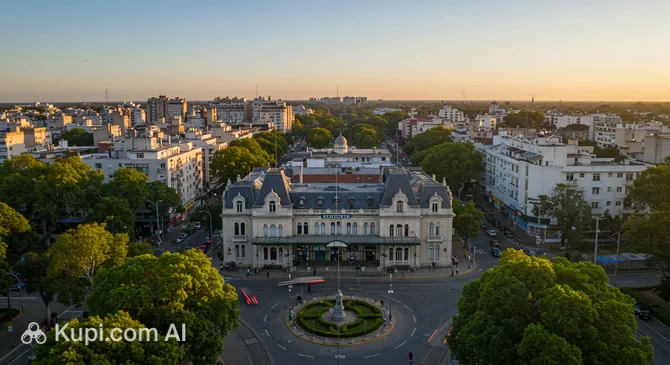
Banfield is a cozy and primarily residential city in Argentina, located just 14 kilometers south of the bustling center of Buenos Aires. As part of the Greater Buenos Aires metropolitan area, it retains the atmosphere of a quiet suburb where daily life flows at a measured pace, and the streets are filled with the spirit of a true Argentine province. With a population of about 224,000, the city is an important transport hub and a popular place to live for those working in the capital.
Banfield. Illustration.
Source: Kupi.com AI
The settlement owes its emergence to the rapid development of the railway network in the second half of the 19th century. Officially, the history of the city took a new turn in 1960, when Banfield acquired its current status. Although it is not a typical tourist center, the city possesses a special charm thanks to its British architectural heritage and its football legacy, which has made it famous throughout the country.
The main symbol and pride of the local residents is the namesake football club "Banfield," founded by immigrants from Great Britain and Ireland. Visiting this city is an excellent opportunity to see the unpolished, honest side of life in the suburbs of the Argentine capital, get to know the culture of football fans, and enjoy the quiet away from the tourist crowds.
Weather Overview
Banfield is dominated by a temperate oceanic climate, typical for the entire capital region of Argentina. All four seasons are clearly defined here: summer delights with warmth and humidity, while winter brings a pleasant coolness. For those who want to know more about temperature patterns, detailed information is available about the current weather in the city by month.
The summer period, lasting from December to February, is characterized by average temperatures ranging from +21°C to +29°C. This is a time of sunny days, which are sometimes interrupted by short but intense downpours. Winter (June–August) in Banfield is quite mild: the thermometer usually fluctuates between +8°C and +15°C, although the proximity to the river can make the air feel colder than it actually is due to humidity.
Precipitation is distributed fairly evenly throughout the year, totaling about 1000–1200 mm annually. The rainiest months are usually in spring and autumn, such as March and October. When planning a trip, expect a warm, sometimes hot summer and dry, bracing winter days — such weather is ideal for leisurely strolls through the city streets at any time of year.
Average monthly temperature
Average monthly precipitation
Interesting Facts
The city was named after Edward Banfield, the first manager of the British railway company that built tracks in the south of the capital region.
The local football club "Banfield" bears the colorful nickname "The Drill" (El Taladro), which it received in the 1940s for its ability to "drill through" opponents' defenses.
Despite its long history, Banfield officially received city status only in 1960, having previously been considered a large settlement.
The year 1873 is considered the symbol of the city's founding, when the first railway station opened here, giving impetus to the development of the entire district.
How to Get There
Banfield is integrated into the transport network of the Greater Buenos Aires metropolitan area, making it easily accessible for travelers. The main artery connecting the city with the capital is the railway. For those planning a visit, detailed information on how to get to the city will help in planning the optimal route and saving travel time.
The nearest international air gateways are Ezeiza Airport (EZE), located about 40 kilometers away, and the capital's Jorge Newbery Airport (AEP). From Ezeiza, it is most convenient to reach the city by taxi or an official transfer, which will take about 1.5–2 hours depending on traffic on the southern highways. From the center of the capital, the journey will be faster and cheaper.
Railway service is represented by the Roca line. Trains depart from Buenos Aires' central station — Constitución. This is the fastest way to get to Banfield station: the journey takes from 20 to 40 minutes. There are also many bus lines (colectivos) running, such as the 501 or 503, but it's worth noting that during peak hours, a bus trip can be delayed due to heavy traffic.
Station
Passenger traffic
Distance
Constitución train station
13
13 km
Once train station
13
15 km
Once train station
13
15 km
Retiro railway station
9
17 km
Retiro Mitre train station
6
17 km
Main Attractions
Although Banfield is not a classic tourist destination with an abundance of historical palaces, it offers guests several iconic spots that reflect its unique identity. The main point of attraction for many remains the "Florencio Sola" stadium, the home arena of Banfield football club. Here, you can feel the incredible energy of Argentine football, especially on match days when the stands are painted in green and white.
Another important site is the Banfield railway station. Founded back in 1873, this station is a living testament to the city's industrial past and its connection to British capital. A stroll through the surrounding neighborhoods allows you to see old buildings that have preserved features of late 19th-century architecture, creating a pleasant contrast with the modern suburban development.
For those who prefer more modern leisure activities, Banfield Shopping is open. This shopping and entertainment center is the heart of local social life, offering opportunities for shopping, visiting cinemas, and relaxing in cafes. This place is great for observing the daily rhythm of the citizens' lives in a comfortable setting.
Local Cuisine
Cuisine in Banfield is a classic embodiment of Argentine gastronomic traditions with an emphasis on meat dishes. The hero of any table here is asado — meat cooked on the grill. Walking through the city, you will surely catch the appetizing smoke from the numerous parrillas (grill bars), where juicy steaks, ribs, and choripán sausages are served.
For a quick snack, locals choose empanadas (pastries with various fillings) or milanesa — a thin breaded schnitzel, often served with french fries or fried eggs. The food culture here is very simple and honest: establishments cater to regular customers, so portions are usually substantial, and the atmosphere is friendly and relaxed.
Among drinks, the absolute leader is mate, which Argentines drink everywhere. In the evening, local beer or a glass of Malbec red wine is popular. For dessert, be sure to try sweets with dulce de leche (Argentine caramel) — it is the perfect end to any meal in this hospitable suburb.
Travel Tips
A trip to Banfield will allow you to see the real life of an Argentine suburb, and a few practical tips will help make your visit as comfortable and safe as possible.
Transport: Be sure to purchase a SUBE card immediately upon arrival in Argentina. Without it, you will not be able to use buses or trains, as cash is not accepted on transport.
Safety: Banfield is a relatively quiet area, but follow standard precautions. Avoid walking in deserted outskirts after dark and keep a close eye on your belongings in crowded places near the station.
Finances: Cards are accepted in large stores and shopping centers, but cash pesos may be required in small shops and markets. Carry a small supply of bills for minor expenses.
Clothing: Choose comfortable shoes for walking and dress according to the season. Remember that in the Southern Hemisphere, summer lasts from December to February, and it can be very hot and humid.
Communication: A SIM card (chip) can be bought at any kiosk (Kiosco). A passport may be required for activation. Wi-Fi is available in the shopping mall and most cafes.
Language: English is not widely spoken here, so learn a few basic phrases in Spanish. Locals are very friendly and will surely appreciate your attempts to speak their language.
Etiquette: Greetings in Argentina are often accompanied by a light kiss on the cheek, even between people who barely know each other. Be prepared for this warm manner of communication.
What to avoid: Do not discuss sensitive political topics and try not to display expensive equipment or large amounts of money in public transport.
By following these simple recommendations, you can fully enjoy the atmosphere of the city and feel its hospitable rhythm.
Entertainment & Nightlife
Nightlife in Banfield is of a more local and quiet nature. There are no huge night clubs or noisy discos for which the capital is famous. Main activity is centered around small local bars and cafes where residents gather in the evenings to discuss the latest news or watch a football match over a glass of cold beer.
For more vibrant experiences and dancing until dawn, local residents usually head to neighboring Lomas de Zamora or travel to the center of Buenos Aires (Palermo or San Telmo districts), which takes about 30–40 minutes by train or taxi. Nevertheless, within Banfield itself, you can find cozy family restaurants that stay open late, offering traditional Argentine hospitality.
Daytime entertainment includes visiting cinemas in shopping malls and strolling through the central squares. The city's main "show" remains the football matches at the local stadium, which turn the weekends into a real celebration for the entire neighborhood, filling the streets with music, fans' songs, and the aroma of grilled meat.
Parks & Museums
Green zones in Banfield are represented by small but cozy squares and parks that serve as a place of rest for citizens of all ages. One such place is Parque de la Trinidad — a modest park where locals like to spend time with their families, have small picnics, or simply walk in the shade of the trees. There are also small landscaped areas near the railway station, livening up the dense residential development.
As for cultural institutions, Banfield does not have major museums or galleries. The main focus here is on residential infrastructure, and for a serious cultural program, residents and guests usually head to Buenos Aires. However, for the observant tourist, the city's architecture itself can become an "open-air museum": the old house facades and the historic station tell the story of the region's industrial development as well as any exhibits.
The environmental situation is typical for densely populated suburbs, so Banfield's parks are valued by locals as important islands of nature. If you are looking for large-scale park complexes or botanical gardens, it is worth traveling a few stops by train toward the center, but for a quiet rest after a walk around the city, Banfield's local squares are quite suitable.
Getting Around
The transport system of Banfield is fully integrated into the general network of Greater Buenos Aires. The main mode of transport for long-distance trips is the Roca line train. Trains run frequently (at intervals of 10–20 minutes), connecting the city with the capital's central station. This is a reliable and budget-friendly way to get around, though it's worth remembering that during morning and evening peak hours, the carriages can be very crowded.
Within the city and throughout the district, a huge number of buses, called colectivos by the locals, operate. Routes such as 75, 148, and 501 cover almost the entire territory of Banfield and neighboring municipalities. Buses run 24/7, but intervals increase significantly at night. To pay for travel on both trains and buses, a SUBE card is mandatory, which can be purchased and topped up at kiosks or stations.
Taxis and services like Uber are also widely available in the city. For safety, it is recommended to use official services (Remise) or mobile applications. Cycling infrastructure is poorly developed, so moving around by bicycle may not be the most comfortable due to heavy traffic and narrow streets. Overall, the city's transport accessibility is rated as good, making it easy to plan trips throughout the region.
Accommodation
The accommodation market in Banfield is primarily geared toward those looking for home comfort and authenticity rather than mass tourism. There are few classic hotels in the city, so the most popular options are apartments and flats available for short-term rent. This is an excellent choice for those who want to feel like a local, shopping at neighborhood stores and having breakfast in local coffee shops.
For transit travelers, the most convenient housing options are located within walking distance of the railway station. This allows for quick access to the center of Buenos Aires while maintaining lower accommodation prices compared to the capital. You can also find small guest houses (residenciales) offering a basic level of comfort at affordable prices.
If you prefer chain hotels or a higher level of service, you should look into the neighboring district of Lomas de Zamora or the commercial quarters nearby, where 2–3 star hotels are represented. In any case, due to the limited number of offers, it is recommended to book accommodation in advance, especially if your visit coincides with important football matches or local holidays.
Nearby Cities
Thanks to its location, Banfield serves as an excellent starting point for exploring the southern part of the capital's metropolitan area. Well-developed transport links make it easy to take day trips to neighboring cities, each of which has its own character and interesting features.
Just a few minutes away by bus is Lomas de Zamora, the administrative center of the municipality. It is a lively city with developed commercial infrastructure, many restaurants, and cultural centers. Even closer is Temperley, which attracts visitors with its quiet residential atmosphere and historical buildings typical of old Argentine suburbs.
For those who want to see the industrial and transport history of the region, the city of Remedios de Escalada will be of interest, home to large railway workshops. Exploring these surroundings will allow you to deeper understand the way of life in Greater Buenos Aires, going beyond the usual tourist routes of the capital.
Traveling through these cities on local trains is an adventure in itself, providing an opportunity to see the real, unembellished life of Argentines.
Shopping & Souvenirs
Shopping in Banfield is primarily focused on the daily needs of its residents, but tourists will also find interesting opportunities here. The center of attraction is the Banfield Shopping complex, where clothing stores, electronics, and household goods are gathered under one roof. It is a modern space with a food court and entertainment, convenient for comfortable shopping at any time of the year.
More colorful shopping awaits you on the streets near the railway station. Numerous small shops, bakeries, and small markets operate here, where you can buy fresh produce, local delicacies, and clothing at affordable prices. The atmosphere of these places resembles traditional trading rows, where sellers know their customers by sight.
There are practically no specialized souvenir shops in Banfield. If you want to bring something back as a memory, the best choice would be gastronomic souvenirs: a jar of high-quality dulce de leche, a pack of classic Argentine mate, or local wine. Shops usually operate from the morning until 20:00 with a siesta break in the middle of the day, although large shopping centers are open until late evening without breaks.