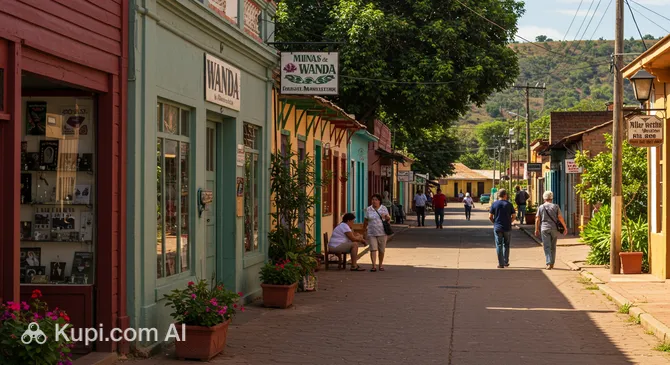
Wanda is an amazing corner of Argentina, tucked away in the northeastern part of the Misiones province. Founded in 1936 by Polish settlers, the city was named after a legendary Polish princess, giving this place a special European flavor in the heart of the South American jungle. Anyone who appreciates the intertwining of cultures and destinies should learn more about the fascinating history of its origin.
Wanda. Illustration.
Source: Kupi.com AI
Geographically, the city is located in a picturesque area surrounded by lush tropical vegetation, near the borders with Brazil and Paraguay. The population of Wanda is about 15,529 people, which allows it to maintain the atmosphere of a cozy and hospitable settlement where every guest feels at home. The climate here is subtropical, which promotes the lush growth of forests and the creation of unique landscapes.
Wanda's main treasure is its famous semi-precious stone mines, discovered in the second half of the 20th century. This place attracts geology enthusiasts and seekers of beauty from all over the world. In addition to its underground riches, the city charms with its calm atmosphere and proximity to the region's great natural monuments, such as the Iguazu Falls. Visiting Wanda is a rare opportunity to see the mineral extraction process with your own eyes and enjoy the tranquility of provincial life.
Weather Overview
Wanda welcomes guests with a humid subtropical climate that keeps the city lush and green all year round. Summers here are long and hot: from December to February, the average temperature is about 26.5°C, often rising to 31°C and above. This period is characterized by high humidity and occasional tropical downpours that bring short-term relief.
Winter months (June–August) in Wanda are short and fairly mild. The average temperature during this period stays around 18–19°C, although at night it can drop to 12–14°C. Rainfall is significantly lower in winter, especially in July and August, making this time of year very comfortable for long walks and mine excursions. If you want to know more about how the city's climate changes by month, it's worth checking out the detailed forecast.
Autumn and spring in the region are transitional seasons with changeable weather. October often becomes the rainiest month of the year, so travelers should always carry a raincoat or umbrella. Overall, thanks to the consistently warm weather, Wanda is open for visits at any time of year, but the most favorable season is considered to be the period from May to September.
Average monthly temperature
Average monthly precipitation
Interesting Facts
The city's name is a tribute to Polish Princess Wanda, who, according to legend, chose death over marriage to an unloved German prince.
The gemstone deposit was discovered by accident in 1976 by a local farmer who found an unusually shiny stone right during agricultural work.
In the mines, you can see unique "bubbles" in the solidified lava filled with amethyst and quartz crystals, whose age is measured in millions of years.
The tunnels of the Wanda mines are spacious enough for walking: their height reaches 2 meters, and their width is about 4 meters.
The city was founded by Polish colonists, and echoes of Eastern European traditions can still be seen in the local culture and architecture.
How to Get There
A trip to Wanda usually begins from the region's larger transport hubs, as the city is conveniently located along the important National Route 12. The main flow of tourists arrives here by car or as part of organized tour groups heading to the famous Iguazu Falls. You can learn more about all the transport nuances in the dedicated section.
For those who prefer air travel, the nearest major airport is Cataratas del Iguazú International Airport (IGR) in Puerto Iguazú. It receives regular flights from Buenos Aires and other Argentine cities. From the airport, you can reach Wanda by rental car or taxi in about 45–60 minutes, enjoying views of the red earth and the tropical forests of Misiones.
Rail service in this region is poorly developed, so buses remain the main ground transport. Regular services connect Wanda with neighboring cities like Eldorado and Puerto Iguazú. Bus travel is a budget-friendly way to move between provincial towns, although experienced travelers recommend renting a car for maximum comfort and route flexibility.
Station
Passenger traffic
Distance
Cataratas train station
2
34 km
Apeadero Posadas train station
2
204 km
1
245 km
Main Attractions
The main attraction for all travelers in Wanda is the famous Wanda Mines (Minas de Wanda). These are unique open-pit mines and tunnels going 25 meters deep into the earth. During an hour-long tour led by experienced guides, you can see how agates, amethysts, topazes, and rock crystals are born in basaltic rocks. The mine walls are literally studded with crystals that shimmer in the light, creating a fantastic picture.
The mine complex grounds include workshops where you can observe the process of cutting and processing stones. This is not just an industrial site, but a full-fledged tourist center where geological formations created by ancient lava eruptions coexist with developed infrastructure for relaxation.
For those who want to combine sightseeing with a pleasant lunch, El Rancho Tenedor Libre is located within the city. This establishment is famous for its hospitality and is an excellent example of local gastronomic hospitality, complementing the city visit with delicious regional dishes.
Local Cuisine
Wanda's gastronomy is closely linked to the traditions of the Misiones province, where meat and local nature's bounty play the main role. Be sure to try asado — the famous Argentine grill cooked over an open fire. Thanks to the tropical climate, local cuisine abounds with fresh fruits: papaya, mango, and passion fruit, which are often served as desserts or used in sauces.
One of the most popular places to get acquainted with local cuisine is El Rancho Tenedor Libre. The "free fork" (buffet) format allows guests to try an unlimited number of dishes for a fixed price, including various types of grilled meats and traditional sides. This place is well-loved by both tourists and locals for its generosity and soulful atmosphere.
Among drinks, the absolute leader is mate — the national drink of Argentina. In Misiones, it is drunk everywhere, and in the heat, terere is popular — a cold version of mate, often with the addition of citrus juice or medicinal herbs. Also, don't forget to try local empanadas (pastries with various fillings), which are often made here with cassava flour.
Travel Tips
Preparing for your trip to Wanda will help you get the most out of this unique place. Here are some practical tips for every traveler:
Clothing and gear: Choose comfortable closed shoes with non-slip soles for visiting the mines, as the tunnels can be damp. Clothing should be lightweight and made of natural fabrics, but don't forget to bring a hat and sunscreen for outdoor walks.
Transport: The best way to reach Wanda is by rental car or taxi from Puerto Iguazú. If using public transport, always check the current bus schedule in advance.
Finances: Cards are accepted in the mines and large stores, but for small expenses, transport, and snacks in small cafes, be sure to have Argentine pesos in cash.
Health and safety: The city is generally very safe. Due to the tropical climate, drink more bottled water and use insect repellent. The nearest pharmacies are in the city center.
Communication: The main language is Spanish. In tourist areas (the mines), staff often speak basic English. Knowing a few phrases in Spanish (e.g., «Gracias» — thank you, «Hola» — hello) will be met with great warmth.
Local etiquette: Greeting people when you meet them, even strangers in small shops, is a polite norm. Argentinians are very friendly and appreciate openness.
What to avoid: Do not attempt to collect stones yourself on the mine grounds outside designated areas or without the guide's permission — this is considered a violation of the rules.
Extra tip: Plan your mine visit for the morning to avoid the peak heat and leave time for lunch at one of the local spots.
Following these simple rules will make your visit to Wanda comfortable and unforgettable. Have a nice trip!
Entertainment & Nightlife
Wanda is primarily a place for quiet daytime relaxation and educational tours. Nightlife here does not have the bustling rhythm of large metropolises; the city is geared towards those who prefer early starts and rich walks in the fresh air. Main activity centers around visiting the mines and exploring the natural beauty of the Misiones province.
For evening leisure, locals and guests choose cozy get-togethers in family restaurants. One notable spot is El Rancho Tenedor Libre, where you can enjoy a traditional Argentine dinner in a relaxed atmosphere. This is a great place for those who want to feel the true rhythm of provincial life after a full day in the mines.
For more vibrant entertainment, discos, and a wide selection of bars, tourists usually head to neighboring Puerto Iguazú, an hour's drive away. Wanda itself remains a quiet haven where the main entertainment is contemplating the starry sky above the rainforest and discussing mineral finds.
Parks & Museums
The city's main cultural attraction is the Stone Museum, located directly at the Wanda mines. This is not just a collection of exhibits, but the living history of the region. The museum halls display the rarest specimens of minerals extracted here: giant amethyst geodes, transparent rock crystals, and unique agate slices with one-of-a-kind patterns. Visitors can not only see the finished products but also learn about the geological processes that formed these treasures millions of years ago.
The city does not have classic urban parks in the traditional sense; however, its entire territory is surrounded by natural "green lungs" — the Selva Misionera tropical jungle. Walks around the city allow you to enjoy exotic flora and fauna, see bright butterflies, and hear the singing of rare birds. The surrounding nature is the perfect backdrop for a peaceful break and photo sessions.
For those who want to relax in the shade and enjoy lunch after visiting the museum, the area around El Rancho Tenedor Libre is a great spot. Although primarily a gastronomic site, its cozy atmosphere and open space allow tourists to catch their breath before the next part of their journey through the Misiones province.
Getting Around
The public transport system in Wanda is quite simple and matches the scale of a small town. The main means of transportation for locals are buses that run along the main highway and connect Wanda with neighboring settlements. However, for tourists, this type of transport may not be the most convenient due to irregular schedules, so many prefer to use taxis or rental cars.
If you decide to travel by bus, tickets are usually purchased from the driver or at small ticket booths at stops. The fare is low, but it's worth having cash pesos in small bills. Within the city itself, most sites are within walking distance, especially if your goal is a stroll through the central streets or visiting local cafes.
To get to the mines, which are located slightly away from residential areas, it's best to order a taxi or use a tour transfer. Taxis in Wanda can be called by phone or found at stands near key locations. Bike rentals are not developed in the city, as the terrain and climatic conditions (high humidity and heat) are more suited to air-conditioned car travel.
Accommodation
Accommodation in Wanda consists mainly of small guest houses and cozy farm estates that offer guests an authentic stay surrounded by nature. This is an excellent choice for those looking to escape city noise and feel the atmosphere of rural Argentina. Availability is limited, so it is recommended to book your stay in advance, especially if your trip coincides with national holidays.
For travelers used to a wide choice of international hotel chains, the best option would be to stay in the neighboring city of Puerto Iguazú. The full range of accommodation is represented there: from budget hostels to luxury five-star complexes with pools and spas. The journey to Wanda from there takes no more than an hour, making day trips to the mines very convenient.
The price range in Wanda itself is very democratic. Staying in local "posadas" (guest houses) will not only save your budget but also let you get to know the life of local residents, who often manage their own small hotel businesses. As a pleasant addition to your stay, consider visiting El Rancho Tenedor Libre, where guests of the city are always welcome for a hearty lunch.
Nearby Cities
Wanda serves as an excellent starting point for exploring the northern part of the Misiones province and the border areas of neighboring countries. Thanks to its location near the "Triple Frontier," travelers can easily visit several countries within one or two days.
Just 42 kilometers to the north is the city of Puerto Iguazú, the main gateway to the world-famous falls. It is a bustling tourist center with many restaurants and shops. Also worth noting is the town of Ñacunday in Paraguay, known for its impressive waterfall and national park offering immersion in the wild.
For those ready to cross the border into Brazil, Foz do Iguaçu is an interesting destination — a large metropolis with developed infrastructure and excellent views of the waterfalls from another angle. Exploring the surroundings of Wanda will give you plenty of impressions: from quiet farmlands to powerful natural elements and the cultural diversity of border cities.
Shopping & Souvenirs
Shopping in Wanda is an exciting adventure for jewelry lovers and fans of unusual souvenirs. The main shopping destination is the complex at the Wanda Mines. A wide range of products made from semi-precious stones mined right under your feet is presented here. You can purchase both raw minerals for your collection and exquisite jewelry: rings, earrings, and pendants in silver and gold with amethysts, topazes, and agates.
In addition to jewelry, the souvenir shops at the mines offer decorative items: vases, animal figurines, candle holders, and clocks carved from natural stone. These items will be a wonderful reminder of your trip to Argentina and a unique gift for loved ones. Prices here range from very budget-friendly for small souvenirs to significant sums for exclusive collectible stones.
Shops are usually open daily, following the schedule of tourist visits to the mines. Argentine pesos in cash are accepted, and at large outlets near the mines, you can pay with international bank cards. If you plan major purchases, it's worth checking the possibility of a Tax Free refund in advance, although this option may be unavailable in small shops.