Support

Red Hill Nature Reserve

About

If you are looking for a place where city life meets pristine nature, the Red Hill Nature Reserve is an ideal find. Spanning approximately 293 hectares, this protected forested ridge serves as the "green lungs" of the southern part of Canberra. The reserve is part of a large park network that ensures the free movement of wildlife within the capital.
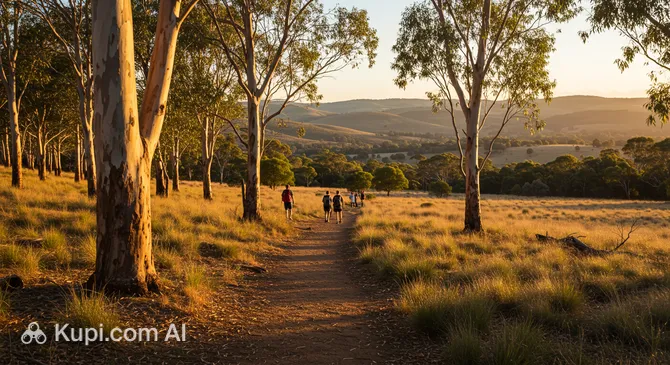
Red Hill Nature Reserve
Red Hill Nature Reserve. Иллюстрация. Источник: Kupi.com AI

This reserve in Australia is famous for its incredible biodiversity: it is home to more than 175 plant species and about 80 bird species. From the hilltop, which reaches 720 meters, a spectacular 360-degree panorama opens up, revealing Parliament House and other national monuments as if they were in the palm of your hand. Thanks to its rich red soil and unique forests, this site is considered one of the region's most significant natural areas.

Visitors come here to swap the bustle of the metropolis for the singing of colorful rosellas and cockatoos. The true "masters" of the territory are the Eastern Grey Kangaroos — their population here numbers around 800 individuals. Red Hill is not just a park, but a living open-air museum of nature, offering a rare combination of accessibility and authentic Australian bush.

Contacts

To plan your visit or learn more about environmental programs, you can use the official resources. The reserve is managed by the ACT Parks and Conservation Service.

How to contactContact
AddressРед Хилл Австралийская столичная тер. 2603, Австралия
Websitewww.environment.act.gov.au

What to Do

The main adventure in the reserve begins with walking. For active visitors, there are trails of varying difficulty: from gentle paths to steep, rocky climbs favored by runners and cyclists. Be sure to head up to the trig point at the summit — it offers the best views of the city neighborhoods nestled in greenery or autumn gold.

Wildlife lovers should bring binoculars. At dawn or dusk, herds of grey kangaroos can be seen on the open grasslands, seemingly unfazed by people. White cockatoos and galahs call to each other in the treetops, and skink lizards can often be spotted sunbathing on the rocks. In spring, the reserve is transformed: the slopes are covered in a carpet of golden flowers and wild daisies, turning a walk into a true session of color therapy.

Those interested in ecology should follow the Red Hill Heritage Walk route. This is a great opportunity to learn more about unique endemic plants and the efforts of volunteers to preserve this fragile world. The silence, broken only by birdsong and the chirping of cicadas, makes Red Hill an ideal place for peaceful relaxation and nature contemplation in the heart of the Australian capital.

Getting There

You can reach this natural getaway from the city center in just 10–15 minutes by car. The main access is via Red Hill Drive, which features visitor parking right at the trailheads. If you prefer a taxi, the ride from the city center will be quick and comfortable.

For those using public transport, bus routes heading to the Red Hill area or the Woden Interchange transport hub (where you can transfer) are suitable options. From Canberra Airport, the drive takes about 20–30 minutes via Airport Drive and Tuggeranong Parkway.

Outdoor enthusiasts can reach the reserve on foot or by bicycle from the surrounding residential areas. Popular trails also start near the Federal Golf Club and along Hindmarsh Drive. Keep in mind that some climbs are quite steep, so comfortable athletic shoes are essential.

Ближайший город: Canberra

History & Facts

The geological past of this site is impressive: the ridge was formed from hornfels — sedimentary rocks that were subjected to extreme temperatures from volcanic activity hundreds of millions of years ago. This process created the unique, erosion-resistant terra rossa soil, whose characteristic red hues gave the hill its name.

Interestingly, the reserve's appearance could have been very different. In 1917, Canberra's famous architect Walter Burley Griffin ordered that only native plants be planted here and that livestock grazing be prohibited. Although animals continued to graze on these slopes until 1997, many of the trees planted according to Griffin's plan have survived to this day.

Today, the Red Hill Nature Reserve is home to a critically endangered type of forest — the Yellow Box – Red Gum grassy woodland. Nationally, less than 1% of such ecosystems remain. The Red Hill Regenerators volunteer group has been working for several decades to restore this biodiversity, fighting invasive species and protecting the fragile balance of nature.

Time Needed

Tourists usually find two to four hours sufficient to fully enjoy the atmosphere of the reserve. This is enough time to leisurely climb to one of the peaks, take panoramic photos, and observe kangaroos in their natural habitat.

If you plan to follow the Red Hill Heritage Walk themed route or go for a full hike across all the slopes of the ridge, it is better to set aside half a day. This will allow you to study rare plant species without rushing and enjoy the silence away from city roads.

Working Hours

Red Hill Nature Reserve is open to the public daily and 24 hours a day. This allows tourists to choose the perfect time for a visit: whether it's early morning to watch the active kangaroos or the evening hours to catch the sunset with a view of the city lights.

As the official schedule may change depending on the season or environmental events, it is recommended to check the official website of the ACT Parks and Conservation Service before your trip.

Круглосуточно

Nearby

After a breath of fresh air on the slopes of the reserve, you can continue exploring the capital by visiting interesting locations within a ten-kilometer radius. There are options for families with children, history buffs, and those who enjoy being near the water.

NameDistance
Royal Australian Mint2.7 km
Old Parliament House3.2 km
Kingston Foreshore3.2 km
Fyshwick Fresh Food Markets3.4 km
National Gallery of Australia3.6 km
National Portrait Gallery3.6 km
Questacon – National Science and Technology Centre3.7 km

Reached the end of the page?

That means the route is fully explored